

What is DEX? The Complete Guide to Decentralized Exchanges and 2026 Sector Development
2026/03/30 17:36:01
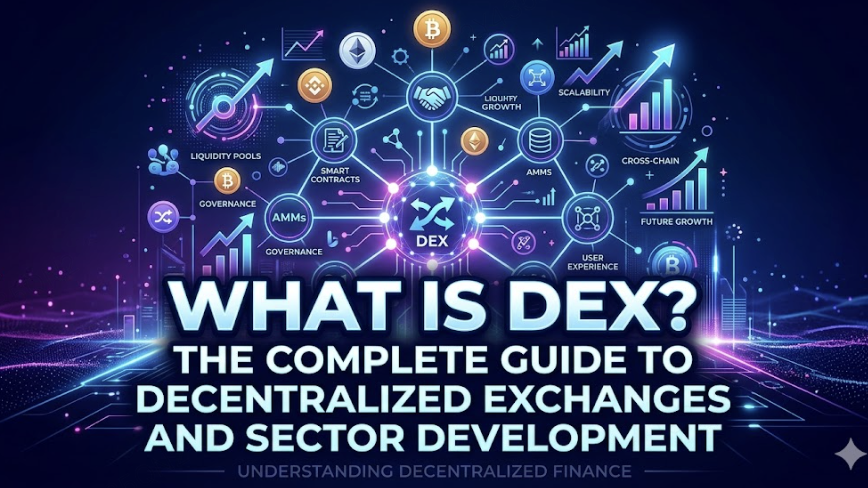
While centralized exchanges (CEXs) act as the primary gateway for converting traditional fiat currency into digital assets, the actual foundation of the decentralized finance (DeFi) ecosystem is built entirely on Decentralized Exchanges (DEXs). Today, DEXs operate as the fully matured, essential liquidity infrastructure for the entire on-chain economy. They seamlessly facilitate billions of dollars in daily trading volume without relying on corporate intermediaries, traditional clearinghouses, or localized banking systems. If you are expanding your portfolio beyond standard spot trading and looking to access permissionless liquidity pools or yield generation, understanding how a DEX currently operates is mandatory.
This comprehensive guide breaks down the fundamental mechanics of decentralized trading, explains the smart contract technology driving Automated Market Makers (AMMs), and analyzes the established cross-chain and Layer 2 scaling solutions that define the sector's current landscape.
Key Takeaways
-
A DEX allows users to trade digital assets directly from their personal Web3 wallets. The exchange never holds your funds, eliminating the risk of centralized platform insolvency or withdrawal freezes.
-
Instead of relying on a centralized corporate entity to match buyers and sellers via an order book, DEXs utilize immutable smart contracts on the blockchain to execute trades automatically.
-
The dominant model for decentralized trading relies on mathematical formulas and user-funded "liquidity pools" to determine asset prices and facilitate instant swaps, rather than traditional bid-ask spreads.
-
The DEX sector is currently experiencing a massive shift toward Layer 2 rollups, cross-chain interoperability protocols, and aggregator models that drastically reduce transaction fees (gas) and prevent liquidity fragmentation.
-
Because DEXs operate entirely on-chain, they cannot process traditional fiat currency. Users must first utilize a secure centralized gateway, to purchase base assets before interacting with decentralized protocols.
What is a Decentralized Exchange (DEX)?
To accurately define a Decentralized Exchange (DEX) in the modern Web3 economy, it must first be contrasted with its centralized counterpart.
A Centralized Exchange (CEX) operates under a traditional financial model: the corporate entity requires identity verification (KYC), utilizes proprietary internal order books to match buyers and sellers, and, crucially, takes direct custody of user funds to facilitate high-speed execution.
Conversely, a DEX is a peer-to-peer financial protocol deployed directly on a public blockchain. It facilitates the trading of digital assets without routing transactions through any corporate intermediary or clearinghouse.
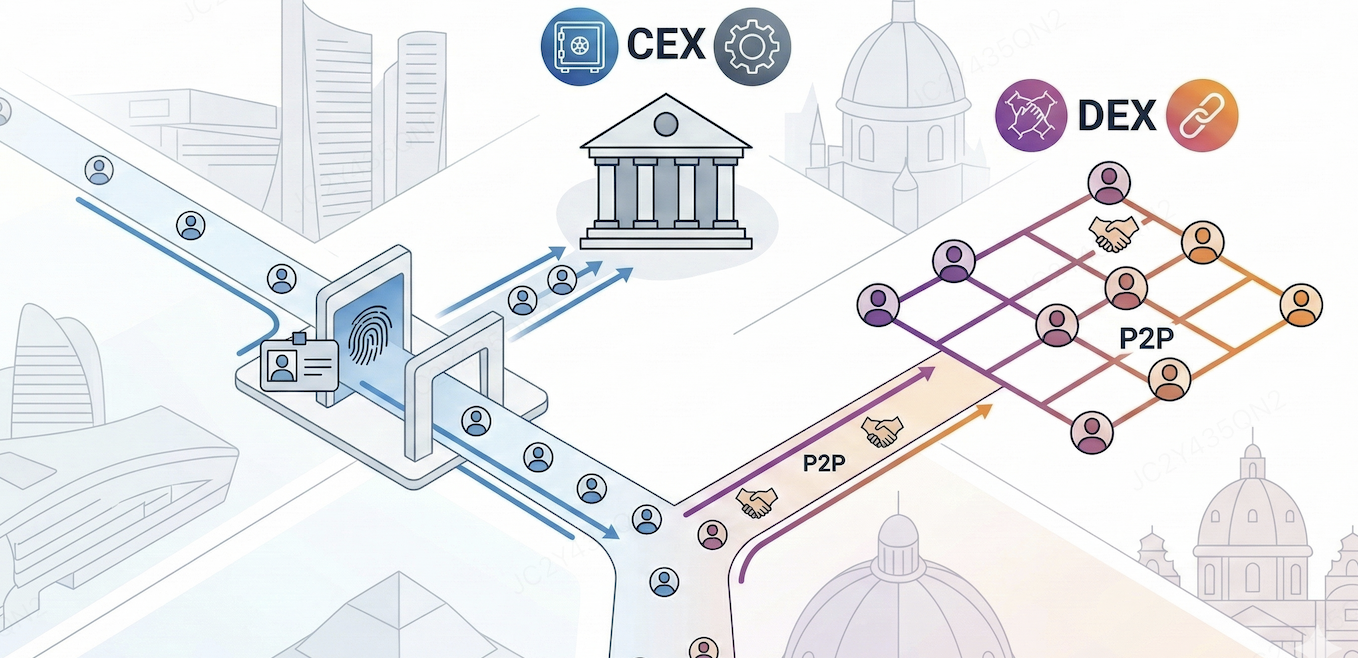
The structural identity of a DEX relies on two foundational pillars:
Non-Custodial Asset Control
When interacting with a centralized platform, you must deposit your capital into their centralized wallets, exposing yourself to counterparty risk. On a DEX, the platform never holds your funds. Users simply connect their personal Web3 wallets to the decentralized application (dApp). When a trade occurs, the assets are swapped directly on-chain and settled immediately into the user's wallet. You maintain absolute, sovereign control over your private keys throughout the entire transaction lifecycle.
Permissionless Smart Contract Execution
Instead of relying on a centralized matching engine and human compliance departments, DEXs operate via immutable smart contracts, self-executing lines of code that run autonomously on networks like Ethereum, Solana, or various Layer 2 rollups. Because the exchange is fundamentally just open-source software living on a distributed ledger, it requires no user accounts, passwords, or KYC documentation. Anyone globally with an internet connection and a funded Web3 wallet can access and trade against the protocol's liquidity.
How Do DEXs Work?
Replicating the deep liquidity of a traditional centralized exchange on a blockchain can seem complicated, but the underlying mechanism of a DEX is actually quite straightforward. Instead of relying on a corporate middleman or a complex order matching system, decentralized exchanges operate using two core components: Smart Contracts and Liquidity Pools. Here is how the decentralized trading process works under the hood:
Smart Contracts Replace the Middleman
The core engine of any DEX is a Smart Contract. This is simply a piece of self-executing code permanently deployed on the blockchain. When you want to trade one token for another, the smart contract automatically executes the transaction based on predefined rules. There are no human brokers, no clearinghouses, and no manual approval processes involved. The code automatically guarantees that if you send Token A, you will receive Token B.
Liquidity Pools Replace Order Books
Centralized exchanges use an order book to match a specific buyer with a specific seller. DEXs do not. Instead, they utilize Liquidity Pools. You can think of a liquidity pool as a large, digital vault locked by a smart contract that holds reserves of two different cryptocurrencies.
When you execute a trade on a DEX, you are not buying from another person, you are trading directly against the assets locked inside this automated pool. The smart contract calculates the exchange rate automatically based on the ratio of the tokens currently sitting in the pool.
Liquidity Providers (LPs) Power the System
Because there is no central company funding the exchange, where do the tokens in the liquidity pools come from? They are supplied by everyday users, known as Liquidity Providers (LPs).
Anyone can deposit their personal cryptocurrency into a DEX liquidity pool. In exchange for lending their assets to the protocol so that other people can trade, these LPs are rewarded with a percentage of the trading fees generated by the platform. This creates a self-sustaining ecosystem where users are financially incentivized to keep the exchange liquid and operational.
Why DEX Development is Critical for Web3
Decentralized exchanges are not merely alternative trading platforms, they function as the foundational economic engine of the entire Web3 ecosystem. Without robust, highly liquid DEX infrastructure, the broader decentralized finance (DeFi) sector mathematically cannot operate. The ongoing development and refinement of DEX architecture is critical to Web3 for three primary structural reasons:
Permissionless Market Creation
Centralized exchanges act as strict financial gatekeepers. Listing a new token on a major CEX traditionally requires extensive compliance reviews, subjective approval from corporate committees, and substantial listing fees. This creates a severe structural barrier for early-stage blockchain projects.
DEXs solve this through permissionless market creation. Any developer or protocol can launch a new digital asset and instantly establish a liquid trading market. By simply deploying an open-source smart contract and funding a new liquidity pool with base assets, projects can bootstrap their own economies without seeking approval from a centralized authority.
Smart Contract Composability
Because a DEX is essentially an open API living on a public blockchain, other financial protocols can directly integrate its liquidity. For example, a decentralized lending platform relies on DEX pricing oracles to determine the value of user collateral, and utilizes DEX liquidity pools to automatically liquidate undercollateralized loans. Yield aggregators automatically route user funds through various DEXs to capture the highest trading fees. This interconnected, programmatic architecture is only possible because DEXs operate as open, readable smart contracts rather than closed corporate databases.
Censorship Resistance and Market Continuity
Traditional financial infrastructure relies on centralized chokepoints. Corporate exchanges and clearinghouses possess the technical ability to freeze user accounts, halt trading on specific assets during periods of high volatility, or block access for users residing in specific jurisdictions.
A properly developed DEX eliminates these single points of failure. Because the trading logic and asset reserves are distributed across thousands of independent nodes on a blockchain, no single entity possesses the authority to halt the market. As long as the underlying blockchain network remains operational, the DEX continues to process trades, ensuring permanent, uninterrupted access to global liquidity.
Current Sector Development
The decentralized exchange landscape in 2026 is structurally vastly different from the early iterations of DeFi. The sector has aggressively optimized its infrastructure to solve historical issues surrounding high transaction costs, slow execution speeds, and fragmented liquidity.
Layer 2 Networks as the Primary Trading Venues
The overwhelming majority of decentralized trading volume no longer occurs on the Ethereum mainnet due to prohibitive gas fees. Instead, liquidity and user activity have migrated to Layer 2 rollup networks, specifically Optimistic rollups (such as Arbitrum and Base) and Zero-Knowledge (ZK) rollups.
By processing transactions off-chain and mathematically batching them for final security settlement on Ethereum, L2 environments allow DEXs to execute complex trades in milliseconds for fractions of a cent. This architectural shift allows decentralized platforms to directly rival the speed and cost efficiency of centralized exchanges.
Cross-Chain Interoperability and Unified Liquidity
Historically, capital in the DeFi sector was heavily fragmented across isolated blockchains. If a user wanted to trade a native asset on Solana for an asset on an Ethereum L2, they were forced to utilize cumbersome and frequently vulnerable third-party bridging protocols.
Today, modern DEX architecture integrates advanced cross-chain messaging protocols and localized liquidity hubs. These systems allow traders to seamlessly swap native assets across entirely different blockchain architectures in a single, automated transaction, effectively unifying global on-chain liquidity into a cohesive market.
The Dominance of DEX Aggregators and Intents
Rather than manually navigating to a specific liquidity pool to execute a trade, the modern Web3 participant primarily utilizes DEX Aggregators. These protocols function as intelligent routing algorithms. When a user initiates a swap, the aggregator instantly scans hundreds of distinct liquidity pools across multiple networks to locate the optimal exchange rate. It automatically splits the order across various platforms to minimize slippage on large trades.
Furthermore, the sector currently utilizes "intent-centric" trading models. Instead of executing a manual path of transactions, a user simply signs a cryptographic signature stating their exact desired outcome. Specialized algorithmic market makers, then compete on the backend to fulfill that exact intent at the best possible price, fully abstracting the technical complexity away from the end user.
Risks and Limitations of Decentralized Trading
While decentralized exchanges provide unparalleled market access and eliminate centralized counterparty risk, removing the corporate intermediary fundamentally transfers the burden of security and execution entirely to the end user. Operating within a permissionless, on-chain environment exposes market participants to several unique structural vulnerabilities. Understanding these risks is mandatory for anyone deploying capital in the DeFi sector.
Smart Contract Vulnerabilities and Exploits
In centralized finance, institutions rely on legal frameworks, compliance departments, and internal insurance funds to protect client assets. On a DEX, the absolute authority is the code itself. If the underlying smart contract governing a liquidity pool contains a logical flaw, an auditing oversight, or an architectural vulnerability, malicious actors can exploit it. Because blockchain transactions are strictly immutable, if a hacker successfully drains a liquidity pool, there is no centralized authority or customer support hotline capable of freezing the network or reversing the transaction.
Impermanent Loss for Liquidity Providers
For users seeking to generate yield by supplying capital to DEXs, the primary financial risk is Impermanent Loss. This phenomenon occurs uniquely within Automated Market Makers (AMMs). When an LP deposits a pair of assets into a pool, the mathematical formula automatically balances the ratio as market prices fluctuate. If the price of ETH rises rapidly on external markets, arbitrageurs will buy the discounted ETH from the pool, altering the LP’s asset ratio. When the LP eventually withdraws their liquidity, they may find that the total fiat value of their holdings is mathematically lower than if they had simply held the two assets individually in a cold wallet.
MEV and Front-Running Attacks
Unlike centralized exchanges where the order book is hidden within a proprietary corporate server, decentralized transactions are broadcast to a public mempool before being finalized on blockchain. Sophisticated algorithmic trading bots constantly monitor this public data. When they detect a user executing a large swap, these bots utilize Maximum Extractable Value strategies. The bot pays a higher gas fee to prioritize its own transaction, buying the asset milliseconds before the user, artificially inflating the price, and immediately selling it back, effectively extracting a hidden tax from the user's intended execution price.
The Fiat-to-DeFi Bridge: Accessing DEXs via KuCoin
Despite their advanced capabilities in automated market making and permissionless trading, decentralized exchanges share one absolute structural limitation: they possess zero connection to the traditional banking system. Because DEX smart contracts live entirely on-chain, they cannot process credit card transactions, wire transfers, or hold fiat currencies like USD or EUR.
To participate in the decentralized economy, a user must first convert traditional fiat currency into a standard on-chain base asset, typically a stablecoin like USDT or a native gas token like ETH or SOL. In the market structure, top-tier centralized exchanges serve as this mandatory infrastructure bridge.
KuCoin operates as a highly secure, regulated gateway connecting the traditional financial system directly to the Web3 DeFi ecosystem. For investors looking to interact with decentralized liquidity pools, the operational pipeline is straightforward:
-
The Fiat On-Ramp: Users begin by buying base crypto assets on KuCoin using traditional payment methods. This converts off-chain fiat into liquid, on-chain capital.
-
Web3 Wallet Integration: Once the assets are acquired, they must be moved off the centralized exchange to interact with a DEX. Users can securely withdraw their newly purchased USDT or ETH directly to a non-custodial wallet (such as the KuCoin Web3 Wallet or MetaMask) via high-speed Layer 2 networks like Arbitrum or Base to minimize transfer fees.
-
Connecting to the DEX: With a funded Web3 wallet, the user now possesses the sovereign capital required to connect to any decentralized exchange aggregator, provide liquidity, or execute intent-based swaps entirely on-chain.
While DEXs provide the limitless financial playground of Web3, a reliable centralized exchange remains the indispensable front door. Utilizing a platform with deep liquidity and robust fiat support ensures that your transition from traditional banking into decentralized finance is seamless and secure.
Conclusion
By replacing corporate intermediaries with immutable smart contracts and Automated Market Makers (AMMs), DEXs provide a permissionless, non-custodial trading environment. The sector's rapid evolution, driven by mass migration to Layer 2 rollups and the integration of intent-centric cross-chain aggregators, has successfully resolved early scalability issues, enabling high-speed, low-cost execution. While the inherent risks of smart contract vulnerabilities and impermanent loss remain, utilizing a secure fiat gateway like KuCoin alongside decentralized protocols offers investors the optimal balance of global market access and sovereign asset control.
FAQs
What is the main difference between a CEX and a DEX?
A Centralized Exchange (CEX) takes direct custody of your funds and matches trades using an internal corporate order book. A Decentralized Exchange (DEX) is non-custodial, allowing you to trade directly from your own Web3 wallet using on-chain smart contracts.
Do I need to complete KYC to use a DEX?
No. Because DEXs are simply open-source software running on a public blockchain, they require no identity verification, geographic compliance, or account creation. You only need a funded Web3 wallet to connect and trade.
What is an AMM (Automated Market Maker)?
An AMM is the underlying algorithm used by the majority of modern DEXs. Instead of an order book, it uses mathematical formulas and user-funded "liquidity pools" to automatically determine asset prices and execute instant swaps.
How do liquidity providers (LPs) make money?
Users who deposit their personal crypto assets into a DEX liquidity pool are rewarded with a proportional percentage of the trading fees generated whenever other market participants swap assets within that specific pool.
Can I buy crypto with fiat currency on a DEX?
No. DEXs operate entirely on-chain and cannot process traditional bank transfers or credit cards. You must first use a secure centralized gateway, such as KuCoin, to purchase a base asset (like USDT or ETH) before bridging those funds to a DEX.