

US CLARITY Act Blocked: Regulatory Uncertainty Intensifies
Thesis Statement
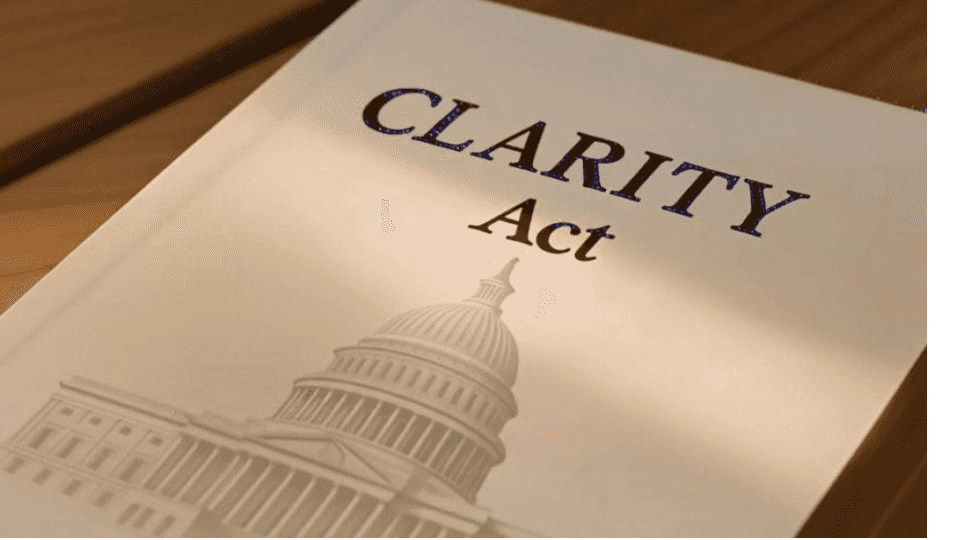
The US CLARITY Act, formally known as the Digital Asset Market Clarity Act of 2025, passed the House of Representatives in July 2025 with strong bipartisan support of 294-134. Yet months later in April 2026, the bill stalled in the Senate Banking Committee, leaving the crypto industry in a state of prolonged regulatory fog. Insiders point to clashes over stablecoin rewards, DeFi provisions, and a shrinking legislative calendar as the main culprits.
This deadlock shows deep tensions between traditional banking interests and the fast-moving digital asset sector, even as Treasury Secretary Scott Bessent and other officials urge swift passage to keep innovation rooted in the United States. The blockage of the CLARITY Act intensifies regulatory uncertainty for US crypto markets, exposing fractures between banks and digital asset firms while raising stakes for innovation, investment, and America's competitive edge in blockchain technology.
How the CLARITY Act Reached the Senate Brink
The bill, introduced by Rep. French Hill in May 2025, aims to create a clear federal framework distinguishing digital commodities under CFTC oversight from certain investment contract assets handled by the SEC. It includes a "mature blockchain test" to determine when tokens transition from potential securities to commodities, plus registration requirements for intermediaries and protections for non-custodial developers. House passage reflected broad recognition that years of enforcement actions left the industry operating in gray zones. The legislation moved to the Senate in September 2025, where negotiations in the Banking Committee initially built momentum into early 2026.
By January 2026, a scheduled markup session collapsed after Coinbase CEO Brian Armstrong publicly withdrew support over draft language on stablecoin yields. Banks had pushed provisions they viewed as protecting deposit models, while crypto firms argued that rewards programs drive adoption of products like USDC. This clash sent the bill into limbo, with subsequent attempts at compromise, including White House-brokered talks, failing to fully resolve differences before Easter recess. Recent reports from late April 2026 indicate the committee still grapples with unresolved questions on yield language, DeFi rules, and securing full Republican backing, pushing any markup potentially into May.
Stablecoin Yield Dispute That Paralyzed Progress
At the heart of the stall lies disagreement over whether stablecoin issuers and platforms can offer yield or rewards to holders. Banking groups lobbied hard against features they see as competing directly with traditional deposit interest, fearing erosion of their funding base for loans. Crypto leaders, including those at Coinbase and Stripe, countered that such programs fuel growth in dollar-pegged tokens used for payments and DeFi, citing USDC's revenue contributions exceeding $1.3 billion in a recent year tied partly to rewards. Multiple White House meetings, including one in February 2026, ended without agreement, while a March compromise attempt drew mixed reactions from both sides.
Senators like Thom Tillis and Angela Alsobrooks worked on tentative language allowing limited rewards for peer-to-peer use while restricting passive yield on idle balances. Yet even after an "agreement in principle" in March, pushback from industry players and banks kept the text contentious. As of mid-April 2026, this issue continues to block advancement, with critics warning that overly restrictive rules could push stablecoin activity offshore or toward Bitcoin as a simpler store of value. The dispute turned what many saw as a technical drafting matter into a proxy battle over the future shape of digital dollar infrastructure.
Inside the Four-Way Deadlock Gripping the Senate
Negotiations have evolved into a complex standoff involving crypto firms, traditional banks, Senate Democrats and Republicans, and administration voices. Each group holds leverage to slow or stop the bill. Banks maintain influence through relationships on the Banking Committee, emphasizing risks to the broader financial system. Crypto executives highlight innovation stifled by uncertainty, pointing to examples where US firms face compliance burdens not seen in more welcoming jurisdictions. Lawmakers balance these pressures while eyeing the November 2026 midterms, which compress the available floor time dramatically.
Senator Cynthia Lummis, a leading champion, warned in April 2026 that missing the current window could delay comprehensive digital asset legislation until 2030 or later. Her comments carry weight as she prepares to leave the Senate. Meanwhile, Senator Bernie Moreno stressed that the bill must reach the full Senate floor by the end of May or risk falling off the agenda entirely amid competing priorities like funding debates and nominations. Chairman Tim Scott has cited three core hurdles: stablecoin provisions, DeFi treatment, and unifying committee votes. These layers create a sequential bottleneck where resolving one issue immediately surfaces the next.
What the Blockage Means for Crypto Innovation on the Ground
Developers and founders describe the uncertainty as a drag on everyday operations. Without clear rules on when a token qualifies as a commodity versus a security, projects hesitate to launch features or expand services to US users. One blockchain entrepreneur in a recent interview shared how his team delayed a decentralized application update for months, fearing potential SEC scrutiny under existing enforcement precedents. Smaller startups face higher legal costs to navigate gray areas, while larger platforms like Coinbase allocate significant resources to lobbying and compliance instead of product building.
The stall also affects tokenized real-world assets and DeFi protocols that could bring trillions in efficiency gains to finance. Analysts note that prolonged limbo encourages talent and capital to migrate to regions with more predictable frameworks, even as the US holds advantages in talent pools and capital markets. Recent joint SEC-CFTC interpretive guidance offers some interim direction on jurisdiction, but industry participants view it as temporary at best without statutory backing from the CLARITY Act.
Market Reactions and Price Swings Tied to Bill News
Crypto prices have shown sensitivity to headlines around the CLARITY Act. Early 2026 rallies cooled when the January markup delay hit, with Bitcoin and Ethereum experiencing short-term dips amid broader risk-off sentiment. Prediction markets like Polymarket have fluctuated wildly, with odds of passage this year swinging from optimistic levels above 70% after March compromises down toward 45% or lower in pessimistic assessments by late April. Galaxy Research pegged the chances at roughly 50-50, cautioning that slippage past mid-May sharply reduces prospects.
Traders and funds monitor Senate signals closely. A successful markup could spark renewed optimism and inflows, while further delays might reinforce narratives of US regulatory hesitation. Stablecoin issuers watch yield language particularly carefully, as restrictions could reshape revenue models and user incentives across payment and lending protocols. These dynamics illustrate how legislative gridlock translates into tangible volatility and decision-making friction for market participants.
Voices from Capitol Hill on the Tight Timeline
Lawmakers on both sides express frustration with the pace. Pro-crypto senators argue the US cannot afford to cede ground in financial technology while competitors advance. Treasury Secretary Scott Bessent reiterated in April 2026 testimony the need for rules that anchor development domestically. White House crypto advisers have applied pressure behind the scenes, releasing reports addressing banking concerns over deposit competition. Yet competing agenda items, from international tensions to domestic funding standoffs, crowd the calendar and limit dedicated debate time.
Senator Lummis's public call on April 11 framed the moment as potentially the last realistic shot before midterms shift priorities. Other voices, including Senate aides, suggest a May markup remains possible if key language solidifies quickly. However, procedural realities mean even a committee advance requires subsequent floor time, which grows scarce as summer approaches. This compressed schedule forces negotiators to balance ambition with pragmatism, sometimes sacrificing preferred provisions to keep the bill alive.
Global Competition Heating Up Amid US Delay
While Washington debates, other countries push forward with their own frameworks. The European Union's MiCA rules provide operational certainty that attracts projects seeking predictable licensing. Asian and Middle Eastern hubs continue to court blockchain firms with tailored incentives. Industry observers note that extended US uncertainty could accelerate offshoring trends, particularly for stablecoin reserves, custody services, and trading infrastructure.
US-based companies still benefit from deep capital markets and technological leadership, yet repeated delays risk eroding that edge. Proponents of the CLARITY Act argue it would codify pathways for responsible innovation while maintaining strong safeguards, helping reclaim narrative control in the global race. Critics of inaction point to data showing crypto-related job growth and investment flowing more freely elsewhere when regulatory signals remain mixed.
DeFi Provisions and Developer Safe Harbors in Limbo
The bill's treatment of decentralized finance represents another flashpoint. Provisions aimed at shielding non-custodial software developers and validators from certain liabilities have drawn scrutiny. Some stakeholders worry that vague language could leave open avenues for future enforcement, while others push for broader protections to encourage open-source building. These details matter because DeFi TVL has grown significantly, powering lending, trading, and yield opportunities without traditional intermediaries.
Negotiators must weigh innovation incentives against potential systemic risks, a balance complicated by the bill's need to pass with enough support to survive floor amendments. Recent industry feedback sessions highlighted concerns that overly cautious DeFi rules might push activity into less transparent corners or overseas protocols. Resolving this piece could determine whether the final legislation truly fosters the decentralized ethos that defines much of crypto's appeal.
Impact on Token Projects and the Mature Blockchain Test
Central to the CLARITY framework is the mechanism for tokens to evolve from securities-like status during fundraising to commodities once networks achieve sufficient decentralization. The "mature blockchain test" sets parameters around ownership distribution, node operation, and functionality. Projects in the pipeline watch these criteria closely, as passage would provide a clearer roadmap for compliance and secondary market trading.
Without the bill, many tokens remain in legal gray zones, complicating listings, partnerships, and utility development. Founders describe iterative legal reviews that slow roadmaps and raise burn rates. Successful enactment could unlock capital formation channels while requiring disclosures during transition periods, striking a balance between investor protection and project growth. Current delays keep these projects in planning mode rather than execution.
Why Banks and Crypto Firms Remain at Odds
The core tension stems from business model differences. Banks rely on deposits as low-cost funding, while crypto platforms use incentives to bootstrap network effects and liquidity. Stablecoins, in particular, sit at the intersection as potential bridges between traditional finance and blockchain rails. Lobbying from the American Bankers Association emphasized safeguarding the deposit base, whereas crypto trade groups stressed that yield features enhance utility for payments and savings in volatile environments.
White House efforts to mediate, including economic analyses downplaying certain competitive threats, have not fully bridged the gap. This divide reflects larger questions about integrating new technologies into existing financial architecture without destabilizing trusted systems. Both sides claim to prioritize consumer protection and market integrity, yet interpretations differ sharply on implementation details.
Senate Banking Committee Dynamics and Vote Challenges
Inside the committee, securing unanimous or near-unanimous Republican support alongside sufficient Democratic buy-in proves tricky. Ethics provisions around lawmakers' crypto holdings and other ancillary issues add layers of complexity. Chairman Scott's public comments in April underscored the need to clear multiple hurdles simultaneously under time pressure. Past cancellations of markup sessions, including the high-profile January delay, serve as reminders of how quickly momentum can evaporate.
Aides and lobbyists describe backchannel discussions that continue daily, with drafts circulating and language tweaks tested against stakeholder reactions. The procedural path requires not just committee approval but coordination with the Senate Agriculture Committee for overlapping provisions, plus floor scheduling. These mechanics turn policy disagreements into logistical nightmares when the calendar tightens.
Potential Paths Forward or Prolonged Limbo
Optimists point to recent administration pressure and isolated compromise signals as reasons for hope. A May markup, followed by rapid floor action before summer, remains theoretically possible if negotiators lock in text soon. Treasury and White House statements reinforce the economic case for clarity. Prediction markets and analyst notes continue to shift with each rumor or leak from Capitol Hill.
Pessimists highlight the growing list of competing priorities and warn that post-May slippage likely pushes the issue past midterms, potentially into a new Congress with fresh uncertainties. Senator Lummis and others frame the current session as the critical window. Industry participants weigh scenarios ranging from a watered-down bill that still provides baseline certainty to outright delay that forces reliance on agency guidance and case-by-case enforcement.
Broader Implications for US Financial Leadership
The CLARITY Act blockage arrives at a moment when digital assets increasingly intersect with traditional markets through ETFs, tokenized securities, and institutional adoption. Prolonged uncertainty could slow integration efforts and dampen confidence among mainstream investors. Conversely, eventual passage would signal institutional embrace and potentially catalyze further product innovation.
Global observers track the US debate as a bellwether for regulatory philosophy. Success would bolster arguments that thoughtful legislation can coexist with rapid technological change. Failure or extended delay might reinforce perceptions of fragmentation, influencing how other nations calibrate their approaches. For now, the stalemate keeps the sector navigating without the comprehensive statute many have sought for years.
Investor Sentiment and Long-Term Industry Resilience
Retail and institutional investors alike monitor developments, adjusting portfolios based on perceived regulatory trajectories. Some view the delay as temporary noise in a multi-year maturation process, while others express impatience with Washington's pace. Resilience shows in continued building activity, with protocols advancing features and communities growing despite the fog.
Longer term, the industry's track record of innovation under uncertainty suggests it will adapt. Yet most participants prefer operating with clear rules that reduce legal risks and unlock institutional capital at scale. The human element remains key: founders who bet careers on blockchain, users seeking better financial tools, and policymakers balancing competing visions of economic progress.
FAQ
1. What exactly is the CLARITY Act trying to achieve in crypto regulation?
The Digital Asset Market Clarity Act seeks to establish clear jurisdictional lines between the SEC and CFTC for digital assets, introduce a test for when tokens become commodities rather than securities, set registration standards for market participants, and create safe harbors for certain decentralized activities. By providing this structure, supporters believe it would reduce reliance on enforcement actions and give businesses a predictable operating environment while incorporating investor protections.
2. Why has the stablecoin yield issue caused such a big problem for the bill?
Banks worry that rewards on stablecoins could pull deposits away from traditional accounts used to fund lending. Crypto firms counter that these incentives help grow useful payment and DeFi tools. The debate stalled multiple markup attempts because both sides see their position as core to their business models, making compromise language difficult to finalize without alienating key stakeholders.
3. How likely is the CLARITY Act to pass in 2026 according to recent analysis?
As of late April 2026, assessments range from roughly 50-50 odds in research notes to lower figures on some prediction platforms, with chances dropping if no markup occurs by mid-May. Factors include the legislative calendar, ability to unify votes, and resolution of remaining policy disputes. Lawmakers have warned that missing near-term windows could delay action for years.
4. What happens to crypto projects if the bill stays blocked?
Projects continue operating under existing guidance and case law, which often means higher legal costs, slower feature rollouts, and hesitation in US markets. Some teams explore workarounds or international options, while others maintain cautious roadmaps. Interim agency interpretations offer partial direction, but many view them as insufficient substitutes for comprehensive legislation.
5. How are everyday crypto users affected by this Senate delay?
Users may see platforms limit certain features or rewards in the US, face ongoing uncertainty around token classifications that affects trading and utility, and experience indirect impacts through market volatility tied to news. On the positive side, the debate itself raises awareness and could eventually lead to stronger consumer safeguards if resolved thoughtfully.
6. Where can I follow the latest updates on the CLARITY Act?
Track official sources like Congress.gov for bill status, statements from Senate Banking Committee members, and reputable outlets covering developments in real time. Industry analysts from firms like Galaxy and news sites frequently publish timing assessments and stakeholder reactions as negotiations evolve.