

Base MCP Launch: How to Use AI Agents for Onchain Swaps, Lending & Transfers on Base
2026/05/27 16:02:00
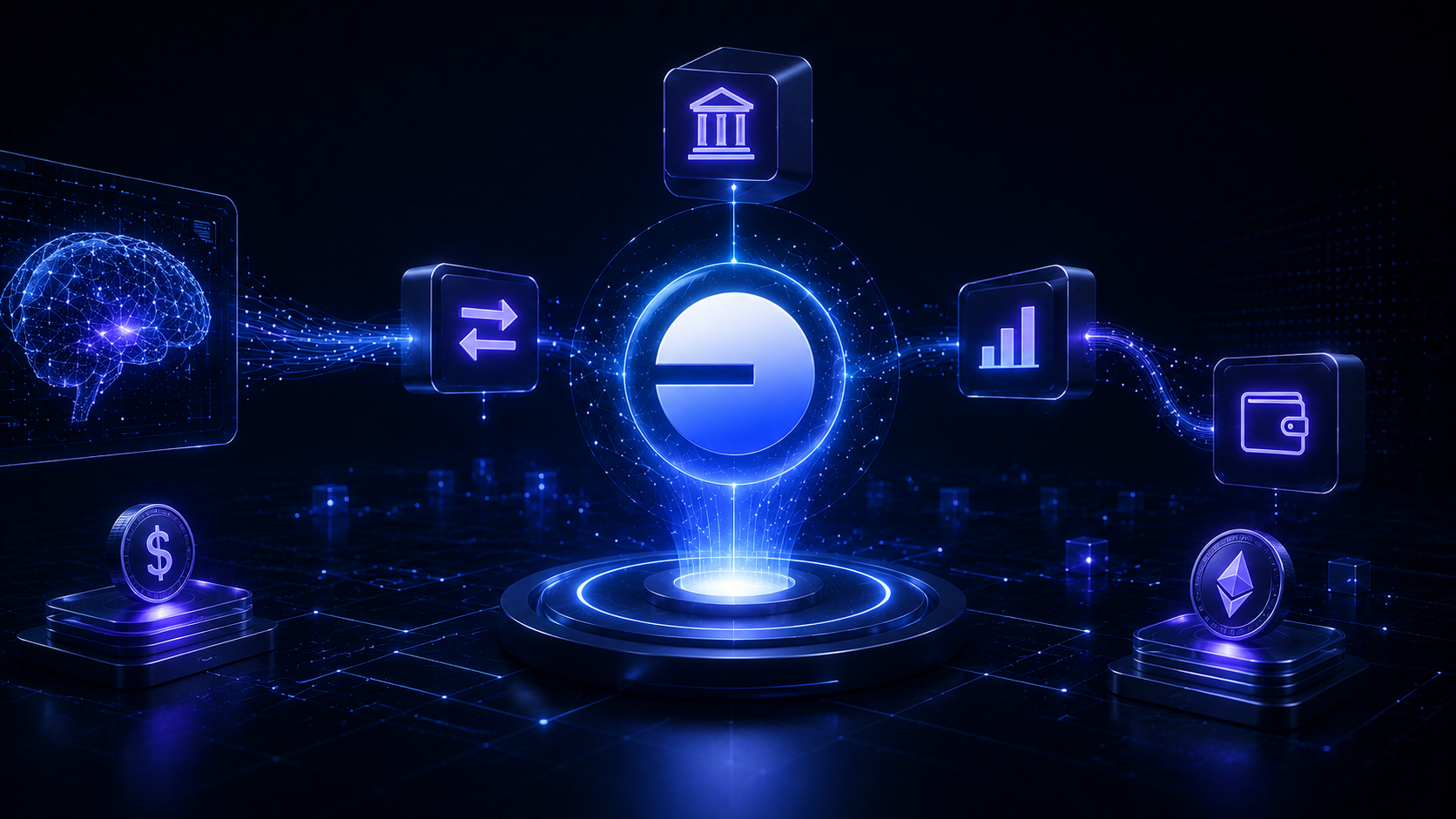
Base MCP works by connecting AI agents to onchain tools through the Model Context Protocol standard. That design lets users execute swaps, transfers, and portfolio actions on Base with human-approved wallet signing. Base MCP — how it works, what it changes, and where the risks lie — is the focus of the analysis below.
Key takeaways
-
Anthropic introduced the Model Context Protocol in November 2024 as an open standard for AI-to-tool connections.
-
Base MCP launched with support for Morpho, Moonwell, Aerodrome, Uniswap, and other Base ecosystem protocols.
-
Coinbase and Replit demonstrated Base MCP onchain actions in an April 2025 developer workshop.
-
Base MCP uses OAuth 2.1 authentication and does not store user private keys.
-
KyberSwap recommended simulation and user-controlled signing for AI agent swaps in May 2026.
-
GitHub described MCP as an open protocol for connecting LLM applications with external tools in March 2026.
What is base mcp?
base mcp defined: Base MCP is a protocol setup that lets AI agents execute blockchain actions on Base through standardized tool connections.
Base MCP is Coinbase’s MCP server framework that connects AI systems to blockchain tools on the Base layer 2 ecosystem. Anthropic introduced the Model Context Protocol in November 2024 as an open standard for secure, two-way communication between AI applications and external tools. Coinbase later applied that structure to onchain workflows, enabling AI agents to interact with wallets, decentralized finance protocols, and portfolio tools on Base.
Base is a layer 2 blockchain ecosystem where users can execute swaps, lending actions, perpetual trades, and transfers. Base MCP acts like a universal adapter between an AI model and onchain applications. Instead of manually opening multiple decentralized apps, users can issue commands through an MCP-compatible AI interface while maintaining transaction approval control.
The launch version of Base MCP integrated Morpho, Moonwell, Aerodrome, Bankr, Avantis, Virtuals, and Uniswap. Those integrations covered lending, token swaps, perpetual contracts, and portfolio tracking functions across decentralized finance workflows.
Base MCP relies on OAuth 2.1 authentication and wallet request links. The MCP server generates transaction requests, but user approval remains mandatory before any blockchain action executes. According to the retrieved research, the MCP server does not hold or access private keys.
Users tracking AI-related crypto infrastructure can also explore AI and blockchain markets on KuCoin.
History and market evolution
Base MCP emerged from the broader adoption of the Model Context Protocol and the rise of autonomous AI agent infrastructure. The protocol’s evolution reflects how AI systems moved from passive assistants toward active blockchain participants.
In November 2024, Anthropic introduced MCP as an open-source standard for connecting AI systems to tools and external data sources. That release established the technical foundation for AI agents capable of interacting with wallets, exchanges, browsers, and APIs.
► MCP launch date: November 2024 — Anthropic introduced the Model Context Protocol as an open standard.
In April 2025, Coinbase and Replit demonstrated Base MCP in a public workshop. The demo showed AI agents executing onchain actions using Coinbase API keys, OpenAI Agents SDK tooling, and blockchain wallet credentials. The workshop demonstrated that AI agents could fetch websites, interact with Base tools, and submit blockchain requests.
► Base MCP workshop: April 2025 — Coinbase and Replit demonstrated AI-driven onchain actions through Base MCP.
The MCP ecosystem expanded further in November 2025 when K2view described MCP servers as bridges between generative AI systems and enterprise tooling. That milestone reflected growing institutional interest in AI orchestration infrastructure.
In January 2026, Bitstamp published guidance describing crypto portfolio management functions such as asset allocation, monitoring, diversification, and rebalancing. Those functions aligned closely with the emerging use case for autonomous crypto agents managing wallets through MCP-connected systems.
In March 2026, GitHub documented MCP as an open protocol for linking LLM applications with external tools. The standardization effort helped position MCP as a common integration layer for AI-enabled crypto applications.
► MCP standardization milestone: March 2026 — GitHub documented MCP as an open protocol for AI-tool integration.
In May 2026, KyberSwap published security guidance recommending DEX aggregator APIs, simulation systems, and user-controlled signing for AI-driven swaps. That guidance highlighted the market’s growing focus on execution safety as autonomous onchain activity expanded.
Current analysis
Base MCP sits at the intersection of AI automation, decentralized finance infrastructure, and wallet security. Technology matters because it reduces friction between language models and blockchain execution environments.
Technical analysis
Base MCP adoption trends point toward higher AI-driven wallet activity on Base and related decentralized finance protocols. Based on KuCoin’s trading data for AI-related crypto sectors, market participants continue monitoring infrastructure projects connected to AI agents, wallet automation, and decentralized execution systems.
The Base ecosystem integration list includes Morpho, Moonwell, Aerodrome, Avantis, and Uniswap. Those protocols span lending, swaps, and perpetual trading, creating multiple execution routes for autonomous agents. The diversity of supported protocols suggests that Base MCP is designed for broad decentralized finance interoperability rather than a single-purpose workflow.
The April 2025 Coinbase and Replit workshop demonstrated that Base MCP could combine OpenAI Agents SDK tooling with blockchain execution systems. That technical architecture allowed agents to interact with websites, execute wallet actions, and coordinate decentralized finance tasks through one conversational interface.
Developers monitoring AI-token activity can follow KuCoin’s AI crypto market data.
Macro and fundamental drivers
The strongest macro driver behind Base MCP is the rapid adoption of AI-tool interoperability standards across crypto and enterprise software ecosystems. Anthropic, Coinbase, GitHub, and KyberSwap all contributed to the growing MCP infrastructure layer between November 2024 and May 2026.
► Security framework milestone: May 2026 — KyberSwap recommended simulation systems and user-controlled signing for AI-driven swaps.
The Coinbase layer 2 ecosystem benefits from higher automation because AI agents can increase transaction counts, rebalance portfolios, and route decentralized finance activity more efficiently. Autonomous execution systems may also increase demand for Base-compatible APIs, wallet infrastructure, and transaction relayers.
Security remains a central concern. The research showed that Base MCP demos still relied on private keys, seed phrases, and API credentials during development workflows. That dependency creates operational risk if wallet permissions or signing policies are poorly configured.
The broader AI-agent market also faces prompt-injection and permission-abuse risks. MCP systems expand the number of external tools available to AI models, increasing the attack surface for malicious instructions or unsafe transaction requests.
Comparison
Base MCP differs from traditional decentralized finance interfaces because it introduces conversational AI as the coordination layer between users and blockchain applications. Traditional DeFi workflows require manual navigation across wallets, exchanges, and dashboards, while Base MCP centralizes actions through AI-agent interfaces.
Anthropic’s Model Context Protocol standard provides interoperability between AI systems and external tools. By contrast, earlier blockchain automation methods relied heavily on isolated APIs or scripted bots with narrower functionality. Base MCP expands that architecture into a generalized AI-agent framework capable of portfolio monitoring, swaps, and transfers.
Coinbase and Replit demonstrated Base MCP using the OpenAI Agents SDK in April 2025, while KyberSwap focused on execution safeguards such as simulation and controlled signing in May 2026. Those developments suggest the market is balancing automation capabilities with transaction safety requirements.
Traditional portfolio bots typically operate on fixed logic rules. Base MCP-enabled agents can combine wallet actions with contextual reasoning through large language models. That flexibility increases automation potential but also introduces additional security considerations.
Readers comparing AI-driven DeFi systems can review KuCoin’s analysis of AI crypto narratives.
Participants who prioritize conversational automation and cross-protocol coordination may find Base MCP more suitable; those focused on minimal attack surfaces and simpler execution models may prefer traditional DeFi interfaces.
Future outlook
Base MCP’s future depends on whether AI agents can safely manage increasingly complex blockchain workflows at scale. The next phase of adoption will likely focus on security controls, wallet permissions, and standardized execution safeguards.
Bull case
The bullish case for Base MCP centers on expanding AI-agent adoption across decentralized finance applications by Q3 2026. Coinbase’s April 2025 workshop demonstrated functioning onchain AI execution, while GitHub’s March 2026 MCP documentation showed continued ecosystem standardization.
Base MCP also benefits from growing integration across the Base ecosystem, including Morpho, Moonwell, Aerodrome, Avantis, and Uniswap. Those integrations give AI agents access to lending, swapping, perpetual trading, and portfolio tracking workflows through a unified interface.
Another supportive factor is the emergence of execution safety guidance. KyberSwap’s May 2026 recommendations around simulation systems and user-controlled signing suggest the market is developing operational standards for autonomous blockchain agents.
Bear case
The bearish case centers on wallet security, execution quality, and AI permission management. The retrieved research showed that Base MCP development workflows used private keys, seed phrases, and API credentials, creating operational risk if access controls are compromised.
Prompt injection remains another identified risk mechanism. MCP systems connect language models to external tools, increasing the possibility that malicious prompts could manipulate wallet permissions or transaction requests.
Execution quality also remains uncertain. KyberSwap stated that AI agents should rely on simulation systems and controlled signing to reduce unsafe calldata and poor trade routing. If autonomous agents execute outdated or flawed strategies, portfolio losses could accelerate during volatile market conditions.
Conclusion
Base MCP represents a new stage in AI-enabled blockchain infrastructure where language models move beyond information retrieval into active onchain execution. Anthropic’s introduction of MCP in November 2024 created the technical foundation, while Coinbase and Replit demonstrated practical Base MCP workflows in April 2025.
The integration of Morpho, Moonwell, Aerodrome, Avantis, and Uniswap shows that AI-agent interoperability is expanding across decentralized finance applications. At the same time, the risks around wallet permissions, prompt injection, and execution quality remain significant. Base MCP reflects a broader trend toward autonomous crypto portfolio management and AI-assisted decentralized finance operations.
Readers tracking ecosystem developments can monitor KuCoin’s latest platform announcements.
Create a free KuCoin account to discover the next crypto gems and trade over 1,000 global digital assets today. Create Now!
FAQ
What is Base MCP used for?
Base MCP is used to connect AI agents with blockchain tools on the Base ecosystem. The framework enables conversational interfaces to execute swaps, transfers, lending actions, portfolio tracking, and decentralized finance interactions while requiring user approval before transactions are signed and broadcast onchain.
How does Base MCP execute onchain swaps?
Base MCP executes onchain swaps by connecting AI agents to decentralized finance protocols through the Model Context Protocol standard. The AI agent generates a transaction request, routes it through supported Base ecosystem integrations, and submits the request for user-controlled wallet signing before execution.
Is Base MCP secure for autonomous crypto portfolio management?
Base MCP includes security protections such as OAuth 2.1 authentication and user-confirmed signing, but operational risks still exist. The retrieved research identified private key handling, prompt injection risks, and unsafe calldata execution as important concerns for autonomous crypto portfolio management systems.
Which protocols are integrated with Base MCP?
The launch version of Base MCP integrated Morpho, Moonwell, Aerodrome, Bankr, Avantis, Virtuals, and Uniswap. Those protocols cover lending, token swaps, perpetual contracts, and portfolio management functions within the Coinbase Base layer 2 ecosystem.
Why does the Model Context Protocol matter to crypto?
The Model Context Protocol matters for crypto because it standardizes how AI systems interact with wallets, decentralized finance protocols, and blockchain tools. Anthropic introduced MCP in November 2024 to create secure two-way communication between AI applications and external systems, enabling broader AI-agent interoperability across crypto infrastructure.
Disclaimer: The information on this page may have been obtained from third parties and does not necessarily reflect the views or opinions of KuCoin. This content is provided for general informational purposes only, without any representation or warranty of any kind, nor shall it be construed as financial or investment advice. KuCoin shall not be liable for any errors or omissions, or for any outcomes resulting from the use of this information. Investments in digital assets can be risky. Please carefully evaluate the risks of a product and your risk tolerance based on your own financial circumstances. For more information, please refer to our Terms of Use and Risk Disclosure.