

15-Year Low in Gold-Silver Ratio: What Just Happened and Why Crypto Investors Should Care
2026/04/08 15:27:02
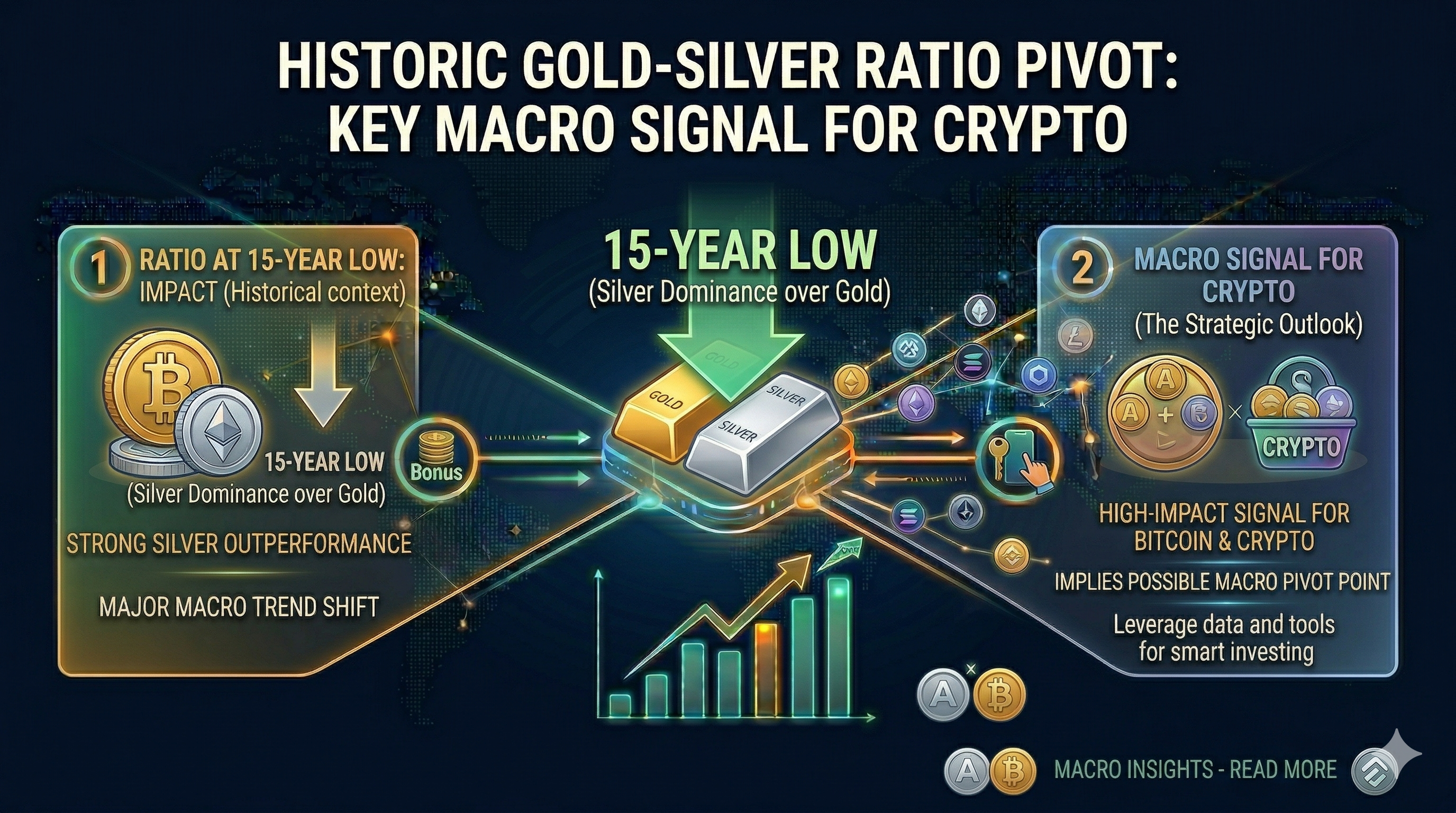
The global financial landscape is currently witnessing a tectonic shift that has caught the attention of macro economists and high-frequency traders alike. The Gold-Silver Ratio (GSR), a metric as old as modern finance itself, has plummeted to a 15-year low. For the uninitiated, this ratio simply tracks how many ounces of silver it takes to purchase a single ounce of gold. When the ratio falls, it signifies that silver is aggressively outperforming gold, often acting as a precursor to broader changes in market liquidity and investor risk appetite.
In the world of cryptocurrency, where assets are often labeled "Digital Gold" (Bitcoin) or "Digital Silver" (Litecoin/Ethereum), these traditional market movements are far from irrelevant. We are currently navigating an era where the lines between decentralized finance and legacy commodities are blurring. The collapse of the GSR in 2026 is not merely a "metals story"—it is a loud, ringing bell for global liquidity cycles. As silver takes the lead in the commodities market, it signals a transition from defensive posturing to aggressive capital allocation, a move that historically flows directly into the crypto ecosystem.
Key Takeaways
To help you navigate this complex macro shift, here are the essential points covered in this analysis:
-
The GSR Breakdown: The Gold-Silver Ratio has hit a 15-year low, driven by a massive surge in silver’s industrial demand—specifically in the green energy sector—and a rotation out of gold's defensive safety.
-
The Risk-On Signal: A falling ratio traditionally signals a "Risk-On" market sentiment. When investors move from gold to silver, they are signaling a higher tolerance for volatility and a search for growth.
-
Liquidity Correlation: Historical data suggests that periods of silver outperformance often precede significant "Altcoin Seasons" and parabolic Bitcoin moves due to the influx of speculative capital.
-
Digital Parallels: Bitcoin’s role as a store of value is being tested as it competes with gold, while the broader crypto market mimics the high-beta, high-reward characteristics of silver.
-
Portfolio Strategy: Investors should view the GSR low as a signal to reassess their stablecoin-to-risk-asset ratio, as these conditions often favor high-growth digital assets.
Decoding the 15-Year Low: What the Gold-Silver Ratio is Telling Us
The Gold-Silver Ratio is perhaps the most reliable barometer for identifying the "mood" of the global market. For the past decade, we have seen this ratio hover at historically elevated levels, often peaking above 80:1 or even 100:1 during times of extreme economic distress, such as the 2020 pandemic. A high ratio tells us that the world is scared; it means investors are hoarding gold to protect their wealth against systemic collapse.
However, the aggressive contraction we are seeing now represents a "mean reversion" of epic proportions. As the ratio drops toward the 50:1 or 40:1 range, it reveals a fundamental change in how capital is being deployed. Silver is a unique hybrid asset: it is half-monetary (a store of value) and half-industrial (a vital component in electronics). When the ratio falls, it tells us that the industrial engine of the world is revving up, and the "fear trade" that previously pumped gold is losing its grip. For a crypto investor, this is the first sign of a "Speculative Spring." It indicates that the "dumb money" and "smart money" alike are ready to move down the risk curve in search of higher returns.
The Macro "Vibe Shift": Why Silver is Outperforming Gold Right Now
The primary driver behind this 15-year low is the sheer demand-supply imbalance in the silver market, which has finally reached a breaking point in 2026. Unlike gold, which is mostly stored in vaults, silver is being consumed at an unprecedented rate. The global transition to renewable energy—specifically the massive expansion of solar photovoltaic capacity and the electrification of the transport sector—has turned silver into one of the most sought-after commodities on the planet.
Beyond industrial utility, we are seeing a massive "Vibe Shift" in macroeconomics. Central banks have spent years battling inflation with high interest rates, but as those rates stabilize or begin to tick down, the opportunity cost of holding non-yielding assets like silver decreases. Investors are realizing that while gold provides safety, silver provides "leverage" on the recovery. In the language of crypto, gold is the "Stablecoin" of the commodity world, while silver is the "Mid-Cap Gem." When silver starts running, it attracts the type of momentum traders who eventually find their way into the Bitcoin and Ethereum markets. This shift suggests that the market is no longer looking for a place to hide; it is looking for a place to win.
The Correlation: How Precious Metals Cycles Predict Crypto Bull Runs
One of the most fascinating aspects of modern finance is the "Lead-Lag" relationship between commodities and digital assets. While Bitcoin is often called a "new" asset class, it behaves remarkably like a high-velocity version of the precious metals market. Historically, we see a predictable rotation of capital. It usually begins with Gold (the first mover), which alerts the market to currency debasement. This is followed by a "Silver Squeeze," where speculative fervor enters the commodities space. Finally, that liquidity overflows into the cryptocurrency market.
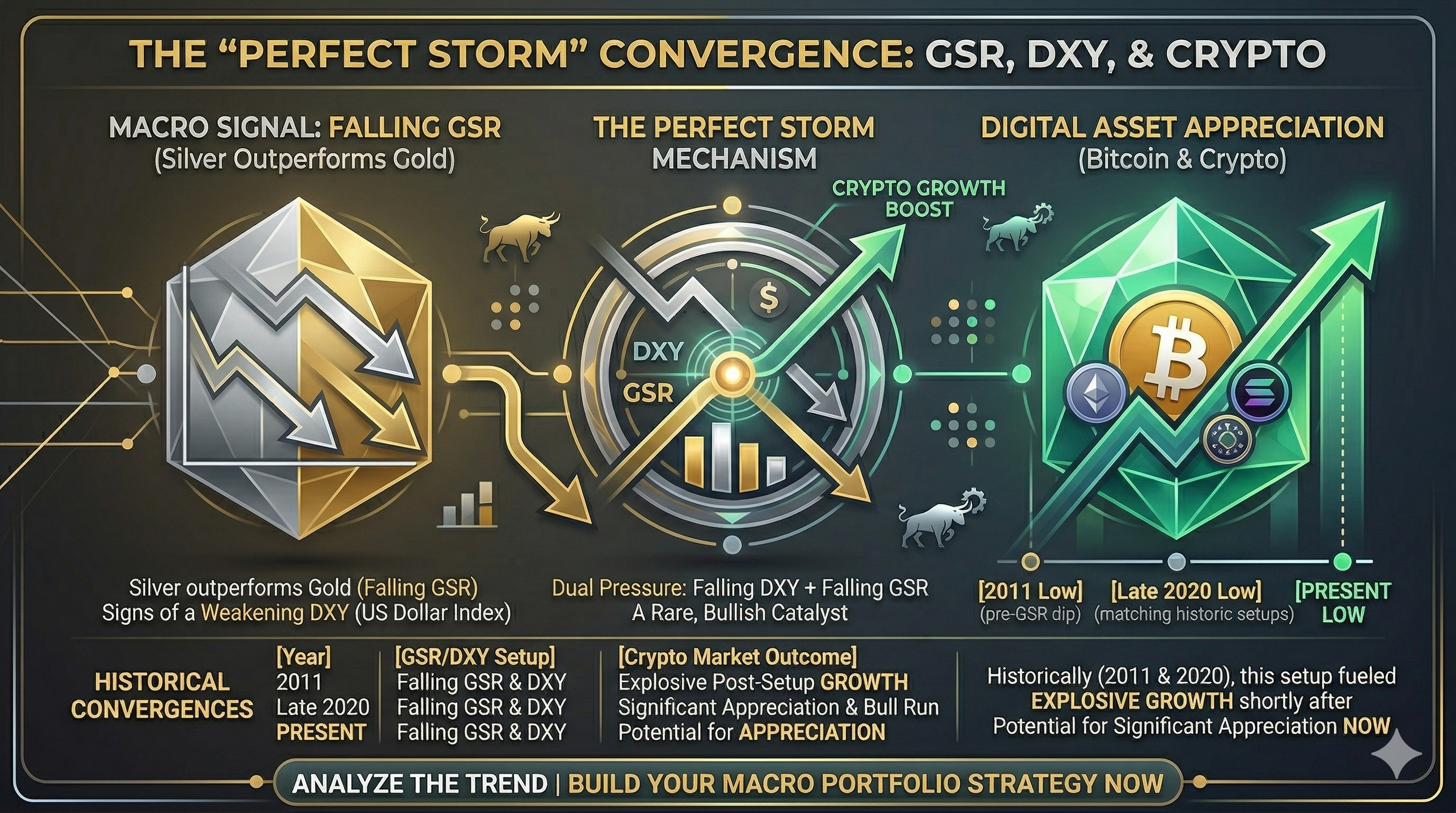
The reason crypto investors should care about a 15-year GSR low is that it represents the "Silver Phase" of the cycle. This is the stage where liquidity is becoming abundant and "cheap." When silver outperforms gold, it usually coincides with a weakening US Dollar Index (DXY). Since Bitcoin and most cryptocurrencies are priced against the dollar, a falling DXY acting in concert with a falling GSR creates a perfect storm for digital asset appreciation. We saw similar setups in 2011 and late 2020; in both instances, the crypto market (or its predecessor assets) experienced explosive growth shortly after. The GSR is essentially the "canary in the coal mine" for a crypto breakout.
"Digital Gold" vs. "Digital Silver": Is Bitcoin Following the Trend?
In 2026, the narrative of "Bitcoin as Digital Gold" has matured, but the 15-year low in the GSR adds a new layer of complexity to this comparison. While Bitcoin has traditionally been correlated with gold’s price movements, we are starting to see Bitcoin exhibit "Silver-like" volatility and growth characteristics. As gold becomes the "boring" asset for institutional giants, Bitcoin is capturing the speculative energy that used to belong exclusively to the silver market.
However, there is a distinct divergence occurring. While silver relies on physical industrial demand, Bitcoin relies on network effects and digital scarcity. The current GSR low suggests that the market is favoring "growth-heavy" stores of value over "static" ones. If gold is underperforming silver, it means the market is rejecting the "stagnant" hedge. This bodes exceptionally well for Bitcoin and Ethereum. If the market is hungry for silver’s volatility, it is only a matter of time before that hunger leads them to the 24/7 liquidity and 10x potential of the crypto markets. We are seeing a "re-rating" of risk, where Bitcoin is no longer viewed as a fringe experiment but as the ultimate "high-beta" version of the gold-silver trade.
Strategic Implications: How to Adjust Your Crypto Portfolio
When the Gold-Silver Ratio hits a multi-year low, it is time for crypto investors to move from a defensive "accumulation" phase to a "growth-oriented" allocation. A falling GSR is the hallmark of an Altcoin Season. During these periods, the market's appetite for risk is so high that Bitcoin’s dominance typically begins to fade in favor of Ethereum, Layer-1 alternatives (like Solana or Avalanche), and even high-conviction meme coins.
Tactically, this means looking at your portfolio's "beta." If you are holding 90% stablecoins or Bitcoin, you might be under-positioned for the liquidity wave that a low GSR predicts. Historically, when silver is the star of the show, the "wealth effect" created in the commodities market leads to an influx of capital into the DeFi (Decentralized Finance) and NFT sectors, as traders seek out even more exotic ways to multiply their gains. However, a 15-year low is also a "stretched" indicator. While it signals a massive bull run, it also suggests that the market is becoming "heated." Smart investors should use this signal to start positioning for a massive move, while keeping a close eye on the ratio for any signs of a sharp "bounce," which would signal that the Risk-On party is ending and it's time to rotate back to Bitcoin or USD.
Market Sentiment in 2026: From Protection to Participation
The psychological impact of a 15-year low in the GSR cannot be overstated. We are moving out of a period defined by "Fear of Loss" and into a period defined by "Fear of Missing Out" (FOMO). In 2026, the global retail investor is no longer content with the 2-5% annual gains of gold. They have seen the explosive power of silver and the institutional adoption of Bitcoin, and they are hungry for participation.
This shift in sentiment is the "fuel" for the next leg of the crypto cycle. When the GSR is low, it reflects a global consensus that the economy is expanding—or at least that the money supply is expanding fast enough to make "holding cash" a losing strategy. For crypto, which thrives on narrative and liquidity, this is the ideal environment. The silver rally acts as a "gateway drug" for traditional investors. Once a commodities trader realizes they can make 30% in silver in a month, they naturally begin to look at the Bitcoin charts where those same gains can happen in a week. The 15-year low in the GSR is the ultimate validation that the "Great Reflation" is here, and the digital asset market is the primary beneficiary of this new financial reality.
Conclusion
The 15-year low in the Gold-Silver Ratio is a rare, generational signal that marks a departure from the defensive macro strategies of the early 2020s. It tells us that silver is no longer just a "precious metal"—it is a critical industrial and speculative engine that is currently outrunning gold’s safety net. For the cryptocurrency community, this is a signal of the highest importance. It confirms that global liquidity is flowing, risk appetite is surging, and the "Risk-On" environment that fuels crypto bull runs is firmly in place.
While Bitcoin continues to solidify its role as "Digital Gold," the behavior of the GSR suggests that the broader market is currently looking for the "Digital Silver"—the high-performance, high-utility assets that offer more than just a place to hide. Whether you are a Bitcoin maximalist or a DeFi yield farmer, the message from the commodities market is clear: the era of stagnation is over. We are entering a phase of aggressive participation and wealth redistribution. By monitoring these legacy indicators like the GSR, crypto investors can gain a crucial edge, identifying the "vibe shifts" in global capital before they hit the headlines of the crypto press. The silver rally is the drumbeat; the crypto explosion is the song that follows.
FAQs
What exactly is the Gold-Silver Ratio and why does it matter?
The Gold-Silver Ratio is the price of gold divided by the price of silver. It tells you how many ounces of silver you need to buy one ounce of gold. It matters because it is a "sentiment indicator." A high ratio means investors are fearful and buying gold; a low ratio means they are optimistic and buying silver for its industrial and speculative potential.
How does a falling Gold-Silver Ratio impact Bitcoin's price?
Historically, a falling ratio (silver outperforming gold) coincides with increased global liquidity and a weaker US Dollar. Since Bitcoin is a "liquidity sponge," it tends to rise significantly when the GSR is falling, as investors have more "risk-on" capital to deploy into digital assets.
Is silver more like Bitcoin or Ethereum?
In the 2026 market, silver is often compared to Ethereum or high-performance Layer-1s. While gold (and Bitcoin) are primarily "stores of value," silver and Ethereum have massive "industrial" or "functional" utility. When the "utility" assets start outperforming the "store of value" assets, it usually signals the start of an Altcoin Season.
Does a 15-year low mean a market crash is coming?
Not necessarily. While a "stretched" ratio can indicate a market is overextended, a 15-year low in the GSR usually marks the middle-to-late stage of an economic expansion. It suggests that speculative energy is peaking, which can lead to massive gains in crypto before an eventual correction occurs.
How should I change my trading strategy based on this ratio?
When the GSR is at a 15-year low, it is generally a signal to be "Long Risk." This means favoring Altcoins and Bitcoin over Stablecoins. However, because the ratio is at an extreme, you should also be prepared for volatility and have an exit strategy if the ratio starts to climb rapidly again, which would signal a return to "Risk-Off" behavior.