

Development and Representative Projects of the Oracle Track
2026/04/07 11:26:32
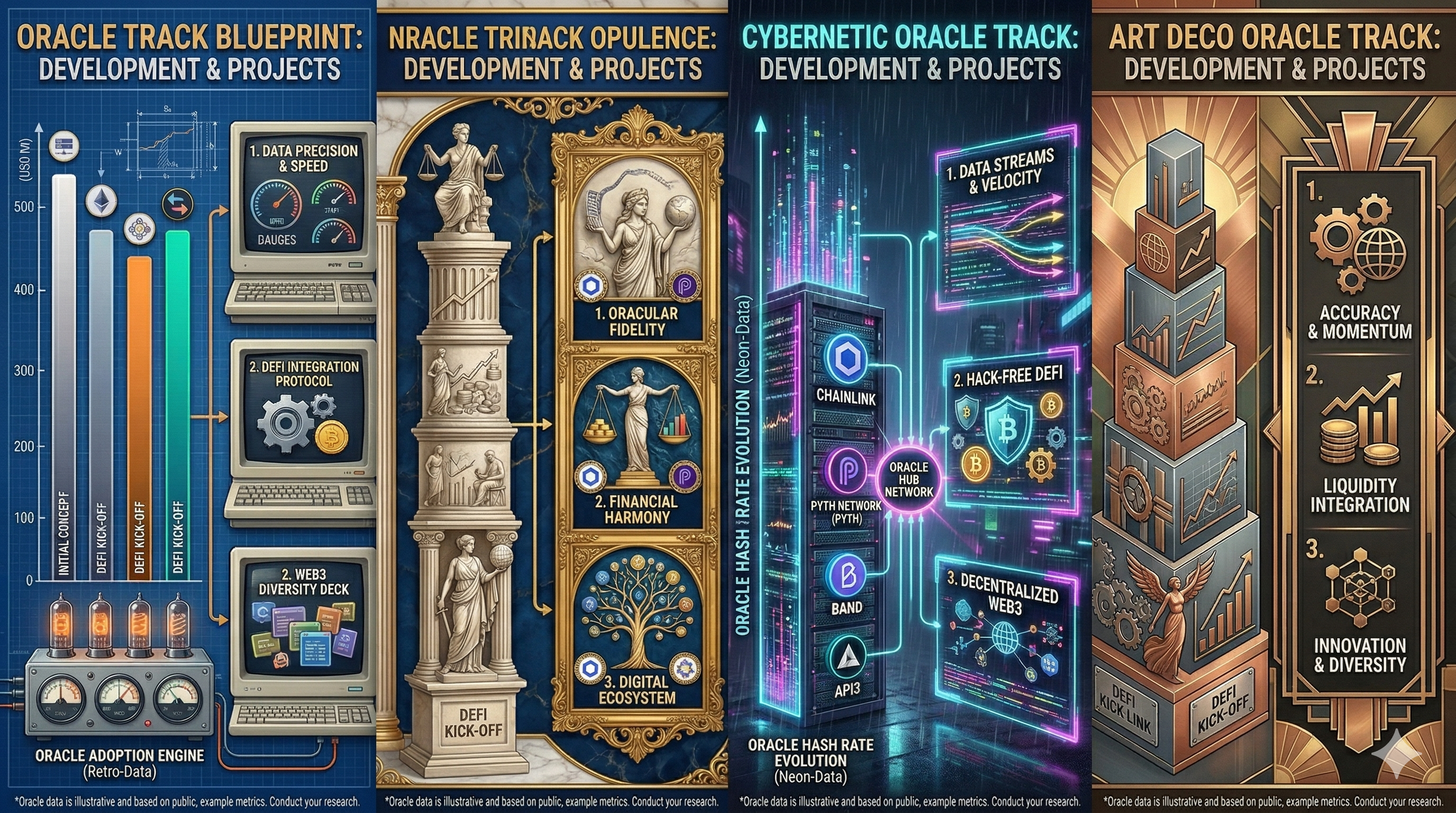
Blockchain oracles have emerged as a foundational layer in decentralized ecosystems, bridging the gap between on-chain logic and off-chain data. As smart contracts expand into finance, gaming, and real-world applications, oracle networks such as Chainlink and Pyth Network are redefining how data is sourced, verified, and delivered, transforming oracles from a technical necessity into a competitive and rapidly growing sector within Web3.
What is Oracle?
An oracle in blockchain is a system that connects smart contracts to real-world data, allowing decentralized applications to function beyond the limits of on-chain information. Blockchains are designed to be secure and self-contained, meaning they cannot directly access external data such as market prices, weather updates, or sports results. This limitation is known as the “oracle problem,” and it restricts how useful smart contracts can be on their own. Oracle networks solve this by acting as intermediaries that gather, verify, and deliver off-chain data to the blockchain in a reliable way.
For example, a decentralized finance (DeFi) lending platform needs accurate price feeds to determine collateral value and trigger liquidations. Without oracles, such platforms would not operate safely or efficiently. Modern oracle systems often use multiple data sources and validation methods to reduce the risk of manipulation or errors.
Some projects even allow data providers to supply information directly, improving accuracy and transparency. As blockchain technology expands into industries like finance, insurance, and gaming, oracles have become a critical piece of infrastructure, enabling smart contracts to interact with real-world events in a secure and automated manner.
The Oracle Problem: Why Blockchains Cannot Access Real-World Data
Blockchains are designed to operate as closed systems where every node must independently verify the same data to maintain consensus. This design ensures security and trustlessness, yet it creates a major limitation: blockchains cannot directly access external data. This limitation is widely known as the “oracle problem,” and it remains one of the most critical challenges in decentralized technology.
Smart contracts, which execute automatically based on predefined conditions, rely entirely on the data available on-chain. Without access to real-world inputs such as asset prices, weather data, or sports results, their functionality remains restricted. Oracle networks solve this issue by acting as intermediaries that fetch, verify, and deliver external data to blockchain environments. The importance of this role has grown alongside decentralized finance (DeFi), where accurate price feeds are essential for lending, derivatives, and trading protocols.
Research from the National Bureau of Economic Research highlights how reliable data inputs are crucial for maintaining financial stability in algorithmic systems. Without oracles, many of today’s most popular blockchain applications would simply not function. This makes the oracle layer not just a supporting component, but a core pillar of the entire Web3 infrastructure.
Early Oracle Designs and Their Structural Limitations
The earliest oracle solutions were relatively simple, often relying on a single data provider to supply external information to smart contracts. This model introduced significant risks, particularly around centralization and data manipulation. If the single source was compromised, the entire system could fail or produce incorrect outcomes. Early blockchain platforms experimented with basic oracle mechanisms, but these lacked the robustness required for financial applications.
A report by Ethereum Foundation outlines how centralized oracles contradict the decentralized ethos of blockchain technology, creating single points of failure. Developers soon realized that oracle systems needed to be decentralized themselves, distributing trust across multiple independent data providers. This realization led to the development of more sophisticated oracle architectures that aggregate data from multiple sources and apply consensus mechanisms to ensure accuracy.
These innovations marked a turning point, shifting the oracle narrative from a simple data bridge to a complex network of validators and economic incentives. The limitations of early designs ultimately shaped the modern oracle landscape, where decentralization, redundancy, and cryptographic verification are considered essential features rather than optional enhancements.
Chainlink’s Rise as the Dominant Oracle Network
Chainlink has become one of the most recognized names in the oracle sector, largely due to its early focus on decentralization and reliability. Launched in 2017, Chainlink introduced a network of independent node operators that retrieve data from multiple sources and aggregate it before delivering it on-chain. This approach reduces the risk of manipulation and ensures that no single entity controls the data flow.
Chainlink’s price feeds are now widely used across DeFi platforms, securing billions of dollars in value. According to Chainlink Labs, the network supports hundreds of integrations across multiple blockchains, including Ethereum and Polygon. Its success is also tied to its flexible architecture, which allows developers to customize oracle solutions for different use cases, from simple price feeds to complex data verification systems.
Chainlink’s partnerships with major institutions and enterprises have further strengthened its position, demonstrating that oracle networks can serve both decentralized and traditional systems. Its growth reflects a broader trend in Web3, where infrastructure projects play a critical role in enabling innovation across the ecosystem.
Pyth Network and the Shift Toward First-Party Data Sources
Pyth Network represents a different approach to oracle design, focusing on first-party data rather than aggregated third-party sources. Instead of relying on external aggregators, Pyth collects data directly from institutional providers such as trading firms and exchanges. This model aims to improve data accuracy and reduce latency, making it particularly suitable for high-frequency applications in DeFi.
According to documentation from Pyth Data Association, the network publishes real-time price feeds across multiple blockchains, including Solana and Ethereum. This direct sourcing approach has gained attention for its potential to deliver more precise and timely data compared to traditional oracle models.
The rise of Pyth shows an important move in the oracle ecosystem, where data quality and speed are becoming key differentiators. As decentralized applications continue to grow, the demand for high-performance oracle solutions is expected to increase, driving further innovation in this space.
Band Protocol and Cross-Chain Oracle Expansion
Band Protocol has carved out a niche by focusing on cross-chain compatibility and scalability. Built on the Cosmos ecosystem, Band Protocol enables data to be shared across multiple blockchains, addressing one of the key challenges in the Web3 space: interoperability. Its architecture allows developers to access reliable data without being tied to a single blockchain network.
This flexibility has made Band Protocol an attractive option for projects that operate across different ecosystems. According to Band Protocol Documentation, the network uses a delegated proof-of-stake model to secure data validation, ensuring both efficiency and decentralization.
The ability to operate across chains positions Band Protocol as a key player in the growing multichain environment. As blockchain ecosystems continue to expand, the need for seamless data sharing will become increasingly important, and cross-chain oracle solutions are likely to play a central role in enabling this connectivity.
API3 and the Emergence of First-Party Oracles
API3 introduces a concept known as first-party oracles, where data providers operate their own oracle nodes instead of relying on intermediaries. This model aims to improve transparency and reduce the risk of data manipulation by eliminating unnecessary layers in the data supply chain. API3’s approach is rooted in the idea that data providers themselves are best positioned to ensure accuracy and reliability.
The project’s whitepaper, available via API3 DAO, outlines how decentralized APIs (dAPIs) can deliver secure and verifiable data directly to smart contracts. This innovation represents a significant departure from traditional oracle models, emphasizing direct accountability and decentralization.
The emergence of first-party oracles reflects the broader evolution of the oracle sector, where new architectures are being developed to address the limitations of earlier designs. As competition intensifies, projects like API3 are pushing the boundaries of what oracle networks can achieve.
Real-World Use Cases Driving Oracle Adoption
Oracle networks are now deeply integrated into a wide range of blockchain applications, particularly in decentralized finance. Lending platforms rely on accurate price feeds to determine collateral values and trigger liquidations, while derivatives markets use oracles to settle contracts based on real-world outcomes.
Data from Chainlink Labs shows that oracle-secured value in DeFi has reached tens of billions of dollars, highlighting the scale of their impact. Beyond finance, oracles are also being used in gaming, insurance, and supply chain management.
For example, weather data can trigger automated insurance payouts, while sports results can determine outcomes in decentralized betting platforms. These applications demonstrate the versatility of oracle networks and their potential to transform multiple industries. As blockchain adoption continues to grow, the demand for reliable data inputs will only increase, further cementing the role of oracles as a critical component of the Web3 ecosystem.
The Competitive Ecosystem of Oracle Networks
The oracle sector has become increasingly competitive, with multiple projects offering different approaches to data delivery. Chainlink remains the dominant player, but newer entrants like Pyth and API3 are gaining traction by introducing innovative models. This competition is driving rapid innovation, as projects seek to differentiate themselves through performance, security, and usability.
According to analysis from Messari, the oracle market is expected to grow significantly as decentralized applications expand. Each project brings unique strengths, whether it is Chainlink’s extensive network, Pyth’s low-latency data, or API3’s first-party model. This diversity is beneficial for the ecosystem, as it encourages experimentation and reduces reliance on a single provider. The competitive dynamics of the oracle sector highlight its importance within the broader blockchain landscape and suggest that further advancements are likely in the coming years.
Security Challenges and Oracle Attacks
Oracle networks play an important role in securing blockchain applications, yet they are also potential targets for attacks. Manipulating oracle data can have significant financial consequences, particularly in DeFi protocols where large amounts of capital are at stake. Several incidents have demonstrated how vulnerabilities in oracle systems can be exploited, leading to substantial losses.
Analysis shows the importance of robust security measures in preventing such attacks. To mitigate these risks, oracle networks employ various strategies, including data aggregation, cryptographic verification, and economic incentives. These measures aim to ensure that data remains accurate and resistant to manipulation. Security remains a key focus for the oracle sector, as maintaining trust is essential for the continued growth of decentralized applications.
The Future of Oracle Technology in Web3
Oracle technology is evolving rapidly, driven by the increasing complexity of blockchain applications. Innovations such as zero-knowledge proofs and trusted execution environments are being explored to enhance data privacy and security. Research from Ethereum Foundation highlights ongoing efforts to improve oracle design and functionality. These advancements could enable new use cases, such as private data feeds and more sophisticated financial instruments.
The integration of artificial intelligence and machine learning may also play a role in improving data accuracy and prediction capabilities. As Web3 continues to expand, oracle networks are likely to become even more critical, serving as the backbone for a wide range of applications. Their evolution will shape the future of decentralized technology and influence how data is used across industries.
Conclusion
The oracle track has evolved from a technical necessity into a dynamic and competitive sector within the blockchain industry. Projects like Chainlink, Pyth, Band Protocol, and API3 demonstrate the diversity of approaches being taken to solve the oracle problem. Their development reflects the growing importance of reliable data in decentralized systems and highlights the potential for further innovation.
As blockchain applications become more sophisticated, the role of oracles will continue to expand. Their ability to bridge on-chain and off-chain worlds positions them as a critical component of the Web3 ecosystem. The future of oracle technology will likely be defined by advancements in security, scalability, and data quality, shaping the next generation of decentralized applications.
Frequently Asked Questions
-
What is a blockchain oracle?
A blockchain oracle is a system that provides external data to smart contracts, enabling them to interact with real-world information.
-
Why are oracles important in DeFi?
They supply accurate price data, which is essential for lending, trading, and derivatives.
-
Which oracle project is the most popular?
Chainlink is currently the most widely used oracle network.
-
What makes Pyth different from Chainlink?
Pyth focuses on first-party data sources, while Chainlink aggregates data from multiple providers.
-
Are oracle networks secure?
They use various security measures, but risks still exist, especially in poorly designed systems.
-
What is the future of oracle technology?
It will likely involve improved security, faster data delivery, and integration with advanced technologies like AI.
Disclaimer
This content is for informational purposes only and does not constitute investment advice. Cryptocurrency investments carry risk. Please do your own research (DYOR).