

Bitcoin Bullish Sentiment Supported by Cooling Inflation Expectations : Market Focuses on July CPI Data
2026/07/08 17:22:00
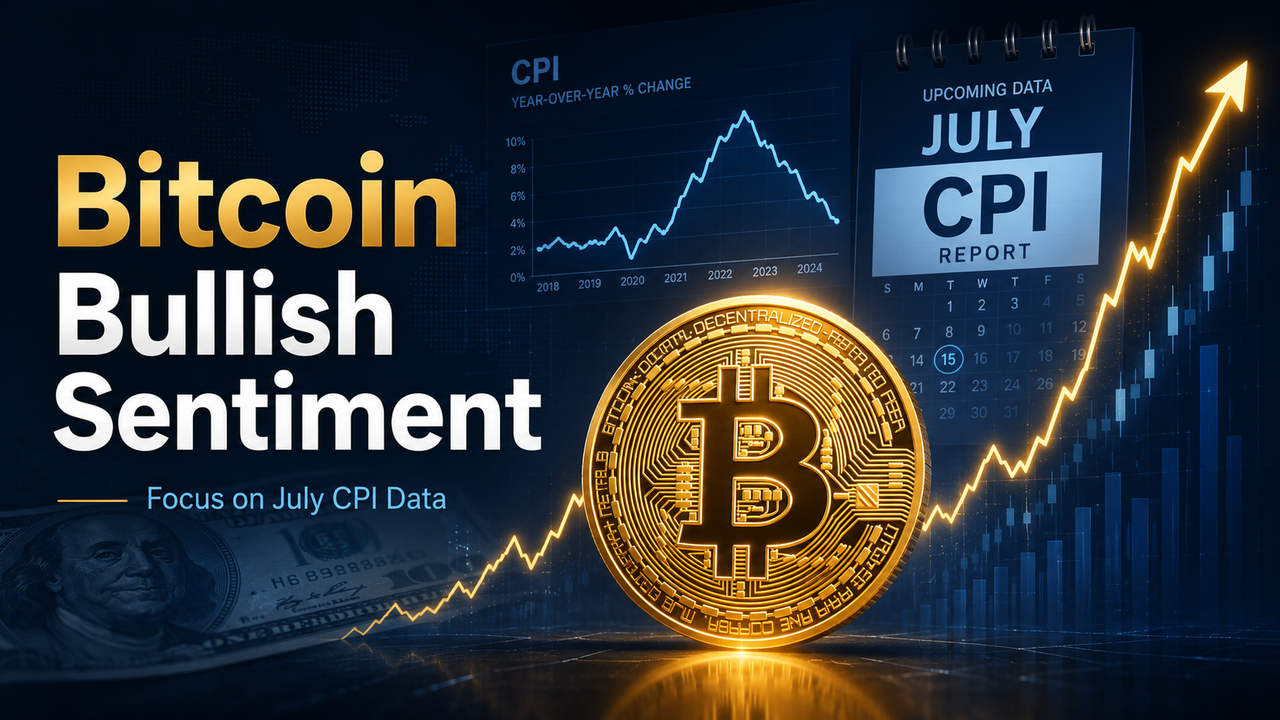
Bitcoin’s latest bullish sentiment is being shaped by a powerful macro question: is inflation pressure finally cooling enough to support risk assets again? After a difficult period marked by sticky prices, high interest rates, and shifting Federal Reserve expectations, traders are now paying close attention to market-based inflation signals, energy prices, the U.S. dollar, Treasury yields, real-time crypto market data, and the upcoming July CPI release. CoinDesk reported that Bitcoin rose nearly 7% in the week ending July 5, its strongest weekly performance since March, as inflation breakevens gave crypto bulls a more supportive signal.
This matters because Bitcoin is no longer traded only as a crypto-native asset. In 2026, BTC is deeply connected to global liquidity expectations, macro data, Bitcoin ETF flows, institutional positioning, and Federal Reserve policy. When inflation expectations cool, traders often become more confident that monetary conditions may not tighten further. That can support Bitcoin demand, especially when the dollar weakens or Treasury yields stabilize. However, the market still needs confirmation from official inflation data, which is why the June 2026 CPI report, scheduled for release on July 14, 2026, at 8:30 a.m. ET, has become one of the most important short-term catalysts for Bitcoin.
Why This CPI Setup Matters for Bitcoin
The current Bitcoin setup is important because the market is trading on expectations before the official data arrives. Traders are not only asking whether inflation is cooling; they are also asking whether the cooling is strong enough to change how the Federal Reserve thinks about interest rates. The Fed kept the target range for the federal funds rate at 3.50% to 3.75% at its June 2026 meeting, which means every major inflation report can still move expectations for the next policy decision.
At the same time, the inflation picture is not completely one-sided. Market-based inflation breakevens have become more supportive for Bitcoin, but consumer inflation expectations remain sticky. Reuters reported that U.S. consumers’ one-year inflation expectations rose to 3.7% in June, while three-year expectations increased to 3.3% and five-year expectations stayed at 3%. This mixed backdrop makes the July CPI report more important because it could either confirm Bitcoin’s bullish macro setup or force traders to rethink it.
How Cooling Inflation Expectations Are Strengthening Bitcoin Bullish Sentiment
Cooling inflation expectations are becoming one of the most important macro factors behind Bitcoin’s improving market sentiment. In recent months, Bitcoin traders have not only been watching crypto-native signals such as ETF flows, exchange liquidity, whale activity, and technical price levels, but also broader economic indicators that influence risk appetite. When inflation expectations start to cool, investors often become more confident that the Federal Reserve may not need to keep monetary policy as tight as before. This can create a more supportive environment for risk assets, including Bitcoin, Ethereum, crypto equities, and high-growth technology stocks. For Bitcoin, the bullish argument is that lower inflation pressure could reduce the risk of further rate hikes, weaken the U.S. dollar, stabilize Treasury yields, and encourage more capital to move back into speculative markets.
1. Lower Inflation Expectations Improve Risk Appetite for Bitcoin
Bitcoin usually performs better when investors believe liquidity conditions may become less restrictive. Higher inflation often forces central banks to keep interest rates elevated, which can reduce demand for risk assets because investors have more attractive returns in cash, bonds, or money-market products. However, when inflation expectations cool, the market may start pricing in a less aggressive Federal Reserve policy path. This does not mean rate cuts are guaranteed, but it can still improve sentiment because traders become less worried about another wave of monetary tightening. As a result, Bitcoin can attract more buying interest from investors who see BTC as a macro-sensitive asset that benefits when financial conditions become easier.
This connection between inflation expectations and Bitcoin sentiment is especially important because the crypto market is highly sensitive to changes in liquidity. When investors expect tighter policy, Bitcoin can face pressure from a stronger dollar and higher yields. When investors expect inflation to ease, the opposite can happen: the dollar may lose some strength, yields may stabilize, and traders may become more willing to take risk again. That is why cooling inflation expectations can strengthen the Bitcoin bullish narrative even before official policy changes happen. The market often moves based on expectations first, and confirmation comes later through economic data such as CPI, PCE inflation, wage growth, and Federal Reserve guidance.
2. Falling Energy Prices Help Reduce Headline Inflation Pressure
Falling energy prices are another reason traders are becoming more constructive on Bitcoin’s macro outlook. Energy costs, especially crude oil and gasoline prices, can quickly influence headline inflation because they affect transportation, logistics, production costs, and household expenses. When oil prices move lower, markets often expect future CPI readings to show less pressure from the energy component. This matters for Bitcoin because softer headline inflation can reduce the fear that the Federal Reserve will need to respond with more hawkish policy. Even if core inflation remains sticky, lower energy prices can still improve short-term market confidence and support risk assets.
For crypto traders, this creates a clearer macro chain reaction. Lower oil prices may reduce inflation pressure, lower inflation pressure may reduce rate-hike fears, and lower rate-hike fears may improve demand for Bitcoin. This is why Bitcoin’s recent bullish sentiment should not be viewed only as a technical rebound. It is also connected to how investors are interpreting the broader inflation cycle. If energy prices continue to cool and inflation expectations keep moving lower, Bitcoin could receive additional support from traders who believe the macro backdrop is becoming less hostile for crypto.
A few key macro signals are currently supporting the Bitcoin bullish narrative:
-
Lower inflation expectations: can reduce fear of aggressive Fed tightening.
-
Weaker energy prices: may help bring headline CPI pressure lower.
-
A softer U.S. dollar outlook: can make Bitcoin more attractive to risk-seeking traders.
-
Stable or lower Treasury yields: can improve appetite for speculative assets.
-
Improved liquidity expectations: can support broader crypto market momentum.
3. Bitcoin Bulls Are Watching Whether CPI Confirms the Cooling Inflation Story
The biggest question now is whether official inflation data will confirm the cooling-inflation story that markets are starting to price in. Bitcoin traders are focusing heavily on the next U.S. CPI report because CPI remains one of the most important data points for Federal Reserve expectations. If CPI comes in softer than expected, it could strengthen the idea that inflation pressure is easing and give the Fed more room to stay patient. In that scenario, Bitcoin could benefit from stronger risk appetite, a weaker dollar outlook, and renewed confidence that liquidity conditions may gradually improve.
However, the market reaction will depend not only on the headline CPI number but also on the details inside the report. Traders will watch core inflation, shelter costs, services inflation, food prices, and energy components to understand whether inflation is genuinely cooling or only improving because of temporary energy weakness. If the report shows broad-based cooling, Bitcoin bullish sentiment could become stronger. But if inflation remains sticky in key areas such as services or housing, the rally could lose momentum because traders may worry that the Fed will keep rates restrictive for longer. This is why the CPI report is not just another economic release; it is a major test for Bitcoin’s current bullish setup.
4. Sticky Consumer Inflation Expectations Remain a Key Risk
Even though market-based inflation expectations are cooling, the bullish Bitcoin outlook still has risks. One major concern is that consumer inflation expectations can remain sticky even when some market indicators improve. If households continue to expect higher prices, businesses may keep pricing power, workers may demand higher wages, and inflation could become harder to bring down. This would make the Federal Reserve more cautious and could limit the upside for Bitcoin and other risk assets. In other words, cooling inflation expectations are helpful, but they are not enough by themselves. The broader inflation picture still needs to show real improvement.
For Bitcoin, this creates a cautiously bullish environment. The market has a reason to become more optimistic, but the rally still depends on confirmation from upcoming data. If CPI shows that inflation is cooling in a sustainable way, Bitcoin could continue to attract buyers who are positioning for better macro conditions. If inflation data disappoints, the market could quickly shift back into defensive mode, especially if the dollar strengthens or Treasury yields rise again. This is why traders should view cooling inflation expectations as a supportive signal, not a guaranteed bullish trigger.
Overall, cooling inflation expectations are strengthening Bitcoin bullish sentiment because they improve the macro backdrop for crypto. Lower inflation pressure can reduce fear of aggressive Federal Reserve tightening, support liquidity expectations, weaken the dollar outlook, and make investors more comfortable taking risk. Still, Bitcoin’s next major move will likely depend on whether upcoming CPI data confirms that inflation is moving in the right direction. Until then, the bullish setup remains promising, but it also remains highly dependent on macro data.
Why July CPI Data Could Decide Bitcoin’s Next Major Market Move
The July CPI report is important for Bitcoin because it can turn market expectations into confirmed data. Traders already have a general idea that inflation pressure may be easing, but Bitcoin’s next major move will likely depend on whether the official numbers support that view or challenge it. The Bureau of Labor Statistics schedule shows that the June 2026 CPI report will be released on July 14, 2026, at 8:30 a.m. ET, making it one of the most important macro events for Bitcoin, the U.S. dollar, Treasury yields, and broader crypto market sentiment in mid-July.
1. CPI Can Quickly Reprice Federal Reserve Rate Expectations
The biggest reason CPI matters for Bitcoin is that it can change how traders price the Federal Reserve’s next move. The Fed kept the federal funds target range at 3.50% to 3.75% at its June 2026 meeting, which means markets are still watching inflation data closely to decide whether policy may stay unchanged or become more restrictive. If CPI is softer than expected, traders may become more confident that the Fed can remain patient. If CPI is hotter than expected, the market may quickly price in a higher chance of tighter policy later in the year. For Bitcoin, this matters because BTC is highly sensitive to liquidity expectations. When traders think the Fed may stay cautious rather than hawkish, risk appetite usually improves. But when inflation data pushes the market toward higher-rate expectations, Bitcoin can face selling pressure because investors may prefer safer yield-bearing assets. This is why the July CPI report could become a direct trigger for Bitcoin price movement, even though it is not a crypto-specific event.
2. The Market Will Look Beyond the Headline CPI Number
Bitcoin traders will not focus only on whether the headline CPI number is higher or lower than expected. The details inside the report may matter even more. If inflation cools mainly because energy prices fall, the market reaction may be positive but limited, because traders may question whether the improvement is temporary. If core inflation, services inflation, and shelter costs also show real cooling, the bullish reaction could be stronger because it would suggest a broader slowdown in price pressure.
This is where the July CPI data becomes more important than a simple “good number” or “bad number.” A soft headline reading with sticky core inflation may create a mixed Bitcoin reaction. A broad-based cooling trend could support a stronger rally. A hot core reading could hurt sentiment even if the headline number looks acceptable. In other words, the quality of the CPI report may decide whether Bitcoin’s next move is a real breakout attempt or only another short-term reaction.
3. Bitcoin Could React Through the Dollar and Treasury Yield Channel
Bitcoin’s reaction to CPI often comes through traditional markets first. If CPI is softer than expected, the U.S. dollar may weaken and Treasury yields may move lower, which can support risk assets. A weaker dollar can make Bitcoin more attractive to global investors, while lower yields can reduce the opportunity cost of holding non-yielding assets such as BTC. Traders often compare these macro reactions with the Bitcoin live price and market overview to judge whether BTC is moving with broader risk assets or showing independent strength. The opposite can also happen. If CPI surprises to the upside, the dollar may strengthen and Treasury yields may rise as traders prepare for a more restrictive Fed path. That type of move can pressure Bitcoin because it tightens financial conditions and reduces demand for speculative assets. New York Fed President John Williams recently said the policy path remains dependent on incoming data, which reinforces why CPI can have such a strong market impact.
4. CPI Surprise Risk Could Increase Short-Term Bitcoin Volatility
The July CPI report may also increase short-term Bitcoin volatility because many traders are likely to position before the release. When a major data event is approaching, leveraged traders often reduce exposure, hedge positions, or prepare for fast moves in both directions. This can make Bitcoin more unstable around the release time, especially if the actual CPI number is far from market expectations.
A few possible market reactions are worth watching:
-
Softer-than-expected CPI: Bitcoin may gain momentum as traders price in a less hawkish Fed path.
-
In-line CPI: Bitcoin may consolidate if the data does not change the current macro view.
-
Hotter-than-expected CPI: Bitcoin may face pressure from a stronger dollar, higher yields, and lower risk appetite.
This means the CPI report may not only decide direction, but also the strength of the next move. A small surprise may create a short reaction, while a large surprise could trigger a sharper breakout or pullback. The impact can be especially sharp in derivatives markets, where how crypto futures trading works becomes more important during high-volatility macro events.
5. Sticky Inflation Expectations Could Limit Bitcoin’s Upside
Even if the July CPI report is softer, Bitcoin bulls still need to watch inflation expectations. Reuters reported that U.S. consumers’ one-year inflation expectations rose to 3.7% in June, while three-year expectations increased to 3.3% and five-year expectations stayed at 3%. This shows that inflation concerns have not disappeared completely, even though some market signals have become more supportive. For Bitcoin, this creates a more complicated setup. A soft CPI report could support bullish sentiment, but sticky consumer inflation expectations may stop the market from becoming too aggressive. The Fed may still want more evidence before changing its policy tone, and that could limit how far Bitcoin can rally from one data point alone. Therefore, the July CPI report is important, but the market will also watch whether the next inflation releases confirm the same trend.
Overall, July CPI data could decide Bitcoin’s next major market move because it directly affects Fed expectations, the U.S. dollar, Treasury yields, and trader positioning. A softer report could support a stronger bullish move, while a hotter report could weaken momentum and bring back macro pressure. For now, Bitcoin’s setup remains highly data-dependent, and the July CPI release may become the key test for whether the current bullish sentiment has enough macro support to continue.
Conclusion
Bitcoin’s bullish sentiment is being supported by a more favorable inflation-expectations backdrop, but the market is still waiting for confirmation from official data. Cooling breakevens, lower energy pressure, and hopes for a less aggressive Federal Reserve path have helped improve crypto risk appetite. However, sticky consumer inflation expectations and the possibility of a hotter CPI print mean the rally is not risk-free. The July CPI report could become the key short-term test for Bitcoin. If the data confirms that inflation pressure is cooling more broadly, BTC may gain stronger macro support. If the report surprises to the upside, Bitcoin could face pressure from a stronger dollar, higher Treasury yields, and renewed concerns about restrictive monetary policy. For now, Bitcoin’s outlook remains cautiously bullish, but highly dependent on incoming inflation data.
FAQs
What is CPI, and why does it matter for Bitcoin?
CPI stands for Consumer Price Index. It measures the average change over time in prices paid by consumers for a basket of goods and services, making it one of the most watched inflation indicators in the U.S. economy. For Bitcoin, CPI matters because it can influence Federal Reserve policy expectations, the U.S. dollar, Treasury yields, and overall risk appetite. When CPI surprises the market, Bitcoin can react quickly because traders often adjust their views on liquidity and interest rates. The U.S. Bureau of Labor Statistics describes CPI as a measure of inflation experienced by consumers in everyday living expenses.
Is lower CPI always bullish for Bitcoin?
Lower CPI is often seen as supportive for Bitcoin, but it is not always automatically bullish. A softer inflation report can improve risk appetite if traders believe the Federal Reserve has less reason to tighten policy. However, Bitcoin’s reaction also depends on whether the market already expected the lower number, how the U.S. dollar responds, and whether core inflation is also cooling. If CPI is lower only because of temporary energy weakness while services inflation remains sticky, Bitcoin’s upside reaction may be limited.
What happens to Bitcoin if CPI comes in hotter than expected?
If CPI comes in hotter than expected, Bitcoin may face short-term pressure because traders could price in a more hawkish Federal Reserve path. A hotter CPI report can push Treasury yields higher, strengthen the U.S. dollar, and reduce demand for risk assets. That does not guarantee Bitcoin will fall, but it can make the market more defensive, especially if leverage is high or traders were positioned for a softer inflation print. Research from CoinGecko found that Bitcoin has shown strong reactions around past CPI announcements, although the size and direction depend on the inflation surprise and broader market setup.
Which CPI number matters most for Bitcoin traders?
Bitcoin traders usually watch three parts of the CPI report: headline CPI, core CPI, and the monthly change. Headline CPI includes food and energy, so it can move sharply when oil or gasoline prices change. Core CPI removes food and energy, making it useful for judging whether inflation pressure is more persistent. The monthly CPI number is also important because it gives traders a fresh view of near-term inflation momentum. For Bitcoin, a broad cooling across headline, core, shelter, and services inflation would usually be more supportive than a headline-only improvement.
Why do interest rates affect Bitcoin price?
Interest rates affect Bitcoin because they shape liquidity and investor behavior. When rates are high, investors can earn more from cash, bonds, or money-market instruments, which can reduce demand for speculative assets. When traders expect rates to stay stable or eventually move lower, risk appetite can improve. The Federal Reserve kept the federal funds target range at 3.50% to 3.75% in June 2026, so markets remain sensitive to inflation data that could influence future policy decisions.
Is Bitcoin really an inflation hedge?
Bitcoin is often described as an inflation hedge because its supply is limited, but in practice, its short-term price often behaves more like a risk asset. During periods of high inflation and aggressive monetary tightening, Bitcoin can fall if investors reduce exposure to speculative markets. S&P Global has noted that crypto’s track record is still too short to prove it as a reliable inflation hedge, while also noting that the dollar has generally had an inverse relationship with crypto prices.
Why do the U.S. dollar and Treasury yields matter after CPI?
The U.S. dollar and Treasury yields matter because they often show how traditional markets are interpreting CPI. If CPI is softer than expected, the dollar may weaken and yields may fall, which can support Bitcoin by improving risk appetite. If CPI is hotter than expected, the dollar may strengthen and yields may rise, making financial conditions tighter. Bitcoin traders watch these markets because BTC can react not only to the CPI number itself, but also to how bond and currency markets respond afterward.
What should Bitcoin traders watch after the July CPI report?
After the July CPI report, traders should watch Bitcoin’s price reaction, the U.S. Dollar Index, Treasury yields, Fed commentary, ETF flows, and whether BTC can hold important support levels. The first reaction after CPI can be volatile, but the more important signal is whether Bitcoin can sustain momentum after the market digests the data. If CPI supports a softer inflation trend and the dollar weakens, Bitcoin may have a stronger bullish setup. If inflation remains sticky and yields rise, BTC could struggle to extend its rally.
Disclaimer
The information provided on this page may originate from third-party sources and does not necessarily represent the views or opinions of KuCoin. This content is intended solely for general informational purposes and should not be considered financial, investment, or professional advice. KuCoin does not guarantee the accuracy, completeness, or reliability of the information, and is not responsible for any errors, omissions, or outcomes resulting from its use. Investing in digital assets carries inherent risks. Please carefully evaluate your risk tolerance and financial situation before making any investment decisions. For further details, please consult KuCoin’s Terms of Use and Risk Disclosure.