

Storj Files for Chapter 11 Bankruptcy: Operations Continue as Company Restructures Legacy Debt
2026/08/01 05:00:00
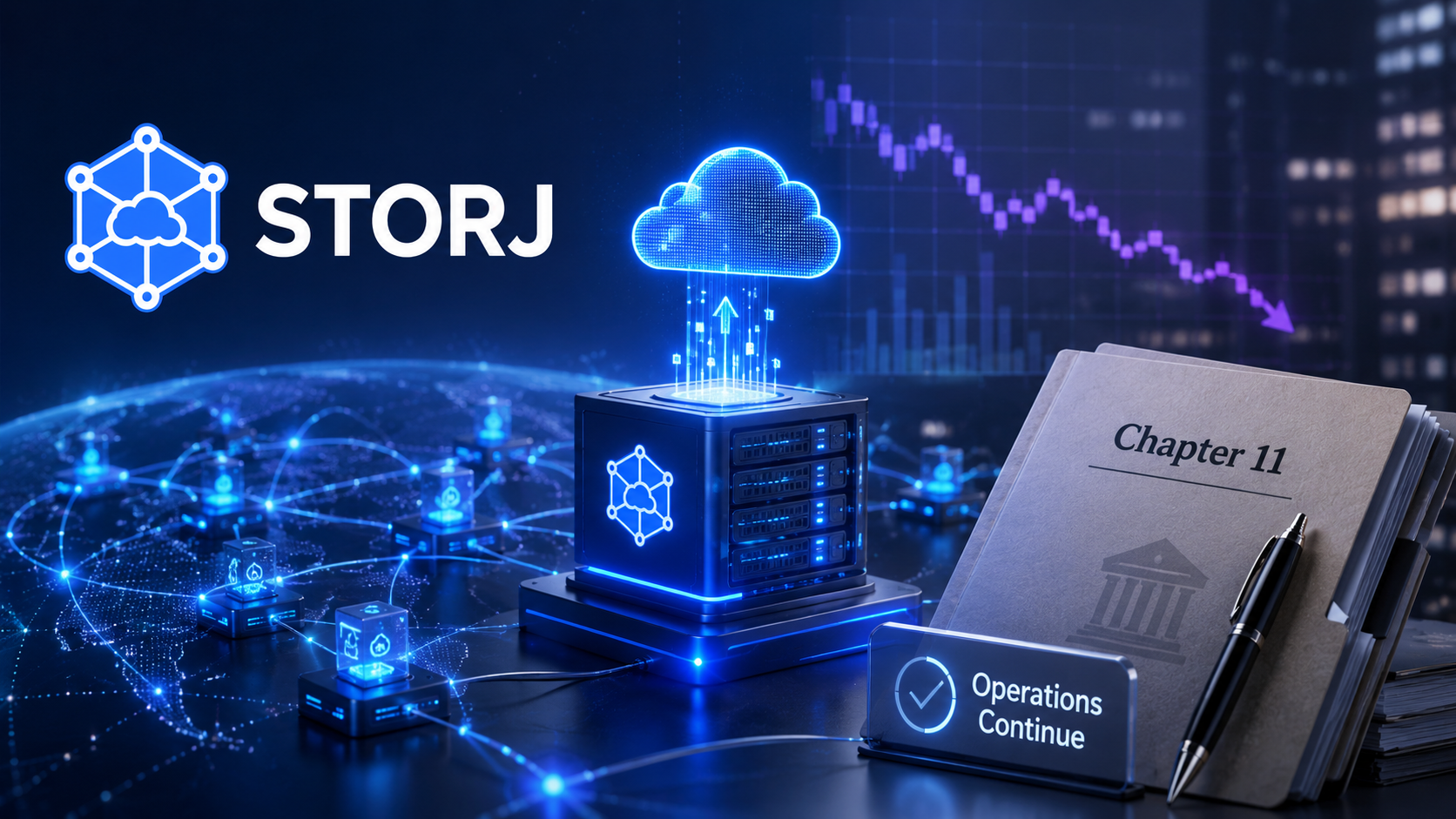
Storj files for Chapter 11 to restructure legacy debt while keeping cloud services online. See what it means for customers, STORJ holders and node operators. A bankruptcy filing often raises fears of an immediate shutdown, yet Storj’s cloud-storage network and customer services remained operational after the company entered Chapter 11. Storj says the court-supervised process is intended to separate legacy financial obligations from its continuing business, allowing the company to preserve customer access, maintain its distributed storage infrastructure and develop a more sustainable financial structure. Chapter 11 does not guarantee a successful recovery, but it gives Storj an opportunity to reorganize without automatically liquidating its core operations.
The most important questions now extend beyond whether the network is online today. Customers need to understand how Storj plans to maintain service availability, while STORJ token holders and storage node operators face separate uncertainties involving token utility, market value, proposed equity participation and pre-filing balances. The final outcome will depend on official court filings, creditor negotiations, asset sales and the terms of a court-approved reorganization plan.
Storj Files for Chapter 11 to Restructure Legacy Debt
According to Storj’s official Chapter 11 restructuring announcement, Storj Labs voluntarily filed for bankruptcy protection on July 26, 2026, in the U.S. Bankruptcy Court for the Northern District of West Virginia under case number 5:26-bk-00512. The decentralized cloud-storage company described the filing as a court-supervised financial restructuring intended to resolve legacy obligations while preserving its core business, customer relationships and network operations. According to Storj, these liabilities largely originated during an earlier phase of the company and predate its current operating strategy. Management maintains that the business has been adjusted to current market conditions, but the remaining obligations are too large to resolve through growth alone. Storj has not yet published a detailed breakdown showing how much debt is connected to acquisitions, vendor contracts, financing arrangements, operating expenses or other historical commitments. The company has also not identified its largest creditors or disclosed how much value may remain after higher-priority claims are addressed. These figures should become clearer when Storj submits more complete schedules of assets, liabilities, contracts and creditor claims to the bankruptcy court.
The Storj Chapter 11 restructuring does not mean the company is immediately liquidating or shutting down. Chapter 11 generally allows a business to continue operating while negotiating with creditors, obtaining financing, reorganizing debt and preparing a court-approved repayment plan. Storj also intends to sell previous acquisitions and nonessential operations so it can concentrate resources on its main decentralized cloud-storage business, although it has not confirmed which assets will be sold. The company previously acquired GPU-computing platform Valdi and PetaGene, the developer of cunoFS, before Inveniam Capital Partners announced its acquisition of Storj in October 2025. However, no official court filing has identified any of these businesses as a confirmed sale target or directly attributed Storj’s legacy debt to a specific acquisition. The success of the restructuring will depend on available liquidity, creditor negotiations, customer retention, asset-sale proceeds and approval of a workable reorganization plan. Until those details are filed, the bankruptcy should be understood as the beginning of Storj’s financial restructuring rather than a completed solution to its legacy liabilities.
How Storj Plans to Keep Operations and Customer Services Running
The following points explain how Storj plans to keep its storage network, customer services, node operations and support systems running throughout the restructuring. These measures are intended to preserve service continuity, although their success will depend on available liquidity and stable network participation.
Storj Cloud Storage Services Will Continue in the Ordinary Course
Storj says it intends to maintain its cloud-storage products, customer accounts, data access, billing systems and technical support throughout the restructuring. The company’s official service-status page showed all major systems operational after the announcement, with no incidents reported on the first two days of the process. This provides early evidence that the financial proceedings have not caused an immediate disruption to customers or the storage network. Storj has also said it does not anticipate service interruptions, although continued availability remains an expectation rather than a permanent guarantee. Maintaining stable performance will be important because any prolonged outage could weaken customer confidence, reduce recurring revenue and make the broader restructuring more difficult.
Distributed Storage Architecture Supports Data Availability
Storj does not store every customer file inside a single company-controlled data center. Files are encrypted, divided into smaller pieces and distributed across independently operated storage nodes in different locations, a model related to decentralized physical infrastructure networks and DePIN projects. This design reduces exposure to the failure of an individual server, storage provider or geographic region because customer data can be reconstructed from a subset of the distributed pieces. The network’s technical architecture may therefore provide greater resilience than a conventional platform that depends entirely on centralized hardware. However, the distributed storage layer still relies on Storj-operated satellite services for authentication, metadata coordination, billing, node selection, audits, repairs and payments. Keeping those coordinating systems operational will be essential for maintaining reliable uploads, downloads and customer-account functions.
Storj Plans to Maintain Storage Node Participation
Independent storage node operators provide the disk capacity and bandwidth that support the Storj network. Preserving their participation will require the company to continue processing new earnings and maintaining the technical systems responsible for audits, reputation scores and monthly payouts. Storj states in its financial restructuring FAQ that obligations created during the restructuring are expected to be paid in the ordinary course, subject to necessary approvals. Reliable payments will be important because node operators may reduce capacity or leave the network if compensation becomes uncertain. Storj must therefore balance financial restructuring with the need to retain enough active nodes to protect data availability, geographic distribution and network performance. Questions surrounding earnings generated before the restructuring remain separate and may be handled through the claims process.
Customer Support Billing and Contracts Are Expected to Remain Active
Storj plans to continue serving existing customers under its normal business procedures, including account management, storage usage, support requests and payment collection. No broad cancellation of customer subscriptions or service agreements has been announced. Keeping these relationships active should help preserve recurring revenue and demonstrate that the core storage business can remain commercially viable. Certain contracts may still be reviewed during the proceedings, particularly if they create unusually high costs or are connected to operations the company no longer considers essential. Customers should monitor official notices for any changes affecting pricing, service terms, support arrangements or contractual rights rather than relying on unverified reports circulating on social media.
Customers Should Continue Monitoring Service Performance
The absence of an immediate outage does not eliminate every operational risk. Storj will need sufficient liquidity, technical staff, infrastructure capacity and node participation to maintain services throughout the restructuring. Customers using Storj for important workloads should continue monitoring uptime, download performance, support response times and official company updates. Maintaining independent backups and tested data-recovery procedures is also a standard cloud-risk practice and does not necessarily indicate that customers should leave the platform. Storj services are currently running, but the long-term level of continuity will depend on the company’s ability to preserve its technical infrastructure and customer base while completing the financial reorganization.
What the Storj Bankruptcy Means for STORJ Token Holders and Node Operators
The Storj bankruptcy creates different risks for STORJ holders and storage node operators. Token holders face uncertainty surrounding market value, token utility and the proposed equity mechanism, while node operators need clarity about unpaid earnings and held balances. The following sections explain how Chapter 11 could affect both groups without assuming that any proposed outcome has already been approved.
What Chapter 11 Means for STORJ Token Holders
STORJ remains an ERC-20 utility token, and understanding how ERC-20 tokens operate on Ethereum helps distinguish token functionality from legal ownership in the company. Storj says STORJ’s current network utility has not changed. However, holding the token does not automatically give a person shares, voting rights or conventional ownership in Storj Labs. Token holders should also not assume they have the same bankruptcy priority as secured lenders, employees, suppliers or recognized creditors. STORJ can remain transferable on Ethereum while its market price responds negatively to uncertainty surrounding the company’s future strategy, network adoption and financial condition. Initial market data showed a decline of approximately 16 percent to 20 percent after the bankruptcy announcement, although the exact movement varied by platform and measurement period.
This uncertainty has also affected STORJ price and market performance as traders assess the relationship between the token and the reorganized company. Storj intends to propose a mechanism that could allow eligible token holders to participate in the ownership of the reorganized business, but the token-to-equity plan is not yet guaranteed or court approved. The company has not disclosed an eligibility date, wallet snapshot, conversion ratio, valuation, minimum token balance or the percentage of equity that may be offered. It is also unclear whether holders would need to exchange or lock their tokens and whether users holding STORJ through centralized platforms would qualify. Bankruptcy priorities, securities regulations, jurisdictional restrictions and tax rules must all be addressed before the proposal can become effective. Until formal terms are published, the equity plan should be treated as a possible restructuring feature rather than compensation promised to every STORJ holder.
How Storj Bankruptcy Could Affect Node Operator Payments
Storage node operators may face a separate issue involving earnings generated before the restructuring and amounts withheld under Storj’s node-payment model. Part of a new operator’s revenue is normally held during the first nine months, with the withholding percentage declining as the node remains active. A portion of the accumulated balance is later released, while the remainder is generally connected to completing a successful graceful exit. The legal treatment of pre-filing earnings and held amounts has not yet been established through a detailed company notice or court decision. It would therefore be premature to describe every outstanding balance as either fully protected or permanently lost.
Node operators should preserve dashboard records, payout histories, wallet addresses, satellite balances and graceful-exit receipts that could help establish when earnings were generated and how much remained unpaid. They should also monitor announcements concerning the bankruptcy claims agent, proof-of-claim procedures and submission deadlines. Starting a graceful exit is a separate technical decision and may not automatically improve an operator’s financial position, so actions should be based on verified instructions rather than rumors. The final treatment of node balances will depend on Storj’s contracts, court filings and the court-approved reorganization plan.
Conclusion
The Storj Chapter 11 bankruptcy represents an attempt to resolve legacy debt while protecting a cloud-storage business that continues to serve customers and depend on independent node operators. The network remained operational following the filing, but present availability does not remove the financial, contractual and operational risks associated with a court-supervised restructuring. Customers should monitor service performance and official notices while maintaining normal backup and recovery measures for important data.
For STORJ token holders and node operators, the most important details remain unresolved. The proposed token-to-equity mechanism has not been approved, and no final rules explain eligibility, valuation or conversion terms. The treatment of pre-filing node earnings and held balances also requires further clarification. Storj’s long-term position will ultimately depend on creditor negotiations, asset-sale proceeds, continued customer confidence and approval of a viable reorganization plan. Until those milestones are reached, stakeholders should distinguish confirmed court decisions from company intentions and unverified speculation.
🔥 Join KuCoin 9th Anniversary Trading CampaignKuCoin is celebrating its 9th anniversary with a special platform campaign filled with exclusive rewards, trading activities, and limited-time offers. Don’t miss the chance to participate and enjoy the benefits as the exchange marks nine years of growth and innovation. Visit the official campaign page now:
|
Frequently Asked Questions
Does the Storj bankruptcy automatically delete customer files?
No. Chapter 11 is a legal and financial process that does not automatically delete data stored on the Storj network. Continued access still depends on the network’s technical systems remaining available, so customers should maintain independent backups and test their recovery procedures for important workloads.
Should Storj customers move their data immediately?
An immediate migration is not automatically necessary while services remain stable. Customers should assess their own risk tolerance, contract requirements and dependence on Storj. Organizations managing critical data may consider testing an alternative provider or maintaining a second copy without disrupting their existing Storj account.
Can Storj sell or transfer customer data during bankruptcy?
Bankruptcy does not automatically convert customer files into assets that Storj can freely sell. Customer agreements, privacy obligations and applicable data-protection laws continue to matter. If ownership of the operating business changes, the treatment of customer information would depend on contract terms, court-approved transactions and legal safeguards.
Could Storj change its storage prices or service terms?
Storj could propose future changes to pricing or service terms, but no bankruptcy-specific price increase has been confirmed. Existing contracts may limit immediate changes for some customers. Users should monitor official billing notices and contract updates rather than assuming that restructuring will automatically make storage more expensive.
Can crypto exchanges delist STORJ because of the bankruptcy?
Yes, an exchange could independently review or delist STORJ, but Chapter 11 does not automatically require every platform to remove the token. Exchanges usually evaluate liquidity, network functionality, project communication, legal risk and user protection. No delisting should be treated as confirmed without an official announcement from the relevant platform.
Are STORJ tokens frozen during the Chapter 11 process?
No automatic on-chain freeze results from the corporate bankruptcy. STORJ remains an ERC-20 token that can continue moving between compatible Ethereum addresses. A custodial platform may separately suspend deposits, withdrawals or trading if it identifies operational or compliance concerns, so users should check platform-specific notices.
Disclaimer: This article is for informational purposes only and does not constitute financial, investment or legal advice. Cryptocurrency investments involve risk.