

Who Is Paul Atkins? The SEC Chairman Reshaping Crypto Regulation in 2026
2026/05/19 18:41:00
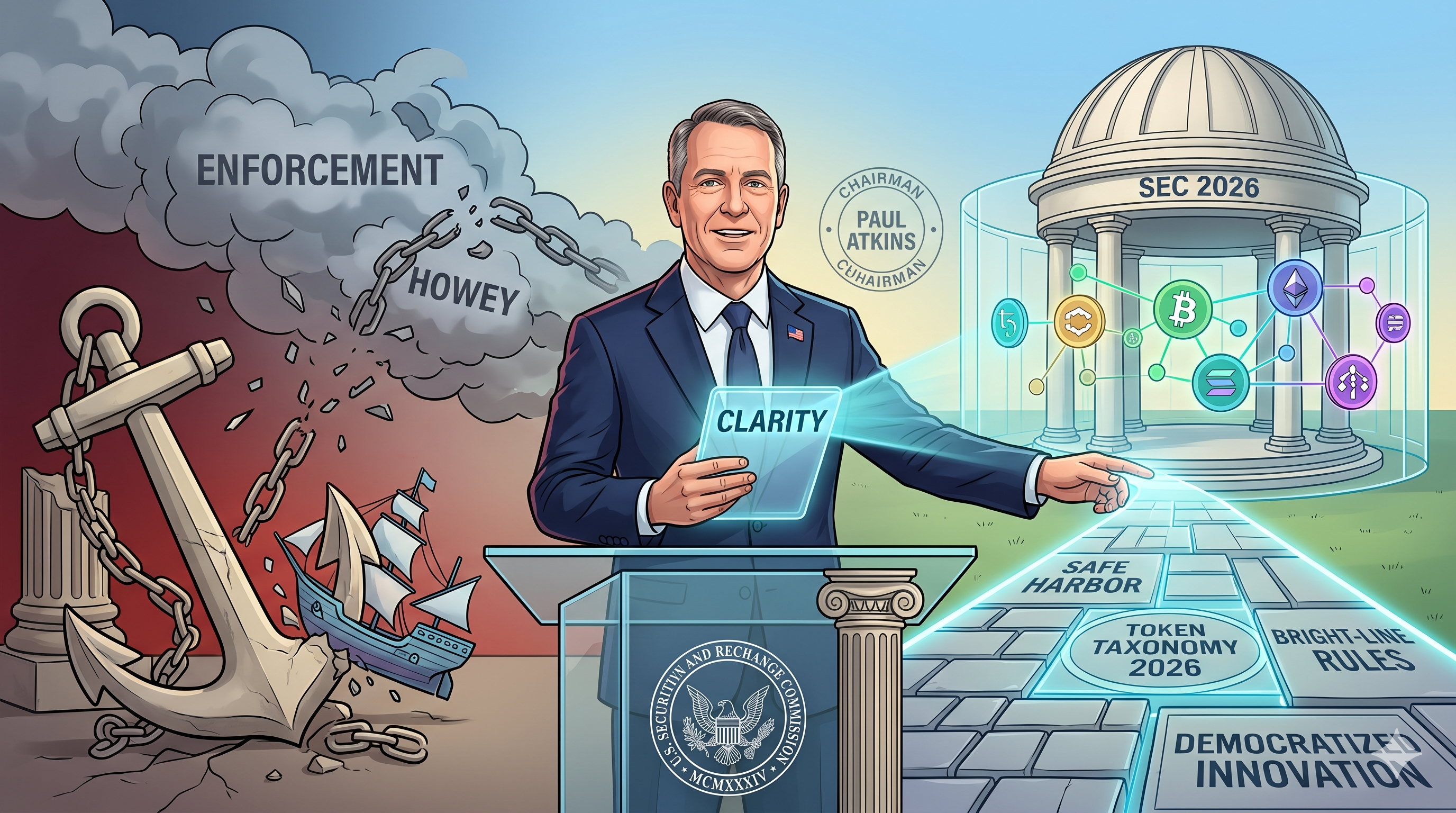
Paul Atkins is orchestrating a regulatory renaissance at the U.S. Securities and Exchange Commission (SEC), fundamentally rewriting the rules for cryptocurrency and digital assets in 2026. Following his appointment, Chairman Atkins has dismantled the agency’s prior adversarial stance, replacing it with a collaborative, innovation-first framework. For cryptocurrency traders, institutional investors, and blockchain developers, the last two months—spanning from mid-March to mid-May 2026—have delivered unprecedented clarity. Through historical interagency agreements, clear digital asset taxonomies, and breakthrough exemptions for tokenized equities, Atkins is actively positioning the United States as the global capital for onshore cryptocurrency development. This comprehensive analysis explores how Paul Atkins is reshaping the SEC, detailing the latest legislative milestones, market reactions, and what these sweeping regulatory shifts mean for the future of decentralized finance.
Key Takeaways
-
The A-C-T Framework Unveiled: In March 2026, Chairman Atkins officially replaced the era of "regulation by enforcement" with a new strategy focused on Advancing, Clarifying, and Transforming the market.
-
Historic SEC-CFTC Alignment: A landmark March 2026 Memorandum of Understanding (MOU) between the SEC and the CFTC established "Project Crypto," harmonizing federal oversight and creating a five-tier taxonomy for digital assets.
-
The May 18 Tokenized Stock Exemption: As of mid-May 2026, the SEC is rolling out an innovation exemption allowing crypto-native platforms to offer tokenized publicly traded stocks without full broker-dealer licensing.
-
Onshore Innovation Safe Harbors: Atkins has proposed a $75 million fundraising exemption and a bespoke regulatory sandbox, aiming to keep crypto talent and capital within the United States.
-
Rising Political Headwinds: The swift deregulation has sparked pushback, notably an April 2026 inquiry from Senators Elizabeth Warren and Chris Van Hollen regarding potential loopholes and market risks.
The Dawn of a "New Day": Paul Atkins and the 2026 SEC Mandate
Moving Away from Regulation by Enforcement
The SEC under Paul Atkins has decisively ended the controversial practice of "regulation by enforcement," substituting it with proactive guidance and clear regulatory guardrails. This ideological shift was most prominently articulated at the Practising Law Institute's SEC Speaks conference on March 19-20, 2026. Atkins heavily criticized the previous administration’s approach, declaring it a misguided campaign that systematically stifled domestic innovation and forced legitimate digital asset businesses into offshore jurisdictions. By establishing that the SEC’s primary objective must be to increase the cost of fraud and manipulation rather than the cost of basic compliance, Atkins has restored confidence among blockchain entrepreneurs. The immediate result has been a surge in onshore project development, as crypto entities no longer have to operate under the constant threat of unpredictable, post-facto litigation. Market participants are now provided with defined paths to compliance, ensuring that capital formation can occur securely within the United States.
The A-C-T Strategy: Advance, Clarify, Transform
The organizing principle of the Atkins-led SEC is the newly implemented A-C-T strategy, a tripartite framework designed to modernize capital markets. First, "Advance" involves updating SEC operations to align with the technological realities of 2026, ensuring that the agency's infrastructure can handle high-speed, blockchain-based market data. Second, "Clarify" focuses on delivering definitive, unambiguous guidance regarding how century-old securities laws apply to modern digital products. Third, "Transform" targets the elimination of outdated, redundant regulations that fail to provide meaningful investor protection. Atkins specifically emphasized that a rulebook crafted for a previous era cannot adequately serve modern investors trading in 24/7 decentralized ecosystems. By applying the A-C-T methodology, the SEC is systematically dismantling regulatory friction, enabling the safe integration of digital assets into mainstream financial portfolios while preserving the core tenets of market integrity.
Project Crypto and the Historic Interagency Alignment
The March 2026 SEC-CFTC Memorandum of Understanding
The fragmented oversight that historically plagued the U.S. cryptocurrency market was resolved on March 11, 2026, when SEC Chairman Paul Atkins and Commodity Futures Trading Commission (CFTC) Chairman Michael Selig signed a binding Memorandum of Understanding (MOU). This MOU formalized "Project Crypto," an ambitious interagency initiative to harmonize the regulation of digital assets. The agreement directly addresses the jurisdictional tug-of-war that previously confused investors and burdened market participants with duplicative compliance obligations. Under this new framework, the SEC and CFTC have established dedicated channels for information sharing, surveillance coordination, and joint rulemaking. The immediate impact of this MOU is the reduction of regulatory gridlock; companies developing novel financial products no longer need to navigate conflicting mandates from two separate federal watchdogs. This unified front signals to global markets that the United States has finally developed a cohesive, workable strategy for digital asset oversight.
Defining the Boundaries: The Five-Tier Crypto Taxonomy
The cornerstone of the SEC and CFTC's new collaborative era is the landmark Interpretive Release issued on March 17, 2026, which establishes a definitive "Crypto Taxonomy" for the market. This release fundamentally alters the application of the Howey test by categorically defining which digital assets are exempt from traditional securities laws.
Table 1: The 2026 SEC-CFTC Crypto Taxonomy Framework
| Asset Category | Regulatory Classification | Description | Market Impact |
| Digital Commodities | Non-Security (CFTC) | Decentralized, blockchain-native assets serving as base layer gas or store of value (e.g., Bitcoin). | Clears the path for expanded commodity derivatives. |
| Digital Collectibles | Non-Security | Non-fungible tokens (NFTs) representing unique art, gaming items, or specific digital property. | Reduces legal risks for NFT marketplaces and creators. |
| Digital Tools | Non-Security | Utility tokens providing access to decentralized platforms, memberships, or specific software events. | Empowers DAO ecosystems to function without SEC oversight. |
| Stablecoins | Conditional | Fiat-pegged tokens evaluated under the GENIUS Act; generally non-securities if backed 1:1 by reserves. | Accelerates the use of stablecoins for institutional settlement. |
| Digital Securities | Security (SEC) | Tokens representing ownership in a centralized enterprise, revenue sharing, or tokenized equities. | Brings traditional finance onchain with clear SEC guidelines. |
By explicitly stating that digital commodities, collectibles, and tools do not constitute securities, the SEC has provided a massive safe harbor for the decentralized finance (DeFi) sector. Furthermore, the taxonomy clarifies that an asset's status is not static; an investment contract can terminate once a blockchain network becomes sufficiently decentralized and the initial promises of managerial effort have been fulfilled.
The Tokenization Boom: Institutional Integration in Spring 2026
Approvals for Nasdaq and NYSE Tokenized Trading
The tokenization of traditional real-world assets (RWAs) reached an inflection point in March and April 2026, directly resulting from the Atkins administration's pro-innovation policies. The SEC officially approved rule changes allowing both Nasdaq and the New York Stock Exchange (NYSE) to facilitate the trading of tokenized equities and exchange-traded funds (ETFs). These approvals leverage the Depository Trust Company's (DTC) highly anticipated tokenization pilot program. As a result, institutional investors can now trade tokenized versions of blue-chip stocks alongside traditional shares using blockchain-based infrastructure. This integration brings the benefits of cryptographic settlement—such as near-instantaneous transaction finality, fractional ownership, and vastly reduced counterparty risk—into the heart of Wall Street. By keeping these initial approvals within the existing, highly regulated market structure, the SEC successfully proved that blockchain technology can enhance, rather than disrupt, traditional equity markets.
The Breakthrough May 2026 Tokenized Stock Innovation Exemption
Building on the momentum of the traditional exchange approvals, the SEC took its most radical step yet. As reported on May 18, 2026, Chairman Atkins is releasing a targeted Tokenized Stock Innovation Exemption. This regulatory breakthrough allows crypto-native platforms to offer tokenized versions of publicly traded companies without being forced to secure full, traditional broker-dealer or national exchange licenses. This exemption is designed to democratize access to U.S. equities, allowing retail investors interacting with decentralized protocols to gain exposure to traditional stock markets via onchain environments. The exemption includes necessary guardrails, such as strict exposure limits and robust disclosure requirements, to prevent market manipulation during its experimental phase. However, by lowering the barrier to entry for crypto exchanges, Atkins is effectively blurring the line between traditional brokerage accounts and digital asset wallets, setting the stage for a fully unified, global financial ecosystem.
Empowering Onshore Development: Exemptions and Safe Harbors
The $75 Million Fundraising Exemption Proposal
To reverse the trend of blockchain talent migrating to Europe and Asia, Chairman Atkins has championed bespoke pathways for capital formation within the United States. A critical component of this strategy, detailed during his March 17 address at the D.C. Blockchain Summit, is a proposed "fundraising exemption" specifically tailored for crypto-asset issuers. This safe harbor allows blockchain startups to raise up to $75 million in any 12-month period under a principles-based, streamlined disclosure regime. This initiative acknowledges that traditional initial public offering (IPO) requirements are financially prohibitive and structurally incompatible with decentralized, open-source software development. By implementing this exemption, the SEC ensures that retail investors still receive essential disclosures regarding project roadmaps and tokenomics, while founders are freed from the millions of dollars in legal fees historically required to launch a compliant network.
Reevaluating the Howey Test for Digital Assets
The application of the 1946 Supreme Court Howey test to 21st-century cryptographic networks has been a persistent point of friction in the crypto industry. In April 2026, during his fireside chat at the Bitcoin 2026 Conference, Atkins articulated a nuanced, modernized interpretation of this precedent. He stated that while economic reality must always trump structural labels, the SEC now formally recognizes the "investment contract safe harbor." This means that a token initially sold to fund the development of a network (and thus classified as a security) can transition into a non-security commodity once the network achieves functional decentralization. This evolutionary approach to the Howey test provides a vital off-ramp for developers. It ensures that projects that successfully build self-sustaining, community-governed protocols are not permanently burdened by centralized corporate reporting requirements, fostering a healthier, more dynamic lifecycle for digital assets.
Resistance in Washington: Pushback on the Pro-Crypto Agenda
Lawmaker Concerns and Cybersecurity Warnings
The aggressive pace at which Chairman Atkins is deregulating the digital asset space has not gone unchallenged. The most formidable resistance materialized on April 27, 2026, when Senators Elizabeth Warren and Chris Van Hollen submitted a formal inquiry condemning the SEC’s recent interpretive releases. The lawmakers argued that exempting broad swaths of the cryptocurrency market from traditional securities laws creates dangerous regulatory loopholes that malicious actors are eager to exploit. They specifically cited warnings from legacy financial institutions regarding the systemic cybersecurity risks introduced by integrating lightly regulated, smart-contract-based protocols with broader financial markets. The senators further alleged that the SEC's bespoke pathways and safe harbors unfairly benefit entrenched crypto insiders—and politically connected digital asset empires—at the direct expense of everyday retail investors who are losing the robust protections historically guaranteed by federal securities laws.
Balancing Innovation with Investor Protection
The growing political friction highlights the delicate balancing act the SEC must perform in 2026. While Atkins insists that rigid, outdated rules have actively harmed American competitiveness, critics maintain that the inherent volatility and anonymity of certain crypto markets necessitate stricter oversight. The SEC's response has been to emphasize its "principles-based" approach. By relying on mandatory disclosures, exposure caps within the new innovation exemptions, and strict anti-fraud enforcement mechanisms, the agency aims to thread the needle between fostering technological advancement and maintaining market integrity. Atkins has repeatedly countered his critics by noting that pushing crypto activities offshore does not protect American investors; it simply removes them from the SEC's jurisdictional safety net altogether. The ongoing debate in Washington ensures that while the regulatory environment is vastly more favorable than in previous years, the structural transformation of the market will remain under intense congressional scrutiny.
The Future Landscape: What the Atkins Era Means for the Crypto Market
Changes to SEC Examination and Enforcement Priorities
The philosophical shift at the top of the SEC has deeply influenced the agency's day-to-day operations, as evidenced by the 2026 Examination Priorities. Unlike previous years where "crypto assets" were heavily featured as a primary risk area demanding aggressive auditing, the 2026 priorities visibly omitted the sector from its high-risk enforcement targets. Instead, the newly updated SEC Enforcement Manual, revised in February 2026, reflects a pivot toward systemic market integrity, focusing resources on prosecuting outright fraud, market manipulation, and insider trading rather than technical registration failures.
Shift in SEC Strategy (Pre-Atkins vs. 2026 Atkins Era)
| Regulatory Aspect | Pre-Atkins Era | 2026 Atkins Era |
| Primary Method | Regulation by Enforcement | Proactive Guidance & Exemptions |
| Token Classification | Almost all tokens presumed securities | Five-tier taxonomy (many non-securities) |
| Market Integration | Heavy restrictions on traditional exchanges | Nasdaq/NYSE tokenized trading approved |
| Capital Formation | Strict traditional IPO paths required | $75M bespoke fundraising exemption |
This realignment indicates a more business-friendly approach. The Division of Enforcement is no longer penalizing companies acting in good faith to navigate the complex regulatory environment; rather, it is dedicating its resources to eliminating bad actors that tarnish the industry's reputation.
Fostering a Global Hub for Blockchain Innovation
Ultimately, Paul Atkins’ tenure as SEC Chairman in 2026 represents a critical turning point for the global financial system. By championing the Tokenized Stock Innovation Exemption, formalizing the SEC-CFTC MOU, and establishing clear taxonomies, Atkins has effectively reversed the U.S. capital flight that characterized the early 2020s. His policies recognize that blockchain technology offers superior mechanisms for capital formation, instant settlement, and financial inclusion. As the SEC continues to roll out its "innovation exemptions" and safe harbors throughout the remainder of 2026, the United States is rapidly consolidating its position as the premier destination for digital asset development. The framework currently being built ensures that the next generation of internet-native financial infrastructure will be designed, funded, and scaled under the banner of American regulatory clarity.
💡 Tips: New to crypto? KuCoin's Knowledge Base has everything you need to get started.
Conclusion
The appointment of Paul Atkins as SEC Chairman has catalyzed a profound transformation in cryptocurrency regulation in 2026. By systematically dismantling the adversarial "regulation by enforcement" approach, Atkins has fostered a new era defined by clarity, collaboration, and technological integration. The implementation of the A-C-T framework and the historic MOU with the CFTC have successfully harmonized federal oversight, providing the market with a much-needed, definitive five-tier crypto taxonomy. Furthermore, institutional milestones—such as the integration of tokenized trading on the Nasdaq and NYSE, alongside the breakthrough May 18 Tokenized Stock Innovation Exemption—demonstrate the SEC's commitment to modernizing U.S. capital markets. While these rapid deregulatory efforts have faced predictable pushback from cautious lawmakers, the overall trajectory is undeniable. Chairman Atkins has successfully pivoted the United States from a hostile regulatory environment to a proactive global hub for blockchain innovation. For investors and developers alike, the policies established in the spring of 2026 lay the durable groundwork for the next decade of decentralized financial growth.
FAQs
Are decentralized autonomous organizations (DAOs) registered entities under Atkins' 2026 policies?
No, DAOs generally do not require formal registration as corporate entities under the new framework. The March 2026 SEC-CFTC Interpretive Release classified "Digital Tools"—which encompass governance and utility tokens used strictly within DAO ecosystems—as non-securities. As long as the DAO operates in a sufficiently decentralized manner without a centralized managerial team driving profit expectations, it falls outside traditional SEC registration mandates.
How do international markets like the EU's MiCA compare to Atkins' 2026 SEC policies?
The European Union’s Markets in Crypto-Assets (MiCA) regulation relies on a highly prescriptive, heavily legislative rulebook that mandates strict licensing for all crypto service providers. In contrast, Atkins’ 2026 SEC policies favor a "principles-based" approach, utilizing safe harbors, innovation exemptions, and flexible interpretations of existing case law (like the Howey test). While MiCA provides rigid statutory certainty, the U.S. approach under Atkins is designed to be more adaptable to rapid technological shifts.
What is the SEC’s stance on central bank digital currencies (CBDCs) in 2026?
The SEC maintains that the issuance and management of a U.S. CBDC fall under the exclusive purview of the Federal Reserve and Congress, not the securities regulator. Chairman Atkins has publicly focused the SEC's resources on regulating private-sector digital assets, tokenized equities, and privately issued stablecoins, distancing the agency from the ongoing macroeconomic debates surrounding a sovereign digital dollar.
How will the SEC handle crypto-related bankruptcies under the new regime?
The SEC evaluates crypto bankruptcies primarily by examining how customer assets were custodied. Under the 2026 guidelines, if a platform properly segregated client funds in accordance with the new digital taxonomy definitions, those assets are protected from the company's creditors. The SEC's current focus is on enforcing strict pre-bankruptcy disclosures and exposure limits to prevent the systemic contagion seen in previous market cycles.
Has the IRS updated crypto tax reporting guidelines to match the SEC’s new token taxonomy?
Not entirely. While the SEC and CFTC have aligned their definitions regarding what constitutes a security versus a commodity, the Internal Revenue Service (IRS) continues to treat almost all digital assets uniformly as "property" for tax purposes. Capital gains taxes still apply to trades, regardless of whether the SEC classifies the traded asset as a digital commodity, a digital collectible, or a digital security.
Disclaimer: This article is for informational purposes only and does not constitute financial or investment advice. Cryptocurrency investments carry significant risk. Always conduct your own research before trading.