

Crypto Regulation Delayed Again: Why Markets Stay Optimistic
2026/05/01 17:40:05
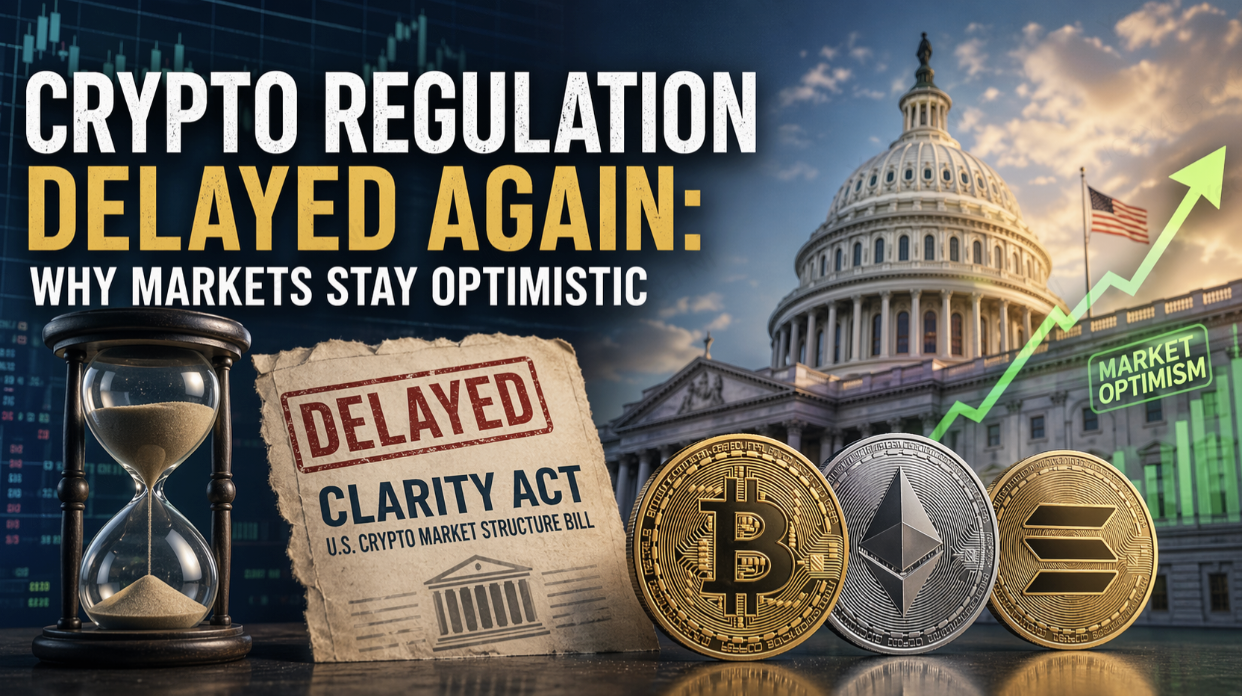
Crypto regulation is back in the spotlight after another delay in the U.S. legislative process, yet the market response has been far calmer than many expected. Instead of treating the setback as a sign of collapse, investors appear to be focusing on the bigger picture: regulatory discussions are still moving forward, institutional interest remains intact, and the long-term case for clearer market rules has not disappeared.
That is what makes this moment so important. The issue is no longer whether crypto will be regulated, but how that framework will eventually take shape. For a market that has spent years dealing with uncertainty around token classification, exchange oversight, and compliance boundaries, even slow progress can be enough to keep sentiment from turning sharply negative.
Hook
What happens when a major crypto bill gets delayed again, yet the market refuses to panic?
Overview
The cryptocurrency landscape in 2026 is being shaped by two forces at once: regulatory friction and growing confidence that clearer rules are still coming. The latest delay around the U.S. CLARITY Act has revived concerns about timing, but it has not erased the market’s broader optimism. Recent reporting shows lawmakers are still negotiating key issues such as stablecoin rewards, DeFi treatment, and oversight boundaries between regulators.
Thesis
This article explains why crypto regulation keeps getting delayed, why markets are staying relatively constructive anyway, and what that says about current crypto market momentum. By the end, readers will have a clearer view of the policy backdrop, the sentiment driving resilience, and the main risks still hanging over the sector.
What the Latest Delay in Crypto Regulation Means
The current delay centers on the CLARITY Act, a U.S. crypto market structure bill intended to define how digital assets are classified and which regulators would oversee different parts of the industry. The bill has been slowed by disagreements over stablecoin yield, DeFi oversight, and the limited time left on the Senate calendar.
This matters because regulatory uncertainty has long been one of crypto’s biggest structural weaknesses. Markets do not just react to price charts and macro signals. They also react to whether the rules of the game are becoming clearer. When the policy process stalls, it raises concerns. But when negotiations continue, even slowly, many investors see that as a sign that progress is delayed rather than abandoned.
That shift in perception helps explain why the latest delay has not caused a broader confidence breakdown. The market is increasingly treating regulatory friction as part of a complex legislative process, not necessarily as a threat to crypto’s long-term future.
Why Crypto Markets Stay Optimistic
Despite another delay in crypto regulation, market sentiment has not turned sharply negative. Investors are looking beyond the latest headline and focusing on the wider direction of policy, adoption, and market structure.
-
Investors Are Focusing on the Bigger Regulatory Picture
Crypto investors are no longer reacting to every delay as though it signals the end of progress. Many now see these setbacks as part of a slow and messy policy process. As long as lawmakers are still debating oversight, structure, and implementation, the market tends to interpret delays as temporary obstacles rather than proof that regulation is falling apart.
-
Markets Still Expect Eventual Regulatory Clarity
One of the strongest drivers of optimism is the belief that clearer rules will eventually arrive. Better definitions around digital assets, exchanges, and oversight could remove one of the biggest long-term barriers facing the sector. That expectation gives both traders and institutions a reason to stay constructive, even when the political process moves more slowly than expected.
-
Broader Risk Appetite Is Supporting Crypto Sentiment
Crypto does not move on regulation alone. Wider market conditions also matter. When investor appetite for risk improves, digital assets often benefit alongside tech stocks and other growth-sensitive assets. That broader support can cushion the effect of negative policy headlines and help preserve momentum even when regulatory developments are mixed.
-
Institutions Still See Long-Term Potential
Institutional interest remains another major source of resilience. Large firms continue to watch the sector closely because they see long-term potential in digital assets, blockchain infrastructure, and tokenized finance. For these players, a delayed bill does not necessarily change the broader opportunity, especially if the direction of regulation still appears to be moving toward a more defined framework.
-
Delays Look Temporary, Not Like a Policy Collapse
Markets usually become more negative when they believe progress has stopped entirely. That has not happened here. Investors still see active negotiations, public support from lawmakers, and continued debate over the structure of crypto regulation. That creates the impression that the process is delayed, not dead.
-
Clearer Rules Could Strengthen the Market
Many participants believe regulation could ultimately help crypto rather than hurt it. A clearer framework could improve trust, attract more institutional participation, and create a more stable environment for exchanges, issuers, and market participants. That long-term view helps explain why optimism has survived repeated setbacks.
How Regulation Delays Affect Market Sentiment and Trading
Regulatory delays usually create volatility because markets dislike uncertainty. That effect can be seen in both crypto assets and crypto-linked equities. When lawmakers postpone action, prices often dip in the short term as traders reassess risk and timing.
But recent market behavior shows something more nuanced. Pullbacks have been limited compared with the broader gains already seen across the sector. That suggests investors are not viewing every delay as a fundamental threat. Instead, many appear to be distinguishing between short-term policy friction and the longer-term direction of regulation.
This is especially important for current cryptocurrency trends. Markets are not just reacting to whether a committee vote happens this week or next. They are reacting to whether the U.S. still appears to be moving toward a workable legal framework. As long as negotiations continue and the policy path remains visible, confidence can hold up even when the timetable slips.
Challenges and Considerations
The optimistic case has real limits, and those risks should not be ignored.
-
Timing remains a major risk. The legislative window is getting tighter, and every delay increases pressure on the Senate calendar. If the process drags on too long, the chances of meaningful action this session could weaken.
-
The politics are still complicated. This delay is not tied to one single issue. Friction points include stablecoin yield restrictions, DeFi oversight, bank lobbying, and broader partisan disagreements. That makes compromise harder and slows momentum.
-
Markets can change their interpretation quickly. Right now, many investors still see the delay as part of a messy but ongoing negotiation. But sentiment could weaken quickly if repeated postponements start to look like evidence that consensus is breaking down.
-
Headlines alone do not tell the full story. A delayed vote does not automatically mean the process has failed. What matters more is whether lawmakers are still narrowing differences and working through the core issues behind the scenes.
-
Confidence depends on visible progress. As long as negotiations continue, markets may stay patient. If signs of progress become less clear, uncertainty could weigh more heavily on prices and crypto-related stocks.
-
Substance matters more than timing. The key issue is not whether a vote is pushed back by a few days or weeks, but whether the main points of disagreement are getting resolved. That is what will determine whether the optimistic case remains intact.
How This Delay Compares With Past Crypto Policy Setbacks
This latest delay in crypto regulation feels different from earlier policy setbacks because the conversation around digital assets has become more advanced. In previous years, every setback raised bigger doubts about whether the United States would ever create a workable crypto regulatory framework. Now, the debate is more focused. Lawmakers are no longer arguing about whether crypto should be regulated at all. They are debating how crypto market structure should work, how stablecoins should be treated, and which agencies should have oversight.
That difference matters for market sentiment. Earlier crypto policy setbacks often created stronger fear because they suggested confusion, regulatory conflict, or a lack of direction. The current delay still adds uncertainty, but it does not carry the same sense of total disorder. Investors are seeing a slower process, not a total collapse in policy momentum.
Here are the key ways this delay differs from past crypto policy setbacks:
-
The debate is more mature:The focus has shifted from basic legitimacy to the details of crypto regulation, including stablecoin rules, DeFi oversight, and market structure.
-
Institutional interest is stronger: Large firms are more involved in digital assets than they were during earlier regulatory setbacks, which helps support confidence.
-
The market sees delay, not defeat: Many investors still believe regulatory clarity is coming, even if the timeline keeps slipping.
-
The policy direction is clearer: In past years, the lack of coordination created confusion. Today, the market can at least see the shape of the discussion.
-
Crypto adoption is further along:The industry is no longer fighting only for relevance. It is now being discussed as part of a broader financial framework.
Another major difference is how markets are interpreting the headlines. In earlier cycles, a delayed policy move often felt like a sign that crypto regulation was stuck. This time, investors are paying closer attention to whether lawmakers are still negotiating behind the scenes. As long as discussions continue, many traders are treating the delay as part of the normal legislative process rather than a signal that regulatory progress has stopped.
Crypto regulation delays do not always mean falling market confidence. In fact, the current environment suggests that crypto markets can remain optimistic when investors believe that regulatory clarity, institutional adoption, and stronger market structure are still moving forward.
Past crypto policy setbacks created fear that the system had no direction. This delay is different because the direction is visible, even if the pace remains slow. That is one of the main reasons crypto market optimism has held up better than many expected.
Conclusion
Crypto regulation may be delayed again, but the market response shows that sentiment is being driven by more than deadlines. Investors still appear to believe that the U.S. is moving, however slowly, toward clearer rules, better market structure, and broader institutional participation.
Markets can absorb delay more easily than they can absorb total uncertainty. As long as the direction of policy still points toward eventual clarity, optimism has a rational foundation, even if the legislative process remains uneven.
FAQs
Why is crypto regulation delayed again in the U.S.?
Because lawmakers are still negotiating major issues such as stablecoin yield, DeFi treatment, agency oversight, and bipartisan support for the CLARITY Act.
What is the CLARITY Act?
It is a U.S. crypto market structure bill designed to define digital asset categories and clarify which regulators oversee different parts of the industry.
Why are crypto markets still optimistic despite delays?
Because many investors see the delays as procedural rather than a sign that regulation is being abandoned. Ongoing negotiations still suggest that clearer rules may eventually emerge.
Do regulation delays affect Bitcoin and altcoin prices?
Yes. Delays can trigger short-term volatility, but recent market behavior suggests that investors are weighing long-term policy direction more heavily than single-day setbacks.
How do stablecoin rules affect the broader crypto market?
Stablecoin rules influence exchange activity, user incentives, liquidity, and business models tied to yield and on-platform balances.
Could the CLARITY Act still pass in 2026?
It is still possible, but the outlook depends on whether lawmakers can resolve the remaining disputes before the legislative window narrows further.
What are markets watching next?
Markets are watching whether the Senate can move the bill forward, whether stablecoin compromises hold, and whether bipartisan support improves.
Does clearer crypto regulation help adoption?
In general, clearer rules can support adoption by reducing uncertainty for exchanges, institutions, issuers, and service providers.
Disclaimer
The information provided on this page may originate from third-party sources and does not necessarily represent the views or opinions of KuCoin. This content is intended solely for general informational purposes and should not be considered financial, investment, or professional advice. KuCoin does not guarantee the accuracy, completeness, or reliability of the information, and is not responsible for any errors, omissions, or outcomes resulting from its use. Investing in digital assets carries inherent risks. Please carefully evaluate your risk tolerance and financial situation before making any investment decisions. For further details, please consult KuCoin’s Terms of Use and Risk Disclosure.