

How Tokenization and Stablecoins Are Funding AI Infrastructure: Framework Ventures Launches $400M Fund
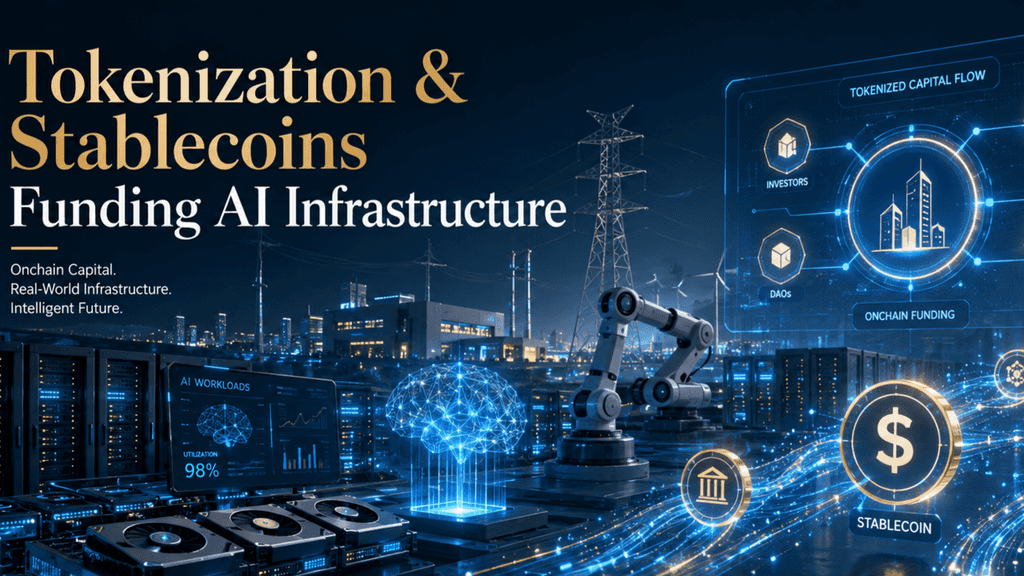
Framework Ventures’ new $400 million fund shows how quickly the crypto investment story is changing in 2026. In earlier cycles, much of the industry’s attention was focused on DeFi, exchanges, NFTs, gaming, wallets, and new blockchain networks. Those sectors still matter, but the stronger new theme is different: blockchain is increasingly being positioned as a financing layer for real-world infrastructure, especially artificial intelligence, robotics, energy, and tokenized assets. The timing is important because AI infrastructure is becoming one of the most expensive technology buildouts in the world. Advanced AI systems need GPUs, servers, data centers, cooling systems, electricity, networking equipment, and long-term compute access. These are not simple software expenses. They are physical, capital-heavy assets that require major financing before many companies can scale revenue.
This is where tokenization and stablecoins enter the discussion. Tokenization can turn real-world assets, contracts, or future cash flows into blockchain-based financial instruments, a trend closely connected to the broader rise of real-world asset tokenization. Stablecoins can provide a faster settlement layer for moving money across onchain markets. Together, they could create new ways to finance AI compute, robotics hardware, energy systems, and data-center infrastructure. Framework Ventures’ fund does not prove that this model will work everywhere, but it shows that major crypto investors are taking the idea seriously.
Why Framework Ventures’ $400M Fund Signals a New Crypto-AI Infrastructure Cycle
Framework Ventures’ $400 million fund signals that crypto venture capital is entering a more infrastructure-driven phase. The fund’s focus on stablecoins, tokenization, AI, robotics, energy, fintech, and digital assets suggests that investors are looking beyond short-term trading narratives. The question is no longer only whether a crypto project can attract users inside the industry. The bigger question is whether blockchain can support capital formation for sectors with real financing needs. This shift is especially important because AI infrastructure is not cheap to build. Large technology companies can spend billions of dollars on compute and data centers, but smaller AI companies often face a tougher path. They may need expensive GPU access before they have stable revenue. Robotics firms may need hardware, sensors, and deployment systems before customers scale. Energy projects may need financing before data-center demand fully arrives. Framework’s fund points to a market where crypto rails could help fill some of these gaps.
1. Crypto Venture Capital Is Moving Beyond Crypto-Native Products
In previous crypto cycles, venture capital mainly funded products built for existing crypto users. Exchanges, DeFi protocols, NFT marketplaces, blockchain games, wallets, and scaling networks were the natural targets because they helped grow the digital asset ecosystem. However, many of these projects depended on trading activity, token incentives, or speculative demand. Framework’s new fund points in a wider direction. AI, robotics, energy, and tokenized real-world assets are not just crypto-native categories. They are sectors with physical infrastructure needs, large capital requirements, and complex financing problems. That makes them attractive for investors who believe blockchain can improve how money moves, how ownership is recorded, and how collateral is managed.
This does not mean crypto-native products are becoming irrelevant. DeFi, stablecoins, custody, settlement networks, and tokenization platforms may actually become more important if they are used to support real-world infrastructure. The difference is that the end market may no longer be only crypto traders. It may include AI developers, data-center operators, robotics companies, energy providers, and institutional investors.
2. AI Infrastructure Creates a Large Financing Gap
AI infrastructure requires heavy spending before returns are guaranteed. A company building AI models needs compute capacity, but compute is expensive and often concentrated among the largest technology firms. Smaller companies may have strong products or specialized models, but they can struggle to secure affordable access to GPUs, cloud infrastructure, or long-term data-center capacity. This creates a financing gap that traditional venture capital alone may not solve. Equity funding can help startups grow, but it can also be expensive and dilutive. Bank lending may not be flexible enough for young AI companies without predictable revenue. Private credit can fill part of the gap, but smaller infrastructure assets may be difficult to package into standard financing structures.
AI infrastructure financing is difficult because companies often need capital for several areas at once:
-
GPU clusters and high-performance computing hardware.
-
Data-center leasing, construction, and expansion.
-
Electricity supply, cooling systems, and grid connections.
-
Cloud compute contracts and long-term infrastructure agreements.
-
Robotics hardware, sensors, and deployment systems.
Tokenization could create another option. If compute assets, infrastructure contracts, or revenue streams can be represented onchain, investors may be able to fund specific parts of the AI infrastructure stack. This could allow companies to raise capital around physical assets or future usage instead of depending only on equity rounds.
3. The Fund Reflects a Search for Real Utility
Framework’s fund also reflects a bigger market mood: crypto investors are searching for stronger real-world utility. After several speculative cycles, the industry needs use cases that connect to real assets, real demand, and measurable cash flows. AI infrastructure fits that requirement because the need for compute, electricity, and automation is already visible across the technology sector. This is what separates the current infrastructure thesis from simple AI-token hype. A weak project can add AI branding and still have no durable business model. A stronger project focuses on solving a real financing or settlement problem. For example, helping fund GPU capacity, energy contracts, robotics hardware, or tokenized credit products is more practical than launching a token with no clear economic base.
The market may therefore reward projects that are less flashy but more useful. Platforms that combine stablecoin settlement, legal compliance, collateral tracking, and real asset underwriting could become more important than projects that rely only on narrative. Framework’s fund suggests that major investors are paying attention to that shift.
How Tokenization and Stablecoins Can Finance AI Compute, Robotics, and Energy
Tokenization and stablecoins can play different but connected roles in the AI infrastructure economy. Tokenization can represent physical assets, contracts, or cash flows onchain. Stablecoins can then move money between investors, borrowers, infrastructure operators, and platforms. For readers who want the broader background, RWA tokenization in crypto explains why real-world assets are increasingly being connected to blockchain-based markets. The strongest use case is not simply creating more AI-themed crypto assets. The stronger use case is asset-backed infrastructure finance. AI compute, robotics systems, and energy networks all depend on expensive physical assets. If those assets can be financed through tokenized structures and settled with stablecoins, blockchain could become part of the capital stack behind AI growth.
1. Tokenized GPU Financing Could Help AI Companies Access Compute
GPUs are one of the most important assets in the AI economy. They are needed for training models, running inference, serving customers, and building AI products at scale. However, GPUs are expensive and can lose value quickly as newer hardware becomes available. This makes them difficult to finance, especially for smaller companies that cannot compete with the largest tech firms. Tokenization could help by creating blockchain-based structures around GPU-backed financing. For example, a compute provider could finance a pool of GPUs through a tokenized credit product. Investors could provide capital, while the operator uses the funds to purchase or lease hardware. The repayment source might come from compute usage, customer contracts, or infrastructure revenue.
This model would still need strong safeguards. Investors would need to know who owns the GPUs, where they are located, how they are insured, how utilization is measured, and what happens if revenue falls short. Tokenization can improve transparency and settlement, but the quality of the underlying collateral remains the key issue.
Tokenized GPU financing could support:
-
GPU-backed loans for AI startups and compute providers.
-
Shared compute pools funded by onchain investors.
-
Revenue-linked financing tied to compute usage.
-
Collateralized lending structures based on physical AI hardware.
-
Secondary markets for certain infrastructure-backed products.
2. Stablecoins Can Speed Up Capital Movement
Stablecoins could become the settlement layer for tokenized AI infrastructure. If tokenization represents the asset, stablecoins provide the money movement. This matters because infrastructure finance often involves multiple parties, including investors, borrowers, custodians, asset managers, data-center operators, and service platforms. Traditional payment rails can be slow, especially when capital moves across borders. Stablecoins can support faster settlement because they move on blockchain networks and can operate around the clock. In a tokenized compute-financing product, stablecoins could be used to collect investor capital, fund loans, distribute payments, move collateral, or settle secondary-market trades. This makes them part of a wider discussion around how stablecoins work in crypto markets and why they are becoming more important for digital finance.
For AI companies, this may create more flexible access to capital. For investors, stablecoins could provide a familiar digital settlement asset for entering and exiting tokenized infrastructure products. However, the stablecoin layer must be supported by proper compliance, reliable reserves, clear redemption rules, and strong custody arrangements.
3. Robotics Infrastructure Could Use Tokenized Funding Models
Robotics is another sector that fits the tokenization thesis because it depends on expensive physical assets. Robotics companies need machines, sensors, batteries, chips, software systems, training data, testing environments, and deployment infrastructure. These costs often arrive before the business reaches scale, which makes financing difficult. Tokenized funding could be useful for robotics companies that operate hardware fleets or robotics-as-a-service models. Instead of selling robots directly, a company may deploy machines and charge customers through recurring contracts. Those future cash flows could potentially support asset-backed financing, where investors help fund the equipment and receive exposure to the revenue generated by deployments.
This approach would only work if the underlying business is strong. Robotics hardware needs maintenance, insurance, software updates, customer demand, and operational support. Blockchain can help organize ownership and payments, but it cannot make a weak robotics business profitable. The value of tokenization would come from making the financing structure clearer and more efficient.
4. Energy Projects Could Become Part of the AI Infrastructure Stack
Energy is one of the most important parts of the AI infrastructure story. Data centers need electricity, cooling, grid access, backup systems, and long-term power agreements. Even if a company can buy GPUs, it still needs enough power to run them. This makes energy financing a major bottleneck for AI growth. Tokenization could help energy projects by creating new ways to fund infrastructure connected to data-center demand. Distributed energy networks, solar projects, battery storage, grid upgrades, and private power contracts could potentially be structured as tokenized assets. This is also close to the broader idea of decentralized physical infrastructure networks, where blockchain-based systems are used to coordinate real-world infrastructure.
Energy-related tokenization could support:
-
Distributed energy projects connected to data-center demand.
-
Tokenized power contracts or energy-linked cash flows.
-
Financing for solar, battery, or grid infrastructure.
-
Stablecoin payments between energy producers and infrastructure users.
-
More transparent tracking of infrastructure-backed financing products.
This point matters because AI infrastructure is not only about chips. It is also about electricity, land, cooling, and connectivity. If tokenization helps finance the energy layer behind AI, blockchain could become part of a much larger infrastructure market than crypto alone.
Key Risks: Regulation, Liquidity, and Credit Quality in Tokenized AI Infrastructure
Tokenized AI infrastructure could become an important financing model, but the risks are serious. A tokenized GPU loan, compute contract, robotics fleet, or energy-backed product still depends on the quality of the borrower, the value of the collateral, the strength of the legal structure, and the real demand behind the asset. Blockchain can improve the financial wrapper, but it cannot make weak assets safe. This sector also combines several complex markets at once. Crypto, private credit, AI compute, robotics, energy infrastructure, and real-world asset tokenization all carry different risks. When combined, the opportunity can become larger, but the product can also become harder for investors to understand. That is why regulation, liquidity, and credit quality will be central to the future of this market.
1. Regulation Could Decide How Fast the Market Grows
Regulation is one of the biggest risks for tokenized AI infrastructure. A product may look like a blockchain token, but if it gives investors exposure to revenue, collateral, yield, or repayment rights, it may be treated as a security, fund product, credit instrument, or structured finance product. That could require disclosures, licensing, investor eligibility checks, and compliance controls. The challenge becomes bigger when assets, issuers, and investors are spread across different jurisdictions. A GPU cluster may be located in one country, the borrower may operate in another, and token holders may be global. That creates questions around ownership rights, bankruptcy treatment, tax obligations, custody, and enforcement if the borrower defaults.
Clear regulation could help serious projects grow because institutions need confidence before entering the market. But unclear rules could slow adoption or force issuers to redesign products. The strongest platforms will likely build compliance into their structure from the start rather than treating it as a later problem.
2. Liquidity May Be Weaker Than the Token Narrative Suggests
Tokenization is often described as a way to make illiquid assets liquid, but that does not happen automatically. A token can exist onchain and still have very little trading activity. If there are not enough buyers, market makers, transparent valuations, or secondary-market platforms, investors may struggle to exit at a fair price. This is especially important for AI infrastructure because many assets are specialized. GPUs, robotics fleets, compute contracts, and energy projects can be valuable, but they are not always easy to price or sell quickly. A tokenized claim on those assets may not trade like Bitcoin, Ethereum, or a liquid public stock. During market stress, secondary liquidity could disappear quickly.
Liquidity depends on trust and market depth. Investors need reliable reporting, clear asset valuation, credible issuers, active marketplaces, and enough demand beyond the initial launch. Without those pieces, tokenization may improve recordkeeping but fail to create a truly liquid investment product.
3. Credit Quality Will Matter More Than Blockchain Design
The biggest financial risk is credit quality. If a borrower cannot repay, the tokenized product can still lose value. If a compute provider fails to generate enough revenue, a GPU-backed loan can default. If a robotics company cannot scale deployments, expected cash flows may not appear. If an energy project faces delays or cost overruns, investors may face losses. This is where the market needs discipline. Strong blockchain design, stablecoin settlement, and smart contracts can improve transaction efficiency, but they cannot replace underwriting. Investors still need to ask basic credit questions: Who is borrowing? What asset supports the loan? How is revenue generated? What is the repayment source? What happens if the asset value falls?
AI infrastructure adds another layer of complexity because hardware can depreciate quickly. GPUs and servers may become less competitive as newer chips arrive. Energy costs may rise. Robotics hardware may need repairs or upgrades. These factors can weaken collateral value over time, especially if the financing structure assumes stable asset prices.
4. Operational and Stablecoin Risks Should Not Be Ignored
AI infrastructure depends on physical systems, which creates operational risk. GPUs must be stored, cooled, maintained, insured, and operated properly. Data centers need uptime, power reliability, network performance, and physical security. Robotics hardware must be serviced and deployed safely. Energy projects depend on permits, equipment, weather conditions, grid connections, and local regulation. A blockchain can record ownership and payments, but it cannot repair a server rack, maintain a robot, or guarantee data-center uptime. That means tokenized AI infrastructure products need reliable operators, asset verification, insurance coverage, maintenance reporting, and performance monitoring. Without those controls, investors may not know whether the asset is producing the expected value.
Stablecoins also introduce their own risks. They depend on reserve quality, issuer credibility, redemption rules, banking relationships, and regulatory treatment. If a stablecoin loses its peg or faces redemption pressure, tokenized infrastructure products using that stablecoin could experience payment delays, valuation problems, or liquidity stress. Stablecoins can make settlement faster, but they should not be treated as risk-free.
Key risks investors should watch include:
-
Unclear regulation around tokenized credit or revenue-backed products.
-
Weak secondary-market liquidity for specialized infrastructure assets.
-
Hardware depreciation for GPUs, servers, and robotics equipment.
-
Borrower default risk if infrastructure revenue does not grow as expected.
-
Stablecoin reserve, redemption, or depegging risk.
-
Operational failures in data centers, energy projects, or robotics fleets.
Conclusion
Framework Ventures’ $400 million fund is a strong signal that crypto’s next major growth story may move beyond crypto-native speculation and toward real-world infrastructure finance. AI compute, robotics, and energy all require large amounts of capital, and tokenization may create new ways to represent, divide, verify, and finance these assets, while stablecoins can support faster settlement across onchain markets. Together, they could help fund GPU clusters, data centers, robotics fleets, distributed energy systems, and tokenized credit products, but the opportunity should still be viewed carefully because tokenization does not remove credit risk, stablecoins do not guarantee liquidity, and AI infrastructure assets can be expensive, complex, and volatile. The strongest projects will likely be those that combine blockchain efficiency with serious underwriting, transparent legal structures, reliable collateral management, and real-world demand. If this thesis develops responsibly, stablecoins and tokenized assets could become part of the financial foundation for the AI infrastructure boom.
FAQs
What does Framework Ventures’ $400M fund mean for the crypto market?
Framework Ventures’ $400 million fund suggests that crypto investors are looking beyond short-term token speculation and toward infrastructure-backed opportunities. The fund shows that blockchain may increasingly be used to support financing, settlement, and asset tracking in sectors such as AI, robotics, energy, and tokenized real-world assets. This could make crypto more connected to real-world business activity instead of only trading-driven market cycles.
Why are stablecoins important for AI infrastructure financing?
Stablecoins are important because they can move capital quickly across blockchain networks. In AI infrastructure financing, they could be used for funding loans, settling tokenized asset transactions, distributing payments, or moving collateral between investors and infrastructure operators. Their biggest advantage is speed and programmability, but they still require strong reserves, reliable issuers, and clear redemption rules.
Can tokenization make AI infrastructure easier to invest in?
Tokenization can make AI infrastructure easier to structure and access, but it does not automatically make every asset safe or liquid. Assets such as GPU clusters, compute contracts, robotics fleets, or energy projects could be represented onchain, allowing investors to gain exposure to specific infrastructure categories. However, investors still need to evaluate ownership rights, collateral quality, revenue sources, and legal protections before trusting any tokenized product.
How could tokenized GPUs work in practice?
Tokenized GPU financing could work by linking a pool of GPUs or compute contracts to an onchain financial product. Investors may provide capital to help purchase or lease GPUs, while repayment could come from compute usage, customer contracts, or infrastructure revenue. This model could help AI companies access compute without buying all hardware upfront, but it would require transparent reporting on hardware ownership, utilization, depreciation, and insurance.
Why does AI infrastructure need alternative financing models?
AI infrastructure needs alternative financing because compute, data centers, and power systems require large upfront investment. Smaller AI companies may not have enough revenue history to qualify for traditional loans, while equity fundraising can be costly and dilutive. Tokenized financing could create another funding route by allowing capital to be raised against physical assets, future usage, or infrastructure-linked cash flows.
What role could DePIN play in AI, robotics, and energy infrastructure?
DePIN, or decentralized physical infrastructure networks, could support AI-related markets by coordinating real-world resources through blockchain-based systems. In theory, DePIN models could help organize distributed compute, energy networks, wireless systems, storage, or sensor infrastructure. For AI and robotics, this may be useful where many physical assets need to be tracked, rewarded, verified, or financed across different locations.
What is the biggest risk in tokenized AI infrastructure?
The biggest risk is that tokenization may make an investment look modern without improving the quality of the underlying asset. A tokenized loan can still default, a GPU can still lose value, and an energy project can still face delays. Investors should focus on credit quality, legal claims, collateral verification, liquidity, and the operator’s ability to generate real revenue.
Are tokenized AI infrastructure products good for retail investors?
Tokenized AI infrastructure products may not be suitable for all retail investors because they can involve complex risks. These products may combine private credit, hardware financing, stablecoins, securities laws, and infrastructure operations. Retail investors should be cautious, especially if a product offers high yields without explaining the borrower, collateral, repayment source, or legal structure clearly.
Could stablecoins replace traditional banks in infrastructure finance?
Stablecoins are unlikely to fully replace traditional banks, but they could become an important settlement tool in tokenized finance. Banks, asset managers, fintech platforms, and crypto firms may all play roles in future infrastructure financing. Stablecoins can improve speed and payment efficiency, while traditional institutions may still provide underwriting, compliance, custody, legal structuring, and risk management.
What should investors watch next in crypto-AI infrastructure?
Investors should watch whether tokenized infrastructure projects can move from theory to real adoption. Important signs include credible issuers, transparent collateral reporting, institutional participation, regulated stablecoin settlement, active secondary markets, and real demand from AI or energy companies. The strongest signal will not be hype around AI tokens, but actual financing products connected to measurable infrastructure usage and cash flows.
Disclaimer
The information provided on this page may originate from third-party sources and does not necessarily represent the views or opinions of KuCoin. This content is intended solely for general informational purposes and should not be considered financial, investment, or professional advice. KuCoin does not guarantee the accuracy, completeness, or reliability of the information, and is not responsible for any errors, omissions, or outcomes resulting from its use. Investing in digital assets carries inherent risks. Please carefully evaluate your risk tolerance and financial situation before making any investment decisions. For further details, please consult KuCoin’s Terms of Use and Risk Disclosure.