

What is strUSD and is its 12% yield safe?
2026/07/30 17:55:00
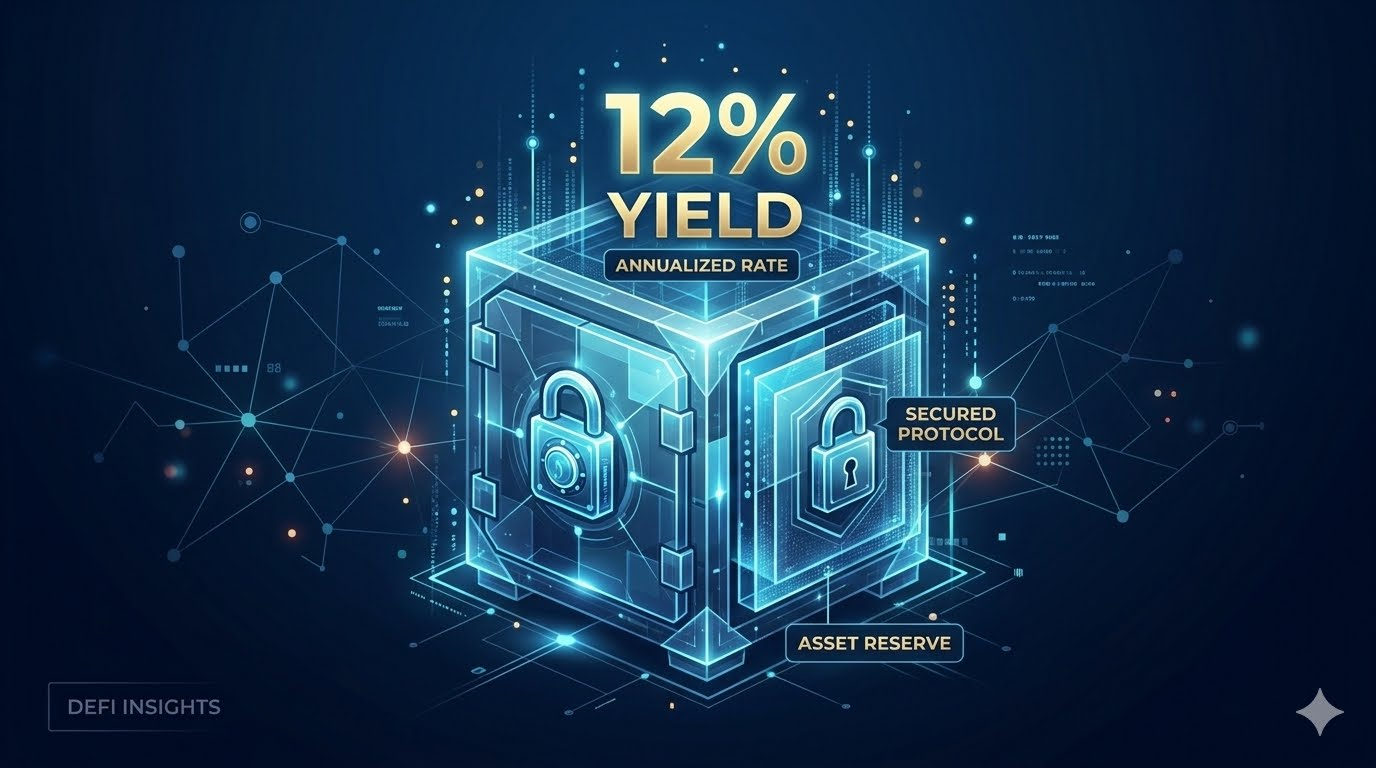
In the decentralized finance (DeFi) landscape, market participants continuously seek yield opportunities that outpace traditional fixed-income assets. In late July 2026, the on-chain yield protocol Tori Finance launched its yield product, strUSD, filling its initial $50 million pre-launch deposit cap within seven days. Following this initial capital influx, the protocol removed the cap, transitioning the pre-deposit pool into an open ecosystem vault and initiating integrations across several DeFi platforms.
At the core of this product is a target annualized percentage yield (APY) of 12%. In a macroeconomic climate where risk-free rates are significantly lower, a double-digit return on a dollar-denominated asset requires careful examination. Given the historical context of past algorithmic stability issues and unsustainable liquidity incentives in crypto, it is essential to evaluate whether strUSD provides sustainable yield or introduces new systemic vulnerabilities.
What is strUSD? Understanding Tori Finance’s New Yield-Bearing Asset
To evaluate the product, it is necessary to first define its structure and the protocol behind it. Developed by Tori Finance, strUSD is an ERC-20 compliant, yield-bearing token designed to bring traditional institutional trading strategies to the public blockchain.
The Origin of Tori Finance and trUSD
The architecture of the protocol relies on a dual-token system: trUSD and strUSD. When users deposit standard fiat-backed stablecoins (such as USDC or USDT) into the Tori Finance ecosystem, they receive trUSD, which serves as the foundational receipt token. To begin accumulating the target 12% APY, users must stake their trUSD to mint the yield-bearing token, strUSD. Because strUSD adheres to the ERC-20 standard, it maintains liquidity, transferability, and composability, allowing it to be utilized within external decentralized applications while accruing underlying returns.
Institutional-Grade Strategies Made Accessible
According to Tori Finance, the primary objective of the protocol is to provide access to financial instruments that typically require high minimum capital thresholds. Historically, the arbitrage and hedging strategies utilized by Tori were primarily accessible to commercial banks and hedge funds due to steep capital requirements and regulatory onboarding processes. By tokenizing these operations, Tori Finance allows Web3 users to gain exposure to these strategies with lower capital barriers.
The Ecosystem Integration
Following its initial capital phase, Tori Finance focused on embedding strUSD into the broader DeFi ecosystem. The asset has been integrated into prominent decentralized protocols, including Pendle's yield-trading markets, Morpho's primitive-based lending pools, and Curve Finance's automated market makers. These integrations allow users to loop, borrow against, or trade the implied volatility of the strUSD yield, increasing its utility across the on-chain economy.
Decoding the 12% APY: Where Does the Yield Come From?
A fundamental rule of crypto risk management is that yield must have a clear, sustainable source. Unlike early DeFi applications that generated yield through token inflation, or decentralized lending pools reliant on volatile on-chain borrowing demand, Tori Finance derives strUSD's revenue strictly from off-chain, real-world financial activities.
The targeted 12% APY is driven by a specific traditional finance mechanism:
The core engine behind strUSD is the foreign exchange (FX) carry trade. This is an established financial strategy where capital is borrowed in a currency with a low-interest rate and deployed into assets denominated in a currency offering higher interest rates (often in emerging markets). Tori Finance executes these trades within traditional global money markets.
Crucially, the strategy does not rely on directional speculation. To protect the principal from currency devaluation, Tori Finance applies a delta-neutral hedging framework to its FX positions. The protocol utilizes forward contracts and foreign exchange derivatives to hedge against currency fluctuations. This effectively locks in the net interest rate differential as profit while mitigating the directional exposure of the target currencies against the US Dollar. There is no recycling of crypto-native capital (such as funding rates or basis trading) involved in this yield generation.
Is the 12% Yield Safe? A Deep Dive into Potential Risks
While the underlying mechanics of strUSD are rooted in established traditional financial practices, a 12% target return inherently carries structural risk. For a centralized exchange platform, providing an accurate, objective risk assessment is paramount. The security of strUSD’s yield faces vulnerabilities across three distinct layers:
On-Chain Risks: Smart Contract Vulnerabilities & DeFi Cascades
-
Protocol Composability Risks: Because strUSD is integrated into Morpho, Pendle, and Curve, it is exposed to multi-layer smart contract risk. If an exploit occurs in an external protocol where strUSD is utilized, the asset could suffer capital impairment, independent of Tori Finance’s internal security.
-
Liquidity Mismatches and De-pegging: If market panic occurs and users simultaneously attempt to redeem their strUSD, on-chain liquidity pools could face strain. While the underlying assets exist off-chain, the time required to unwind complex institutional positions means on-chain redemptions could face delays, potentially causing trUSD or strUSD to trade at a discount (de-peg) on secondary exchanges.
Off-Chain Risks: Counterparty and Custody
-
The Bridge Between On-Chain and Off-Chain: Once user funds leave the blockchain to participate in traditional banking and FX markets, they transition away from decentralized ledgers. Investors must rely on human operators and external entities rather than immutable code.
-
Institutional Counterparty Risk: The execution of global carry trades requires prime brokerages, market makers, and commercial banking institutions. If a banking partner or prime broker faces insolvency, the capital deployed by Tori Finance could be frozen or impacted by bankruptcy proceedings.
Market Risks: FX Execution Failures
-
Hedging and Derivative Slippage: The delta-neutral FX strategy is only effective if hedges are maintained precisely. In moments of extreme macroeconomic volatility, liquidity in foreign exchange forward markets can drop. If the protocol experiences execution slippage or cannot rebalance its hedges efficiently, the portfolio could suffer principal loss.
-
Lack of Historical Validation: Tori Finance launched in mid-2026. While the underlying financial concepts are old, the protocol’s specific automated hedging models and risk frameworks have yet to be stress-tested through a prolonged macro crisis or severe global interest rate shift.
Tori Finance’s Security Infrastructure
To address these risks and meet institutional compliance standards, Tori Finance has implemented several risk management mechanisms:
Independent Risk Management: The protocol appointed RockawayX (an established digital asset investment firm with over $2 billion AUM) to act as the independent risk manager. RockawayX monitors off-chain positions, tracks leverage ratios, and ensures accurate fund allocation.
Real-Time Cryptographic Auditing: To mitigate off-chain opacity, Tori utilizes Accountable, a validation network. Accountable uses Zero-Knowledge Proofs (ZKPs) and Trusted Execution Environments (TEEs) to audit off-chain balance sheets and bank holdings in real-time, providing verifiable proof of reserves without exposing proprietary data.
Continuous Code Monitoring: The smart contracts underwent security audits by Web3 auditing firms, including Sherlock and Nethermind. Additionally, the platform integrated Hypernative for 24/7 automated threat detection.
For individuals interacting with Tori Finance’s ecosystem, understanding how to utilize advanced DeFi structures can help manage exposure.
Managing Risk via Pendle Protocol
Through Pendle Finance, strUSD can be separated into two components:
-
PT-strUSD (Conservative approach): This isolates the principal from the yield. By holding PT-strUSD, an investor locks in a fixed interest rate over a set period, avoiding the volatility of the underlying strategy's performance.
-
YT-strUSD (Aggressive approach): This represents pure exposure to the fluctuating yield of strUSD. Buyers of YT leverage the yield component with minimal capital, though they face a total loss of the premium paid if the yield drops significantly.
When dealing with an asset targeting a 12% APY, capital preservation should remain the primary focus. Yield-bearing tokens tied to complex off-chain strategies are not direct substitutes for standard fiat-backed stablecoins like USDC. Rational portfolio allocation dictates that exposure to early-stage, high-yield assets should be restricted to a calculated portion of a diversified portfolio—specifically, capital allocated for higher risk that can withstand potential liquidity delays or systemic disruptions.
Conclusion
Tori Finance's strUSD represents a notable development in bridging decentralized finance with traditional institutional FX trading. By tokenizing global carry trades and utilizing derivative hedging operations, the protocol has established a clear off-chain yield generation model.
However, elevated returns remain structurally inseparable from risk. The operational simplicity of holding an ERC-20 token masks a complex dependency on off-chain counterparties, derivative markets, and DeFi composability. While real-time zero-knowledge auditing and independent oversight by RockawayX provide substantial credibility, the protocol is still in its early stages. Investors looking to allocate capital to this asset should monitor the ecosystem closely, stay informed on macroeconomic interest rate policies, and maintain strict position-sizing frameworks.
Join KuCoin 9th Anniversary Trading CampaignKuCoin is celebrating its 9th anniversary with a special platform campaign filled with exclusive rewards, trading activities, and limited-time offers. Don’t miss the chance to participate and enjoy the benefits as the exchange marks nine years of growth and innovation. Visit the official campaign page now:
 |
FAQs
Where does the 12% APY come from?
The yield is generated off-chain from traditional global money markets through foreign exchange carry trades—borrowing low-interest currencies to invest in higher-yielding ones while maintaining a delta-neutral hedging framework to eliminate directional market risks.
Is strUSD's yield correlated with crypto market conditions?
No. Unlike traditional DeFi yields that rely on crypto funding rates or asset borrowing demand, strUSD’s returns are derived strictly from real-world macroeconomic interest rate differentials, making its performance independent of crypto market cycles.
Who manages the off-chain operational risks?
Digital asset investment firm RockawayX acts as the independent risk manager, monitoring off-chain positions and leverage. Simultaneously, the Accountable network utilizes Zero-Knowledge Proofs and TEEs to provide real-time, cryptographic proof of off-chain bank reserves.
What happens if there is an on-chain bank run?
While on-chain liquidity pools (like Curve) provide immediate swaps, underlying assets exist off-chain. Unwinding complex institutional positions takes time. Massive simultaneous redemptions could cause temporary liquidity delays or secondary market de-pegging discounts.
How can conservative investors reduce risk using Pendle?
Conservative investors can purchase PT-strUSD on Pendle. This isolates the principal from the fluctuating yield, allowing users to lock in a guaranteed fixed interest rate over a set period while avoiding strategy performance volatility.
Can strUSD completely replace standard stablecoins like USDC?
No. strUSD carries structural smart contract, counterparty, and off-chain execution risks that fiat-backed stablecoins do not have. It should be treated as an early-stage, high-yield asset and limited to a calculated portion of a diversified portfolio.
Disclaimer
The information provided on this page may originate from third-party sources and does not necessarily represent the views or opinions of KuCoin. This content is intended solely for general informational purposes and should not be considered financial, investment, or professional advice. KuCoin does not guarantee the accuracy, completeness, or reliability of the information, and is not responsible for any errors, omissions, or outcomes resulting from its use. Investing in digital assets carries inherent risks. Please carefully evaluate your risk tolerance and financial situation before making any investment decisions. For further details, please consult KuCoin’s Terms of Use and Risk Disclosure.