

Tokenized Stocks Hit Record $2.3B Market Cap: Ondo, Backed, & Robinhood Surge
2026/08/01 10:11:00
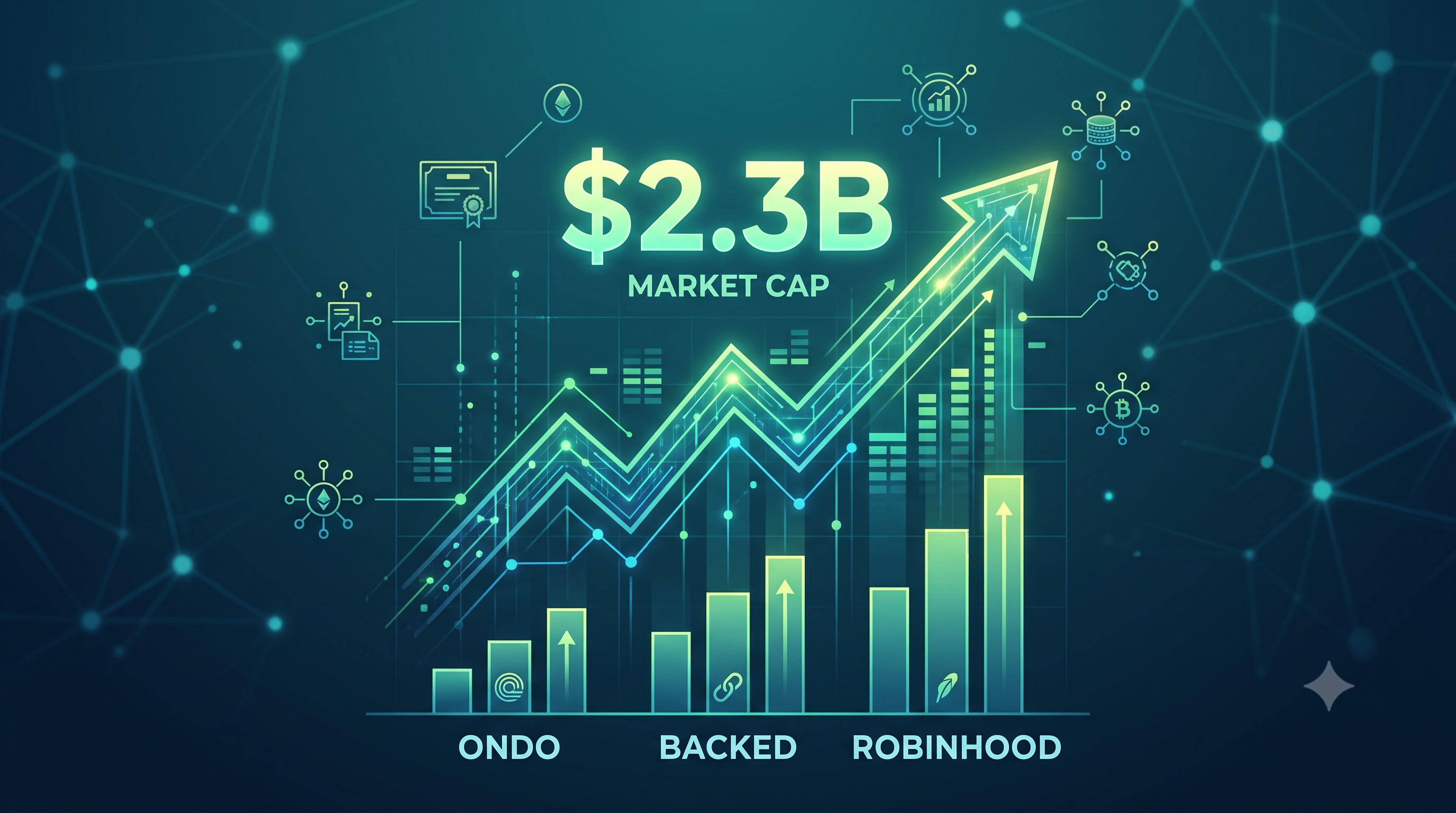
Tokenized stocks reached a significant milestone in mid-July 2026, achieving an impressive total capitalization of approximately $2.3 billion, as indicated by aggregated data from various sources. This remarkable growth was underscored by major issuers such as Ondo Finance, Backed Finance, and Robinhood Chain, all of which reported record metrics for shares outstanding, holder counts, and transaction volumes on the same day. The surge in market activity reflects a growing demand for 24/7 trading capabilities, the utility of collateral in decentralized finance, and enhanced accessibility to traditional equities through blockchain technology. As more investors recognize the benefits of tokenized assets, the market is likely to continue expanding, attracting a diverse range of participants and fostering innovation in financial products.
The increase in tokenized stock market capitalization to $2.3 billion is a clear indicator of the accelerating adoption of on-chain equities. This trend is being driven by innovative product offerings from companies like Ondo, Backed, and Robinhood, which are focused on enhancing liquidity, accessibility, and composability. These advancements are crucial as they help bridge the gap between traditional financial markets and decentralized infrastructure, making it easier for investors to engage with tokenized assets. As the ecosystem matures, we can expect further developments that will improve the overall trading experience, increase the crypto market efficiency, and attract institutional interest. The continued evolution of tokenized equities signifies a transformative shift in how assets are traded and managed, paving the way for a more inclusive financial ecosystem.
Tokenized Equities Market Hits New Capitalization High
Tokenized stocks reached a record $2.3 billion market capitalization in mid-July 2026, nearly doubling since March, when the sector first surpassed $1 billion. Data from Token Terminal and Artemis showed all-time highs across major venues on July 21, with Ondo Finance’s tokenized shares outstanding hitting 514.5 million and holder count reaching 93,880. Backed Finance achieved $579.4 million in tokenized market cap, while Robinhood Chain recorded notable activity in its newly launched stock tokens. Ethereum maintained the largest share at 34%, followed by BNB Chain at 30% and Solana at 23%. The sector remains a small but rapidly growing portion of the broader tokenized real-world assets market.
Some of the logical drivers are 24/7 minting and redemption, voting rights on some tokens, and integration as collateral in decentralized perpetual platforms. The multi-chain and multi-issuer expansion indicates a maturing infrastructure and distribution channels. Real user engagement, not hype, is reflected in holder growth and cumulative volume stats. The milestone represents the journey of tokenized stocks from a niche experiment to a significant asset class in decentralized finance. Industry context shows tokenized equities are benefiting from improvements in settlement speed and composability over traditional brokerage rails.
Ondo Finance Extends Dominance with Expanded Offerings
Ondo Finance solidified its position as the leading issuer with roughly $955 million in on-chain equities, supported by a series of product enhancements in July. The firm enabled 24/7 minting and redemption for tokenized US stocks and ETFs, added voting rights, and integrated tokenized stock collateral into its perpetual futures venue, which reached record open interest. Partnerships, including with Japan’s SBI Group for tokenized Japanese stocks and JPYSC settlement, further expanded reach. Ondo’s catalog now exceeds 430 tokenized stocks and ETFs across Ethereum, Solana, and BNB Chain, with distribution through major wallets and protocols. Holder counts more than tripled over recent months, reflecting broader accessibility.
These developments enhance utility for both retail and institutional participants seeking on-chain exposure. Ondo’s growth direction shows the effectiveness of combining traditional equity access with decentralized finance features such as continuous trading and collateral use. Analysis from July 21 confirmed record metrics, validating demand for these capabilities. The issuer’s strategy focuses on compliance and interoperability, positioning it well for further integration with emerging agentic finance tools. This performance contributes significantly to the sector’s overall capitalization milestone.
Backed Finance Achieves Record Market Cap Through Exchange Partnerships
Backed Finance reached a tokenized market cap high of $579.4 million on July 21, benefiting from its xStocks product distributed via partnerships with exchanges, including Kraken and Bybit. The Swiss issuer has seen rapid expansion, with cumulative transaction volumes surpassing $25 billion within eight months of launch. Token Terminal data placed xStocks holdings at approximately $564+ million, underscoring strong demand for its offerings. Exchange-issued tokenized products represent a distinct growth channel alongside DeFi-native platforms.
Backed’s approach emphasizes regulatory compliance and broad distribution, enabling users across multiple jurisdictions to access on-chain equity exposure. Advantages include 24/7 trading and integration into decentralized applications for lending and derivatives. This model complements traditional brokerage experiences while adding blockchain benefits such as self-custody and composability. Backed’s record metrics on July 21 aligned with sector-wide highs, demonstrating synchronized momentum. The firm’s success illustrates how strategic partnerships can accelerate adoption of tokenized securities.
Robinhood Chain Introduces Tokenized Stocks to New User Base
Robinhood’s Stock Tokens on its recently launched Layer 2 chain achieved record metrics on July 21, with $19.3 million in tokenized market cap, shares outstanding, and holder count all reaching highs. Available in over 120 countries, the tokens enable 24/7 trading and serve as collateral in decentralized protocols on the chain. The Arbitrum-based network, launched on July 1, integrates Robinhood’s large user base with blockchain capabilities. Early activity includes usage in derivative platforms like Lighter. Robinhood’s entry brings traditional brokerage familiarity to on-chain equities, potentially onboarding new participants to decentralized finance.
The product design is focused on accessibility and composability, enabling tokenized stocks to participate in wider DeFi ecosystems. Pragmatic examples of integration with lending and perpetual markets are illustrated to improve utility. Robinhood Chain’s success underscores the importance of established platforms in fueling growth, in addition to the record capitalization of the tokenized stocks sector. Holder growth metrics reveal growing retail interest. The move is in line with Robinhood’s plan to diversify away from traditional trading and into blockchain infrastructure. This development adds a substantial distribution muscle to the tokenized equities market.
Arcus Exchange Expands Leveraged Trading on Tokenized Equities
Arcus, a groundbreaking platform supported by Robinhood Crypto and developed by the innovative dYdX team, made its debut by offering spot trading on an impressive array of 95 stock tokens. In a swift move to enhance its trading capabilities, the platform also introduced perpetual futures, allowing users to leverage their positions by up to 50 times. On July 21, Arcus achieved a remarkable milestone, recording a staggering daily perpetual trading volume of $11.9 million, alongside an open interest of $6.8 million, showcasing the platform's rapid adoption and user engagement. Functioning as a decentralized exchange on the Robinhood Chain, Arcus is designed to provide zero-fee spot trading, specifically catering to non-US users who are seeking innovative trading solutions. The platform's architecture is robust, supporting continuous markets for a diverse range of assets, including equities, commodities, and indices.
This strategic launch introduces a new speculative layer to the world of tokenized stocks, enabling traders to access leveraged exposure and implement hedging strategies that were previously constrained within traditional financial markets. The practical trading activity observed on Arcus underscores a significant demand for 24/7 access to equity derivatives on-chain, reflecting a shift in how traders engage with financial instruments. Early metrics from Arcus show the immense potential for decentralized venues to capture substantial trading volume in tokenized assets, indicating a growing interest in this innovative trading approach.
DeFi Composability Enhances Tokenized Stock Utility
Tokenized stocks are rapidly evolving to become essential collateral in decentralized lending and perpetual protocols, significantly enhancing their functionality beyond mere holding or trading. These innovative platforms allow users to borrow against their equity exposure or utilize tokens in various leveraged strategies, showcasing a level of composability that sets on-chain assets apart from traditional brokerage holdings. Real-world applications demonstrate the seamless integration of tokenized stocks into automated market makers and derivatives venues, with both trading volume and total value locked metrics in these ecosystems experiencing substantial growth alongside the overall market capitalization.
For participants in the decentralized finance (DeFi) space, these features not only enhance capital efficiency but also open up exciting yield opportunities. Moreover, the rise of agentic finance, where AI agents engage with tokenized assets, further expands the potential use cases, driving innovation and creating new avenues for investment. The inherent composability of these assets fosters network effects and liquidity, with data showing a notable increase in lending total value locked (TVL) for tokenized equities.
Institutional and Retail Adoption Trends in Tokenized Equities
Both institutional and retail investors play a vital role in the growth of tokenized stocks, with various platforms designed to meet diverse needs through compliance measures and self-custody options. Collaborations with established financial institutions provide a pathway for regulated access, while decentralized finance (DeFi) platforms attract users who prefer a permissionless experience. The rising number of holders across different issuers signifies a widening interest and participation in this market. However, practical challenges such as geographic restrictions and wallet requirements can impact how quickly adoption occurs.
For retail traders, tokenized stocks present the advantage of 24/7 trading and the opportunity for fractional ownership, making investing more accessible. On the other hand, institutional players are particularly interested in improving settlement processes and integrating these assets into their portfolios. Analysis showing cumulative trading volumes and unique wallet addresses indicates ongoing engagement and interest in the sector. The impressive market capitalization achieved reflects positive momentum across various user groups. As products continue to evolve and improve, we can expect a faster integration into the mainstream financial landscape.
Hurdles and Risks in the Tokenized Stocks Market
Tokenized stocks have experienced fast growth, yet they encounter significant challenges that need addressing. Issues such as liquidity fragmentation across different blockchain networks, counterparty risks associated with certain issuance models, and the diverse regulatory landscapes in various jurisdictions complicate the market. To tackle these challenges, platforms are implementing thorough audits, insurance mechanisms, and transparent reporting of reserves to build trust among users. In low-liquidity environments, price premiums or discounts can emerge, particularly noticeable during initial trading sessions. Therefore, users are encouraged to carefully assess custody arrangements and redemption processes to ensure their investments are secure.
In times of market volatility, strategies like margin isolation can offer valuable insights for effective risk management. While the relatively small size of the tokenized stock sector compared to traditional equities may limit its systemic impact, it also brings to light execution risks that investors should be aware of. Continuous technical advancements and efforts toward standardization are underway to alleviate these concerns. Moreover, data reflecting trading volumes in relation to market capitalization suggests there is potential for deeper liquidity in the market. The impressive milestone of a $2.3 billion capitalization not only signifies progress but also shows that the sector is still in its early developmental stages, with much more growth potential ahead.
Future Growth Projections for Tokenized Equities
The tokenized stock market is expected to continue expanding as blockchain infrastructure becomes more advanced and traditional financial assets increasingly move on-chain. Issuers are exploring new ways to grow their platforms through broader product offerings, support for additional markets, and expansion into new geographic regions. As more companies introduce tokenized versions of stocks, exchange-traded funds, and other financial instruments, the sector could attract a wider range of retail and institutional participants. The integration of tokenized equities with payment networks, decentralized applications, and emerging AI-powered financial tools may further increase their usefulness by creating new ways for users to interact with digital representations of traditional assets.
While the sector has achieved a major milestone with a $2.3 billion market capitalization, further growth will depend on improving infrastructure, liquidity, and user accessibility. Rising holder numbers, increased transaction activity, and deeper integration with decentralized finance platforms will likely serve as key indicators of continued adoption. Tokenized equities are also benefiting from the broader growth of real-world asset tokenization, as investors and financial institutions explore blockchain-based solutions for faster settlement and improved market access. However, challenges such as regulatory uncertainty, scalability limitations, and the need for greater user education remain important factors that the industry must address.
Conclusion
The tokenized stocks sector’s achievement of a $2.3 billion market capitalization reflects strong momentum driven by innovations from Ondo, Backed, and Robinhood, alongside multi-chain infrastructure development. Record metrics in shares, holders, and volumes on July 21 demonstrate genuine demand for 24/7 access, collateral utility, and composability with decentralized finance. This growth bridges traditional equities with blockchain benefits while highlighting ongoing challenges in liquidity and standardization.
As adoption broadens across retail and institutional segments, tokenized stocks are positioned to play an increasingly significant role in capital markets. The sector’s trajectory suggests further expansion as technology and distribution channels mature. Continued focus on reliability and user experience will determine long-term success. This milestone underscores the evolving intersection of traditional finance and decentralized systems.
Join KuCoin 9th Anniversary Trading Campaign
KuCoin is celebrating its 9th anniversary with a special platform campaign filled with exclusive rewards, trading activities, and limited-time offers. Don’t miss the chance to participate and enjoy the benefits as the exchange marks nine years of growth and innovation. Visit the official campaign page now:
FAQs
What are tokenized stocks, and how do they work?
Tokenized stocks are blockchain-based representations of traditional equities that allow investors to gain exposure to stocks through digital tokens. These assets are designed to mirror the value and ownership benefits of traditional shares while adding blockchain features such as 24/7 trading, faster settlement, self-custody options, and integration with decentralized finance applications.
How do tokenized stocks benefit from decentralized finance (DeFi)?
Tokenized stocks gain additional utility through integration with DeFi platforms. Instead of simply holding an asset, users can potentially use tokenized equities as collateral for lending, access derivatives markets, or participate in other financial applications. This composability allows tokenized stocks to function as more flexible financial instruments compared with traditional brokerage-held shares.
What are the main risks and challenges facing tokenized stocks?
Despite rapid growth, tokenized stocks face several challenges, including regulatory uncertainty, liquidity fragmentation across different blockchains, counterparty risks, and difficulties related to custody and redemption processes. Limited liquidity can also cause price differences between tokenized assets and their underlying stocks. Improving transparency, infrastructure, and industry standards will be important for long-term adoption.
Are institutions and retail investors adopting tokenized stocks?
Both institutional and retail investors are showing increasing interest in tokenized equities. Retail users are attracted by features such as 24/7 trading and fractional ownership, while institutions are exploring benefits like faster settlement, improved market efficiency, and easier integration with digital financial systems. Growing holder numbers and transaction volumes suggest expanding participation across different investor groups.
What is the future outlook for tokenized equities?
The tokenized equities market is expected to continue growing as blockchain infrastructure improves and more traditional financial assets move on-chain. Future expansion could be supported by broader product offerings, integration with payment systems, decentralized applications, and AI-powered financial tools. However, continued growth will depend on solving challenges related to scalability, regulation, liquidity, and user education.
Disclaimer
The information provided on this page may originate from third-party sources and does not necessarily represent the views or opinions of KuCoin. This content is intended solely for general informational purposes and should not be considered financial, investment, or professional advice. KuCoin does not guarantee the accuracy, completeness, or reliability of the information, and is not responsible for any errors, omissions, or outcomes resulting from its use. Investing in digital assets carries inherent risks. Please carefully evaluate your risk tolerance and financial situation before making any investment decisions. For further details, please consult KuCoin’s Terms of Use and Risk Disclosure.