

Turtle Trading Strategy Explained: Is It Built for High-Frequency or Low-Frequency Trading?
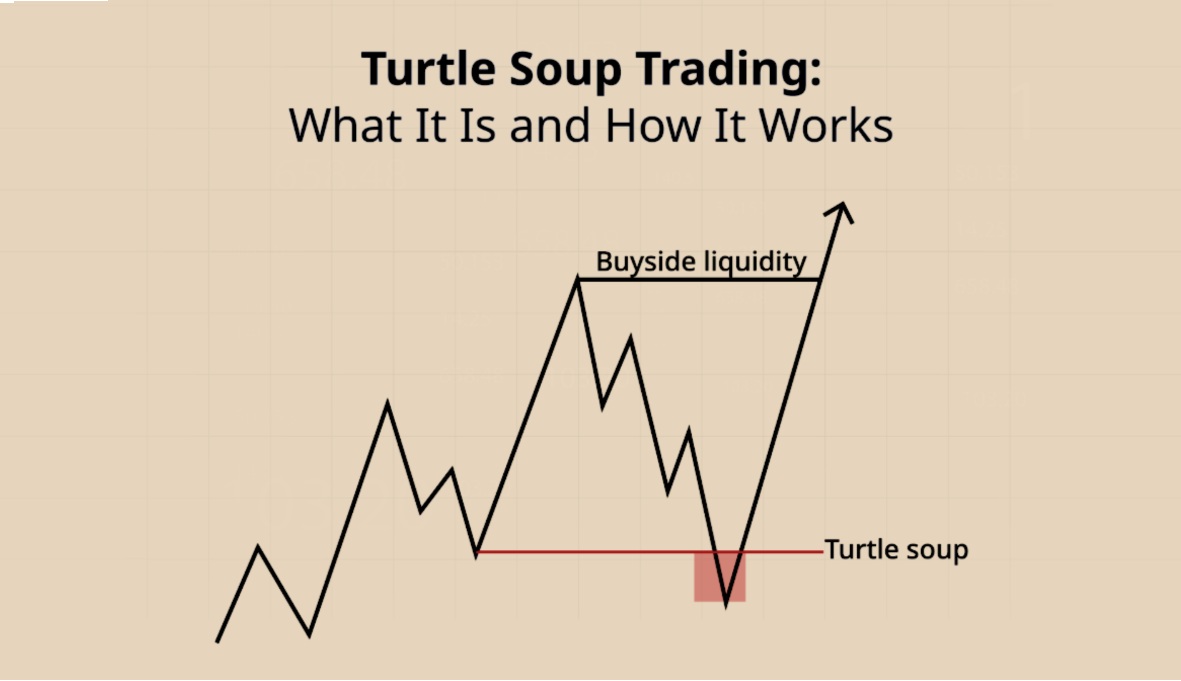
In the trading ecosystem, few strategies have achieved legendary status quite like Turtle Trading. Developed in the 1980s through a famous experiment, it challenged the idea that trading success depends on innate talent. Instead, it proved that disciplined rules and systematic execution could produce consistent results. Today, as markets develop and technology reshapes trading styles, a new question has emerged: does Turtle Trading still fit modern environments, and more specifically, is it better suited for high-frequency or low-frequency trading? The answer requires a deeper look into how the strategy operates.
Unlike fast-paced systems that rely on fast execution, Turtle Trading is rooted in patience, trend identification, and strict risk management. It focuses on capturing large market moves rather than small fluctuations. This makes it fundamentally different from many modern strategies that prioritize speed. As traders revisit classic systems in a data-driven era, Turtle Trading is being re-evaluated through a new lens. Its principles remain relevant, but its application may differ depending on market structure and trader goals.
Thesis statement
Turtle Trading is fundamentally a low-frequency, trend-following strategy designed to capture large market moves over time, making it structurally incompatible with high-frequency trading despite modern attempts to adapt it.
The Original Turtle Experiment That Changed Trading Forever
Turtle Trading began as an experiment led by Richard Dennis and William Eckhardt, who wanted to test whether successful trading could be taught. They recruited individuals with little to no trading experience and trained them using a strict set of rules. These rules covered entry signals, position sizing, risk management, and exit strategies. The results were remarkable. Many of the participants, known as “Turtles,” went on to generate substantial profits by following the system.
This experiment demonstrated that discipline and consistency could outperform intuition. The strategy itself was built around breakout trading, where positions are entered when price moves beyond a defined range. This approach allows traders to capture strong trends as they develop. What made the system unique was its emphasis on rules. Every decision was predefined, reducing the influence of emotions.
The success of the Turtle experiment helped popularize systematic trading and laid the foundation for many modern strategies. It also highlighted the importance of risk management, which was a core component of the system. By limiting losses and letting profits run, the Turtles were able to achieve consistent results over time.
How Turtle Trading Identifies Trends Using Breakouts
Turtle Trading is a simple yet powerful concept: trends often begin with breakouts. The strategy identifies entry points based on price moving above or below a specific range, typically defined by recent highs or lows. When price breaks above a previous high, it signals the potential start of an upward trend. Conversely, a break below a previous low indicates a possible downward trend. This approach allows traders to enter the market early in a trend’s development.
The key advantage is that it does not rely on predicting direction. Instead, it reacts to price movement, ensuring that trades are aligned with actual market behavior. The system also includes rules for confirming signals and avoiding false breakouts. For example, traders may require a breakout to exceed a certain threshold before entering a position.
This helps filter out noise and improve accuracy. Once a position is established, the focus shifts to managing risk and maximizing gains. By following these rules consistently, Turtle traders aim to capture large price movements while minimizing losses. This disciplined approach is a defining feature of the strategy.
The Role of Timeframes in Turtle Trading Execution
Timeframes play a crucial role in how Turtle Trading operates. The original system was designed to work on daily charts, with signals based on multi-day or multi-week price ranges. This naturally places the strategy in the low-frequency category. Trades are not executed frequently, but when they occur, they are based on significant market movements. This contrasts sharply with high-frequency trading, where decisions are made in fractions of a second. Turtle Trading requires patience, as traders may wait days or even weeks for a valid signal.
Once a trade is entered, it may be held for an extended period, depending on how the trend develops. This long-term perspective allows traders to capture substantial gains from sustained market movements. It also reduces the impact of short-term noise, which can lead to false signals.
By focusing on higher timeframes, Turtle Trading aligns with the broader direction of the market. This makes it more resilient to rapid fluctuations that can disrupt shorter-term strategies. The emphasis on timeframes highlights why the strategy is inherently low-frequency in nature.
Why Turtle Trading Naturally Produces Fewer Trades
One of the defining characteristics of Turtle Trading is its low trade frequency. This is a direct result of its design. The strategy only generates signals when price breaks out of established ranges. These events do not occur frequently, especially in stable markets. As a result, traders may experience long periods without any trades. While this may seem unproductive, it is actually a key strength of the system.
By avoiding unnecessary trades, Turtle Trading reduces exposure to market noise and minimizes transaction costs. Each trade is based on a clear, high-probability setup. This selective approach increases the likelihood of capturing meaningful trends. It also aligns with the principle of quality over quantity.
Professional traders often emphasize that not all trading opportunities are equal. By focusing on significant breakouts, Turtle Trading ensures that capital is deployed only when conditions are favorable. This disciplined approach contrasts with high-frequency strategies that rely on constant activity. The lower trade frequency is not a limitation but a reflection of the strategy’s focus on capturing large market moves.
Position Sizing: The Risk Engine Behind the Strategy
Risk management is a central component of Turtle Trading, and position sizing plays a critical role in this process. The system uses a volatility-based approach to determine how much capital to allocate to each trade. This ensures that risk remains consistent across different market conditions. When volatility is high, position sizes are reduced to limit potential losses. When volatility is low, larger positions can be taken.
This dynamic adjustment helps maintain balance in the trading portfolio. The concept of “units” is used to standardize position sizes. Each unit represents a fixed percentage of capital, adjusted for volatility. This allows traders to scale their positions systematically. By controlling risk at the position level, Turtle Trading reduces the impact of individual losses.
This is essential for long-term success, as even the best strategies experience losing trades. The emphasis on position sizing highlights the importance of discipline. Traders must follow the rules consistently to achieve the desired outcomes. This structured approach to risk management is one of the reasons why Turtle Trading has remained relevant over time.
Holding Winners: The Core Philosophy of Trend Following
A key principle of Turtle Trading is letting winners run. This means holding onto profitable positions for as long as the trend remains intact. The strategy uses trailing stops to manage exits, allowing profits to grow while limiting downside risk. This approach is based on the idea that a small number of large trades can generate the majority of returns.
By staying in the market during strong trends, traders can capture significant gains. This contrasts with strategies that take profits quickly, often missing out on larger moves. Holding winners requires patience and discipline. It can be challenging to resist the urge to take profits early, especially after a trade has already produced gains. However, the Turtle system is designed to overcome this tendency by enforcing strict rules. Exits are determined by predefined conditions rather than emotions.
This ensures that decisions are consistent and aligned with the overall strategy. The focus on holding winners is a defining feature of trend-following systems and a key reason why Turtle Trading can produce substantial returns over time.
Why Turtle Trading Struggles in High-Frequency Environments
Turtle Trading is fundamentally incompatible with high-frequency trading due to its reliance on longer timeframes and fewer signals. High-frequency trading focuses on executing a large number of trades within very short periods, often milliseconds. It relies on speed, advanced technology, and access to market data. Turtle Trading, on the other hand, is built on patience and long-term trend identification. The signals it generates are not suitable for rapid execution.
Attempting to adapt Turtle Trading to a high-frequency framework would require altering its core principles. This could compromise its effectiveness. High-frequency strategies aim to capture small price movements repeatedly, while Turtle Trading seeks to benefit from large trends.
These objectives are fundamentally different. The infrastructure required for high-frequency trading is also significantly more complex, involving specialized hardware and algorithms. Turtle Trading does not require such resources, making it more accessible but less suited to high-speed environments. This distinction highlights why the strategy remains firmly rooted in low-frequency trading.
Adapting Turtle Trading to Modern Markets
While the original Turtle Trading system was designed decades ago, traders have adapted it to modern markets. Advances in technology and data analysis have allowed for more precise implementation of the strategy. Some traders use shorter timeframes to generate signals more frequently, but this requires careful adjustment to avoid increasing noise. Others incorporate additional indicators to filter signals and improve accuracy.
Despite these modifications, the core principles remain unchanged. Breakout-based entries, strict risk management, and trend-following exits continue to define the strategy. Modern adaptations often focus on improving efficiency rather than increasing frequency.
Traders may use automated systems to execute trades more consistently. This reduces the risk of human error and ensures that rules are followed. The ability to backtest strategies using historical data has also enhanced the development process. By analyzing past performance, traders can refine their approaches and optimize parameters. These advancements have helped Turtle Trading remain relevant in a rapidly changing market environment.
Comparing Turtle Trading to High-Frequency Strategies
The differences between Turtle Trading and high-frequency strategies are significant. Turtle Trading operates on longer timeframes, focusing on capturing large trends over extended periods. High-frequency strategies aim to exploit small price discrepancies within very short timeframes. This leads to a fundamental difference in trade frequency, execution speed, and overall approach. Turtle Trading prioritizes patience and discipline, while high-frequency trading emphasizes speed and precision.
The risk profiles of the two strategies also differ. Turtle Trading involves fewer trades with larger potential gains, while high-frequency trading involves many trades with smaller profits. Each approach has its advantages and challenges. High-frequency trading requires advanced infrastructure and technical expertise. Turtle Trading is more accessible but demands strong discipline and the ability to endure periods of inactivity. These differences highlight why the two strategies serve different purposes. Traders must choose the approach that aligns with their goals, resources, and risk tolerance.
The Psychological Edge of Low-Frequency Trading
Low-frequency trading offers psychological advantages that are often overlooked. By reducing the number of trades, it minimizes the stress associated with constant decision-making. Traders have more time to analyze the market and plan their actions. This leads to more thoughtful and deliberate decisions. Turtle Trading, with its structured rules, further reduces emotional pressure. Traders do not need to react to every market movement. Instead, they follow a predefined system.
This helps maintain discipline and consistency. High-frequency trading, in contrast, can be mentally demanding. The need for constant monitoring and rapid execution can lead to fatigue and increased stress. Low-frequency strategies allow traders to focus on quality rather than quantity. This can improve overall performance and reduce the risk of burnout. The psychological benefits of Turtle Trading are an important factor in its continued popularity among professional traders.
Low-Frequency by Design, Not by Limitation
Turtle Trading is best understood as a strategy designed for low-frequency trading. Its reliance on breakout signals, longer timeframes, and trend-following principles makes it naturally suited to capturing large market moves over time. Attempting to adapt it to high-frequency trading would require significant changes that could undermine its effectiveness.
The strategy’s strength lies in its simplicity and discipline. By focusing on high-quality setups and managing risk carefully, it provides a framework for consistent performance. While modern markets have introduced new challenges, the core principles of Turtle Trading remain relevant. Traders who value patience and systematic execution continue to find success with this approach.
The distinction between high-frequency and low-frequency trading is not just about speed but about strategy design. Turtle Trading clearly aligns with the latter, offering a proven method for navigating complex markets. Its enduring appeal highlights the importance of discipline, risk management, and long-term thinking in trading.
FAQs
1. What is Turtle Trading in simple terms?
Turtle Trading is a rule-based strategy that uses breakouts to enter trades and focuses on capturing long-term trends while managing risk through strict position sizing.
2. Is Turtle Trading high-frequency or low-frequency?
It is a low-frequency strategy because it relies on longer timeframes and generates fewer trades based on significant market movements.
3. Can Turtle Trading be used in modern markets?
Yes, it can be adapted with modern tools and data analysis, but its core principles remain the same.
4. Why does Turtle Trading use breakouts?
Breakouts signal the potential start of a new trend, allowing traders to enter positions early in the move.
5. What is the biggest advantage of Turtle Trading?
Its disciplined, rule-based approach helps traders capture large trends while controlling risk.
6. Does Turtle Trading guarantee profits?
No strategy guarantees profits. Turtle Trading improves consistency but still depends on market conditions.
Disclaimer
This content is for informational purposes only and does not constitute investment advice. Cryptocurrency investments carry risk. Please do your own research (DYOR).