



KuCoin Ventures Weekly Report: Geopolitical Shocks and Repricing: AI Cements its Status as Strategic Infrastructure, Crypto Market Accelerates Divergence Amid "Stagflation Trading" and "Compliant Operations"
2026/03/03 08:03:02
1. Weekly Market Highlights
Public markets are leaning into a “mainstream, fundamentals-first” crypto narrative—while on-chain markets are stuck in an “information edge → disputes” loop
Over the past week, the market’s segmentation became more pronounced. Public markets are repricing crypto-related assets through auditable operating metrics and clearer compliance frameworks. By contrast, attention in on-chain ecosystems has been dominated by data misuse, frontrunning, and mutual accusations. In a period where breakthrough product narratives are relatively scarce, information asymmetry has become the primary source of “alpha,” raising the cost of trust and pushing regulatory spillover risk back to the foreground.
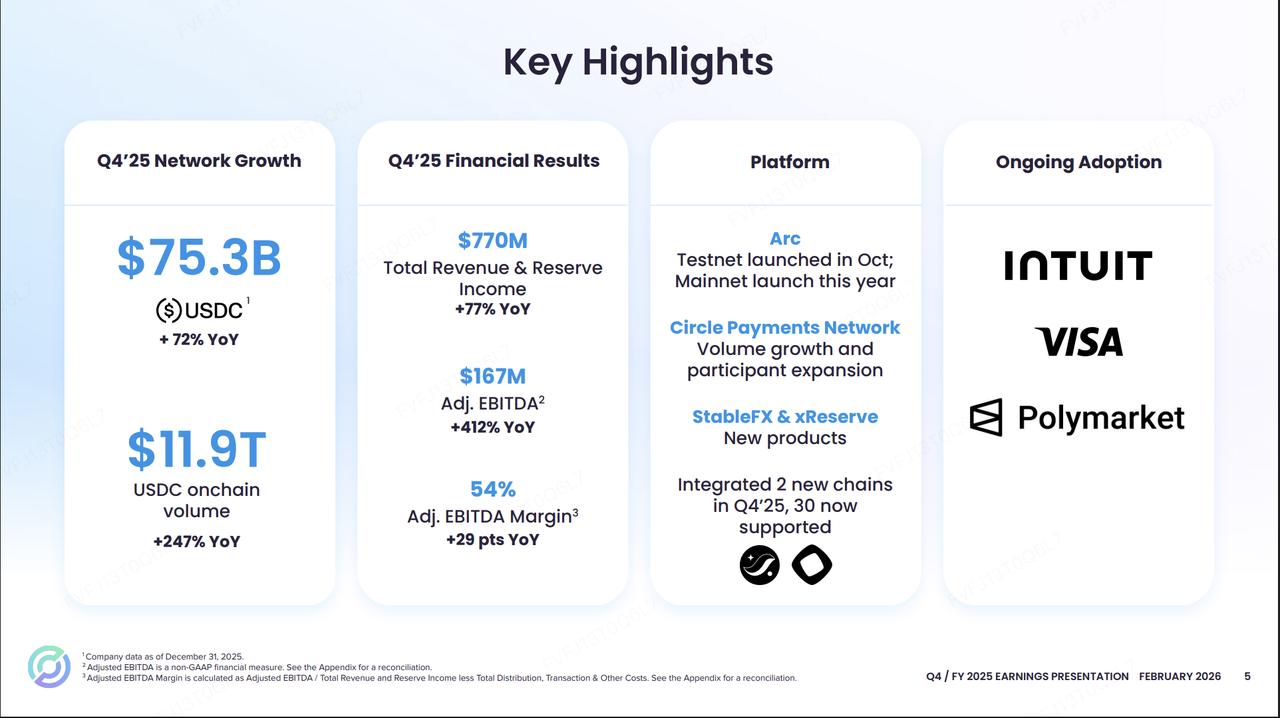
Start with public equities. Circle (CRCL) rebounded after earnings, driven by the improved visibility of its cash-flow profile under the “stablecoin scale × interest-rate environment” equation. As USDC supply expanded, reserve income and overall revenue improved—nudging Circle’s market positioning toward a more mainstream, regulated financial infrastructure lens, rather than a single “stablecoin concept stock” label. At the same time, recent periodic cash-out activity by executives/directors under disclosure requirements has become a focus of discussion. This is not an allegation of insider trading, but in a post-earnings repricing phase it can be interpreted as a marginal factor affecting near-term supply and sentiment. Going forward, three variables matter most: the durability of USDC supply expansion (i.e., whether growth is still driven by real settlement demand), the sensitivity of reserve income and profitability to the rate path, and the pace/structure of management share sales as a potential short-term overhang.
Block (XYZ, formerly Square) is fundamentally a payments and fintech company, with its core footprint best summarized as merchant acquiring/payment tools plus the consumer-facing Cash App. Last week, Block pushed its “operating story” further into an aggressive efficiency narrative by explicitly tying layoffs to deeper AI integration into operations. The market largely read this as an organizational efficiency reset—from headcount-led growth to AI-enabled lean growth—aimed at improving output per unit cost and strengthening the company’s ability to convert scale into margins. The key questions for the next few quarters are whether AI-driven cost structure redesign can translate into sustained margin expansion (rather than a one-off expense cut), and whether the restructuring affects core business growth quality—particularly measurable changes in Cash App engagement, transaction volumes, and product iteration cadence.
Shift the lens back to on-chain markets, and the tone changes entirely. The sensitivity of the Axiom episode isn’t about “whether the product is innovative,” but that it strikes at the market’s baseline expectation of fairness: if a platform can efficiently link user identities with on-chain behavior, and internal controls are insufficient to prevent abuse, the edge no longer comes from research or execution—but from privileged access and information barriers. Adding a more concrete layer, the Polymarket contract tied to ZachXBT’s investigation accumulated meaningful volume and odds swings before the public disclosure, creating a self-referential loop of “trading an insider-trading investigation via prediction markets.” That dynamic makes it easier for the market to extrapolate from a single ethical failure to a structural governance and regulatory gap. From here, risk evolution largely hinges on two tracks: first, whether Axiom can deliver verifiable remediation in access control and auditability (e.g., permissions, logging, and minimization of sensitive data); second, whether compliance tightening for event contracts/prediction markets—under increasing regulatory attention—becomes strong and fast enough to structurally impact market depth and participation.
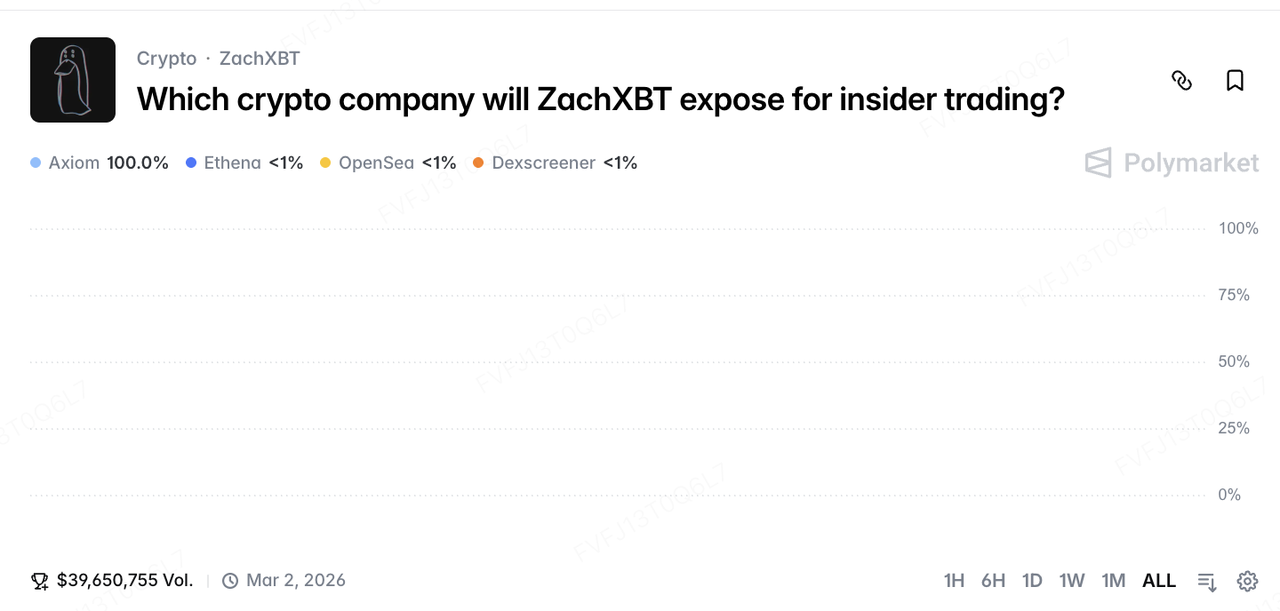
Data Source: https://polymarket.com/event/which-crypto-company-will-zachxbt-expose-for-insider-trading
Overall, this isn’t a simple story of “public markets good, on-chain markets bad.” It looks more like a shift in pricing logic. When investors prioritize verifiability, disclosure, and scalable business models, public-market exposure tends to receive a fundamentals certainty premium. On-chain ecosystems, if they continue to monetize information advantages as the dominant profit mechanism, may see louder short-term activity—but are more likely to converge toward a regime of tighter oversight and higher trust costs. The divergence is accelerating: public markets are embracing clearer commercial flywheels, while on-chain markets need stronger governance and credible self-verification to offset ongoing trust erosion.
2. Weekly Selected Market Signals
Geopolitical Conflict Reshapes "AI Infrastructure" Consensus; Safe-Haven Capital Shifts to "Stagflation Trading" Mode
On February 28, the joint US-Israeli "Operation Epic Fury" dealt a heavy blow to Iran, resulting in the deaths of multiple high-ranking officials, including Supreme Leader Ali Khamenei. Following the event, certain marketing accounts and emotional social media circles heavily hyped this as a sci-fi-level assassination driven by an "AI autonomous kill chain." However, cross-verification from the WSJ, NYT, and multiple open-source intelligence outlets reveals a much more pragmatic truth than the "AI fiction": human intelligence (such as the CIA's long-term infiltration) and the final decisions of commanders remain the core of the battlefield.
Yet today, no one dares to underestimate the terrifying efficacy of AI in actual combat. In this modern war, AI technologies—represented by Palantir’s data fusion platform and Anthropic’s Claude model—truly played an indispensable role as a "super brain." They processed massive amounts of satellite imagery, drone reconnaissance, and intercepted communications in extremely short timeframes, and conducted precise wargaming across dozens of strike scenarios. The most dramatic scene, which best proves AI's value, is this: despite Trump having just issued a blanket ban on the use of Anthropic's technology, models like Claude were already so deeply embedded in the underlying combat and intelligence systems of US Central Command (CENTCOM) that the military simply could not immediately extract them during actual combat. This irreplaceability in extreme environments has fundamentally elevated the AI narrative from a "technological frontier" to "national strategic infrastructure."
Faced with this ultimate geopolitical test, AI has taken the stage as the absolute protagonist, sparking intense global discussion and application. In contrast, aside from Bitcoin serving as a safe-haven asset for a portion of capital, the broader crypto industry's primary utility seems confined to the "PvP mechanics" of prediction markets. The overall crypto narrative appears extremely thin amidst this macro upheaval. To break out of this awkward "outsider" status, crypto investments must pivot toward extreme pragmatism. We must seek out infrastructure capable of embedding itself into real-world business flows just as AI has, in order to secure a seat for Web3 in the future global macro narrative.
Under the dual impact of geopolitical conflicts and tech giant earnings reports, global risk assets faced short-term pressure. However, capital did not engage in indiscriminate selling; instead, there was a highly distinct "narrative switch." Market focus on AI rapidly shifted from early "blind frenzy" to "business integration and actual utility." Enterprises represented by Palantir, which have proven the value of their data fusion in actual combat, are seeing their pragmatic "Military + AI" logic re-evaluated and pursued by smart money.
Driven by market fears of an actual blockade of the Strait of Hormuz, WTI crude oil surged above $72, and Brent crude temporarily spiked 13% to reach the $80–$82 range. Risk aversion caused a sharp overnight plunge in US stock index futures, with the Dow dropping nearly 400 points at one point. Capital rapidly withdrew from tech and consumer stocks, flooding into energy and defense sectors. Funds accelerated their inflow into gold and the US dollar, while the 10-year US Treasury yield ticked down slightly due to safe-haven buying. If the Middle East conflict pushes oil prices past $100 or higher, global inflation is expected to rise by 0.6–0.7 percentage points. The market is swiftly transitioning from an "AI boom trade" to a "Geopolitics + Stagflation" defensive mode.
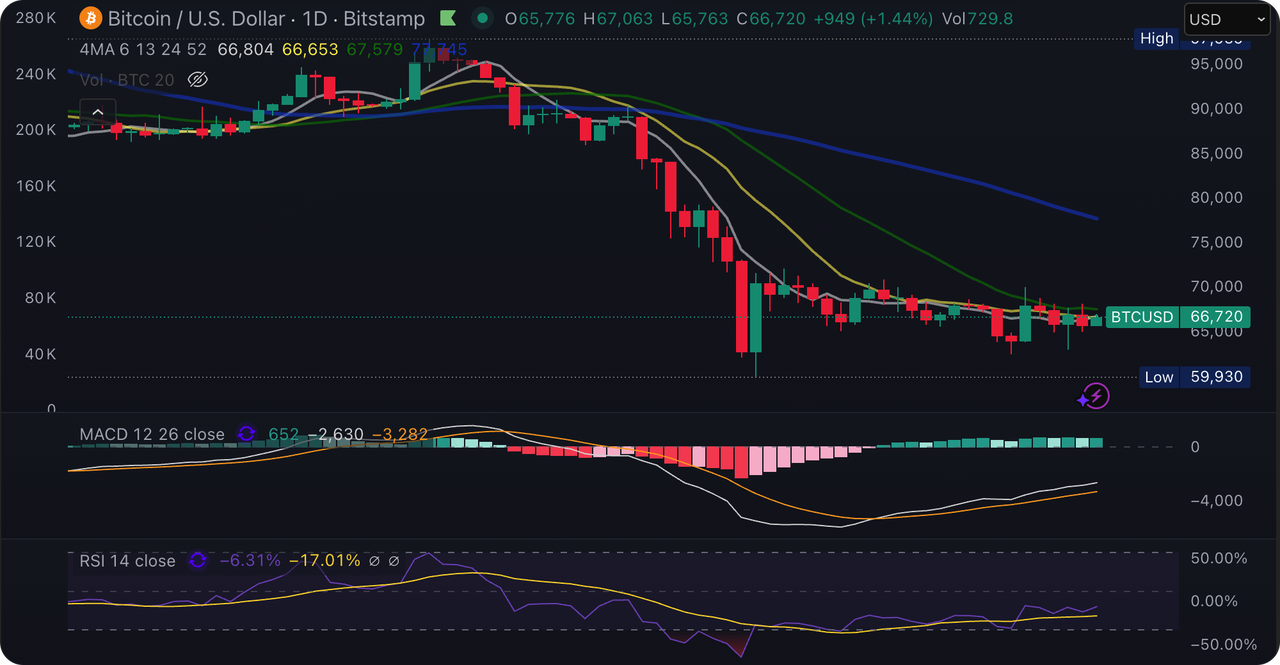
Data Source: TradingView
In the face of sudden warfare, the crypto market initially exhibited classic high-beta risk asset characteristics, but quickly recovered, demonstrating strong structural resilience. Saturday's panic selling temporarily smashed BTC to a low of $63,000, evaporating over $128 billion from the total crypto market cap in an instant and liquidating over $500 million in leverage. However, spot dip-buying capital flooded in almost immediately, driving BTC to quickly rebound to the $66,000–$68,000 range over the weekend and holding key support levels. Although the broader altcoin market performed weakly in February, the Altcoin Season Index rebounded to 45 during this rally. Short-term bottom-up surges in high-elasticity public chains like SOL indicate that, following extreme panic, capital is willing to establish left-side positions in oversold, high-quality beta assets.
Data Source: SoSoValue
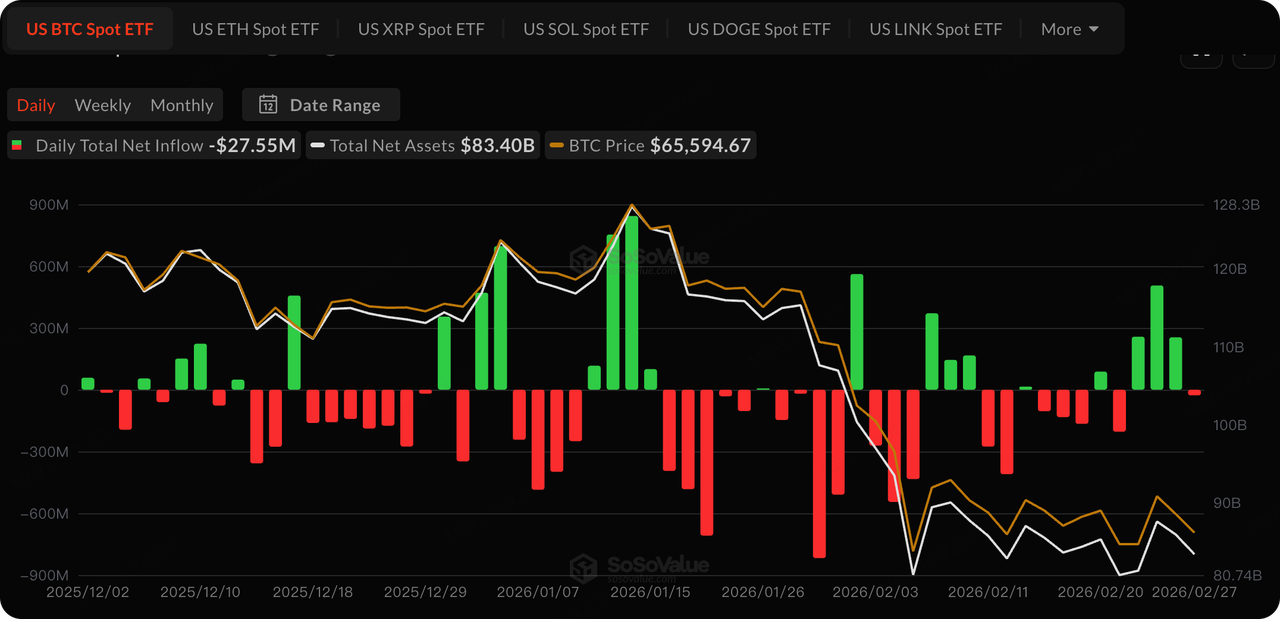
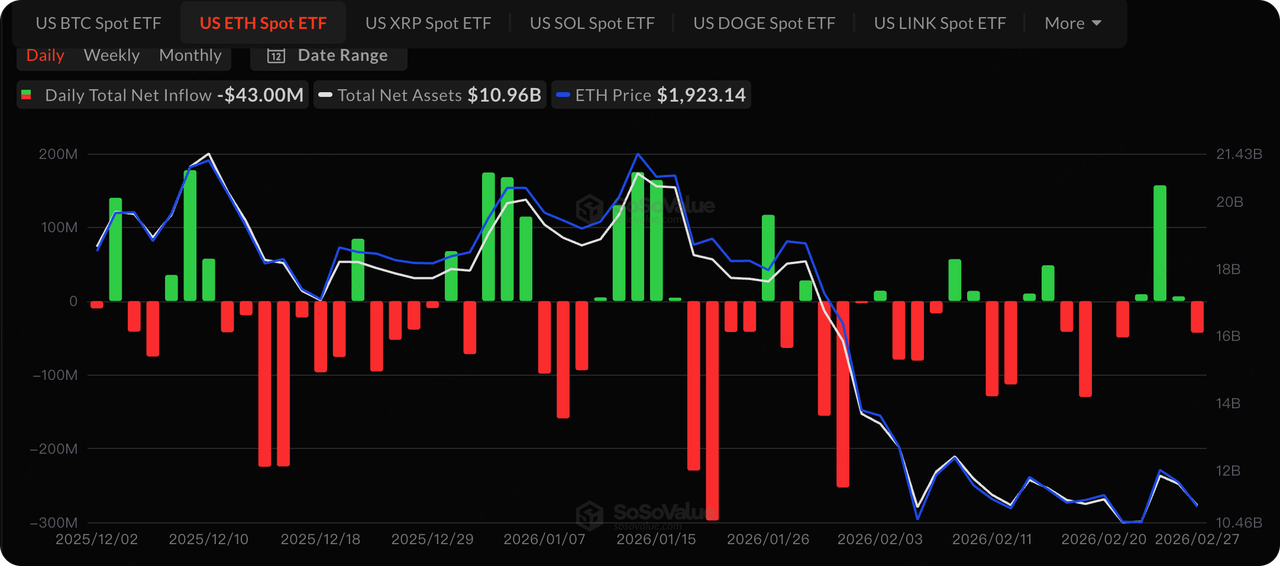
As of last week, after a painful month-long shakeout, US crypto spot ETF capital had already begun showing very clear signs of bottoming and recovery. The BTC spot ETF not only hit the brakes on outflows but also recorded large net inflows for consecutive days in late February; the ETH spot ETF similarly demonstrated a strong recovery pattern, even logging a single-day net inflow of over $150 million at the end of the month. This indicates that, strictly from an economic data perspective, traditional institutions had determined the interim correction was complete and began left-side accumulation. However, the weekend's warfare may completely disrupt this trajectory. The actual ETF capital flows after the US stock market opens this Monday will serve as the core observational metric for judging institutional risk aversion and future market direction.
Data Source: DeFillama
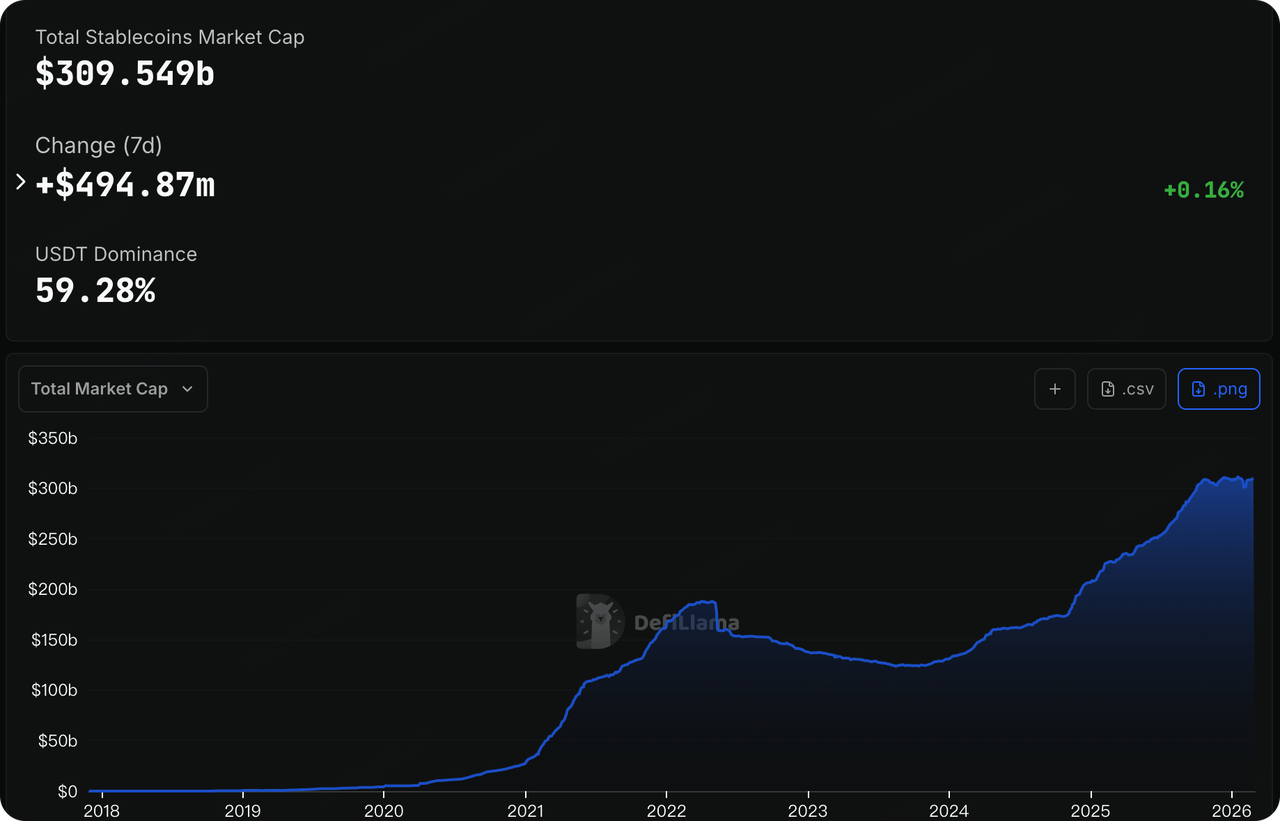
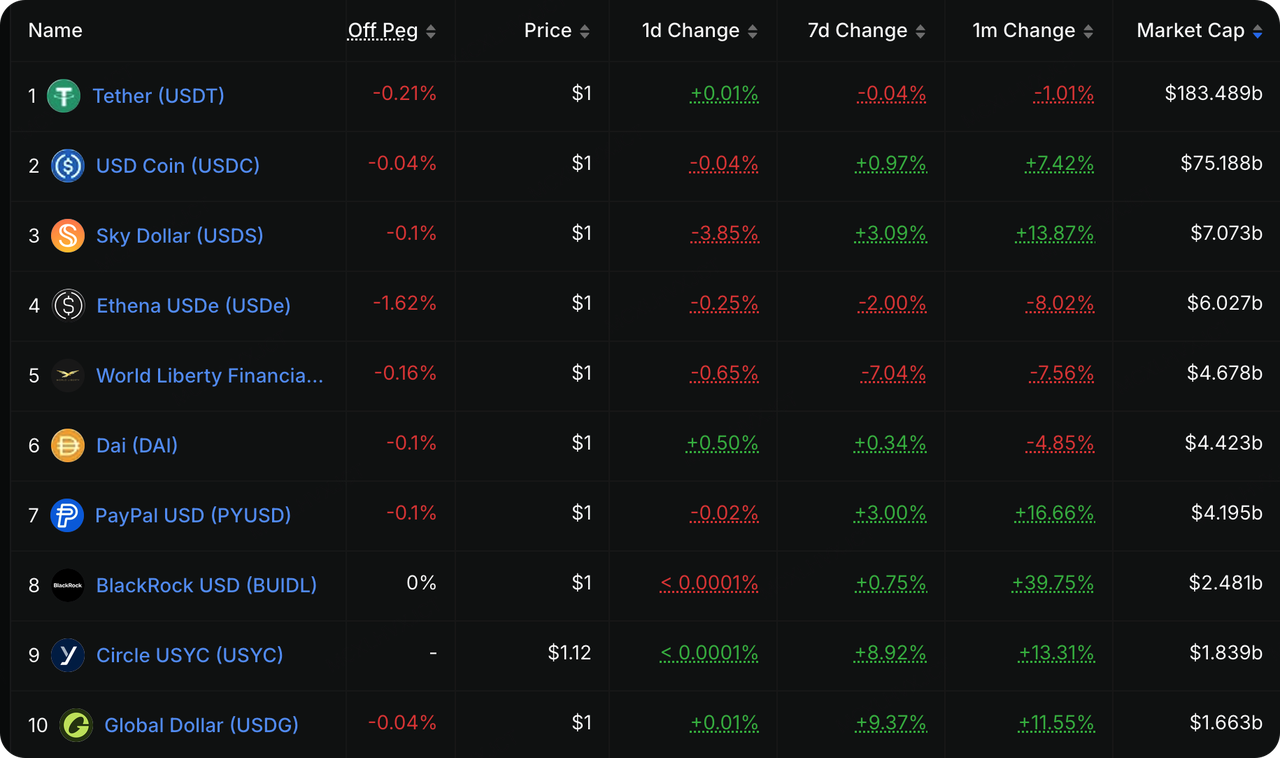
The total market capitalization of stablecoins across the network remains around $309.8 billion, with the overall scale slightly expanding. What merits attention is the internal structural adjustment: capital is clearly flowing from decentralized stablecoins into relatively more compliant, fiat-collateralized stablecoin portfolios. This suggests that institutional capital within the market is primarily executing defensive "deleveraging and reallocation" operations, rather than exiting the crypto market entirely.
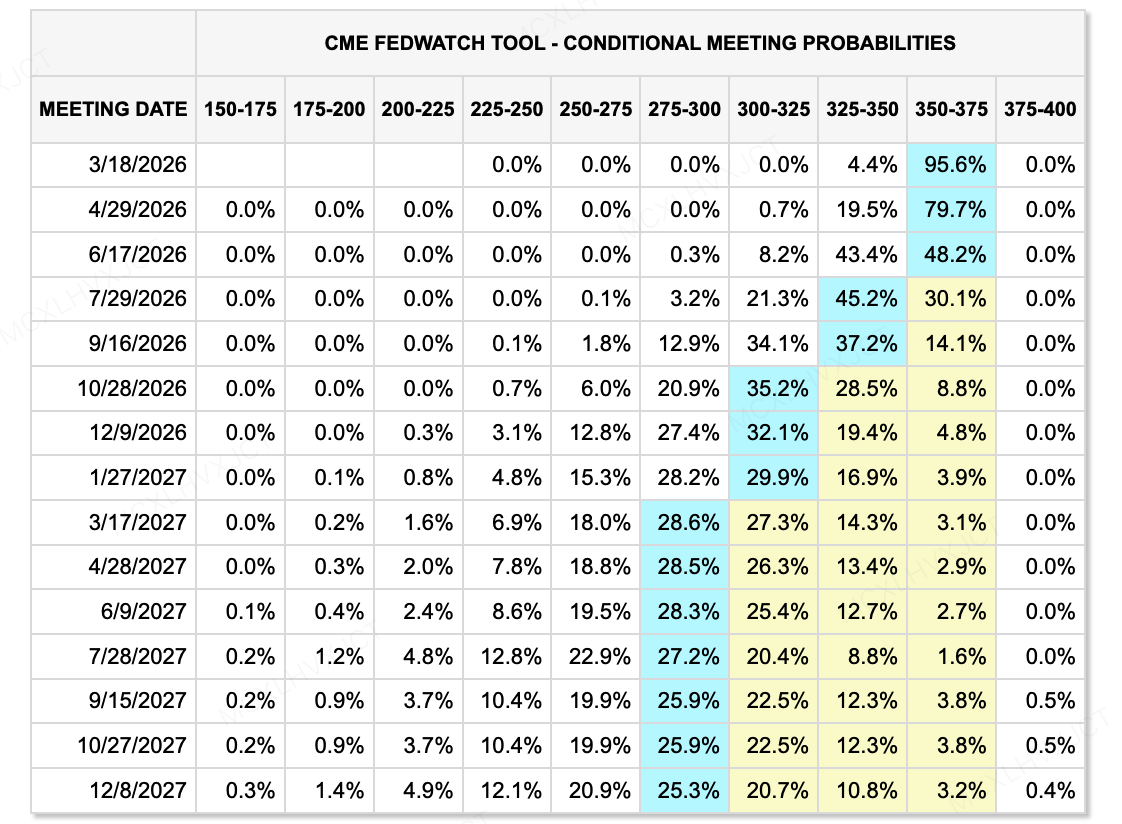
Data Source: CME FedWatch Tool
The geopolitical conflict has completely derailed the Federal Reserve's rate-cut script. Soaring oil prices have caused inflation stickiness to once again exceed expectations. Persistently high risk-free rates will continue to suppress the valuations of high-risk, zero-cash-flow crypto assets. Given that the Fed's balance sheet has been reduced to $6.5 trillion, if the conflict becomes prolonged, the liquidity stance of global central banks will be forced to shift from anticipated "marginal easing" to "defensive tightening," which will continuously cap the valuation ceiling for crypto assets.
Key Events to Watch This Week:
The US-Iran conflict has instantly pushed the "geopolitical risk premium" to its 2026 peak, making oil prices the new dominant variable in global pricing. The market will remain highly volatile over the next 1–2 weeks, and capital will reprice based on whether the conflict is deemed "controllable" or "out of control."
-
March 3: ISM Manufacturing PMI (expected around 53.0); monitor updates on the Iran situation.
-
March 5: ADP Private Employment Report, ISM Services PMI, Fed Beige Book (regional economic survey) – focus on inflation/employment signals.
-
March 6: Initial Jobless Claims.
-
March 7: February Non-Farm Payrolls + Retail Sales – This will be the first major data release since the conflict escalated and will significantly impact the tone of the March 17-18 FOMC meeting.
Data Source: CryptoRank
According to CryptoRank statistics, a total of $116M in funding across 18 events was disclosed this week, with the largest being Whop raising $200M USD at a $1.6B USD valuation. Whop is a leading global digital marketplace platform focusing on the creator economy. Creators use the platform to sell software tools, trading groups, and access to online communities and courses. This round focuses on integrating Tether wallets and USDT to enable instant, low-cost global settlements.
Other funding includes:
-
Based: Completed an $11.5M Series A led by Pantera, with participation from Coinbase Ventures, Wintermute, and others. Positioned as a Web3 super app, it integrates Hyperliquid perpetual/spot trading, prediction markets, staking, and a Visa crypto card. The next step is North American expansion and the development of AI Agentic business operations.
-
JPYC: Completed a $12M Series B led by Asteria, with participation from local Japanese IT companies and BitFlyer. It is Japan's first regulated onshore JPY stablecoin, backed by 100% yen deposits and Japanese government bonds, and deployed across multiple chains. Primarily used for convenience store payments, cross-border remittances, and collaboration with Circle StableFX.
t54 Labs Secures $5M Seed Funding, Pragmatically Positioning as the "Trust Infrastructure" for the AI Agent Economy
t54 Labs recently secured $5 million in seed funding. The round was led by Anagram, PL Capital, and Franklin Templeton, with strategic participation from Ripple, Virtuals Ventures, and ABCDE.
The project is an early-stage AI infrastructure company based in the California Bay Area, whose core mission is to build the trust layer for a credible agent economy. Unlike traditional DeFi or AI tools, it is designed specifically for autonomous AI Agents, enabling them to transfer value securely, compliantly, and autonomously, without relying on human intervention or pre-funded accounts. It is currently deployed on the XRPL, Solana, and Base chains, and supports the x402 payment protocol.
Founder Chandler Fang emphasized: "When agents begin transacting autonomously, verifiable identity, real-time risk assessment, and programmable accountability will become standard." Target markets include AI agent compute payment services, x402 merchant settlements, and institutional treasury automation. The agent economy is projected to reach $30 trillion by 2030, and t54 is positioning itself squarely in the "trust infrastructure" lane.
Core features include: KYA (Know Your Agent) Verification System
-
Functionality: Developer KYB, model origin tracking, human-AI agent binding, proof of intent.
-
Pain Points Addressed: Currently, most AI agents execute transfers with "no identity and no accountability," making them vulnerable to prompt injection attacks or impersonation.
Trustline Real-Time Risk Engine
-
Core Technology: Uses agent-native signals (identity, code audits, authorized behavioral patterns, device context) to generate real-time credit scores.
-
Detects anomalies and manipulation attacks, automatically triggering challenge protocols while maintaining high approval rates. Pre-transaction risk control for agent autonomy, making decisions in seconds.
Open-Source Security Layer x402-secure
-
An SDK + Proxy layer based on the x402 protocol.
-
Automatically layers identity verification, intent checking, and Trustline risk control onto every agent payment. Integration takes only minutes.
-
Supporting tools include a real-time Dashboard (security score rankings, behavior monitoring, anomaly detection) and an agent verification network. The project is currently listed on the official Coinbase x402 Bazaar ecosystem page.
The project has already launched its first agent-native credit product, ClawCredit. Its highlights include keyless operation and no pre-funded gas requirements, relying instead on custodial settlement. Agents automatically build credit limits through responsible use. Every expenditure is 100% linked to the agent's inference reasoning trace + code snapshot (fully auditable), and it is already live on Solana. Practical case: An agent can autonomously apply for a credit line and pay for x402 services without requiring humans to repeatedly top up the balance.
In the AI × Crypto sector of early 2026, t54 Labs exemplifies a pragmatic path of "solving real business pain points first, then discussing ecosystem scaling." The project utilizes crypto infrastructure to address the trust and compliance gaps in autonomous AI settlements. This approach is not only logically consistent but also possesses immense commercial extensibility (capable of penetrating AI compute payments, x402 merchant settlements, and institutional treasury automation). We will continue to track the protocol's cross-chain adoption data and subsequent product iteration cadence.
About KuCoin Ventures
KuCoin Ventures, is the leading investment arm of KuCoin Exchange, which is a leading global crypto platform built on trust, serving over 40 million users across 200+ countries and regions. Aiming to invest in the most disruptive crypto and blockchain projects of the Web 3.0 era, KuCoin Ventures supports crypto and Web 3.0 builders both financially and strategically with deep insights and global resources.
As a community-friendly and research-driven investor, KuCoin Ventures works closely with portfolio projects throughout the entire life cycle, with a focus on Web3.0 infrastructures, AI, Consumer App, DeFi and PayFi.
Disclaimer This general market information, possibly from third-party, commercial, or sponsored sources, is not financial or investment advice, an offer, solicitation, or guarantee. We disclaim liability for its accuracy, completeness, reliability, and any resulting losses. Investments/trading are risky; past performance doesn’t guarantee future results. Users should research, judge prudently, and take full responsibility.