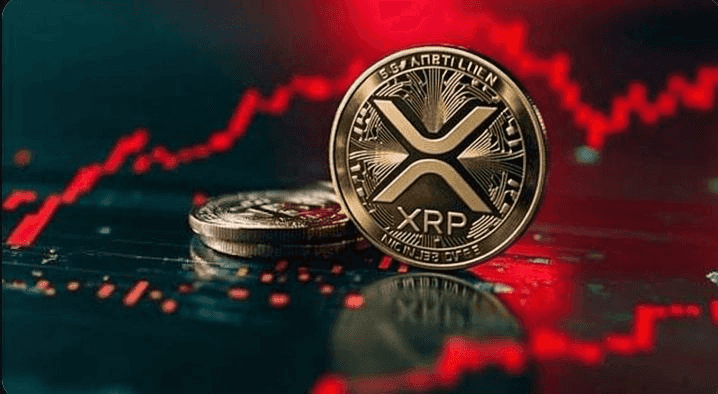
Is XRP a Good Investment? 2026 Ripple Comprehensive Guide
Is XRP a Good Investment? 2026 Ripple Comprehensive Guide
Key Takeaways
Market Position: XRP has transitioned from a speculative token to an institutional-grade utility asset, backed by significant infrastructure like Spot ETFs and DTCC integration.
Regulatory Catalyst: The potential passage of the CLARITY Act in the US is the primary driver for regulatory certainty and potential price repricing.
Core Utility: Its value proposition remains centered on On-Demand Liquidity (ODL), providing faster and cheaper cross-border settlements compared to the legacy SWIFT system.
Risk Profile: Classified as a medium-to-high risk asset. While utility is high, risks include heavy competition from stablecoins (RLUSD, JPM Coin) and Ripple’s large escrow holdings.
2026 Price Targets: * Base Case: $2.50 – $4.00.
Bull Case: Up to $8.00 (contingent on ETF demand and legislative success).
Moonshot: A $100 price point is considered highly unrealistic due to market cap constraints.
Portfolio Strategy: Recommended as a "satellite" holding for aggressive investors; it should complement rather than replace core assets like BTC or ETH.
India Compliance: Fully legal but subject to strict tax laws, including a 30% tax on gains and a 1% TDS on all transactions.
XRP remains one of the most polarizing digital assets in the crypto space. In 2026, as the "CLARITY Act" nears a potential Senate vote and institutional adoption hits new milestones, the question remains: is XRP a good investment for your portfolio? While some envision XRP as the backbone of a new global financial system, others warn of its inherent volatility and centralization risks. This guide explores the 2026 landscape to help you decide if Ripple’s native token fits your investment strategy.
Quick Verdict: Is XRP a Good Investment in 2026?
To provide a direct answer: is XRP a good investment right now? It depends entirely on your risk appetite. In early 2026, XRP has transitioned from a purely speculative token into an institutional-grade utility asset, but it is far from a "guaranteed" bet.
For Aggressive Investors: XRP presents a high-upside opportunity. With the recent listing of Ripple’s institutional platform, Hidden Road, in the DTCC directory, the infrastructure for mass adoption is ready. If the CLARITY Act passes by April as predicted by industry experts, XRP could see a massive repricing.
For Conservative Investors:Is XRP a good investment for a stable portfolio? Only as a "satellite" holding. It should complement, not replace, core assets like Bitcoin or Ethereum.
Why People Buy: Fast settlement (3-5 seconds), negligible fees, and massive banking partnerships (300+ global banks).
Why People Avoid: Significant supply remains in Ripple's escrow, and competition from stablecoins like RLUSD or Central Bank Digital Currencies (CBDCs) remains fierce.
In 2026, XRP is classified as a medium-to-high risk asset with significant utility backing.
XRP at a Glance: Understanding the Basics and Is XRP a Good Investment?
Before asking is XRP a good investment, you must understand its core function. XRP was engineered as a "bridge currency" to solve the inefficiencies of the legacy SWIFT system. Traditional cross-border transfers are slow, taking 3-5 days, and expensive due to multiple intermediary banks.
XRP facilitates "On-Demand Liquidity" (ODL). Instead of holding pre-funded accounts in local currencies worldwide, banks can use XRP to convert Currency A to Currency B instantly. In 2026, several factors drive XRP’s price action:
Legislative Progress: The progress of the CLARITY Act in the US.
Institutional Flows: Net inflows into Spot XRP ETFs, which reached over $1.25 billion by March 2026.
Network Utility: The volume of actual transactions processed on the XRP Ledger (XRPL).
Macro Sentiment: Global interest rates and the overall health of the crypto market.
What Is XRP and How Is It Different? Is XRP a Good Investment Compared to Others?
When debating is XRP a good investment, investors often compare it to Bitcoin. However, their DNAs are fundamentally different:
Bitcoin (Digital Gold): Designed as a decentralized store of value. It relies on Proof-of-Work (mining) and is prized for its scarcity ($21$ million cap).
XRP (Digital Oil): Designed for high-speed utility. It uses a consensus protocol that is faster and more energy-efficient than Bitcoin.
Because XRP’s value is tied to its role as a liquidity tool, its success depends on real-world throughput. Unlike meme coins that rely on social media hype, the "is XRP a good investment" argument is built on the plumbing of global finance.
Understanding the XRP Ledger: Is XRP a Good Investment Based on Technology?
The XRP Ledger (XRPL) is the decentralized, open-source blockchain behind the token. In 2026, the XRPL has evolved significantly, now supporting an EVM-compatible sidechain (launched in 2025) and over $2.3 billion in Tokenized Real-World Assets (RWA).
The technology allows for nearly 1,500 transactions per second (TPS). While critics point to the "Unique Node List" (UNL) as a sign of centralization, proponents argue this design is what makes it "enterprise-ready." If you believe the future of finance is on-chain, then the technical robustness of the XRPL suggests that yes, is XRP a good investment from a fundamental perspective.
Who Develops XRP? Is XRP a Good Investment Despite Ripple's Influence?
A common misconception when asking is XRP a good investment is the belief that Ripple owns XRP.
Ripple: A private technology company that uses XRP in its products (Ripple Payments).
XRP: An independent digital asset.
While Ripple holds a large portion of the supply in escrow, they do not control the ledger. In 2026, Ripple’s influence is seen as a double-edged sword: it provides the professional marketing and banking partnerships required for growth, but it also creates a "centralized" perception that can lead to regulatory scrutiny.
What Changed Since 2024 and Why 2026 Is Different for Your Investment?
If you asked "is XRP a good investment" in 2024, the answer was clouded by the SEC lawsuit. By 2026, the landscape has shifted:
Regulatory Clarity: Most legal hurdles have been cleared, and the US is moving toward a comprehensive "CLARITY Act" for digital assets.
ETF Inclusion: The launch of Spot XRP ETFs has opened the door for pension funds and institutional 401k plans.
Traditional Finance (TradFi) Integration: Ripple’s Prime brokerage (Hidden Road) is now clearing trades through the NSCC/DTCC infrastructure, placing XRP directly inside Wall Street's engine.
The Bull Case: Why Is XRP a Good Investment for the Long Term?
The "Bull Case" for XRP is simple: Liquidity.
If XRP captures even 5% of the $150 trillion annual cross-border payment market, the demand for the token could skyrocket. In 2026, we are seeing Japanese and South Korean banks lead the way in integrating XRP for remittance corridors. With exchange-held supply at 7-year lows (1.6 billion tokens), any surge in institutional demand could trigger a massive supply shock.
The Bear Case: Risks That Make You Wonder, Is XRP a Good Investment?
No investment is without risk. When evaluating is XRP a good investment, consider these "Bear" factors:
Competition: J.P. Morgan’s JPM Coin and various stablecoins (USDT, USDC, and Ripple's own RLUSD) offer similar settlement speeds.
Decoupling: There is no guarantee that high network usage will lead to a higher token price, as banks can use the technology without necessarily holding large amounts of XRP.
Market Volatility: As seen in early 2026, XRP can drop 40% from its highs even during positive news cycles.
How High Will XRP Go in 2026? Is XRP a Good Investment for Price Gains?
Predicting price is speculative, but we can look at 2026 scenarios:
Bearish Scenario: If the CLARITY Act fails or market liquidity dries up, XRP could retest the $1.00 - $1.20 support levels.
Base Scenario: Steady adoption and ETF inflows could keep XRP in the $2.50 - $4.00 range.
Bullish Scenario: Standard Chartered analysts have projected a target of $8.00 by the end of 2026, assuming sustained ETF demand and full regulatory "green light."
Can XRP Reach $100? Is XRP a Good Investment for "Moon" Gains?
Many retail investors ask this when considering is XRP a good investment. To reach $100, XRP’s market cap would need to exceed $10 trillion—more than the current market cap of gold. While "never say never" in crypto, a $100 price point is highly unlikely in the 2026 timeframe without a total collapse of global fiat currencies.
How High Can XRP Go Realistically? Is XRP a Good Investment for Steady Growth?
A realistic outlook for 2026 focuses on the $3.50 to $5.50 range. This represents a healthy recovery toward its previous all-time highs while accounting for the increased circulating supply. Real wealth in XRP is built through the "utility cycle," not overnight moonshots.
What Will XRP Be Worth in 5 Years? Is XRP a Good Investment for the 2030s?
By 2030, the "is XRP a good investment" debate will be settled by its adoption as a global reserve asset for banks. If Ripple succeeds in becoming the "TCP/IP of money," the value could be significantly higher than today’s prices. However, this depends on out-competing sovereign CBDCs.
Is XRP Legal in India? Is XRP a Good Investment for Indian Traders?
Yes, XRP is legal to buy, sell, and hold in India as of 2026. However, the 2026 Union Budget has maintained a 30% flat tax on VDA (Virtual Digital Asset) gains and a 1% TDS on every transaction. Additionally, new penalties of ₹50,000 for incorrect reporting under Section 509 mean Indian investors must be extremely diligent with their tax filings.
How to Buy XRP With INR on Mudrex: Is XRP a Good Investment to Start Today?
If you’ve decided that yes, is XRP a good investment for you, Mudrex offers a compliant and simple way to start in India.
Step 1: Create a Free Account on Mudrex
Download the app, verify your email/phone, and complete the mandatory KYC (Aadhaar/PAN). This is crucial for 2026 compliance.
Step 2: Buy XRP Through Mudrex Using INR
Mudrex allows you to deposit INR via:
UPI: Instant deposit via Google Pay or PhonePe.
Bank Transfer: NEFT/IMPS for larger amounts.
The INR is converted to USDT, which acts as the stable base to purchase XRP, protecting you from INR-USD fluctuations during the trade.
Step 3: Receive XRP in Your Mudrex Wallet
Once the trade is executed, your XRP is held in a secure, insured wallet. Remember to keep records for your ITR (Schedule VDA) filings.
Is It Too Late to Buy XRP? Is XRP a Good Investment for Latecomers?
It is never "too late" if the utility is just beginning. In 2026, with the DTCC integration and ETF approvals, many argue that the professional phase of XRP has only just started. If you are looking for 10,000% gains, you might be too late. If you are looking for a utility-backed asset with 2x-5x potential, then the answer to "is XRP a good investment" remains positive.
Is XRP a Good Long-Term Investment? Final Verdict
XRP is a long-term play on the digitization of the global financial system. It requires patience and an understanding that the price is driven by institutional adoption, not just retail hype.
Conclusion
XRP enters 2026 with more fundamental strength than ever before. While risks regarding competition and supply management remain, the regulatory and institutional tailwinds are undeniable. Is XRP a good investment? For the informed investor who treats it as a strategic part of a diversified portfolio, the answer is a cautious but optimistic "Yes."
For more insights into responsible investing, visit Mudrex Learn or subscribe to our YouTube channel for weekly 2026 market breakdowns.
Start your crypto journey in minutes by creating a secure KuCoin account with no initial deposit required. Sign Up Now!
FAQs
Is XRP a good investment now?
It is a viable option for those seeking institutional exposure, provided they can handle 20-30% price swings.
Can XRP reach $100?
Highly improbable in the current economic cycle due to the required market capitalization.
What are the tax implications in India for 2026?
A 30% tax on profits and a 1% TDS on all "transfers," including token swaps.
Disclaimer: The information on this page may have been obtained from third parties and does not necessarily reflect the views or opinions of KuCoin. This content is provided for general informational purposes only, without any representation or warranty of any kind, nor shall it be construed as financial or investment advice. KuCoin shall not be liable for any errors or omissions, or for any outcomes resulting from the use of this information. Investments in digital assets can be risky. Please carefully evaluate the risks of a product and your risk tolerance based on your own financial circumstances. For more information, please refer to our Terms of Use and Risk Disclosure.