

New Fed Chair Kevin Warsh: Top Macro Challenges and Crypto Impact
2026/05/18 16:57:02
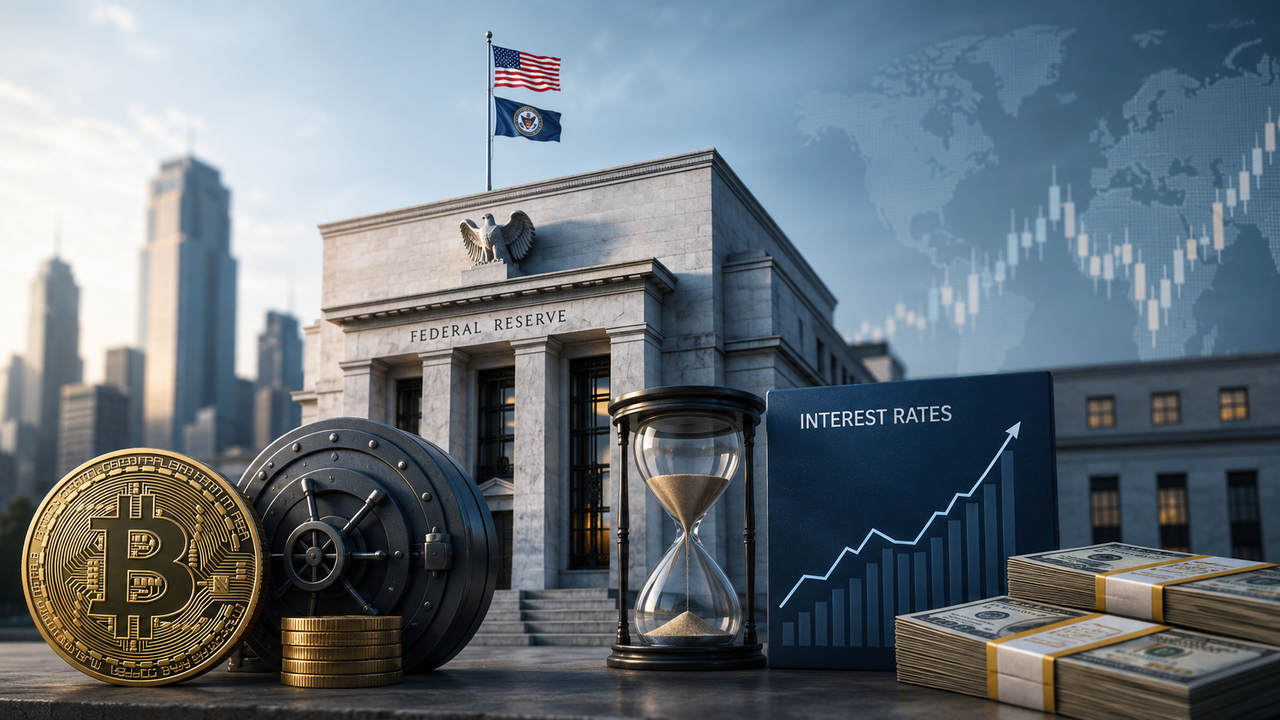
The global financial ecosystem is experiencing a historic transition as the Federal Reserve undergoes an unprecedented leadership shift amid persistent macroeconomic volatility. With the official confirmation of the new central bank leadership, investors across legacy and digital asset markets are bracing for a structural overhaul in monetary policy execution.
This deep dive analyzes how the institutional hurdles confronting New Fed Chair Kevin Warsh will shape global liquidity patterns, interest rate trajectories, and cryptocurrency valuations.
Key Takeaways
-
Inflation Resurgence: Headline inflation has rebounded to 3.8%, driven by geopolitical conflict in the Middle East, effectively forcing the Fed into a corner and postponing long-awaited rate cuts.
-
FOMC Fractures: Warsh inherits an incredibly divided Federal Open Market Committee (FOMC), which recently recorded four voting dissents—the highest level of internal structural disagreement since 1992.
-
Unprecedented Board Dynamics: Outgoing Chair Jerome Powell is retaining his seat on the Board of Governors until 2028, creating a highly unusual "double-headed" power dynamic within the central bank.
-
Delayed Easing Cycle: Quantitative tightening and structural inflation have caused Wall Street to price out monetary easing completely, pushing the realistic timeline for initial rate cuts out to late 2027.
-
Crypto Resilience: While prolonged high interest rates pressure speculative altcoins, Bitcoin's narrative as "Digital Gold" is strengthening as global fiat supplies face structural devaluation and political interference.
Meet Kevin Warsh: The Fed's New Leader
Kevin Warsh steps into the role of Federal Reserve Chair as one of the most intellectually distinct and influential policymakers of the modern era. Having previously served as the youngest-ever Federal Reserve Governor from 2006 to 2011, Warsh is no stranger to managing extreme economic crises. During the 2008 global financial meltdown, he acted as the central bank's primary liaison to Wall Street, working behind the scenes to stabilize broken credit markets and prevent a total systemic collapse.
Following his departure from the board, Warsh spent over a decade in academia and private finance, where he developed a reputation as a fierce critic of the post-crisis central banking model. He has long argued that the Federal Reserve has overextended its mandate, becoming "hyper-talkative" through forward guidance and leaving an unsustainably large footprint on commercial markets. Nominated by the White House to bring a comprehensive "regime change" to Washington, Warsh intends to strip away unnecessary administrative clutter and return the Fed to a more disciplined, market-oriented operational framework.
Core Institutional Challenges Faced by New Fed Chair Kevin Warsh
The institutional landscape awaiting Warsh inside the Eccles Building is arguably the most hostile any incoming chair has encountered in modern financial history. Rather than managing a smooth economic expansion, he must immediate navigate deep internal schisms, a lingering predecessor, and a sudden reversal in consumer price metrics.
The 3.8% Inflation Surge
The most immediate and glaring threat to the new administration's economic goals is the aggressive resurgence of headline consumer price inflation, which has officially climbed to 3.8% year-over-year. This hot print shatters any lingering hopes that the previous hiking cycle had successfully subdued structural price pressures.
The primary driver behind this acceleration is the widening geopolitical war involving Iran in the Middle East, which has triggered an extended spike in global crude oil and domestic motor fuel costs. Because energy costs quickly bleed into manufacturing, transportation, and consumer supply chains, Warsh is facing a highly toxic supply-side shock. This 3.8% inflation surge strips the central bank of its ability to easily lower borrowing costs without risking a catastrophic unanchoring of long-term inflation expectations.
A Divided FOMC: Highest Dissents Since 1992
As New Fed Chair Kevin Warsh tries to establish structural control, he must manage a policy-setting committee that is actively tearing itself apart over the correct path forward. At the final policy meeting of the previous term, the 12-member voting block of the FOMC delivered a historic shock to financial markets by registering four official dissents.
This represents the highest volume of open disagreement on the FOMC since 1992. Three of these dissenters broke ranks to declare that the central bank's current posture is entirely too loose, signaling that the Fed should be actively preparing to hike interest rates rather than holding them steady. Warsh's desire for what he terms a "good old-fashioned family fight" inside policy meetings has materialized before his first official vote, presenting a massive consensus-building challenge.
The Shadow of Jerome Powell on the Board
Compounding the internal friction is a highly unusual administrative arrangement that breaks with over seven decades of central banking tradition. Jerome Powell, following the conclusion of his turbulent tenure as chair, has made the strategic decision to remain on the Federal Reserve Board of Governors. Armed with a legal term that runs through January 2028, Powell will continue to sit at the policy table, cast official votes on interest rates, and exert immense behind-the-scenes influence over staff economists.
This setup creates an awkward, double-headed leadership dynamic. Warsh will be forced to implement his sweeping "regime change" and alter communication styles while his predecessor—who spent eight years building the exact framework Warsh intends to dismantle—watches from the exact same room.
Monetary Policy Dilemmas: What to Expect Next
The convergence of sticky consumer prices and extreme institutional friction means that the new chair has zero room for error. Every policy lever at his disposal currently carries significant systemic risk for both traditional banking structures and global capital allocations.
The Postponed Rate-Cut Forecast Until Late 2027
For the past several quarters, global financial markets have been operating under the assumption that a comprehensive rate-cut cycle was just around the corner. However, the combination of 3.8% inflation and a deeply hawkish contingent within the FOMC has forced a violent repricing of global yield curves.
Major investment banks and interest rate futures markets have now effectively pushed the timeline for the first initial rate cut out to late 2027.
| Metric / Horizon | Previous Projections | Current Warsh-Era Forecast |
| Fed Funds Target Rate | 2.50% - 2.75% | 3.50% - 3.75% (Held Flat) |
| First Anticipated Rate Cut | Mid-2026 | September 2027 |
| Primary Systemic Risk | Mild Economic Sluggishness | Structural Stagflation / Real Estate Crises |
This "higher-for-longer" environment means that corporations, commercial real estate developers, and sovereign governments will be forced to refinance trillions of dollars in short-term debt at restrictive borrowing costs for the next several years, significantly dampening speculative economic expansions.
Shrinking the $6.7T Balance Sheet Safely
Beyond the headline federal funds rate, Warsh is highly focused on reducing the central bank’s massive $6.7 trillion balance sheet, which remains bloated with trillions of dollars in U.S. Treasuries and mortgage-backed securities (MBS). Warsh has historically argued that an oversized balance sheet distorts price discovery, crowds out private capital, and represents an unnecessary intervention in free markets.
However, unwinding this massive portfolio via aggressive Quantitative Tightening (QT) is an incredibly hazardous maneuver. Draining liquidity out of the financial architecture too quickly can cause sudden, unpredictable dislocations across domestic banking channels.
Dodging the 2019-Style Repo Liquidity Crisis
The primary danger of an overly aggressive balance sheet reduction is a repeat of the chaotic repo market crisis of September 2019. During that episode, the Federal Reserve inadvertently allowed bank reserves to drop below a critical structural threshold, causing short-term lending rates to instantly spike from 2% to a staggering 10% overnight.
If Warsh miscalculates the minimum comfortable level of reserves required by modern commercial banks, he risks triggering a sudden, systemic credit freeze. For crypto and digital asset markets, a repo-style liquidity crunch is an immediate hazard, as it forces institutional desks to rapidly liquidate liquid assets—including digital currencies—to meet immediate dollar-denominated funding obligations.
Resisting Trump’s White House Political Pressure
Perhaps the most visible trial for New Fed Chair Kevin Warsh will be his ability to maintain the statutory independence of the world's most powerful central bank. President Donald Trump nominated Warsh with the explicit expectation that he would act as a catalyst for cheaper credit, as the administration has consistently used its public platforms to demand aggressive rate cuts to juice industrial growth.
-
The White House Objective: Rapidly drop borrowing costs to fuel domestic real estate, manufacturing, and equity expansions.
-
The Fed Independence Mandate: Maintain restrictive rates until the 2% inflation target is achieved, ignoring political election cycles and executive grievances.
During his confirmation hearings, Warsh went to great lengths to assure lawmakers that he would act as an independent agent, stating clearly that he has never promised specific rate paths to the executive branch. True independence, however, is easy to claim in a congressional hearing room but incredibly difficult to maintain when a sitting president begins launching daily public broadsides against your policy decisions.
Crypto Market Outlook Under the Warsh Era
For digital asset markets, the arrival of Kevin Warsh and a deeply divided Federal Reserve represents a profound paradigm shift. The era of predictable, cheap central bank liquidity is officially dead, forcing crypto assets to decouple from pure speculative momentum and rely instead on their underlying structural narratives.
Bitcoin as Digital Gold Amid Sticky Inflation
As structural consumer price inflation remains stubbornly anchored at 3.8% and the Federal Reserve finds itself politically compromised, Bitcoin’s core value proposition as an absolute, non-sovereign hard asset is experiencing a massive institutional revival. When legacy fiat systems suffer from persistent purchasing power degradation, traditional safe havens like sovereign bonds lose their appeal due to deeply negative real yields.
Bitcoin, featuring a mathematically hard-capped supply that cannot be altered by a divided FOMC or an aggressive executive branch, is increasingly viewed by corporate treasuries and macro hedge funds as a superior form of digital gold. The longer Warsh is forced to maintain high interest rates to combat geopolitically driven energy inflation, the stronger the long-term capital inflows become into decentralized, disinflationary networks.
Stablecoin Yield Dynamics in a Higher-for-Longer Environment
The postponement of Federal Reserve rate cuts until late 2027 completely alters the economic architecture of the stablecoin industry. With the federal funds rate held at a restrictive ceiling, dominant stablecoin issuers like Tether and Circle will continue to generate massive risk-free revenues by backing their digital tokens with high-yielding, short-duration U.S. Treasury bills.
This persistent macroeconomic environment is accelerating a structural shift within the decentralized finance (DeFi) sector:
-
The Influx of Real-World Assets (RWAs): Traditional crypto native yields can no longer compete with risk-free institutional rates, forcing protocols to tokenize real-world financial instruments.
-
Yield-Bearing Stablecoin Inovations: Capital is rapidly moving away from non-yield-generating legacy tokens and into advanced, interest-bearing stablecoins that pass the underlying U.S. Treasury yield directly down to the end-user's digital wallet.
-
The Yield Arbitrage Compression: As long as traditional short-term rates remain elevated, the cost of capital inside the crypto ecosystem will stay high, keeping a firm lid on hyper-leveraged, low-utility speculative lending protocols.
Capital Flows: Will Institutional Liquidity Dry Up?
The defining question for the crypto industry over the next twenty-four months is whether institutional capital allocations will survive an extended period of tight central bank liquidity. When risk-free dollar assets yield close to 4%, the hurdle rate for allocating capital to volatile alternative asset classes increases dramatically. Venture capital funding for early-stage Web3 protocols is highly likely to remain constrained, as institutional allocators prioritize immediate, high-yielding liquidity over long-duration software bets.
However, this macroeconomic filtration system is not entirely negative. A prolonged liquidity squeeze effectively starves fraudulent, highly speculative, and zero-utility digital assets of oxygen, while concentrating surviving institutional capital flows into highly liquid, fully regulated investment vehicles like spot Bitcoin and Ethereum ETFs.
Conclusion
The structural transition to New Fed Chair Kevin Warsh marks the official end of predictable, highly accommodative monetary policy and the beginning of a highly volatile macro regime. Confronted with a toxic combination of 3.8% headline inflation, historic institutional dissents, and aggressive executive pressure, Warsh faces an uphill battle to protect the central bank's independent credibility. For the broader cryptocurrency ecosystem, this extended period of high interest rates and liquidity constraints will undeniably challenge speculative altcoin networks. However, by serving as a pressure test for sovereign fiat structures, this challenging macroeconomic backdrop ultimately solidifies Bitcoin’s fundamental narrative as an independent, institutional-grade safe haven asset.
FAQ
Q1: Who is the New Fed Chair Kevin Warsh?
A: Kevin Warsh is an attorney and financier who officially succeeded Jerome Powell as the Chair of the Federal Reserve in May 2026, having previously served as a central bank Governor from 2006 to 2011.
Q2: Why are market analysts projecting no interest rate cuts until late 2027?
A: Persistent 3.8% consumer price inflation, driven by Middle Eastern geopolitical energy shocks, combined with an internally fractured, hawkish FOMC, has forced markets to price out any near-term monetary easing.
Q3: What major challenges are faced by New Fed Chair Kevin Warsh regarding bank liquidity?
A: Warsh must safely reduce the Fed's $6.7 trillion balance sheet via Quantitative Tightening without draining commercial bank reserves too quickly, which would trigger a destructive 2019-style repo market credit crisis.
Q4: How does the new Federal Reserve regime affect the price of Bitcoin?
A: While restricted global liquidity limits purely speculative capital flows, stubborn 3.8% inflation and political threats to central bank independence heavily reinforce Bitcoin’s core utility as a hard-capped, digital gold asset.
Q5: What does a "higher-for-longer" interest rate environment mean for stablecoins?
A: It allows major stablecoin issuers to generate immense risk-free revenue from underlying treasury reserves, while accelerating the development of decentralized real-world assets (RWAs) and yield-bearing digital tokens across global crypto exchanges.