

SEC Innovation Exemption for Tokenized Stocks: What Paul Atkins' 2026 Move Means for 24/7 Fractional Trading
2026/05/19 16:12:02
Introduction
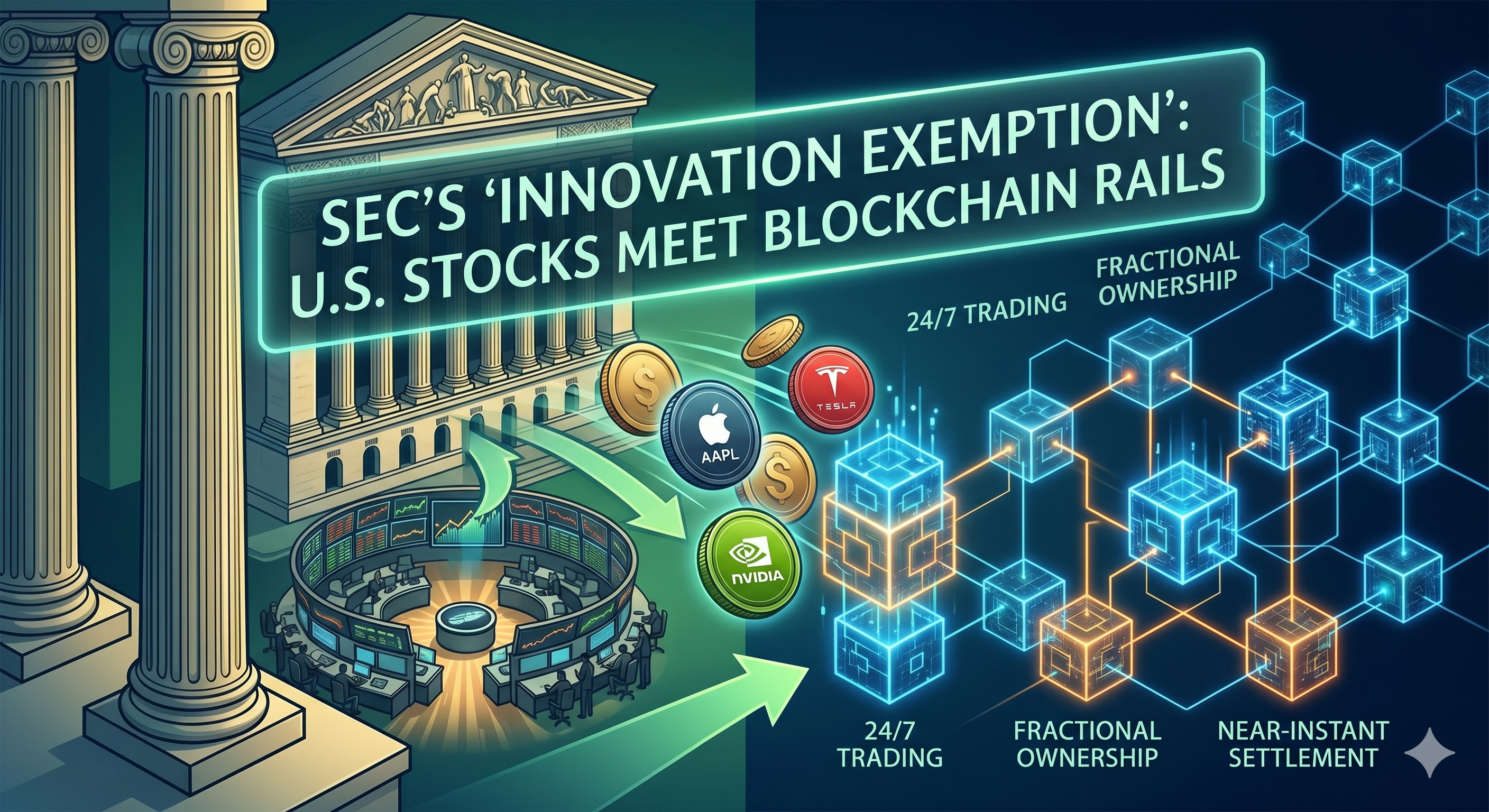
The U.S. Securities and Exchange Commission is preparing to launch an "innovation exemption" as soon as this week — a regulatory carve-out that would let publicly traded stocks like Apple, Tesla, and Nvidia trade as blockchain tokens around the clock, in fractional sizes, with near-instant settlement. It is the most consequential opening between traditional equity markets and crypto infrastructure since spot Bitcoin ETFs were approved.
The short answer to what the exemption does: it creates a lighter compliance path for tokenized representations of public equities, allowing 24/7 trading and fractional ownership while explicitly excluding traditional shareholder rights like voting and dividends. The move is led by SEC Chair Paul Atkins and aligns with the Trump administration's broader effort to relax crypto restrictions, building on earlier tokenization pilots by Nasdaq and NYSE. Traditional finance voices are pushing back on investor protection grounds, but the structural direction is set: U.S. equity markets are being rebuilt on blockchain rails, one exemption at a time.
What Is the SEC's Innovation Exemption for Tokenized Stocks?
The SEC's innovation exemption is a targeted regulatory carve-out that lets tokenized versions of publicly listed stocks trade on blockchain networks without the full registration burden traditionally required of securities offerings. The framework is expected to be announced as soon as this week, according to reporting on internal SEC planning under Chair Paul Atkins.
The exemption is narrow by design. It does not legalize tokenized securities broadly — it creates a defined sandbox where qualified issuers and platforms can offer tokenized equities under modified disclosure and operational requirements. Tokens issued under the exemption are expected to represent economic exposure to underlying shares rather than direct legal ownership of them.
What the Exemption Covers
Based on the framework outlined in SEC pre-announcement coverage, tokenized stocks under the innovation exemption are expected to enable:
-
24/7 trading on blockchain networks, including weekends and holidays
-
Fractional ownership down to very small denominations
-
Near-instant settlement compared to the T+1 standard in traditional equity markets
-
Programmable transfer and custody through smart contracts
-
Cross-border accessibility subject to local rules
What the Exemption Does Not Cover
Tokens issued under the exemption are explicitly stripped of several traditional shareholder rights:
-
No voting rights at shareholder meetings
-
No direct dividend distributions through the token contract (economic equivalence is typically passed through via the issuer)
-
No direct legal claim on the underlying company in many proposed structures
-
No automatic eligibility for tax treatments tied to direct share ownership
This separation is the central design choice. By detaching economic exposure from governance rights, the SEC creates a product that behaves more like a structured derivative than a traditional share — which is what makes the lighter regulatory treatment defensible.
Why Is Paul Atkins Pushing Tokenized Equities Now?
Paul Atkins is pushing tokenized equities because the political environment, the technical maturity of public blockchains, and the competitive pressure from offshore venues have aligned for the first time. Atkins took over as SEC Chair under the Trump administration with an explicit mandate to reverse the enforcement-heavy posture of the previous commission and reposition the U.S. as the primary jurisdiction for tokenized finance.
The Political Alignment
The Trump administration has made crypto-friendly regulation a stated policy priority, and Atkins has long been on record as supportive of light-touch securities oversight. The innovation exemption fits a broader pattern that includes earlier rollbacks of crypto-specific accounting guidance and the approval of additional spot crypto ETF products.
The Competitive Pressure
Offshore platforms have offered tokenized U.S. equities to non-U.S. users for over a year. Products like tokenized Tesla and tokenized Nvidia on platforms accessible outside the United States have already demonstrated user demand and operational feasibility. Without a domestic framework, U.S. retail and institutional capital was effectively pushed offshore to access the same product. The exemption brings that activity onshore.
The Infrastructure Pilots
Both Nasdaq and NYSE have run tokenization pilots over the past 18 months, testing tokenized share representations on permissioned and public blockchains. These pilots gave the SEC operational evidence that custody, transfer, and reconciliation could work at scale within existing market structure. The innovation exemption converts pilot learnings into a production framework.
How Will 24/7 Tokenized Stock Trading Actually Work?
Tokenized stock trading under the exemption will work by issuing on-chain tokens backed one-to-one by underlying shares held in custody, with secondary trading occurring on registered platforms and decentralized venues throughout the week. The mechanics blend traditional custody with blockchain settlement.
The Issuance Path
A qualified issuer — typically a broker-dealer or specialized tokenization platform — purchases or holds the underlying shares in custody. For each share held, the issuer mints a corresponding token on a supported blockchain. The token represents a claim on the economic value of that share, redeemable through the issuer.
The Trading Path
Once minted, tokens trade peer-to-peer on blockchain networks. Trading does not pause for U.S. market hours, weekends, or holidays. Price discovery during off-hours is set by market participants and arbitrageurs who can redeem or create tokens against the underlying shares when traditional markets reopen.
The Settlement Path
Blockchain settlement compresses what is currently a T+1 process in U.S. equity markets to seconds or minutes. Faster settlement reduces counterparty risk, frees up working capital that would otherwise be locked in settlement queues, and enables new use cases like real-time collateralization of tokenized equity positions in DeFi protocols.
Which Stocks Will Be Tokenized First?
The first tokenized stocks under the exemption are expected to be the highest-liquidity U.S. large caps — names like Apple, Microsoft, Nvidia, Tesla, Amazon, and Meta — because they offer the deepest underlying markets to support reliable arbitrage and redemption.
Why Large Caps Lead
Tokenization works best when the underlying market is deep enough that arbitrageurs can keep the token price tightly pegged to the underlying share price. For a stock with billions in daily volume, even large token order flow can be absorbed by mint-and-redeem activity. For a thinly traded micro-cap, the same flow would create persistent price dislocations.
The Likely Expansion Path
After large caps, the next wave is expected to include high-profile ETFs, sector-specific equity baskets, and eventually mid-cap names. International equities and IPO allocations are likely longer-term targets — particularly relevant given the SpaceX IPO targeting June 2026 and the anticipated OpenAI and Anthropic listings later in the year.
|
Tokenization Tier
|
Likely Assets
|
Timing
|
|
Tier 1
|
Mega-cap U.S. equities (AAPL, MSFT, NVDA, TSLA)
|
At launch
|
|
Tier 2
|
Large-cap ETFs (SPY, QQQ) and broad sector baskets
|
Within 6 months
|
|
Tier 3
|
Mid-caps and selected international equities
|
12+ months
|
|
Tier 4
|
Pre-IPO allocations and private market access
|
Longer-term
|
What Are the Risks of Tokenized Stock Trading?
The biggest risks are weakened investor protections, custody and counterparty exposure, off-hours liquidity gaps, and unresolved questions about how tokenized shares are treated in corporate actions. Traditional finance voices have raised each of these concerns in public commentary on the proposed exemption.
Investor Protection Gaps
Tokens issued under the innovation exemption do not carry the full disclosure framework that applies to direct share ownership. Holders may not receive proxy materials, may not have direct legal recourse against the issuer of the underlying stock, and may not be covered by SIPC protection in the same way traditional brokerage holdings are.
Custody and Counterparty Risk
The token is only as good as the issuer's custody of the underlying shares. If the issuing entity faces insolvency, mismanagement, or technical failure, token holders may rank as general creditors rather than beneficial owners of the underlying. This is the same structural risk that surfaced with crypto exchange failures in 2022 and 2023, applied now to tokenized equity exposure.
Off-Hours Price Dislocation
24/7 trading means tokenized stocks will move when underlying markets are closed. During weekends, holidays, and overnight sessions, price discovery happens with thinner liquidity and no anchor from primary market prints. Large gaps between the token's off-hours price and the underlying's reopening print are likely, especially during news events.
Corporate Action Treatment
How tokenized shares handle stock splits, mergers, special dividends, and spin-offs is not yet fully standardized. Each issuer will define its own pass-through mechanics, and inconsistency across platforms could create confusion for cross-platform holders.
How to Position for the Tokenized Stock Trend on KuCoin
KuCoin offers traders multiple ways to position for the tokenization narrative even before tokenized U.S. equities go live under the SEC innovation exemption. The most direct exposure is through the crypto assets and infrastructure tokens that will benefit from increased on-chain settlement volume.
To position for the tokenized equity trend on KuCoin:
-
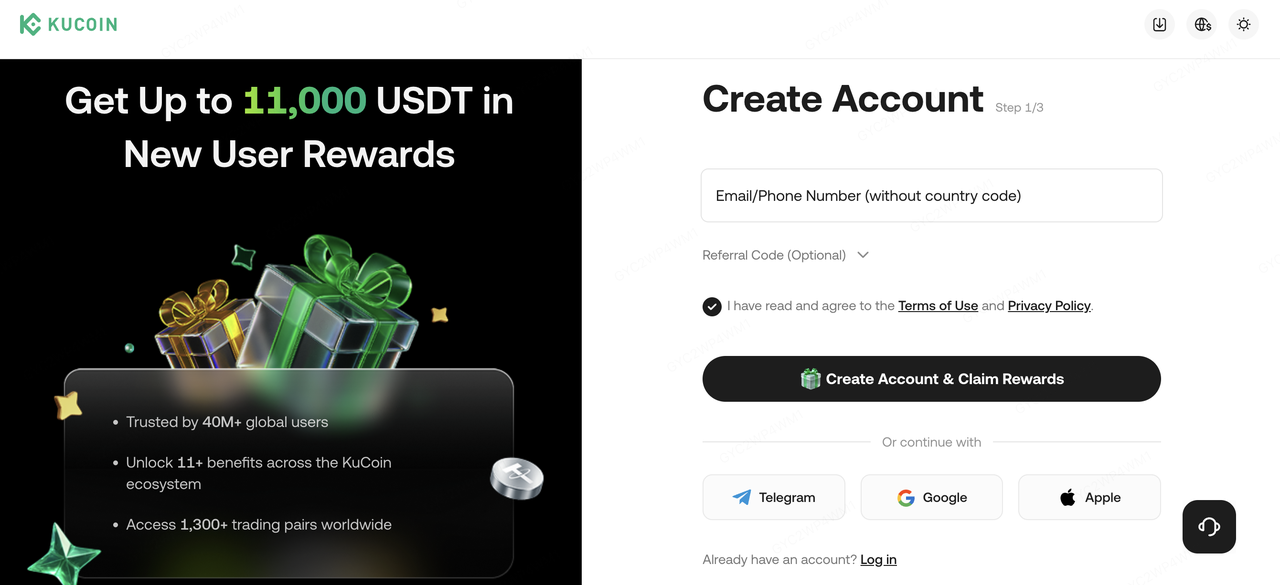
Register a KuCoin account and complete identity verification
-
Deposit stablecoins to fund your trading account
New users can now register at KuCoin and Get Up to 11,000 USDT in New User Rewards.
Conclusion
The SEC's innovation exemption marks a structural shift in how U.S. equities will trade. Paul Atkins is moving the commission from an enforcement-first posture to a framework-first posture, and tokenized stocks are the highest-profile early test of that change. The product enables 24/7 trading, fractional ownership, and near-instant settlement — three properties that crypto markets have always had and that traditional equity markets have never offered.
The trade-offs are real. Token holders give up voting rights, direct dividend mechanics, and parts of the traditional investor protection framework in exchange for accessibility and operational efficiency. Custody risk, off-hours price dislocation, and unresolved corporate action treatment are legitimate concerns that the rollout will need to address.
The direction, however, is set. Nasdaq and NYSE pilots have already proven the operational case. Offshore tokenized equity products have proven the demand case. The innovation exemption converts both into a domestic regulatory framework. For crypto-native traders, the most important takeaway is that the boundary between equity markets and on-chain markets is no longer theoretical — it is being formalized, and the assets, networks, and platforms that sit on that boundary stand to capture the resulting flow.
Frequently Asked Questions (FAQs)
When will tokenized stocks actually be available to U.S. retail traders?
The SEC innovation exemption is expected to be announced as soon as this week, but live retail products typically follow regulatory announcements by several months. Initial offerings are likely to launch first to qualified investors and through registered broker-dealers, with broader retail access expanding as platforms complete operational onboarding and state-level registrations.
Will tokenized stocks pay dividends?
Tokenized stocks under the proposed exemption generally pass through economic dividend equivalents through the issuer rather than distributing dividends directly via the token contract. The exact mechanism — cash payment, token rebate, or reinvestment — will vary by issuer. Token holders should review the specific terms of each tokenized product before assuming dividend treatment matches traditional share ownership.
Can I use tokenized stocks as collateral in DeFi protocols?
Tokenized stocks are technically compatible with DeFi collateral systems, but actual integration depends on each protocol's risk framework and the regulatory status of the specific token. Early integrations are expected on permissioned or hybrid platforms before fully permissionless DeFi protocols accept tokenized equity collateral.
How are tokenized stocks taxed?
Tax treatment of tokenized stocks is jurisdiction-specific and not yet fully standardized. In the U.S., tokenized equity exposure is generally expected to be treated similarly to direct share ownership for capital gains purposes, but the lack of traditional brokerage reporting infrastructure may create reporting complexity for early holders. Consult a qualified tax advisor for personal guidance.
Does the SEC innovation exemption apply to tokenized private company shares?
The initial exemption is focused on tokenized versions of publicly traded stocks rather than private company shares. Tokenization of pre-IPO equity and private placements operates under separate frameworks, including Regulation D and Regulation A offerings, and is not directly covered by the public-stock innovation exemption being announced this week.