

Spot BNB ETF Approved: 7 Things Every Trader Must Know About VanEck's VBNB in 2026
2026/05/29 20:33:00
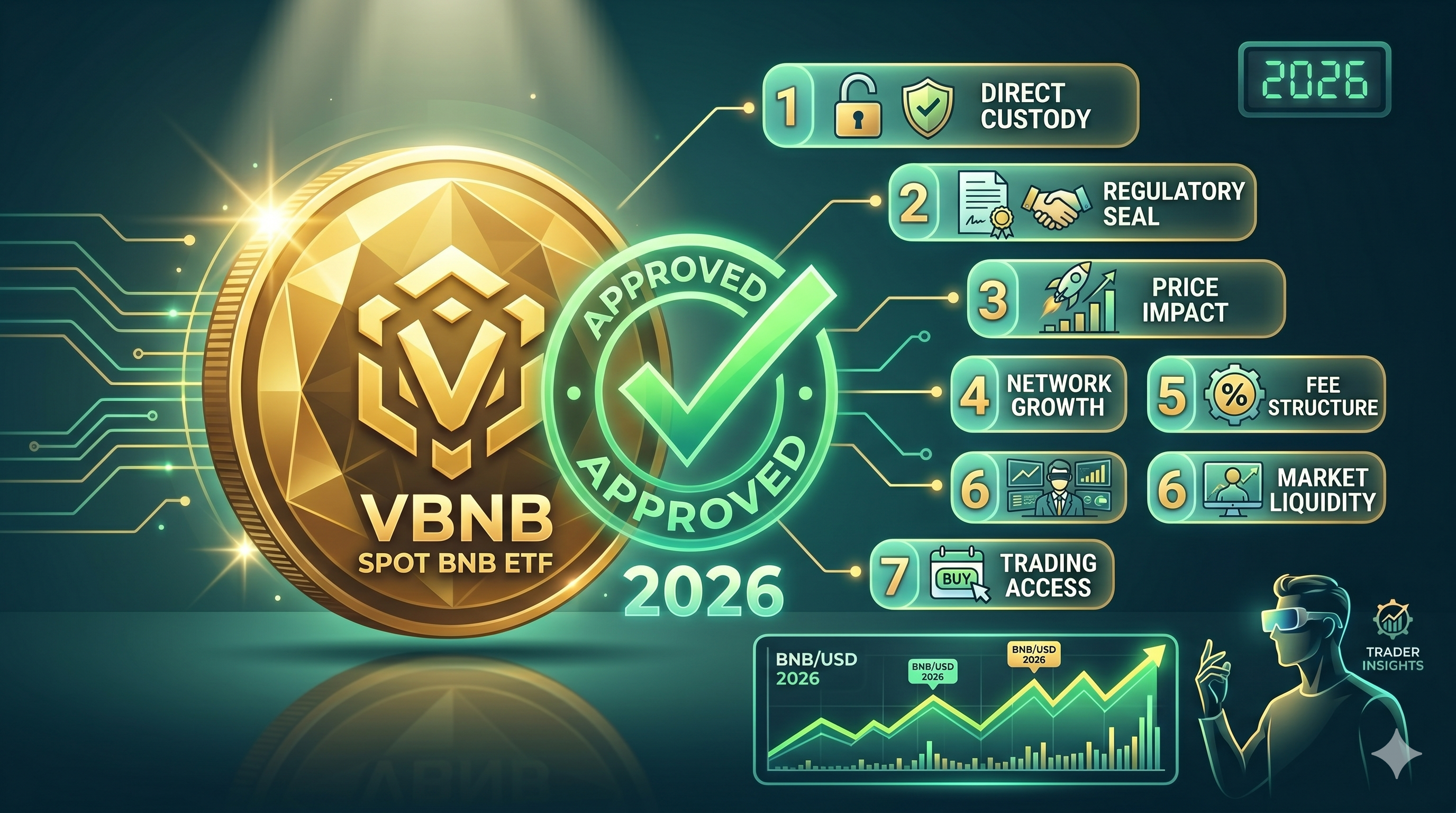
May 2026 marked a historical paradigm shift for the cryptocurrency sector as VanEck officially launched the United States' first spot BNB Exchange-Traded Fund (ETF) under the ticker VBNB. Trading live on the Nasdaq as of late May, this financial instrument provides Wall Street with direct, regulated exposure to the world's fourth-largest digital asset. However, instead of triggering a massive bullish rally, BNB's price unexpectedly dipped by 1.4% immediately following the announcement. For digital asset traders and institutional analysts navigating this unprecedented launch, understanding the underlying mechanics of VBNB is crucial. This comprehensive analysis explores the precise reasons behind the post-launch price drop, breaks down the ETF's fee structures, evaluates severe SEC regulatory warnings, and maps out the long-term trading strategies required to profit from this structural market shift.
💡 Tips: New to crypto? KuCoin's Knowledge Base has everything you need to get started.
Key Takeaways
-
Immediate Price Action Breakdown: BNB dropped 1.4% upon the ETF launch due to a classic "buy the rumor, sell the news" market dynamic, compounded heavily by weakened on-chain network metrics and severe meme coin volatility.
-
Product Specifications: VBNB is a physically backed spot ETF charging a 0.39% sponsor fee. It utilizes Anchorage Digital Bank for cold storage and notably does not offer native staking rewards to its shareholders.
-
Fierce Competitive Landscape: Grayscale is aggressively competing for market share, having submitted its 5th amended S-1 filing for a competing BNB ETF in mid-May 2026, setting the stage for an institutional capital war.
-
Regulatory Risk Factors: The SEC has highlighted significant regulatory uncertainties regarding BNB's affiliations with the Binance exchange, alongside deep concerns over network validator centralization.
-
The Platform Token Precedent: While short-term trading remains choppy, a successful VBNB rollout could pave the way for other major exchange ecosystem tokens, such as KCS and OKB, to pursue similar regulatory wrappers.
The Big Question: Why Did BNB Price Drop After the ETF Launch?
BNB's 1.4% price decline immediately following the VBNB launch on the Nasdaq was primarily driven by an aggressive "buy the rumor, sell the news" sell-off from short-term speculators, drastically amplified by deteriorating on-chain fundamentals. Rather than signaling a structural failure of the ETF product itself, this drop reflects a temporary exhaustion of speculative momentum and a broader macroeconomic risk-off environment dominating late May 2026.
The Mechanics of "Buy the Rumor, Sell the News"
Financial markets operate as forward-looking discounting mechanisms, meaning that the anticipated value of an event is often priced into an asset long before the event actually occurs. The market had heavily priced in the VBNB approval weeks in advance. Speculative whispers of the ETF launch had been circulating aggressively since the beginning of May 2026, culminating when VanEck officially submitted its 5th amended S-1 filing on May 15. During this two-week window, institutional front-runners and retail momentum traders accumulated massive spot positions, artificially inflating the asset's baseline price.
By the time the ETF went live on May 27 and May 28, the positive news was entirely exhausted. Traders who had accumulated BNB at lower levels earlier in the month immediately executed market sell orders to lock in their profits, creating a wall of localized distribution. Furthermore, on-chain analytics data indicates a severe shift in holding patterns. Long-term holders—specifically the cohort that had been holding BNB for 6 to 12 months—initiated large-scale cash-outs just hours before the Nasdaq listing. This whale-tier distribution absorbed whatever initial retail buying pressure the ETF launch generated, directly suppressing the price and resulting in the 1.4% intraday contraction.
On-Chain Metrics and Ecosystem Fragility
Beyond the immediate speculative selling pressure, the actual fundamental utility and demand on the underlying BNB Chain have noticeably slowed throughout April and May 2026. Daily transaction counts—a core metric used to evaluate the health and vibrancy of a Layer-1 blockchain—have receded significantly from their previous first-quarter peaks. This contraction in network activity indicates that fewer users are interacting with decentralized applications (dApps), decentralized exchanges (DEXs), and lending protocols on the network, directly translating to a lower demand for BNB to pay for network gas fees.
This foundational weakness was severely worsened by a recent, high-profile crash in several prominent Meme coins native to the BNB ecosystem. Throughout mid-May, speculative capital that had aggressively pumped ecosystem micro-caps evaporated, exposing the underlying speculative fragility within the network. When retail traders lose capital in ecosystem tokens, the liquidity drain inevitably travels upward, impacting the base Layer-1 asset.
Macroeconomic Market Sentiment
Finally, the launch of VBNB occurred against a highly challenging macroeconomic backdrop. The broader digital asset market entered late May 2026 gripped by an overarching risk-off sentiment. With global equities facing hawkish central bank rhetoric and institutional liquidity tightening, high-beta assets across the crypto sector experienced synchronized sell-offs. BNB simply could not escape the macro gravitational pull. The asset recorded its third consecutive day of downward price action heading into the ETF launch, proving that even a landmark regulatory approval cannot instantly reverse a macro-driven sector-wide contraction.
Inside VBNB: Fee Structures and Product Mechanics
VanEck's VBNB is structurally designed as a traditional, physically backed spot ETF that holds actual BNB tokens rather than utilizing derivatives or synthetic futures contracts, offering a competitive 0.39% annual sponsor fee. Traders and institutions evaluating this new product must carefully weigh the regulatory convenience and security of a traditional brokerage wrapper against the significant opportunity cost of foregone native staking rewards.
Detailed Breakdown of the VBNB Product
To properly assess VBNB as an investment vehicle, market participants must look beyond the ticker and understand the specific architectural decisions VanEck made regarding custody, fee structures, and yield generation.
| ETF Dimension | Specific Details & Implementation |
| Product Ticker | VBNB (Listed on Nasdaq) |
| Product Type | Spot ETF (Directly holds physical BNB tokens, no futures) |
| Custody Provider | Anchorage Digital Bank (Institutional-grade cold storage) |
| Sponsor Fee | 0.39% (Annualized management fee) |
| Initial Net Assets | Approximately $1.01 million (As of May 27, 2026) |
| Staking Status | Currently un-staked (Forfeits native network yield) |
The 0.39% sponsor fee places VBNB slightly higher than the highly competitive fee war seen during the spot Bitcoin ETF launches in early 2024, where fees frequently hovered between 0.20% and 0.25%. However, considering the unique regulatory hurdles and specialized custody requirements associated with an exchange-affiliated asset like BNB, the 0.39% fee remains well within acceptable institutional boundaries. Anchorage Digital Bank, a heavily regulated and highly respected digital asset custodian, secures the underlying tokens in offline cold storage, effectively neutralizing the risk of remote cyber-attacks or hot wallet exploits.
The Staking Dilemma: Forfeiting Native Yield
The most critical mechanical factor that sophisticated investors must consider is VBNB's current staking policy. As of its launch in May 2026, the ETF does not stake its underlying BNB holdings. In the decentralized finance ecosystem, BNB operates on a Proof-of-Stake (PoS) consensus mechanism. Native holders who delegate their tokens to network validators receive a continuous, programmatic yield generated from network transaction fees and block emissions.
By purchasing VBNB through a traditional brokerage account, investors explicitly forfeit these lucrative staking rewards. While VanEck has noted in secondary documentation that they reserve the right to explore regulatory-compliant staking solutions in the future, the current lack of yield places the ETF at a distinct mathematical disadvantage. For an institutional fund manager, paying a 0.39% fee to hold an asset that could otherwise be generating passive yield natively requires a strong preference for regulatory wrapping over total capital efficiency.
Capital Inflows & The Bitcoin ETF Comparison
Initial capital inflows for the VBNB spot ETF sit at a highly conservative $1.01 million in initial net assets, representing a drastically lower starting point compared to the explosive, billion-dollar debuts of spot Bitcoin ETFs, though directly comparing the two assets ignores fundamental structural differences in market demand. Analyzing the inflow trajectory of VBNB requires assessing its specific utility niche and the looming institutional competition.
Divergent Market Functions: BTC vs. BNB
When the Bitcoin spot ETFs launched, they represented the definitive opening of the institutional floodgates for the entire cryptocurrency asset class. Bitcoin is globally recognized as a decentralized store of value and digital gold, making it a mandatory core allocation for traditional macroeconomic funds. BNB, despite boasting a massive market capitalization hovering near $50 billion, serves a radically different, highly specific utility function. It acts as the economic engine and gas token for a single Layer-1 smart contract platform and operates as the primary discount token for the world's largest centralized exchange.
Institutional interest in an exchange-ecosystem token will naturally be more constrained and measured than interest in a global, non-sovereign monetary network. Therefore, expecting VBNB to pull in $1 billion in its first week is fundamentally flawed. Analysts are instead setting realistic benchmarks, closely monitoring whether VBNB can crack the $10 million to $20 million sustained inflow mark within its first 30 to 60 days of trading. Consistent, slow-drip capital accumulation will signal that traditional finance views the asset as a legitimate technology infrastructure play rather than a mere speculative proxy.
The Grayscale Competition Threat
The capital inflow dynamics for VanEck are instantly complicated by fierce, direct competition. On May 15, 2026—the exact same timeline VanEck finalized its paperwork—digital asset management giant Grayscale submitted its own 5th amended filing to convert or launch a competing BNB ETF. Grayscale commands an massive existing client base and wields unparalleled marketing power within the institutional crypto sector.
If Grayscale's competing product receives rapid SEC approval, it will create a massive fork in the road for institutional capital. This competition could either fracture the initial institutional inflows, severely stunting VBNB's growth as capital divides between the two funds, or it could massively expand the total addressable market. A dual-ETF environment validates the asset class further, potentially forcing wealth managers to allocate capital simply to avoid missing out on the sector's new industry standard.
Decoding SEC Warnings: Regulatory and Centralization Risks
Investing in the VBNB ETF carries unique, severe systemic risks explicitly outlined in the SEC's mandated S-1 filings, primarily centering on the token's historical affiliation with the Binance exchange ecosystem and the architectural centralization of its underlying validator network. Rational market participants must rigorously evaluate these downside threats before allocating capital.
Binance Affiliation and Regulatory Uncertainty
The most prominent risk factor separating VBNB from purely decentralized assets like Bitcoin is its inextricable historical and operational link to Binance. While the BNB Chain operates as an open-source, permissionless network, the underlying asset's utility, liquidity, and brand identity are deeply intertwined with the centralized exchange. The SEC has mandated stringent disclosures regarding this relationship.
The S-1 filing clearly outlines that any future regulatory crackdowns, compliance hurdles, or severe legal penalties levied against the global exchange ecosystem could directly and negatively impact VBNB's net asset value. If international regulators were to restrict the exchange's operations or pursue further aggressive litigation, the corresponding panic would inevitably trigger massive sell-offs in the spot market, directly crashing the ETF's value regardless of the blockchain's actual technological performance.
Validator Concentration and Network Security
Unlike Bitcoin's highly decentralized, globally distributed Proof-of-Work mining network, the BNB Chain relies on a highly concentrated set of validators for block production and consensus. The SEC filing explicitly warns that this architectural centralization could severely compromise the network's long-term integrity.
Because a relatively small number of entities control the validation process, the network is theoretically more susceptible to coordinated attacks, regulatory censorship, or systemic outages. If a major validator node is compromised, acts maliciously, or is forced offline by state actors, it could destabilize the entire network, halt transaction processing, and destroy the token's value.
The 1940 Act Exemption Warning
Furthermore, the SEC officially mandated a severe warning regarding the structural nature of the fund itself. The prospectus explicitly states: "The Trust is not regulated under the Investment Company Act of 1940 or by the CFTC, presenting higher investment risks and potentially resulting in a total loss." This regulatory exemption means that VBNB investors do not benefit from the strict mutual fund protections, diversification requirements, and specific fiduciary safeguards that govern traditional equities and bonds. Traders are essentially purchasing raw, unregulated market volatility wrapped in a traditional ticker, and must manage their own risk accordingly.
The Era of Platform Coin ETFs: Will KuCoin (KCS) or OKB Be Next?
The successful Nasdaq listing of VBNB officially establishes a monumental legal and structural precedent that will inevitably pave the way for other major centralized exchange platform tokens to seek institutional ETF wrappers. If traditional financial markets demonstrate sustained appetite for exchange-backed digital assets, highly liquid tokens like OKB and KuCoin Token (KCS) are primed to lead the next wave of Wall Street filings.
Evaluating the Potential Candidates
Asset managers are constantly hunting for the next high-liquidity narrative. Exchange tokens represent a highly unique value proposition: they act as a proxy bet on the trading volume, user acquisition, and overall profitability of the centralized crypto exchange industry itself. With VanEck successfully navigating the SEC's grueling approval process for BNB, the regulatory blueprint has been written.
| Potential ETF Candidate | Associated Platform | Estimated Market Cap | Current ETF Application Status |
| OKB | OKX | ~$10 Billion | Unannounced / Private |
| KCS | KuCoin | ~$1 Billion | Unannounced / Private |
| LEO | Bitfinex | ~$10 Billion | Unannounced / Private |
| HT | Huobi | < $1 Billion | Unannounced / Private |
If VBNB proves to be a profitable product for VanEck, and especially if Grayscale successfully launches its competing fund, Wall Street firms will rapidly look down the market cap ladder. Tokens like OKB, with its massive $10 billion valuation, and KCS, boasting a dedicated global user base and deep liquidity profiles, offer the exact structural mechanics that asset managers require to build new spot products.
This potential "Platform Token ETF" era would completely redefine the valuation models for these assets. Currently priced primarily on retail utility, fee discounts, and ecosystem burn mechanisms, the sudden introduction of institutional ETF absorption would trigger massive structural repricing events across the board.
Trading Strategy & Long-Term Price Impact
For active cryptocurrency traders, the immediate 1 to 3-month outlook for BNB remains a choppy consolidation phase as the market digests the ETF's lack of explosive day-one inflows, but the 6 to 12-month horizon points toward a strong structural return to the $1,000+ level if steady institutional demand holds. Executing profitable trades around VBNB requires separating short-term volatility from macroeconomic catalysts.
Short-Term Defensive Tactics (1 - 3 Months)
In the immediate aftermath of the May 2026 launch, traders must implement strict defensive strategies. The 1.4% drop confirms that speculative capital is exhausted, and the asset is likely to enter a period of range-bound volatility. Traders should capitalize on this by executing mean-reversion strategies, buying localized dips at established technical support levels and selling into brief relief rallies. Given the broader macro risk-off environment and the looming uncertainty of Grayscale's competing application, utilizing tight stop-loss orders is absolutely mandatory to protect capital from sudden downside liquidation cascades.
Long-Term Value Accumulation (6 - 12 Months)
The long-term fundamental catalysts for BNB remain incredibly powerful, operating independently of short-term price action. A critical driver is the protocol's aggressive deflationary mechanics. The recent 34th quarterly BNB burn permanently incinerated approximately 1.37 million BNB, stripping massive amounts of supply directly out of circulation.
When you combine an aggressive, programmatic supply reduction with the slow, compounding capital absorption of a new Wall Street ETF, the result is a massive structural supply shock. If VBNB manages to attract consistent institutional inflows—pushing past the $10 million to $50 million mark over the next year—the reduced circulating supply will amplify upward price movements. Long-term position traders should view the current post-ETF dip not as a failure, but as a heavily discounted accumulation zone, targeting a macro breakout past previous all-time highs and aiming for the psychological $1,000 threshold by mid-2027.
Conclusion
The launch of VanEck's VBNB marks a pivotal and permanent evolution in how Wall Street interacts with exchange-native digital assets. While the immediate 1.4% price decline left many retail traders frustrated and looking for answers, the drop is a textbook reaction to early speculation, worsened by temporary slowdowns in on-chain activity and broader macroeconomic pressures across the late May 2026 landscape. VBNB introduces a highly accessible, albeit fee-bearing, avenue for traditional capital to gain direct exposure to the BNB ecosystem.
However, the complete lack of staking yields, combined with explicitly stated SEC risk warnings regarding validator centralization and historical exchange affiliations, means this traditional financial vehicle is not without its significant structural flaws. As Grayscale prepares to forcefully enter the arena with its own competing product, the true test for BNB will be its ability to attract consistent, long-term capital inflows over the next several quarters. For now, the successful Nasdaq listing of VBNB alone establishes a powerful regulatory precedent, completely validating the asset class and potentially unlocking the door for a massive future wave of platform token ETFs across the broader cryptocurrency industry.
FAQs
Why doesn't the VBNB ETF offer native staking rewards to its investors?
The VBNB ETF currently bypasses staking to navigate strict regulatory complexities and ensure immediate compliance with SEC custody rules. Staking involves locking assets on-chain, which introduces technical counterparty risks and liquidity constraints that traditional ETF frameworks and custodians like Anchorage Digital Bank are not yet fully authorized to manage at scale.
How does Anchorage Digital Bank physically secure the BNB for the ETF?
Anchorage Digital Bank secures the underlying BNB using institutional-grade cold storage. This means the private cryptographic keys controlling the ETF's assets are generated and stored completely offline on specialized hardware, geographically distributed and air-gapped from the internet to prevent any possibility of remote cyber-attacks or unauthorized digital access.
Could the SEC forcefully delist the VBNB ETF if Binance faces new legal issues?
Yes, the SEC S-1 filing explicitly outlines this systemic risk. If Binance faces severe new regulatory crackdowns, crippling litigation, or international operational bans, the SEC has the authority to halt trading or force the liquidation of the ETF to protect traditional market investors from unprecedented exposure to offshore regulatory collapse.
What was the exact mathematical impact of the 34th BNB burn on the token's circulating supply?
The 34th quarterly auto-burn permanently removed approximately 1.37 million BNB tokens from the total circulating supply. This programmatic destruction essentially acts as a deflationary pressure mechanism, reducing the amount of liquid BNB available on open exchange order books and theoretically increasing the value of the remaining tokens assuming demand remains constant.
How does the 0.39% sponsor fee for VBNB compare to standard spot Bitcoin ETFs?
VBNB's 0.39% sponsor fee is slightly higher than the aggressive industry averages seen across top-tier spot Bitcoin ETFs, which generally range between 0.20% and 0.25%. The higher fee reflects the specialized institutional custody requirements and elevated legal compliance costs associated with managing an exchange-affiliated token rather than a purely decentralized asset like Bitcoin.
Disclaimer: This article is for informational purposes only and does not constitute financial, legal, or investment advice. Always conduct your own thorough research and consult with a certified financial advisor before engaging in trading activities.