

The AI Quantum Threat: Is Your Crypto Wallet Safe Against Next-Gen Attacks?
2026/05/30 14:12:28
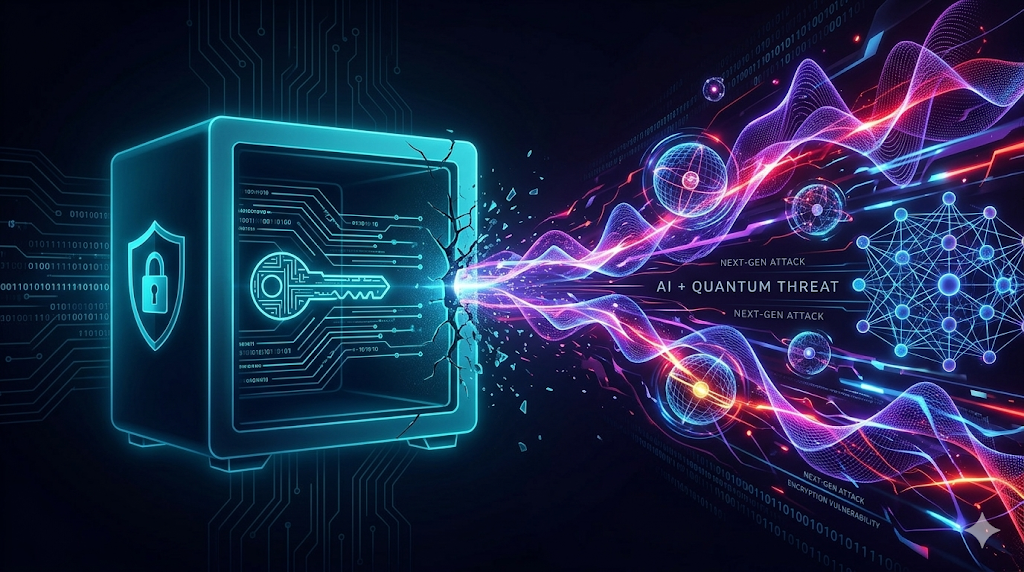
Did you know that the convergence of artificial intelligence and quantum computing has drastically shortened the timeline for breaking modern encryption? Your crypto wallet is inherently vulnerable to next-generation attacks because standard blockchain networks rely on elliptic curve cryptography, which quantum computers can theoretically shatter. However, transitioning to post-quantum algorithms neutralizes this existential threat.
Researchers in 2026 warn that AI models are actively accelerating quantum development, creating a new arms race. While the underlying protocols remain robust, individual wallets holding private keys act as the primary point of failure. Protecting your digital wealth requires adopting systems that utilize finalized national cryptographic standards.
Quantum resistant crypto — Cryptographic algorithms engineered specifically to withstand attacks from quantum computers.
Bitcoin self-custody — The practice of securing and controlling your own private cryptographic keys.
Crypto security models — Structural frameworks used by platforms to safeguard user assets from breaches.
Understanding the AI and Quantum Convergence
The fusion of artificial intelligence and quantum technology has drastically accelerated the timeline for breaking modern encryption. Industry experts now recognize that AI serves as a powerful weapon to optimize quantum algorithms, reducing the necessary hardware requirements for an attack.
This synergy undermines the foundational assumptions of digital security. Security professionals can no longer treat encryption as static infrastructure. According to experts in May 2026, AI compresses the developmental timeline for cryptographically relevant quantum computers. Relying on decade-old standards is mathematically irresponsible today.
AI Accelerating Q-Day
Q-Day—the moment quantum computers break public-key cryptography—is approaching far sooner than historically projected. Machine learning systems now assist researchers in discovering new materials and refining quantum algorithms at unprecedented speeds. This feedback loop forces the cryptocurrency industry to rethink its defensive timelines.
By feeding vast amounts of data into predictive models, scientists are effectively building next-generation quantum hardware using this generation's AI. This constant acceleration means the threshold for cracking a crypto wallet drops significantly every year.
The Harvest Now, Decrypt Later Strategy
Adversaries are actively vacuuming up encrypted internet traffic today with the specific intention of decrypting it once quantum hardware matures. This "harvest now, decrypt later" approach makes the quantum threat a current, active emergency rather than a distant, theoretical problem. Your intercepted transactional data is already at risk.
Sophisticated state actors and organized cybercriminals are stockpiling communications and unspent transaction output data. Once attackers achieve sufficient quantum supremacy, any harvested data lacking quantum-safe encryption becomes instantly exploitable.
The Core Vulnerability: Elliptic Curve Cryptography
Elliptic curve cryptography, the security foundation for networks like Bitcoin and Ethereum, is fundamentally incompatible with a post-quantum world. A sufficiently powerful quantum machine running Shor's algorithm can easily derive a user's private key from their public key. This structural flaw exposes billions of dollars in digital assets.
Traditional cryptographic systems rely on math problems that take classical computers millennia to solve. Quantum systems, however, process these specific mathematical factors exponentially faster. Transitioning away from this is an absolute necessity.
Why Crypto Wallets are Ground Zero
Crypto wallets act as the immediate ground zero for quantum attacks, rather than the blockchain networks themselves. If an attacker derives your private key, they can sign valid transactions and drain your funds without attacking the underlying protocol consensus. Securing the wallet interface prevents individual asset loss.
When you expose a public key by making a transaction, a quantum-equipped adversary could intercept the next transaction. Consequently, users must prioritize post-quantum cryptography on the wallet level immediately.
Google's 2026 Quantum Research
In March 2026, Google's Quantum AI team published alarming research proving that cracking elliptic curves requires far fewer qubits than previously estimated. They demonstrated that a quantum computer could theoretically crack blockchain encryption using under half a million physical qubits. This revelation severely collapsed the expected safety window.
Google's breakthrough proves that codebreakers are becoming highly efficient, prioritizing algorithm optimization over raw hardware scaling. Every new development reducing qubit requirements serves as a critical warning that current cryptographic assumptions are rapidly expiring.
NIST's 2026 Post-Quantum Standards
The National Institute of Standards and Technology has finalized the cryptographic algorithms necessary to defend against quantum threats. These new Federal Information Processing Standards provide the absolute benchmark for quantum-resistant security. The entire global digital infrastructure must migrate to these established frameworks by 2035.
Adopting these standards effectively neutralizes the quantum threat by utilizing complex mathematical problems, like lattice structures, that remain unsolvable. The immediate implementation of these finalized standards serves as the only reliable defense against modern threats.
FIPS 203, 204, and 205 Explained
Published in August 2024, NIST's first three standards provide the foundation for quantum-secure communications. FIPS 203 specifies the Module-Lattice-Based Key-Encapsulation Mechanism, which secures internet traffic and key exchanges. This standard replaces the vulnerable Diffie-Hellman protocol heavily utilized across the current digital landscape.
FIPS 204 and FIPS 205 introduce quantum-resistant digital signatures. By integrating these specific signature schemes, cryptocurrency developers can guarantee that wallet authorizations remain mathematically secure against the most advanced quantum hardware available.
FIPS Drafts and Fallback Algorithms
NIST continuously develops backup algorithms to ensure complete systemic resilience in case primary lattice-based systems fail. In March 2025, NIST selected the Hamming Quasi-Cyclic code-based scheme as a reliable fallback for key encapsulation. This diversification prevents a single mathematical breakthrough from compromising global security.
Draft standard FN-DSA remains in active standardization to provide a more compact signature alternative. Developing efficient, compact alternatives is critical for blockchains where data block space commands a high premium.
Upgrading Blockchain Networks vs. Wallets
Upgrading individual wallets provides a faster, more agile defense than waiting for a complete, contentious hard-fork of massive, decentralized blockchain networks. By implementing post-quantum cryptography at the client level once the underlying protocol enables the feature, users can instantly shield their funds by migrating to quantum-resistant addresses. This strategy bypasses the notoriously slow and politically complex decentralized consensus process required for full network migration.
Networks like Bitcoin intentionally move slowly to prioritize ultimate stability over rapid innovation. Waiting for a network-wide mandate leaves users dangerously exposed to "Harvest Now, Decrypt Later" schemes. Proactive wallet upgrades allow individuals to achieve immediate cryptographic sovereignty and security as soon as the network introduces opt-in quantum-safe address formats.
Protocol Level Mitigation Strategies
Bitcoin Improvement Proposal 360 (BIP-360), which introduces Pay-to-Merkle-Root (P2MR), outlines a conservative, calculated path for mitigating quantum exposure within the base protocol. Instead of hastily introducing massive post-quantum signature algorithms like crystals-dilithium into the block space, BIP-360 establishes a framework that hides internal public keys behind a Merkle root during transactions. This critical optimization drastically reduces the attack surface for Shor’s algorithm without causing systemic disruptions.
Core developers prioritize these public-key hiding tools and opt-in frameworks over forced transitions. This deliberate, phased pacing provides necessary defense mechanisms while maintaining the network's unparalleled uptime, backwards compatibility, and structural integrity.
Hardware Security Module Adaptation
Hardware Security Modules (HSMs) must undergo total architectural redesigns to accommodate the massive key sizes and signature payloads inherent to post-quantum algorithms like ML-DSA and FN-DSA. These physical devices generate and protect cryptographic keys offline, making them critical for institutional cryptocurrency custody. Modern modules must integrate next-generation application-specific integrated circuits (ASICs) to maintain true resilience.
Institutional custodians cannot rely on simple firmware updates alone. Existing secure elements lack the volatile memory and processing power required for complex lattice-based mathematics. True security requires uncompromising hardware adaptation, forcing organizations to deploy entirely new silicon architecture capable of processing post-quantum equations quickly to prevent sudden quantum breakthroughs.
The Institutional Approach to Quantum Readiness
Major financial institutions and corporate treasuries are actively overhauling their security infrastructure to meet quantum-readiness mandates. These entities recognize that failing to migrate their cryptographic systems poses an existential threat to their multi-billion-dollar cryptocurrency portfolios. Protecting client assets now requires strict adherence to NIST's finalized guidelines.
Institutions do not have the luxury of waiting; they must execute preemptive, multi-year migration strategies immediately. Retail investors must closely mirror this aggressive institutional approach to preserve their wealth.
Federal Mandates and Procurement
The US government mandates strict timelines for migrating federal systems to post-quantum cryptography, directly influencing the private sector's security standards. The Quantum Computing Cybersecurity Preparedness Act legally requires agencies to transition away from vulnerable algorithms. These federal procurement policies force technology vendors to rapidly commercialize quantum-safe products.
Because the federal government demands compliant solutions, the cryptocurrency industry inevitably inherits these robust security technologies. As vendors update their cloud services, blockchain developers gain access to highly sophisticated, battle-tested defensive tools.
Corporate Treasury Adjustments
Large corporate entities holding massive digital treasuries face the greatest systemic risk from quantum advancements. Because these treasuries represent singular, massive targets, attackers will invariably focus their quantum decryption efforts on these specific institutional wallets. Corporate custodians must deploy hybrid cryptographic models to quarantine their capital safely.
By actively splitting their holdings across multiple post-quantum signature schemes, institutions drastically reduce their attack surface. Diversification in cryptography is just as crucial as diversification in asset allocation.
Hybrid Solutions and Quantum Random Number Generators
Combining post-quantum cryptography (PQC) with Quantum Random Number Generators (QRNG) provides the ultimate defense-in-depth architecture for digital assets. Traditional computing systems rely on pseudo-random number generators (PRNGs) to derive wallet seeds. If these implementations suffer from flawed entropy sources, sophisticated AI models and classical statistical tools can potentially exploit and predict the private key patterns. QRNGs eliminate this soft target by leveraging quantum physics to guarantee absolute, unpredictable entropy.
By merging mathematically proven lattice-based algorithms with the hardware-level physical unpredictability of quantum mechanics, security developers can construct virtually impenetrable wallets. This hybrid architecture ensures that the underlying randomness prevents any mathematical or pattern-based reverse-engineering attempts by hostile actors.
True Entropy vs. Pseudo-Randomness
True, unpatterned entropy is mathematically impossible to achieve using standard, deterministic computer processors, making poorly implemented pseudo-random number generators a hidden structural vulnerability. A sufficiently advanced AI infrastructure, if fed with flawed or narrow-entropy key generation code, could theoretically map out the predictable seeds of vulnerable wallets. True quantum entropy removes this entire attack vector.
Quantum Random Number Generators measure fundamentally unpredictable physical phenomena—such as photon superposition or radioactive decay—to produce raw, uncrackable wallet seeds. Because the laws of quantum mechanics dictate that these subatomic events are inherently random, no algorithm, neural network, or supercomputer can ever model or predict them.
Multi-Signature Protections
Multi-signature (Multi-Sig) wallet architectures significantly delay quantum adversaries by requiring multiple distinct cryptographic signatures to authorize a single transaction. Under standard conditions, even if a quantum computer running Shor's algorithm successfully derives one traditional elliptic curve private key, the attacker cannot drain the funds without dedicating massive additional quantum computational resources to crack the remaining, geographically distributed keys.
When combined with post-quantum algorithms, these multi-sig frameworks transform into institutional-grade security fortresses. By deploying a hybrid signature model that requires authorization from both a legacy curve (like Secp256k1) and a post-quantum scheme (like ML-DSA), developers create a system that is simultaneously resilient against undiscovered classical bugs and aggressive quantum codebreaking.
Existential Risks for Legacy Chains
The transition window for securing legacy blockchain networks is closing rapidly, as researchers continually reduce the estimated time until Q-Day. Networks that fail to prioritize quantum-resistant upgrades face total systemic collapse. Once a threat actor publicly demonstrates the ability to steal funds, the market value will plummet.
The threat is highly asymmetric: attackers only need to succeed once to destroy trust. Implementing post-quantum standards requires immediate, coordinated effort from developers and miners to ensure viability.
Satoshi's Dormant Coins
Over two million early Bitcoin sit in dormant addresses that directly expose their public keys to the blockchain. These specific addresses make them the absolute easiest targets for a future quantum attack. If quantum hackers steal and dump these coins, the market will experience unprecedented devastation.
Because the original owners have lost the keys or abandoned the wallets, these funds cannot be migrated to quantum-safe addresses. Developers must actively debate protocol-level interventions to quarantine these exposed legacy coins.
Why Panic is Counterproductive
While the quantum threat is mathematically genuine, panicking or liquidating digital assets is entirely counterproductive. The brightest cryptographic minds in the world, including NIST researchers and core blockchain developers, have already finalized the defensive algorithms required. The solution exists; the industry merely needs the time to implement it.
Cryptocurrency markets have historically survived massive regulatory crackdowns and exchange collapses. The transition to post-quantum cryptography is simply another technical hurdle that the ecosystem will successfully navigate.
Secure Your Digital Assets on KuCoin
Protecting digital assets against next-generation threats requires utilizing platforms that actively prioritize institutional-grade security and swift cryptographic adoption. As quantum advancements press the digital asset ecosystem to upgrade, positioning capital within proactive, secure venues serves as a vital layer of defense. Top-tier platforms, such as KuCoin, continuously monitor changing global cryptographic standards to ensure user funds are fortified against emerging subatomic vulnerabilities.
Conclusion
The convergence of artificial intelligence and quantum computing accelerates the timeline for breaking legacy encryption, presenting a severe threat to the cryptocurrency industry. Because standard blockchains rely heavily on elliptic curve cryptography, individual wallets exposing public keys represent the most immediate vulnerability. Fortunately, mitigating this threat is entirely possible through the rapid adoption of finalized cryptographic algorithms. The National Institute of Standards and Technology has established robust post-quantum frameworks, providing a definitive roadmap for the digital economy.
Institutional giants and corporate treasuries are actively upgrading their physical hardware security modules and implementing hybrid architectures to protect multi-billion-dollar portfolios. Retail users must prioritize wallet-level upgrades and utilize advanced security models, like true quantum random number generators, to eliminate predictability. While dormant, exposed coins pose a unique legacy challenge, panic is entirely unwarranted. The solutions are proven, standardized, and actively being deployed. By transitioning to quantum-safe practices, the cryptocurrency ecosystem will seamlessly survive the approaching quantum era.
FAQs
What does the Harvest Now, Decrypt Later strategy involve?
This strategy involves attackers intercepting and storing currently encrypted internet traffic and blockchain data today. They patiently hold this stolen data with the explicit intention of decrypting it later when quantum computers become powerful enough to break encryption.
Why is elliptic curve cryptography vulnerable to quantum attacks?
Elliptic curve cryptography relies on complex mathematical problems that classical computers cannot realistically solve. However, quantum computers utilizing Shor's algorithm can process these specific factors exponentially faster, easily deriving a private key from an exposed public key.
What are the finalized NIST post-quantum standards?
In August 2024, NIST finalized FIPS 203, 204, and 205 as the primary defense against quantum threats. These standards utilize complex lattice-based and hash-based mathematics to secure key encapsulation and digital signatures against both classical and quantum computers.
Are major blockchains going to be destroyed by quantum computers?
No, the underlying protocols are actively developing mitigation strategies to transition to quantum-safe algorithms. While older wallets exposing public keys are vulnerable, upgrading network cryptography will secure the broader ecosystem from systemic collapse.
What is a Quantum Random Number Generator?
A Quantum Random Number Generator is a physical device that utilizes the unpredictable laws of quantum mechanics, like atomic decay, to generate truly random numbers. This provides absolute mathematical unpredictability for wallet seed generation, preventing AI from reverse-engineering codes.
Disclaimer:This content is for informational purposes only and does not constitute investment advice. Cryptocurrency investments carry risk. Please do your own research (DYOR).