

RLUSD Reaches $1.25 Billion Market Cap Within 15 Months: Can It Overtake USDC?
Introduction
Did you know that it took stablecoin giants USDT and USDC several years to reach the market capitalization that Ripple USD achieved in just 15 months?
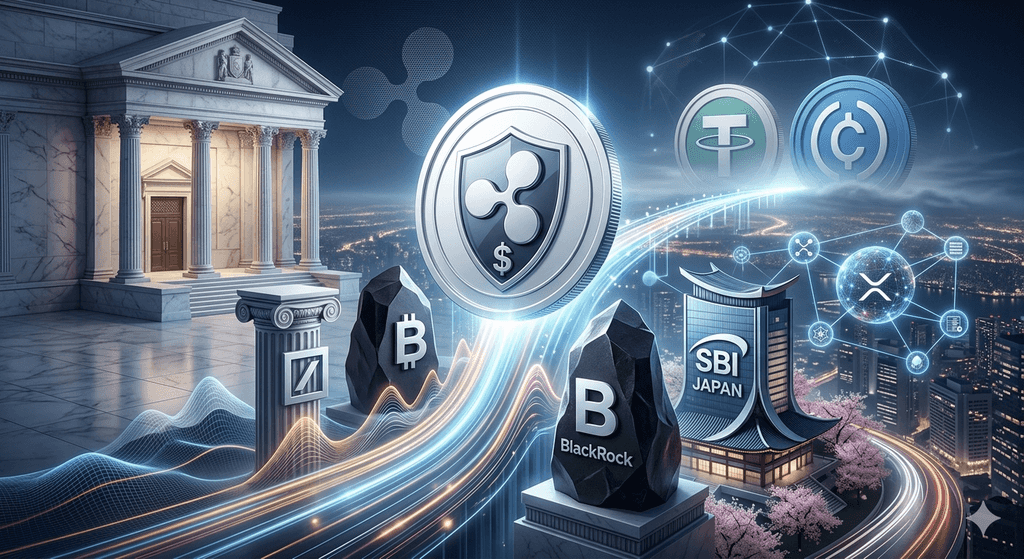
Since its launch in December 2024, RLUSD has surged past $1.25 billion in market cap, making it one of the fastest-growing stablecoins in cryptocurrency history. This remarkable growth has caught the attention of institutional investors, traditional banks, and crypto enthusiasts alike. With major financial institutions like Deutsche Bank, BlackRock, and SBI Japan backing the Ripple ecosystem, RLUSD is positioning itself as a serious contender in the stablecoin market. In this comprehensive guide, we’ll explore RLUSD’s rapid rise, its competitive advantages over established players like USDC and USDT, and whether it has the potential to overtake the second-largest stablecoin in the world.
What is RLUSD? Understanding Ripple’s Stablecoin
The Birth of a Bank-Grade Stablecoin
Ripple USD (RLUSD) was launched in December 2024 as Ripple’s answer to the growing demand for regulated, transparent stablecoins in the cryptocurrency market. Unlike many stablecoins that entered the market with limited utility, RLUSD came with significant institutional backing from day one. The stablecoin is fully backed by US dollar reserves, with monthly attestations proving reserve adequacy - a feature that has become increasingly important following the collapse of algorithmic stablecoins like TerraUSD.
The concept behind RLUSD extends beyond simply creating another dollar-pegged token. Ripple designed RLUSD to serve as the bridge between traditional finance and decentralized finance, enabling seamless value transfer across borders while maintaining the stability and regulatory compliance that institutional players require. This strategic positioning has allowed RLUSD to capture market share rapidly, particularly in corridors where Ripple’s payment infrastructure already has strong adoption.
Technical Foundation and Reserve Structure
RLUSD operates on the XRP Ledger, benefiting from the blockchain’s established infrastructure, fast transaction finality, and low energy consumption. The reserve structure follows strict regulatory standards, with US Treasuries and cash equivalents held in segregated accounts. Monthly transparency reports ensure that every RLUSD in circulation is fully backed by liquid reserves - a critical differentiator in an era where stablecoin transparency is under intense regulatory scrutiny.
The reserve model has received conditional approval from the Office of the Comptroller of the Currency (OCC), marking a significant milestone for bank-issued stablecoins. This approval, granted in December 2025, opens the door for RLUSD to integrate directly with traditional banking infrastructure, potentially giving it access to the vast liquidity pools of the traditional financial system.
Understanding Stablecoin Mechanics
Stablecoins like RLUSD maintain their peg to the US dollar through different mechanisms depending on their design. RLUSD utilizes a collateralized reserve model, meaning every token in circulation is backed by actual US dollars held in reserve. This contrasts with algorithmic stablecoins that attempted to maintain their peg through mathematical formulas without full reserve backing - a design that proved disastrous during the 2022 market downturn.
The reserve composition for RLUSD includes primarily short-term US Treasury securities, which provide both stability and yield generation. This approach mirrors the reserve strategy used by Circle for USDC, but with the added regulatory framework of OCC oversight. The combination of transparent reserves and regulatory approval makes RLUSD particularly attractive to institutional investors who require strict compliance with accounting and reporting standards.
RLUSD’s Explosive Growth: A Market Analysis
The Numbers Behind the Rise
RLUSD’s journey from launch to $1.25 billion market cap represents one of the most aggressive growth trajectories in stablecoin history. To put this achievement in perspective, consider that USDC took years to reach similar milestones, building its reputation through gradual adoption and regulatory compliance. RLUSD achieved this in just 15 months through a combination of strategic partnerships, institutional adoption, and aggressive market penetration.
The year-over-year growth rate of approximately 1,278% places RLUSD among the fastest-growing financial instruments in the crypto space. This growth has been driven by several key factors: the integration of RLUSD into major trading platforms, BlackRock’s adoption as collateral for institutional operations, and the expansion of cross-border payment corridors through Ripple’s network.
Analyzing Market Dynamics
The stablecoin market operates on fundamental dynamics that favor established players but also create opportunities for well-positioned newcomers. Liquidity begets more liquidity - traders prefer stablecoins with deep order books and tight spreads, creating network effects that benefit dominant players. However, these same dynamics can shift when major institutional players adopt new standards, as evidenced by BlackRock’s decision to utilize RLUSD.
Trading volume statistics reveal interesting patterns about RLUSD’s adoption. Despite its relatively small market cap, RLUSD has achieved significant exchange volume, with over $43 billion in cumulative centralized exchange volume recorded by March 2026. This volume-to-market-cap ratio suggests strong active usage rather than passive holding, indicating real utility rather than speculative accumulation.
Market Position and Competitor Comparison
As of April 2026, RLUSD has captured approximately 0.4% of the total stablecoin market. While this percentage may seem small, the stablecoin market is dominated by two major players - USDT (Tether) with approximately 58.25% market share and USDC (Circle) with around 23%. Every percentage point captured represents billions of dollars in trading volume and utility.
The competitive landscape has shifted dramatically in 2026. With the total stablecoin supply reaching $315 billion in Q1 2026, the market presents a significant opportunity for well-regulated alternatives. RLUSD’s positioning as a “bank-grade” stablecoin gives it unique access to institutional use cases that competitors cannot easily replicate.
| Stablecoin | Market Cap | Market Share |
| USDT | ~$183 billion | ~58.25% |
| USDC | ~$73.3 billion | ~23.3% |
| RLUSD | ~$1.25 billion | ~0.4% |
| USD1 | ~$4 billion | ~1.3% |
Table 1: Major Stablecoin Market Share (April 2026)
Institutional Adoption: The Game Changer
Major Banks Embracing RLUSD
The most significant development in RLUSD’s short history is the level of institutional adoption it has achieved. Deutsche Bank, one of the world’s largest financial institutions, integrated Ripple’s payment infrastructure in Q1 2026, enabling seamless conversion between RLUSD and traditional banking rails. This integration marks a pivotal moment for cryptocurrency-stablecoin adoption, as it represents one of the first instances of a major legacy bank actively supporting a blockchain-based stablecoin.
SBI Japan, the largest online brokerage in Japan, followed suit by incorporating RLUSD into its trading and payment ecosystem. With Japan’s strict regulatory framework for cryptocurrencies, SBI’s adoption signals regulatory comfort with RLUSD’s reserve structure and compliance mechanisms. This move has particularly significant implications for the Asian market, where regulatory clarity has often been a barrier to stablecoin adoption.
Perhaps most notably, BlackRock - the world’s largest asset manager with over $10 trillion in assets under management - adopted RLUSD as collateral for certain institutional operations in January 2026. BlackRock’s involvement brings unprecedented legitimacy to the stablecoin, as the firm is known for its rigorous due diligence processes. Their decision to utilize RLUSD rather than established alternatives underscores confidence in Ripple’s stablecoin infrastructure.
OCC Approval and Banking Integration
The OCC’s conditional approval in December 2025 represents a watershed moment for RLUSD and the broader stablecoin industry. This approval specifically addresses the regulatory concerns that have historically prevented banks from fully embracing cryptocurrency-native stablecoins. As of April 1, 2026, new OCC rules have expanded what “national trust banks” can do with stablecoin-related activities, potentially unlocking significant liquidity for RLUSD.
This regulatory development positions RLUSD as the preferred stablecoin for institutional players who require strict compliance with US banking regulations. The ability to integrate with traditional banking infrastructure gives RLUSD a significant competitive advantage over purely decentralized or less-regulated alternatives.
Competitive Advantages Over USDC
Regulatory Compliance and Transparency
One of RLUSD’s primary competitive advantages over USDC is its regulatory framework. While USDC has faced increasing scrutiny from regulators - particularly following the banking challenges in 2023 - RLUSD has proactively engaged with regulatory bodies to achieve OCC conditional approval. This proactive approach has positioned RLUSD as the “safe choice” for institutional adoption.
The transparency mechanism differs between the two stablecoins. USDC relies on monthly attestations from certified public accounting firms, while RLUSD’s reserve structure benefits from direct OCC oversight. This regulatory relationship provides an additional layer of assurance for institutional users who must satisfy internal compliance requirements.
Integration with Ripple Ecosystem
RLUSD benefits from seamless integration with Ripple’s extensive payment network, which processes billions of dollars in cross-border transactions annually. For businesses and financial institutions already using Ripple’s infrastructure, RLUSD offers obvious synergies - enabling instant settlement of cross-border payments with minimal friction.
This ecosystem advantage cannot be overstated. While USDC works with various payment processors, RLUSD is native to a payment network specifically designed for institutional use cases. The integration means that RLUSD holders can access Ripple’s liquidity pools and payment corridors without requiring additional infrastructure or intermediaries.
Speed and Cost Efficiency
Transaction speed and cost efficiency represent significant differentiators in stablecoin utility. On the XRP Ledger, RLUSD transactions settle in 3-5 seconds with minimal fees - a stark contrast to Ethereum-based alternatives that can experience congestion and high gas fees during peak periods. For institutions processing high volumes of stablecoin transactions, this efficiency translates directly to cost savings.
Challenges and Risk Factors
The Regulatory Hurdle
Despite RLUSD’s progress, significant regulatory challenges remain. The stablecoin market is subject to evolving regulatory frameworks, and potential changes in US cryptocurrency policy could impact RLUSD’s growth trajectory. While the OCC conditional approval represents progress, full regulatory clarity remains elusive, and future policy shifts could present obstacles.
Additionally, competition from other bank-issued stablecoins is intensifying. Several traditional financial institutions have announced plans to launch their own stablecoins, potentially fragmenting the market further. The success of RLUSD depends partially on maintaining its first-mover advantage in the bank-grade stablecoin category.
Market Penetration Barriers
Despite rapid growth, RLUSD faces significant barriers to achieving mainstream adoption. The stablecoin market exhibits strong network effects - users gravitate toward established tokens with the deepest liquidity and widest acceptance. Overcoming this inertia requires continued expansion of use cases and trading pairs across exchanges and DeFi protocols.
Trust also remains a factor. While institutional adoption provides credibility, retail users - who constitute a significant portion of stablecoin holders - may be slower to trust a relatively new entrant. Building retail confidence requires sustained transparency and track record, areas where established stablecoins have years of experience.
Future Outlook: Can RLUSD Overtake USDC?
Growth Catalysts for 2026 and Beyond
Several catalysts could accelerate RLUSD’s growth in the coming years. The expansion of RLUSD trading pairs on major exchanges, continued institutional adoption, and integration with DeFi protocols all represent near-term growth opportunities. With projections suggesting the stablecoin market could exceed $1 trillion by late 2026, the addressable market continues to expand.
Ripple’s aggressive marketing and partnership expansion also suggest continued growth. The company has demonstrated willingness to invest heavily in market penetration, and recent funding rounds provide the capital necessary for sustained growth initiatives. Executives have predicted that institutional adoption will “accelerate at a rapid pace” through the end of 2026.
Realistic Assessment
While RLUSD’s growth has been impressive, overtaking USDC requires capturing significant market share from an entrenched competitor with established utility. USDC’s $73.3 billion market cap represents nearly 60 times RLUSD’s current valuation. Achieving parity would require RLUSD to replicate its growth rate over multiple years - an ambitious but not impossible goal given sufficient adoption catalysts.
The more realistic near-term target for RLUSD may be establishing itself as the third-largest stablecoin, particularly as institutional adoption continues to accelerate. With the stablecoin market projected to grow substantially, even maintaining current growth rates could position RLUSD as a significant player within the broader ecosystem.
How to Buy RLUSD on KuCoin
If you’re interested in adding RLUSD to your portfolio, KuCoin offers a secure and user-friendly platform for purchasing this stablecoin. Here’s how to get started:
Step 1: Create a KuCoin Account
Visit KuCoin and complete the registration process. KuCoin requires account verification for stablecoin purchases, so you’ll need to provide identification documents. The platform supports residents in most countries, with location-specific requirements available during signup.
Step 2: Fund Your Account
After verification, deposit funds using your preferred method. KuCoin supports bank transfers, credit/debit cards, and cryptocurrency deposits. For purchasing RLUSD, you can deposit USD via bank transfer or use other cryptocurrencies to trade for RLUSD on the platform.
Step 3: Navigate to RLUSD Trading Pairs
Once your account is funded, search for RLUSD trading pairs on KuCoin. The platform offers multiple trading pairs, including RLUSD/USDT and RLUSD/USDC. Select the pair that best suits your needs.
Step 4: Execute Your Purchase
Place a market or limit order to acquire RLUSD. Market orders execute immediately at the current price, while limit orders allow you to specify your desired purchase price. For stablecoin purchases, market orders typically offer the best execution.
Why Choose KuCoin for RLUSD?
KuCoin offers several advantages for RLUSD traders:
-
Competitive trading fees with tiered discount structures
-
High liquidity for major stablecoin pairs
-
Advanced security features including multi-signature wallets
-
Mobile apps for trading on the go
-
Responsive customer support
Conclusion
RLUSD’s journey from launch to $1.25 billion market cap within 15 months represents one of the most remarkable growth stories in cryptocurrency history. Backed by major financial institutions including Deutsche Bank, BlackRock, and SBI Japan, and operating under OCC conditional approval, RLUSD has established itself as a legitimate contender in the stablecoin market. While overtaking USDC’s $73.3 billion market cap remains an ambitious long-term goal, RLUSD’s current trajectory suggests it will capture increasing market share in the expanding stablecoin ecosystem.
The stablecoin market’s projected growth to $1 trillion by late 2026 provides significant opportunity for well-positioned players. RLUSD’s regulatory compliance, institutional backing, and integration with Ripple’s payment network position it well for continued expansion. For investors seeking exposure to the stablecoin sector, RLUSD represents an intriguing option worth monitoring.
FAQs
-
What makes RLUSD different from other stablecoins?
RLUSD is a regulated stablecoin backed by US dollar reserves with OCC conditional approval. It operates on the XRP Ledger and benefits from integration with Ripple’s payment infrastructure, making it particularly suitable for institutional cross-border payments.
-
Is RLUSD fully backed by US dollars?
Yes, RLUSD maintains 1:1 backing with US dollar reserves, including US Treasuries and cash equivalents. Monthly attestations verify reserve adequacy.
-
Can RLUSD be used for DeFi applications?
Yes, RLUSD can be used in DeFi protocols that support the XRP Ledger. As adoption expands, more DeFi platforms are expected to integrate RLUSD support.
-
How does RLUSD compare to USDC in terms of fees?
RLUSD transactions on the XRP Ledger typically have minimal fees compared to Ethereum-based stablecoins. Trading fees vary by platform, with KuCoin offering competitive fee structures.
-
Is RLUSD available for US residents?
Availability varies by region due to regulatory considerations. US residents should verify KuCoin’s current availability for their location before attempting to purchase.
-
What is the growth potential for RLUSD?
Analysts suggest RLUSD could reach $2 billion market cap in the near term, with longer-term projections depending on continued institutional adoption and market expansion.
-
Does RLUSD have any advantages for cross-border payments?
Yes, RLUSD integrates directly with Ripple’s payment network, enabling fast, cost-effective cross-border settlements ideal for institutional use cases.
-
What risks should I consider before buying RLUSD?
Key risks include regulatory uncertainty, market penetration challenges, and competition from established stablecoins. As with any cryptocurrency investment, conduct thorough research and consider your risk tolerance.
Disclaimer: The information on this page may have been obtained from third parties and does not necessarily reflect the views or opinions of KuCoin. This content is provided for general informational purposes only, without any representation or warranty of any kind, nor shall it be construed as financial or investment advice. KuCoin shall not be liable for any errors or omissions, or for any outcomes resulting from the use of this information. Investments in digital assets can be risky. Please carefully evaluate the risks of a product and your risk tolerance based on your own financial circumstances. For more information, please refer to our Terms of Use and Risk Disclosure.