


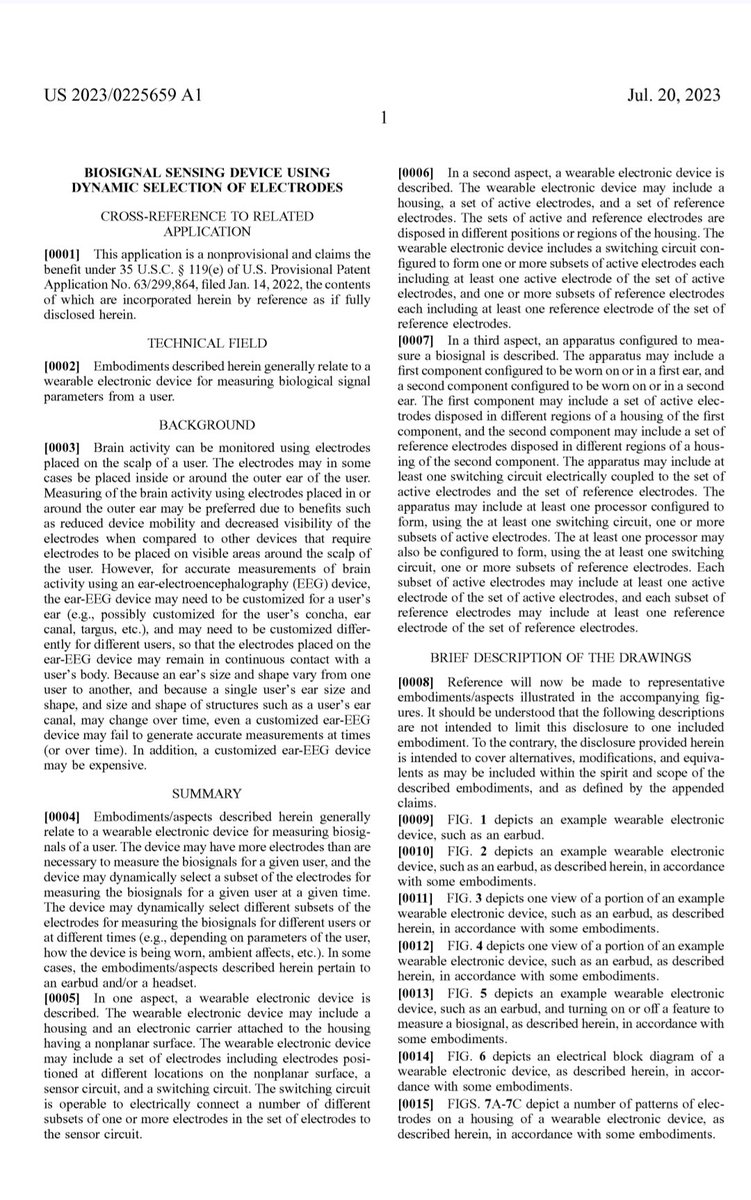
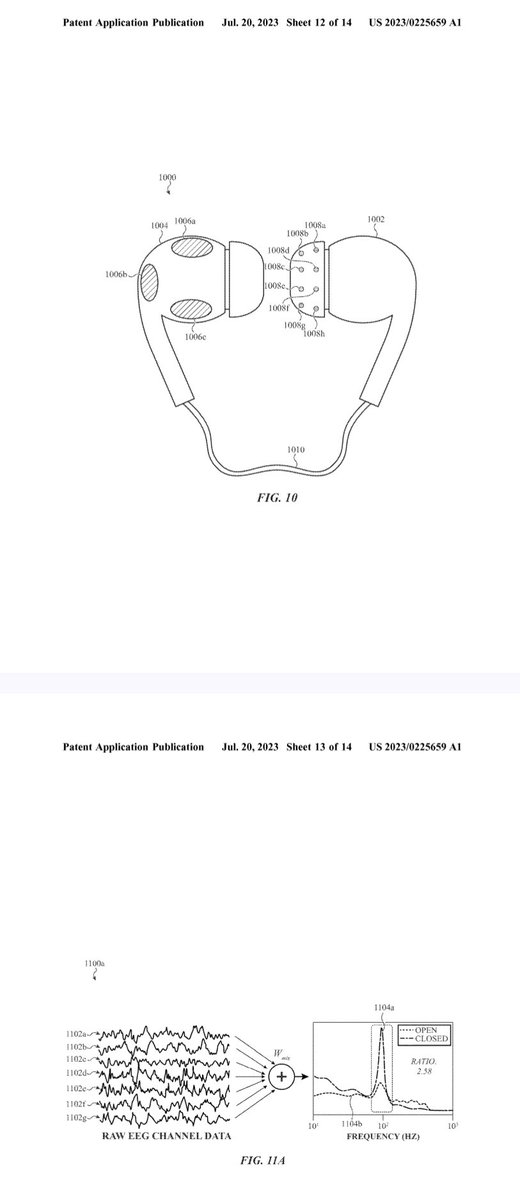
The Neural Ear Thesis: Zcash and the Privacy Layer of the Cognitive Economy $ZEC $ZCSH 2029. It starts in your ear. A deal is approved mid-thought during a meeting. A creator licenses a fragment of a dream without speaking. A user purchases a focus-state enhancement before a deadline—silently, instantly. No screens. No typing. No visible action. Intent becomes transaction. And nothing about it is exposed— not the user, not the context, not the state of mind behind the decision. By 2029, financial and cognitive data don’t just coexist—they converge. Every transaction becomes a record of both value and intent. Both must remain private—simultaneously. From Financial Privacy to Cognitive Privacy For most of modern finance, privacy had a narrow definition: obscure balances, mask counterparties, reduce surveillance. The system assumed that financial activity could be separated from human context—that money moved independently of the mind that directed it. That assumption no longer holds. Privacy did not disappear. It migrated. It followed value, and value moved upstream—from transactions to intent. This shift did not arrive through dramatic surgical breakthroughs. It emerged quietly, through everyday devices. Ear-worn interfaces—subtle, always-on, socially invisible—became the first mass-market bridge between cognition and computation. Companies like pushed hardware toward continuous biosignal capture, while advanced the interpretation layer through increasingly powerful AI. The convergence was not a single invention, but a system: Always-worn hardware. Continuous signal capture. Real-time inference. Together, they turned cognition into an interface. The Rise of the Neural Ear These systems were never introduced as brain-computer interfaces. They didn’t need to be. They only needed to detect patterns—attention, stress, intent—and translate those patterns into usable signals. Perfect fidelity was unnecessary. Inference was enough. Users no longer had to express decisions explicitly. Intent itself became sufficient input. A glance, a pause, a moment of focus—these became signals that systems could interpret and act upon. The result was a subtle but profound shift. Economic interaction no longer required deliberate action. It became continuous. Payments could be triggered. Experiences could be purchased. Decisions could be executed—without a visible interface. The interface layer moved: From screens… to the ear… to the mind. The Privacy Collapse Once cognition entered the transaction layer, every economic action began to carry more than financial data. It carried context. Not perfectly, not explicitly—but consistently enough to matter: Attention and distraction Emotional state Decision timing Behavioral patterns At scale, even imperfect signals became something far more powerful—a persistent, machine-readable map of human behavior and inferred intent. Traditional systems were not designed for this. Transparent blockchains expose behavioral patterns by design. Stablecoins and CBDCs produce complete audit trails. Platform-based payments bind identity directly to activity. The problem is no longer simply knowing who paid whom. It is knowing what was happening in their mind when they paid—and whether that can be reconstructed later. The Breakthrough: Neural Receipts The solution did not come from finance. It came from cryptography. Zcash’s zk-SNARK architecture introduced a different capability entirely: the ability to prove that something happened without revealing the underlying details. Applied to a cognitive economy, this becomes something new: A transaction can be verified. A service can be confirmed. But identity, context, and intent remain hidden.

Share


Source:Show original
Disclaimer: The information on this page may have been obtained from third parties and does not necessarily reflect the views or opinions of KuCoin. This content is provided for general informational purposes only, without any representation or warranty of any kind, nor shall it be construed as financial or investment advice. KuCoin shall not be liable for any errors or omissions, or for any outcomes resulting from the use of this information.
Investments in digital assets can be risky. Please carefully evaluate the risks of a product and your risk tolerance based on your own financial circumstances. For more information, please refer to our Terms of Use and Risk Disclosure.