


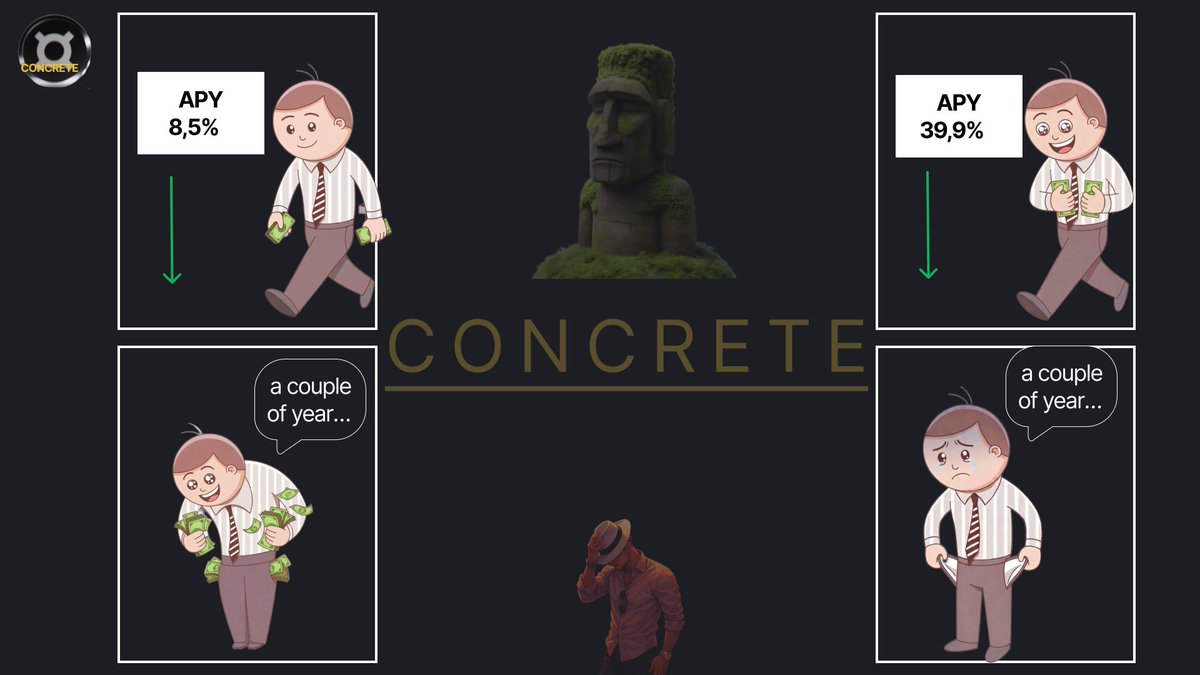
I decided to share a thought that becomes obvious to anyone who wants to grow in DeFi. Most investors are attracted by large numbers. They see high APY sometimes 30% or 40% and assume it means a better opportunity. Protocols compete by showing bigger yields, and users naturally chase the highest number on the dashboard. But the problem is that APY alone does not tell the whole story. Many projects offer extremely high yields but do not clearly explain where that yield comes from. In most cases, investors are simply asked to provide liquidity. Your assets become part of a pool, and you receive LP tokens representing your share. At first everything looks attractive. A pool might show a 40% APY. But over time you may notice that your balance is not growing as expected. The reason is that real yield depends on many factors: volatility of the asset, trading volume, liquidity conditions, and impermanent loss. Liquidity providers earn a share of trading fees. When trading activity is high, this can generate income. But if the asset price falls and trading volume decreases, rewards decline as well. In this situation the APY displayed on the screen may still look high, while the actual value of your position may stagnate or even decrease. This is why the concept of risk-adjusted yield is becoming more important. In traditional finance, investors evaluate returns relative to the risk required to achieve them. Two strategies can show the same APY but carry completely different levels of risk. Because of this, many experienced investors prefer stable and sustainable returns rather than chasing the highest yield. A strategy offering around 8.5% with controlled risk may be more valuable over time than a volatile 40% APY. This is also where DeFi vault infrastructure becomes important. DeFi vaults help diversify strategies, automate capital allocation, enforce risk parameters, and simplify participation for users. This approach reflects the idea of managed DeFi, where onchain capital allocation and automated compounding focus on long-term capital efficiency rather than short-term numbers. A good example is Concrete DeFi USDT, which offers around 8.5% stable yield. While it may look smaller compared to aggressive strategies, consistent and sustainable returns tend to attract long-term capital. The future of DeFi may not depend on the highest APY. It will likely depend on the most reliable yield. more information, more interesting things to follow, keep an eye on the project @ConcreteXYZ @crypttoji

Share


Source:Show original
Disclaimer: The information on this page may have been obtained from third parties and does not necessarily reflect the views or opinions of KuCoin. This content is provided for general informational purposes only, without any representation or warranty of any kind, nor shall it be construed as financial or investment advice. KuCoin shall not be liable for any errors or omissions, or for any outcomes resulting from the use of this information.
Investments in digital assets can be risky. Please carefully evaluate the risks of a product and your risk tolerance based on your own financial circumstances. For more information, please refer to our Terms of Use and Risk Disclosure.