




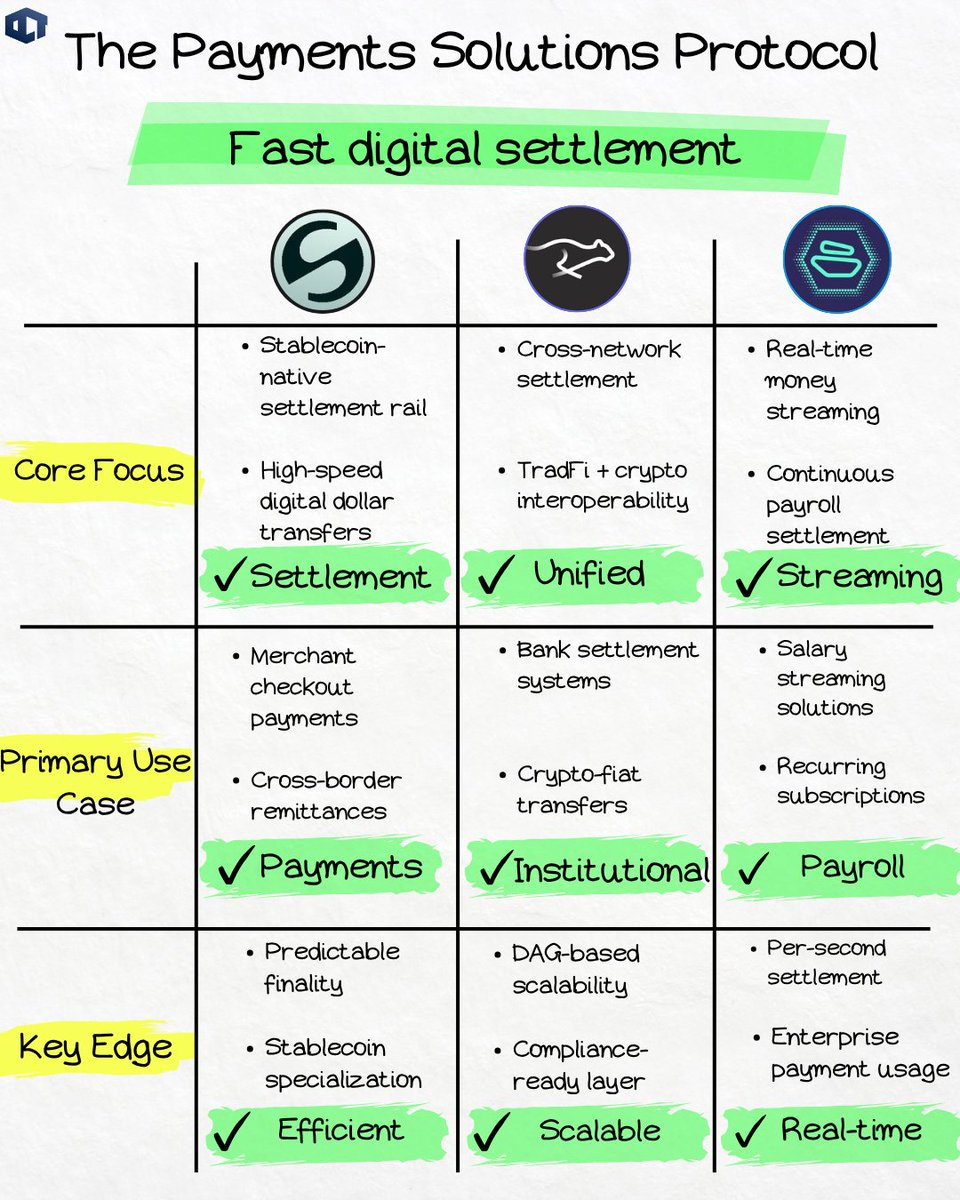
The next financial rails won’t be built by banks. They’re being built on-chain. → Stable ( $STABLE ) → Zebec Network ( $ZBCN ) → Keeta Network ( $KTA ) Here’s how they actually stack up 👇 ⚪ Stable ( $STABLE ) ✦ Core Focus → Stablecoin-native settlement infrastructure At its core, Stable is focused on becoming the base rail for moving stablecoins efficiently across the global economy. The main thesis here is simple: if digital dollars become the default medium for internet-native payments, then the infrastructure layer that moves those dollars could become extremely valuable. Rather than trying to be a broad Layer 1 that supports every possible on-chain activity, Stable appears to be purpose-built for one specific function: fast and efficient settlement of stablecoin transactions. • That means its core focus is not DeFi speculation or general smart contract activity. • Its focus is the actual movement of value, especially dollar-denominated value. This makes it a pure infrastructure play on the idea that stablecoins evolve from trading instruments into everyday money rails. ✦ Primary Use Case → Payments, remittances, merchant transfers, and treasury settlement The most immediate use case for Stable is in areas where money needs to move quickly, cheaply, and predictably. This includes: • cross-border remittances • merchant checkout systems • payroll payouts • B2B settlements • treasury transfers between entities For example, if a company wants to pay overseas contractors in USDT, or a merchant wants instant stablecoin checkout, the network is designed around that exact workflow. • This is what makes the use case easier to understand than many crypto infrastructure projects. • It directly maps to real-world financial activity. Instead of asking, “What can this chain do?”, the better question is, “How efficiently can this rail move digital dollars?” That practical framing gives it strong relevance in a world where stablecoin usage continues expanding. ✦ Key Edge → Low fees and predictable finality The biggest edge for Stable is that it removes unnecessary complexity. On large multi-purpose chains, fees and confirmation times can vary depending on congestion and network activity. That creates friction for payment use cases. Payments need predictability. Businesses care less about narrative and more about questions like: • How much does each transfer cost? • How quickly does it settle? • Can I rely on consistent confirmation times? Stable’s key edge is that it is optimized around these exact requirements. Low fees make small and frequent payments viable. Predictable finality makes it more suitable for commerce, payroll, and treasury workflows. That combination is what makes it compelling as a digital dollar movement rail. 🟢 Zebec Network ( $ZBCN ) ✦ Core Focus → Real-time programmable money flow Zebec’s core focus is fundamentally different. Instead of focusing on one-time payment settlement, Zebec is focused on continuous money movement. The idea here is that money should not have to move in fixed time intervals. Traditional finance still works in batches. Salary arrives monthly. Subscriptions renew periodically. Treasuries disburse funds on schedules. Zebec is rebuilding this model by turning money into a real-time stream of value. That means the core focus is not just payments, but programmable cash flow infrastructure. This is a much more dynamic layer of finance. It transforms money from static transfers into something that can flow continuously. ✦ Primary Use Case → Payroll, subscriptions, DAO payouts, and gig economy flows The strongest use case for Zebec sits in any system where payments are recurring or time-based. This includes: • salary streaming • contractor payouts • subscriptions • DAO payroll • real-time treasury disbursements • gig economy compensation A good way to think about it is this: instead of getting paid once a month, value can stream to your wallet every second. That changes user experience significantly. For payroll, it improves liquidity access. For DAOs and treasury systems, it allows highly programmable distributions. For subscriptions, it makes pay-per-time models more flexible. This is why Zebec’s use case feels more immediate and product-driven. It solves an actual inefficiency in how money currently moves. ✦ Key Edge → Continuous settlement and strong PayFi narrative The biggest edge here is continuous settlement. This is what separates Zebec from normal payment rails. Traditional rails are event-based. Zebec is flow-based. That means value is always moving rather than being triggered at discrete points. This creates strong utility in areas like payroll automation and treasury management. It also gives Zebec one of the strongest PayFi narratives in crypto because it merges payments with programmable finance. Money becomes something that can respond dynamically to time, rules, and smart contracts. That’s a meaningful infrastructure edge. 🔴 Keeta Network ( $KTA ) ✦ Core Focus→ Cross-rail interoperability and unified settlement Keeta’s core focus is the broadest and most ambitious among the three. It is not only trying to optimize payments. It is focused on becoming the interoperability layer between crypto rails and traditional financial infrastructure. This means connecting multiple systems that historically do not communicate efficiently. For example: • crypto networks • bank rails • ACH systems • card networks • tokenized asset platforms • fiat settlement layers Its core focus is essentially unified financial settlement across different rails. This makes it more institution-oriented than the other two. ✦ Primary Use Case →Crypto-to-fiat transfers, institutional settlement, and RWAs Keeta’s primary use case sits at the intersection of crypto and traditional finance. This includes: • crypto-to-bank settlement • fiat on/off ramps • institutional payment flows • tokenized real-world assets • cross-network transfers • banking integrations This is especially relevant in a world where RWAs continue expanding. If tokenized treasuries, deposits, and securities become mainstream, institutions will need a compliant and scalable way to move value between systems. That’s where Keeta’s use case becomes interesting. It is less consumer-facing and more focused on institutional-grade settlement infrastructure. ✦ Key Edge →DAG scalability and compliance-first design The biggest edge here is its architecture. The DAG-based model suggests Keeta is aiming for high-throughput settlement and better scalability for complex transaction environments. That matters when the target market includes institutions and cross-rail finance. The second major edge is compliance alignment. Institutions cannot simply use any rail that lacks operational controls. A compliance-first architecture makes it more suitable for banks, enterprises, and regulated asset movement. This is what gives Keeta its biggest upside. If institutions increasingly move value on-chain, compliant interoperability infrastructure could become extremely valuable. My takeaway • Stable gives the cleanest pure-play stablecoin rail thesis • Zebec offers the strongest current product utility in PayFi • Keeta carries the largest institutional and long-term interoperability upside This sector matters because it is not about apps. It is about who owns the rails through which money moves. ⚡ Conclusion The bigger takeaway here is that these protocols are not competing in the same lane. They’re rebuilding different layers of the future financial stack. Stable is building the digital dollar movement rail. Zebec is turning money into programmable real-time cash flow. Keeta is positioning itself as the institutional interoperability layer. That distinction matters.

Share


Source:Show original
Disclaimer: The information on this page may have been obtained from third parties and does not necessarily reflect the views or opinions of KuCoin. This content is provided for general informational purposes only, without any representation or warranty of any kind, nor shall it be construed as financial or investment advice. KuCoin shall not be liable for any errors or omissions, or for any outcomes resulting from the use of this information.
Investments in digital assets can be risky. Please carefully evaluate the risks of a product and your risk tolerance based on your own financial circumstances. For more information, please refer to our Terms of Use and Risk Disclosure.