


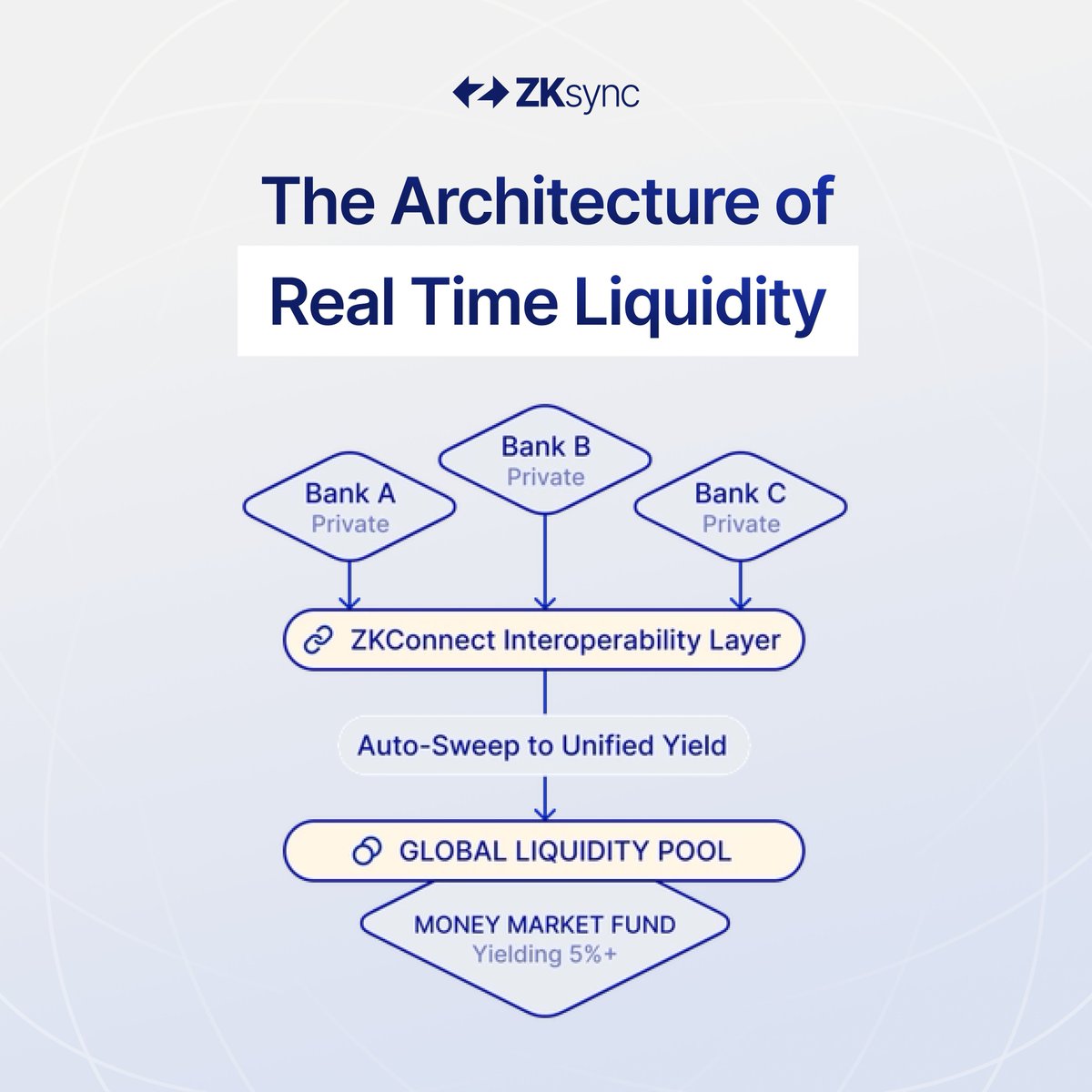
For institutions entering crypto markets, the real constraint is not technology. It is the balance between privacy, liquidity, and compliance. Public blockchains expose everything by default. Transaction flows, balances, and counterparties become visible to anyone. For many financial workflows, that level of transparency is simply not viable. But isolating activity on private chains creates another problem: liquidity disappears. Capital still wants access to the settlement guarantees and market depth anchored around @Ethereum. Disconnecting from that base means losing composability with the wider ecosystem. This is the institutional dilemma: • Privacy is required for operational confidentiality • Liquidity is required for market participation • Compliance requires controlled disclosure @zksync Prividium approaches this problem differently. Built with the ZK Stack, Prividium operates as a permissioned Validium chain where execution and state remain entirely off-chain inside infrastructure controlled by the institution. What reaches Ethereum is only the verification layer: • State roots and zero knowledge proofs anchor each batch to @Ethereum • Transaction inputs, balances, and calldata remain private • Ethereum provides finality and settlement guarantees This architecture allows institutions to maintain confidentiality while remaining connected to Ethereum’s liquidity environment. Selective disclosure also becomes possible: • Role based permissioning controls who can access internal data • Proxy RPC enforces infrastructure level access policies • Regulators or auditors can receive verifiable disclosures when required Through the ZKsync Elastic Network, Prividium chains interoperate natively with other ZKsync chains and Ethereum anchored environments, allowing assets and data to move without external bridges. The result is a different model of blockchain infrastructure. Private execution for regulated workflows. Ethereum settlement for trust and security. Interoperability for liquidity and composability. In other words, privacy without sacrificing liquidity. Prividium is not replacing Ethereum. It is extending Ethereum so institutional capital can operate on-chain without exposing the data it cannot afford to reveal.

Share


Source:Show original
Disclaimer: The information on this page may have been obtained from third parties and does not necessarily reflect the views or opinions of KuCoin. This content is provided for general informational purposes only, without any representation or warranty of any kind, nor shall it be construed as financial or investment advice. KuCoin shall not be liable for any errors or omissions, or for any outcomes resulting from the use of this information.
Investments in digital assets can be risky. Please carefully evaluate the risks of a product and your risk tolerance based on your own financial circumstances. For more information, please refer to our Terms of Use and Risk Disclosure.