


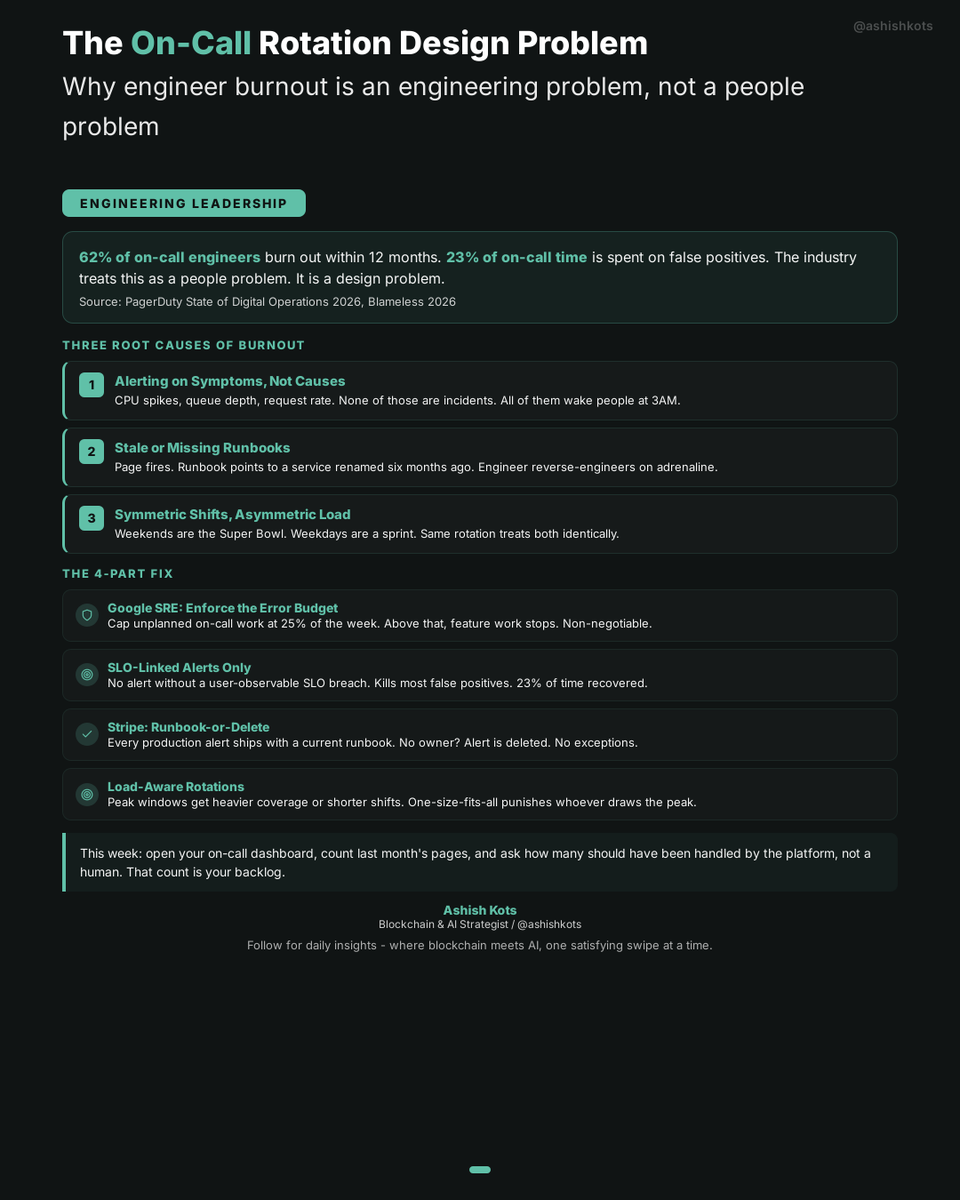
62% of on-call engineers burn out within 12 months (PagerDuty 2026). That is not a people problem. It is an engineering design problem. Three root causes every burnt-out rotation has: 1. Alerting on symptoms instead of causes CPU spikes, queue depth, request rate - none of those are incidents. All of them wake people at 3AM. 2. Stale runbooks Page fires. Runbook points to a renamed service. Engineer reverse-engineers the system on adrenaline and no sleep. 3. Symmetric shifts for asymmetric load Weekends are the Super Bowl. Weekdays are a sprint. Same rotation treats both identically. Four fixes the best teams ship: 1. Error budget Cap unplanned on-call work at 25% of the week. Above that, feature work stops. Google SRE wrote the playbook. 2. Alerts linked to SLOs If it does not correspond to a user-observable SLO breach, it is noise. 23% of on-call time is false positives (Blameless 2026). 3. Runbook-or-delete Every production alert ships with a current runbook, or the alert is deleted. You will lose half your alerts. That is the point. 4. Load-aware rotations Peak windows need heavier coverage or shorter shifts. One-size-fits-all punishes whoever draws the peak. If you lead engineering, on-call design is your job. Not HR. Not your EM. You. This week: open the dashboard, count the pages, ask how many should have been handled by the platform, not a human. #EngineeringLeadership #OnCall #SRE

Share


Source:Show original
Disclaimer: The information on this page may have been obtained from third parties and does not necessarily reflect the views or opinions of KuCoin. This content is provided for general informational purposes only, without any representation or warranty of any kind, nor shall it be construed as financial or investment advice. KuCoin shall not be liable for any errors or omissions, or for any outcomes resulting from the use of this information.
Investments in digital assets can be risky. Please carefully evaluate the risks of a product and your risk tolerance based on your own financial circumstances. For more information, please refer to our Terms of Use and Risk Disclosure.