


Coinbase Plans 24/7 Gold and Silver Futures Trading in a Strategic Move to Expand into the U.S. Market. Coinbase is preparing to launch 24/7 trading of gold and silver futures in the United States, signaling a major expansion into traditional commodities markets. According to sources, Coinbase is gearing up to offer round-the-clock trading for gold and silver futures in the U.S., marking a significant expansion beyond its core cryptocurrency services into traditional commodities markets. This move would position Coinbase as one of the first major digital asset platforms to provide continuous trading for precious metals futures, blending traditional financial instruments with the always-on operational model of cryptocurrency markets. The development has drawn attention from both financial analysts and cryptocurrency industry observers, as it reflects a broader trend toward convergence between traditional commodities and digital trading infrastructure. Meanwhile, industry discussions have also touched on unrelated developments in blockchain security and quantum computing progress, highlighting the rapid evolution of the digital finance and technology landscape. Expansion into Traditional Commodities Markets Coinbase is primarily known as a cryptocurrency exchange, offering trading services for digital assets such as Bitcoin, Ethereum, and other blockchain-based tokens. The introduction of gold and silver futures trading represents a strategic expansion into traditional financial markets—particularly assets historically traded on regulated exchanges with limited operating hours. By providing 24/7 access to these markets, Coinbase aims to align commodities trading with the continuous nature of digital asset markets, which operate without traditional closing hours. This shift reflects growing investor demand for more flexible and accessible trading environments unbound by conventional market schedules. The Growing Appeal of 24/7 Trading Models The concept of 24/7 trading is increasingly prevalent in fintech, largely driven by the structure of cryptocurrency markets. Unlike traditional stock and commodities exchanges, cryptocurrency markets operate continuously, enabling global participants to trade at any time. Coinbase’s potential move into 24/7 gold and silver futures trading demonstrates an effort to bridge the gap between traditional finance and digital asset infrastructure. This model could attract both institutional and retail investors seeking access to commodities markets without being constrained by standard trading hours. Integration of Digital Finance and Traditional Finance The expansion into precious metals futures reflects a broader industry trend toward integrating digital financial systems with traditional finance. Financial platforms are increasingly seeking to combine blockchain-based infrastructure with traditional assets such as commodities, equities, and derivatives. This convergence is driven by demand for faster settlements, improved liquidity, and more efficient trading systems. By offering both digital assets and traditional commodities futures on a single platform, exchanges like Coinbase are positioning themselves at the center of this evolving financial ecosystem. Impact on Markets and Investor Interest The rollout of 24/7 gold and silver futures trading could significantly impact market liquidity and investor behavior. Continuous trading enables participants to respond in real time to global events, potentially increasing trading volume and market efficiency. It also enables more dynamic price discovery, as markets are no longer restricted by regional trading hours. In particular, institutional investors may view this development as an opportunity to access commodities markets more flexibly through digital platforms. Broader Fintech Trends Coinbase’s move is part of a larger trend in fintech, where traditional assets are being digitized and integrated into modern trading systems. This includes the tokenization of real-world assets, the development of blockchain-based payment systems, and the expansion of decentralized financial infrastructure. These trends reflect a fundamental shift in how global markets operate, with increasing emphasis on speed, accessibility, and interoperability across different asset classes. Industry Commentary and External Observations This development has been discussed within the cryptocurrency community and among financial analysts, including commentary from X account @coinbureau, which previously reported on trends in digital asset markets and institutional adoption. Although not an official confirmation from regulators or the company itself, such commentary reflects widespread industry interest in the growing overlap between traditional finance and digital trading platforms.Analysts often emphasize that, although innovation is accelerating, regulatory approval and market structure factors will play a crucial role in determining the success of these initiatives. Regulatory Considerations in the U.S. Market Deploying commodity futures trading in the United States requires compliance with stringent legal frameworks overseen by financial regulators. Any expansion into gold and silver futures markets must adhere to established guidelines on derivatives trading, investor protection, and market transparency. Regulatory approval processes can impact both the timeline and structure of new financial products introduced by platforms such as Coinbase. Therefore, while the announcement signals intent, actual deployment may depend on regulatory approval and infrastructure readiness. Connection to Broader Technological Developments The financial industry is currently undergoing significant technological transformations, including advancements in blockchain infrastructure, cybersecurity, and artificial intelligence. Although unrelated to Coinbase’s expansion into commodities, broader industry discussions also highlight challenges such as software vulnerabilities in blockchain systems and long-term technological risks like quantum computing. These parallel developments underscore the complexity of modern financial infrastructure, where innovation and risk management evolve simultaneously. Market Stability and Risk Factors While 24/7 trading offers greater flexibility, it also introduces new challenges related to volatility and risk management. Continuously trading markets can experience rapid price fluctuations without the natural pauses found in traditional trading hours. This demands enhanced risk management tools and monitoring systems to ensure market stability and investor protection. Exchanges implementing such systems must balance innovation with safeguards designed to maintain orderly markets. Conclusion Coinbase’s reported plan to launch 24/7 gold and silver futures trading in the United States represents a significant step in the ongoing convergence between traditional financial markets and digital asset markets. By extending continuous trading infrastructure into commodities, the platform is responding to rising expectations from global investors who increasingly demand real-time access to financial instruments. Although regulatory approval and implementation details remain critical, this move signals a broader transformation in how financial markets will operate in the future. As digital and traditional financial systems continue to integrate, developments like these highlight a growing trend toward more integrated, accessible, and continuously operating global markets. — Victoria Hale

Share


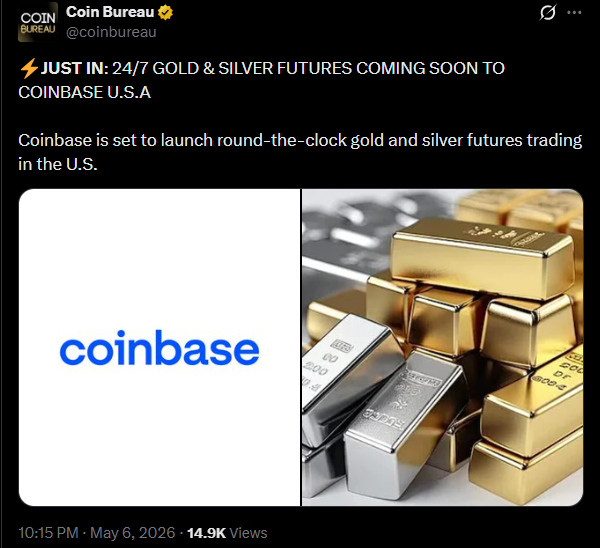
Source:Show original
Disclaimer: The information on this page may have been obtained from third parties and does not necessarily reflect the views or opinions of KuCoin. This content is provided for general informational purposes only, without any representation or warranty of any kind, nor shall it be construed as financial or investment advice. KuCoin shall not be liable for any errors or omissions, or for any outcomes resulting from the use of this information.
Investments in digital assets can be risky. Please carefully evaluate the risks of a product and your risk tolerance based on your own financial circumstances. For more information, please refer to our Terms of Use and Risk Disclosure.