


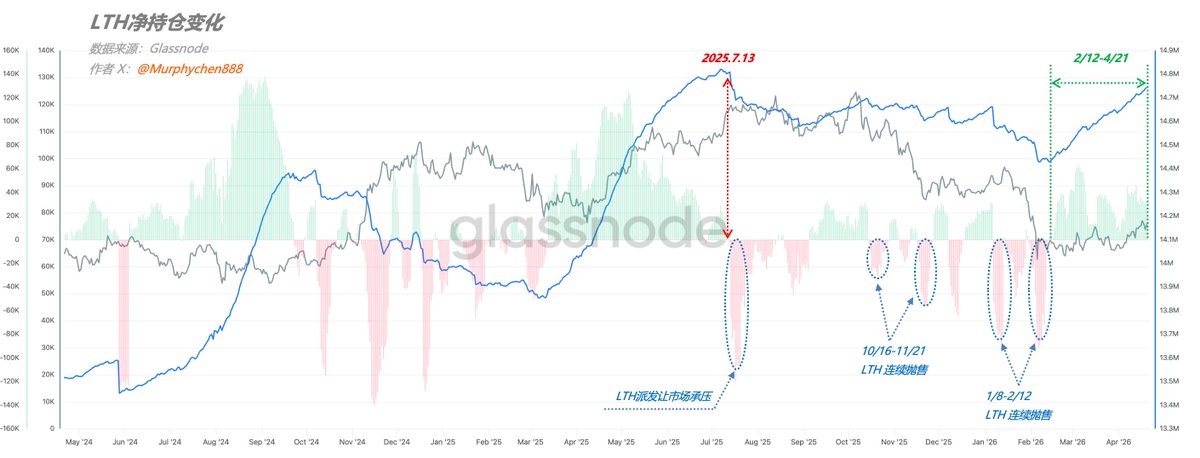
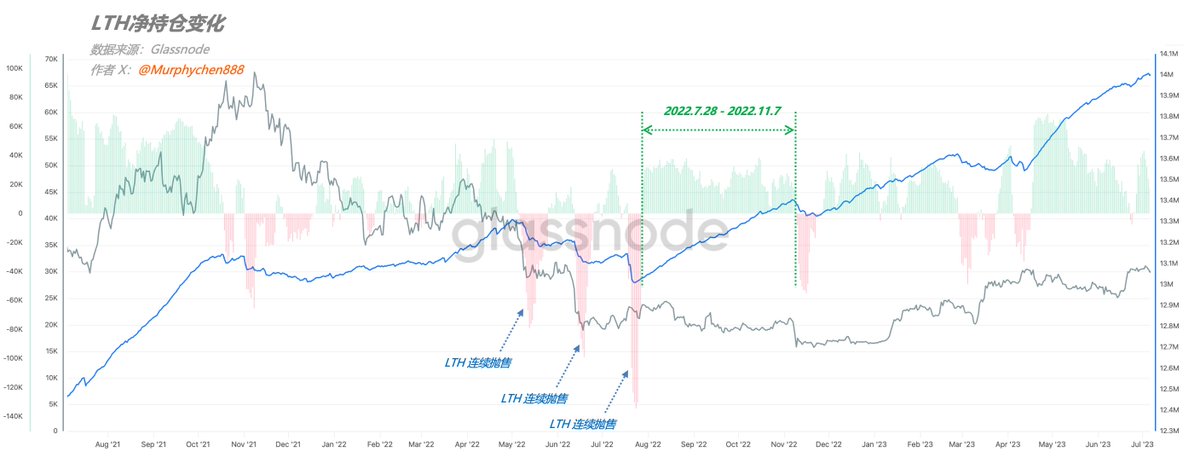
Can we still wait for the "final drop"? Let’s first derive the logic with data, then share my personal opinion. I believe what fellow investors are hoping for as the "final drop" refers to a sharp decline similar to last November or this February—ideally a drop of at least $20 billion, correct? Such a decline reflects systemic risk emerging—after all, ice doesn’t freeze three feet thick in a single day. Since mid-July 2025, the market has clearly felt the pressure from LTH distribution (Figure 1). This shouldn’t occur during the peak of a bull market. It indicates that demand has gradually become unable to absorb the sustained selling pressure from supply. Therefore, the trend reversal after two failed attempts to break $120,000 was an inevitable outcome under these long-term conditions. Subsequently, during the periods of October 16–November 21 and January 8–February 12, LTHs engaged in large-scale sell-offs, accompanied by steep price declines—this is easy to understand. Now let’s return to the present. Notice this: From February 12 to April 21, LTH net holdings have consistently been in a state of "net growth." There are only two possible explanations for this: 🚩 LTHs have significantly reduced their distribution—or even begun accumulating. 🚩 STHs are choosing to hold their positions longer, effectively becoming new LTHs. When these two factors combine, they create "net growth"—meaning reduced market activity and lower liquidity, alongside diminished selling pressure. Under these conditions, the "final drop" that many anticipate is nearly impossible. It’s fine to hope for it, but we must also respect objective facts. Currently, the structural change in LTH net holdings closely resembles the period from July 28, 2022, to November 7, 2022 (Figure 2). After multiple consecutive waves of LTH selling, the market entered a new accumulation phase—until another black swan event occurred. I’m not saying a "final drop" definitely won’t happen, nor am I suggesting blind bullishness ahead. On the contrary, various data indicate that BTC is increasingly approaching a strong resistance zone and may be due for some correction. My personal view is this: Unless an unexpected event triggers another large-scale LTH distribution, a sharp decline like last November or this February is highly unlikely to reoccur. Moreover, historical data show that during the latter stages of bear markets, LTH net holdings almost always rise. The term "latter stage" essentially means we’re entering a phase where there’s little left to sell. If you combine this with the "Investor Sentiment Index" I shared yesterday, doesn’t it provide mutual confirmation? (Note: LTH = Long-Term Holder; STH = Short-Term Holder; distinction based on holding period > 155 days ± 10-day data smoothing)

Share


Source:Show original
Disclaimer: The information on this page may have been obtained from third parties and does not necessarily reflect the views or opinions of KuCoin. This content is provided for general informational purposes only, without any representation or warranty of any kind, nor shall it be construed as financial or investment advice. KuCoin shall not be liable for any errors or omissions, or for any outcomes resulting from the use of this information.
Investments in digital assets can be risky. Please carefully evaluate the risks of a product and your risk tolerance based on your own financial circumstances. For more information, please refer to our Terms of Use and Risk Disclosure.