


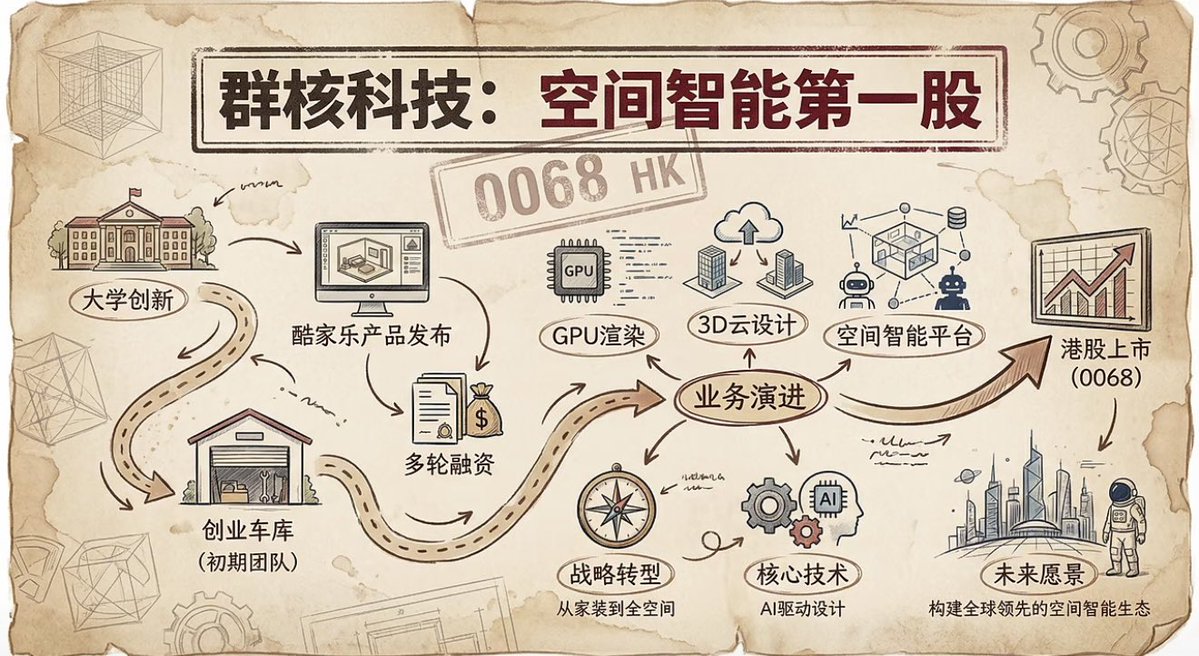
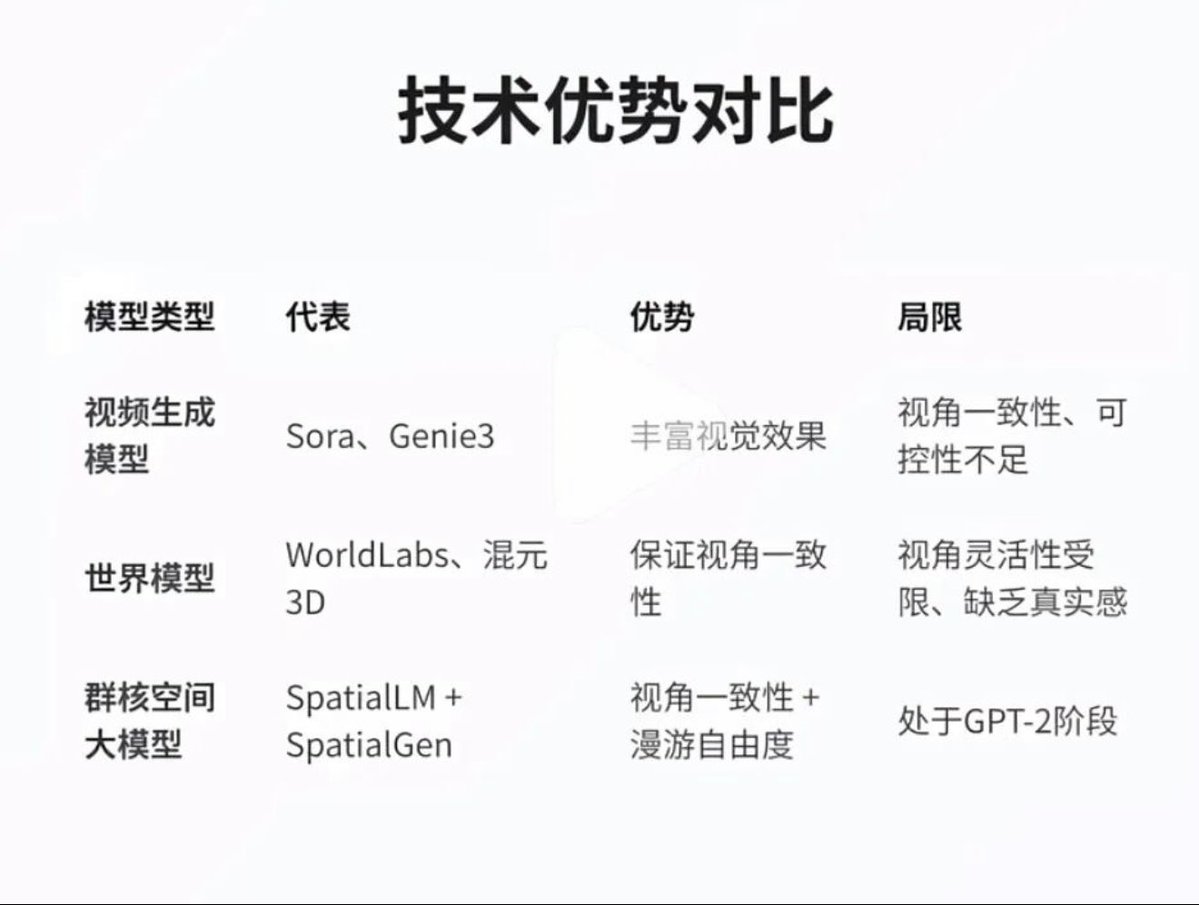
The entrepreneurial journey of Qunhe Technology is quite extraordinary. All three founders graduated from top-tier universities (Zhejiang University, Tsinghua University, and the University of Illinois), and previously worked at NVIDIA, Google, and Microsoft, with deep expertise in computer graphics, parallel computing, and GPU programming. Huang Xiaohuang played a key role in NVIDIA’s CUDA development, Zhu Hao specializes in low-level graphics algorithms, and Chen Hang possesses full-stack development capabilities. This team, even by today’s standards, represents one of the most elite and well-rounded founding lineups imaginable—yet their initial venture targeted home decoration O2O, a field that doesn’t appear to have high barriers to entry. There’s much more to the story. When Qunhe Technology was first founded, it was a company “holding a hammer and looking for nails.” Huang Xiaohuang returned to China with the world’s most advanced cloud-based GPU physical rendering and simulation technology, searching everywhere for applications. Fifteen years ago, many investors had never even heard of GPUs; Qunhe managed to secure funding by pitching the idea of an online virtual home community (similar to Houzz, which was then valued at $4 billion). After further exploration, they eventually found their first customers in the highly lucrative real estate industry, launching their spatial design software, KuJiaLe. From home decoration O2O to designer SaaS, Qunhe’s products not only generated revenue and ensured the company’s survival, but also enabled them to accumulate vast amounts of high-quality 3D spatial data across real-world scenarios in home design, architecture, and industry. Starting in 2018, Qunhe began returning to its original entrepreneurial vision. In 2018, Qunhe Technology collaborated with Imperial College London and the University of Southern California to release the world’s largest indoor scene understanding deep learning dataset, containing 130 million spatial data points. In December 2015, Qunhe co-released the SAGE-3D dataset with Zhejiang University—the first-ever embodied learning dataset based on 3D Gaussian VLE (Visual-Language Navigation). The power of high-quality data + algorithms + proprietary large-scale GPU clusters gradually became evident. In 2025, Qunhe Technology launched the industry’s first spatial large model for 3D scene generation: SpatialLM (spatial language model) and SpatialGen (spatial generation model). This is the world’s first industry-specific large model truly focused on “spatial intelligence,” advancing AI from “text language” to “spatial language.” Since then, Qunhe has led the field of spatial intelligence. In 2023, Qunhe shifted its entire strategic focus toward spatial intelligence. Huang Xiaohuang said: “We once believed our growth engine was our product—but we now increasingly realize that what truly determines our ceiling is the underlying algorithmic and model capabilities.” If this insight holds true, Qunhe’s future offerings won’t just be design software, but reusable spatial understanding and generation capabilities. Their pricing model will shift from per-seat or subscription-based fees to token-based or usage-based billing. Looking back now, Qunhe’s entrepreneurial path is the complete opposite of conventional startup logic. Most entrepreneurs first identify a market need (the nail), then build the tool (the hammer) to solve it. Huang Xiaohuang did the reverse: He spent 14 years honing a single “hammer”—GPU real-time rendering combined with 3D spatial data—until it became razor-sharp. Then, across different eras, he used that same hammer to strike different nails. From home decoration O2O to designer SaaS, to AI research and spatial intelligence— Qunhe Technology has pivoted four times, but the hammer has never changed; only the nails have. He calls this approach “holding a hammer and looking for nails.” The business scenarios evolve—but the core grows stronger. This morning, as Hong Kong markets opened, I bought some Qunhe shares around HK$20. From my perspective, the market will almost certainly reward companies with this kind of enduring imagination.

Share


Source:Show original
Disclaimer: The information on this page may have been obtained from third parties and does not necessarily reflect the views or opinions of KuCoin. This content is provided for general informational purposes only, without any representation or warranty of any kind, nor shall it be construed as financial or investment advice. KuCoin shall not be liable for any errors or omissions, or for any outcomes resulting from the use of this information.
Investments in digital assets can be risky. Please carefully evaluate the risks of a product and your risk tolerance based on your own financial circumstances. For more information, please refer to our Terms of Use and Risk Disclosure.