


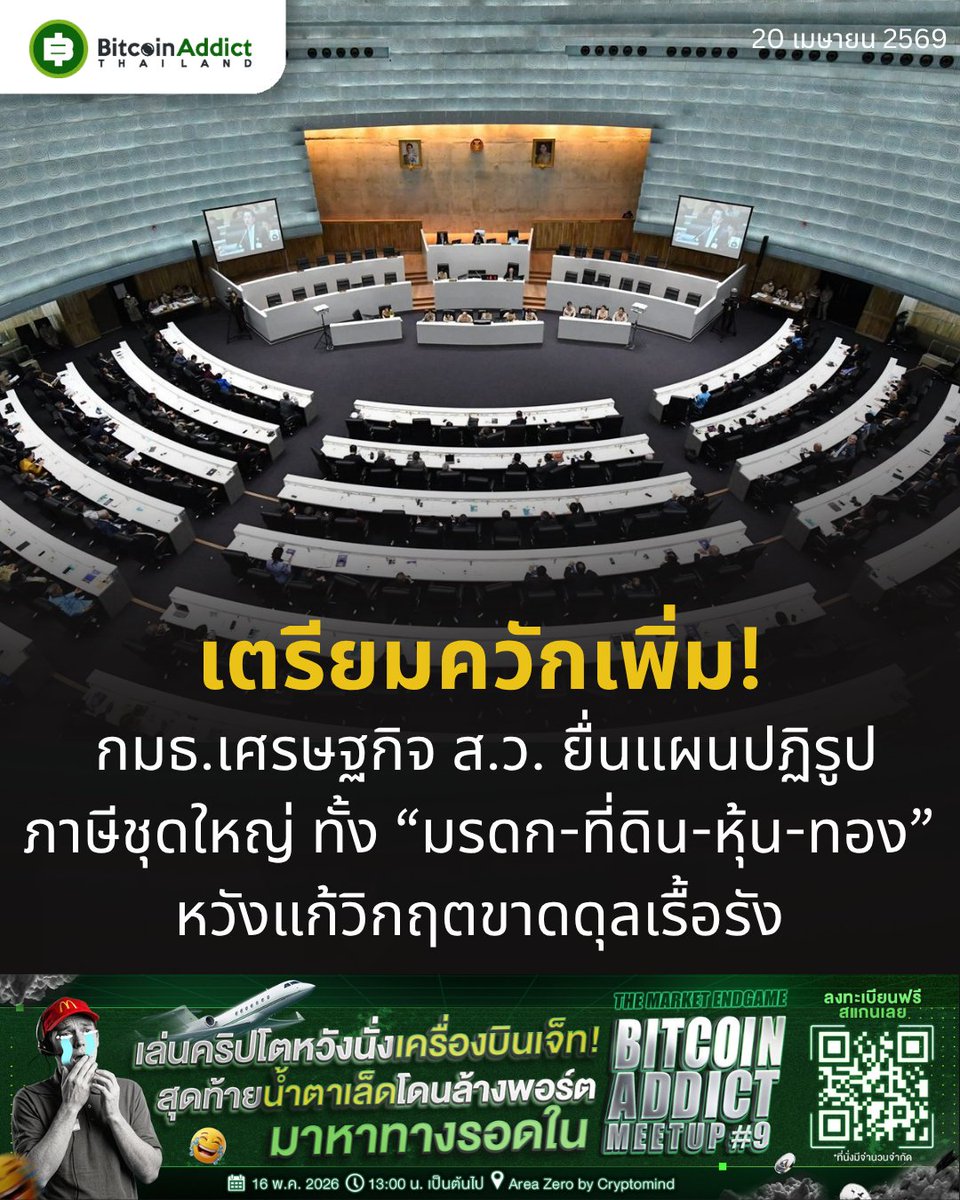
Public debt is set to hit the ceiling by 2028. The Senate proposes a comprehensive new tax package, including a 10% VAT—still on track. Over the past 10 years, Thailand’s budget deficit has averaged 4% of GDP annually, with no pause. Terms once rarely heard, such as “public debt nearing the ceiling,” are now being mentioned more frequently. On April 19, 2026, the Senate’s Committee on Economic, Financial, and Fiscal Affairs released the full document to be presented to the Senate two days later, alongside a new tax package targeting nearly every type of investment asset held by Thai citizens. 🏛️ What’s happening? – The committee, chaired by Kamphon Suphapaeeng, proposed a major tax structure reform covering income, consumption, asset bases, and local finance. – The goal: close the budget deficit gap and prepare for an aging society. – On April 21, 2026, the proposal will be submitted to the Senate before being forwarded to the Cabinet for final decision. 🧩 What’s unusual? The document explicitly mentions “gold” and “stocks,” yet the term “digital assets” is never directly referenced—even though cryptocurrency is a rapidly growing market with a large base of retail participants in Thailand. 📅 Timeline of events: 1) 2015–2025 – 10 consecutive years of deficits. Thailand’s budget deficit averaged 4% of GDP, exceeding the sustainable limit of 3%, forcing annual borrowing. 2) January 1, 2025 – The government exempted crypto taxes, announcing a temporary exemption from Capital Gains Tax on crypto trades conducted through exchanges licensed by the SEC, valid until December 31, 2029. 3) February 12, 2026 – A panel titled “Thai Taxation: Time for Structural Reform” was held, inviting officials from the Revenue Department and SEC to provide input before the initial proposal was unveiled. 4) February 13, 2026 – The 10% VAT proposal gained momentum: a gradual increase of 1% per year over three years, projected to generate 20–30 billion baht annually to fund a 3,000-baht monthly elderly allowance. 5) February 23, 2026 – The government pushed back: Siripong Angsakulkit, Deputy Leader of the Bhumjaithai Party, confirmed that “there are no plans to raise VAT to 10% in the next 2–3 years.” 6) April 19, 2026 – Full package unveiled. The committee released the complete document with clear expansions: – VAT to rise from 7% to 10%, eliminating exemptions for businesses with annual revenue under 1.8 million baht. – Tax on gold transactions covering three forms: physical gold, digital platform gold, and paper gold (gold-backed contracts without physical ownership). – Stock sale tax plus Global Minimum Tax of 15% to be implemented by 2027. – 20% corporate tax on foreign entities such as TikTok, eBay, and Alibaba. – Tax on all outdoor advertising signs—including political campaign banners. – Increased tax on idle land; proposal introduced for a “Thai Receipt Lottery.” 7) April 21, 2026 – Submitted to the Senate before being forwarded to the Cabinet to determine final intensity or moderation of details. 8) 2027–2029 – The real crisis period, according to figures from the committee’s secretary-general.Public debt may reach 69.78% of GDP by 2028, nearing the 70% ceiling—coinciding precisely with the impending expiration of the crypto tax exemption. 🧭 Key impacts to watch: – Crypto trades conducted through exchanges licensed by the SEC will remain exempt from Capital Gains Tax until December 31, 2029. – However, if “digital gold” and “paper gold” are officially taxed, an immediate question arises: Will Tokenized Gold (tokens pegged to gold prices on the blockchain), a form of RWA (Real World Asset Tokenization), be interpreted under the same regulatory scope? – This matters because several platforms in Thailand are actively promoting RWA as a core product offering. 💬 Investor community sentiment: – Many are questioning: “If we pay a 3% VAT, will the interest from government bonds even keep up with inflation?”—reflecting growing distrust in personal savings models. – Others argue that the absence of explicit mention of “digital assets” may simply reflect their current tax-exempt window—but some warn that after 2029, the game could change, especially if a digital gold tax framework becomes a template for broader application. 🔚 Conclusion: This set of proposals is not yet law—it is merely a recommendation from the Senate Committee, pending approval by both the Senate and the Cabinet. What to watch next: On April 21, 2026, observe whether any amendments are made—and whether the term “digital assets” is formally included in the version submitted to the Cabinet. Because the period between 2027 and 2029, when the government needs revenue most, coincides exactly with the expiration of Thailand’s crypto tax exemption wall. And if the state truly needs to raise more funds—will crypto be pulled into this tax package, or will its exemption be extended once again? #BitcoinAddictThailand #CryptoNews #ThaiTax

Share


Source:Show original
Disclaimer: The information on this page may have been obtained from third parties and does not necessarily reflect the views or opinions of KuCoin. This content is provided for general informational purposes only, without any representation or warranty of any kind, nor shall it be construed as financial or investment advice. KuCoin shall not be liable for any errors or omissions, or for any outcomes resulting from the use of this information.
Investments in digital assets can be risky. Please carefully evaluate the risks of a product and your risk tolerance based on your own financial circumstances. For more information, please refer to our Terms of Use and Risk Disclosure.