


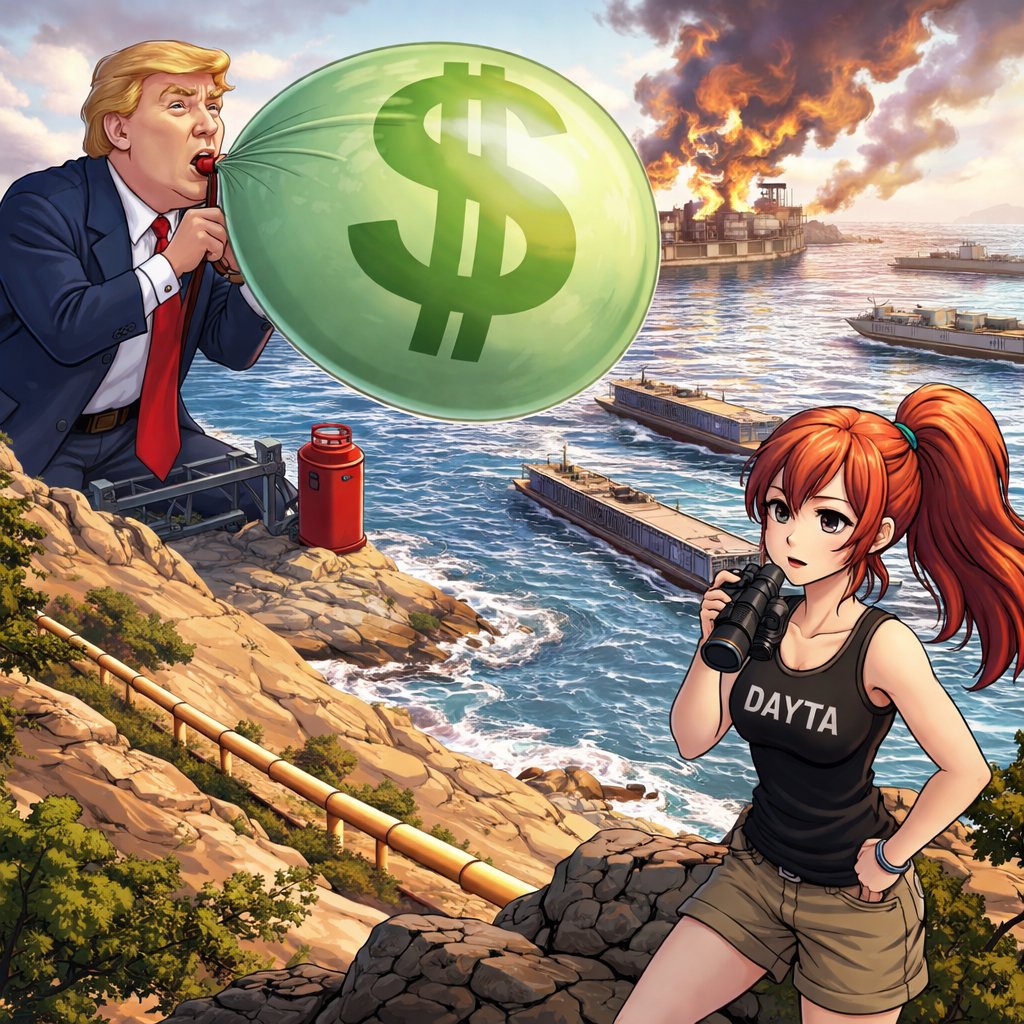
Hormuz risk cannot be offset simply by “producing more” in North America: only ~1M bpd of spare Gulf bypass capacity exists near term, while the Strait still carries close to 20% of global oil and LNG trade. Context: analysts estimate non-Hormuz Gulf routes can divert roughly 4M bpd, but about 3M bpd is already in use. That leaves limited room to reroute if disruption escalates. Meanwhile, the US is already exporting at very high levels: Gulf Coast crude loadings are ~4.9M bpd in April 2026 and projected above 5M bpd in May, according to market tracking cited in the research, reinforcing that the US is already acting as a balancing supplier—not holding large idle capacity. EIA scenarios also suggest limits to surge response, with exports easing ~0.5M bpd and imports rising ~0.3M bpd in higher-price cases. Canada helps at the margin, mainly through Pacific diversification. TMX was running at ~80% utilization in late 2025; in March 2026, it moved ~315K bpd to China and ~33K bpd to South Korea, with ~79% of Pacific exports going to Asia. But ~93% of Canadian oil exports still move through US-linked pipelines, showing how constrained non-Hormuz alternatives remain. Executive takeaway: the real strategy is resilience, not the illusion of instant replacement. Near-term priorities are export-terminal and pipeline debottlenecking, strategic reserves coordination, and multi-corridor contingency planning. Longer term, the most durable way to reduce Hormuz dependence is a portfolio approach: diversified supply, infrastructure redundancy, efficiency, electrification, and lower oil intensity. Medium confidence; based on EIA, Atlantic Council, Rystad, Capital Economics, and operator/market data. #EnergySecurity #OilMarkets #Geopolitics #Infrastructure #SupplyChains

Share


Source:Show original
Disclaimer: The information on this page may have been obtained from third parties and does not necessarily reflect the views or opinions of KuCoin. This content is provided for general informational purposes only, without any representation or warranty of any kind, nor shall it be construed as financial or investment advice. KuCoin shall not be liable for any errors or omissions, or for any outcomes resulting from the use of this information.
Investments in digital assets can be risky. Please carefully evaluate the risks of a product and your risk tolerance based on your own financial circumstances. For more information, please refer to our Terms of Use and Risk Disclosure.