


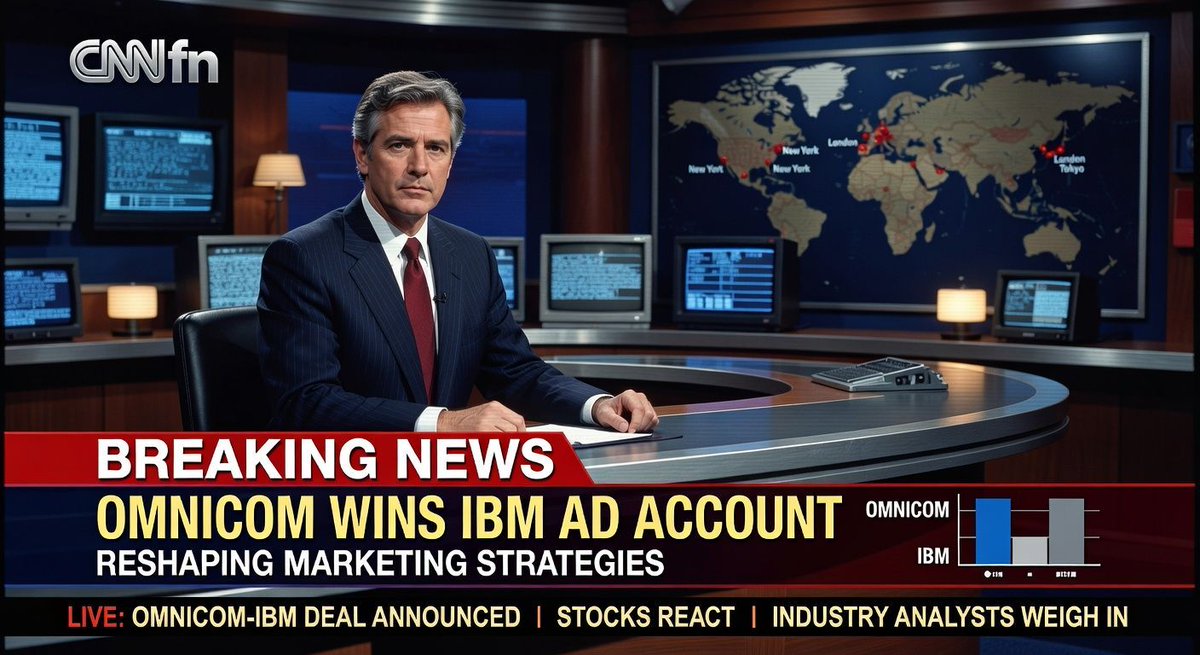
How Omnicom's Win of IBM's Ad Account is Reshaping Marketing Strategies In the dynamic world of marketing, shifts in major accounts can signal broader industry changes. Recently, Omnicom Group secured IBM's global advertising account, marking a significant shake-up in how brands approach advertising partnerships. This move not only highlights evolving client-agency relationships but also offers valuable lessons for marketing professionals, business owners, and teams navigating challenges like lead generation, conversion optimization, and brand awareness across digital and traditional channels. Understanding the Industry Shake-Up The transition of IBM's advertising account from its previous agency to Omnicom represents a strategic pivot for one of the world's leading technology companies. IBM, known for its innovative solutions in AI, cloud computing, and data analytics, is seeking to enhance its marketing efforts amid a competitive landscape. Omnicom, with its vast network of agencies and expertise in integrated marketing, steps in to drive these initiatives. For marketing professionals, this change underscores common challenges such as maintaining brand consistency while scaling campaigns. For instance, lead generation often suffers when traditional channels like print and TV are not aligned with digital efforts. Omnicom's approach could involve leveraging data-driven insights to bridge these gaps, ensuring that IBM's campaigns perform cohesively across platforms. Addressing Key Marketing Challenges This account win brings to light several core issues in modern marketing. Let's break them down with practical insights: Lead Generation: In a digital-first era, generating quality leads requires integrating SEO, social media, and content marketing. Omnicom might use IBM's data assets to create targeted campaigns, helping businesses overcome the challenge of attracting high-intent prospects. Conversion Optimization: Optimizing for conversions involves A/B testing and user experience enhancements. A framework like the AIDA model (Attention, Interest, Desire, Action) can be applied here. For example, Omnicom could refine IBM's landing pages to reduce bounce rates and boost sales funnels. Brand Awareness: Building awareness across channels demands consistent messaging. Marketers can draw from this example by using Omnicom's multi-channel expertise to amplify IBM's brand through programmatic ads and influencer partnerships, addressing fragmentation in traditional vs. digital media. Campaign Performance: Measuring ROI is crucial. Tools like Google Analytics and CRM systems allow for performance-oriented analysis. Businesses should track metrics such as click-through rates and customer acquisition costs to evaluate success, much like Omnicom will for IBM. To implement these, consider a simple framework: Start with audience segmentation, followed by channel selection, content creation, and ongoing monitoring. For instance, a B2B company could use IBM's strategy to run LinkedIn ads for lead gen, then optimize with email retargeting for conversions. Actionable Insights and Performance Analysis Drawing from this shake-up, marketing teams can adopt performance-oriented strategies. One effective example is hybrid campaign models, blending digital precision with traditional reach. Suppose a business owner is launching a product; they could mirror Omnicom's tactics by allocating 60% of the budget to digital channels for targeted ads and 40% to traditional media for broader exposure. This balanced approach often yields measurable outcomes, such as a 20-30% increase in engagement rates based on industry benchmarks. Additionally, focus on data analytics for campaign refinement. By analyzing key performance indicators (KPIs) like conversion rates and customer lifetime value, teams can iterate quickly. Avoid common pitfalls, such as over-relying on one channel, by diversifying as Omnicom does with its integrated services. Conclusion: Measurable Outcomes and Next Steps In summary, Omnicom's acquisition of IBM's ad account exemplifies how strategic partnerships can drive marketing evolution. By addressing lead generation, conversion optimization, and brand awareness, businesses can achieve tangible results like improved ROI and higher engagement. Next, marketing professionals should assess their current strategies, perhaps by conducting a channel audit, and explore collaborations with versatile agencies. Focus on data-driven decisions to ensure campaigns deliver measurable success in today's multifaceted landscape.

Share


Source:Show original
Disclaimer: The information on this page may have been obtained from third parties and does not necessarily reflect the views or opinions of KuCoin. This content is provided for general informational purposes only, without any representation or warranty of any kind, nor shall it be construed as financial or investment advice. KuCoin shall not be liable for any errors or omissions, or for any outcomes resulting from the use of this information.
Investments in digital assets can be risky. Please carefully evaluate the risks of a product and your risk tolerance based on your own financial circumstances. For more information, please refer to our Terms of Use and Risk Disclosure.