


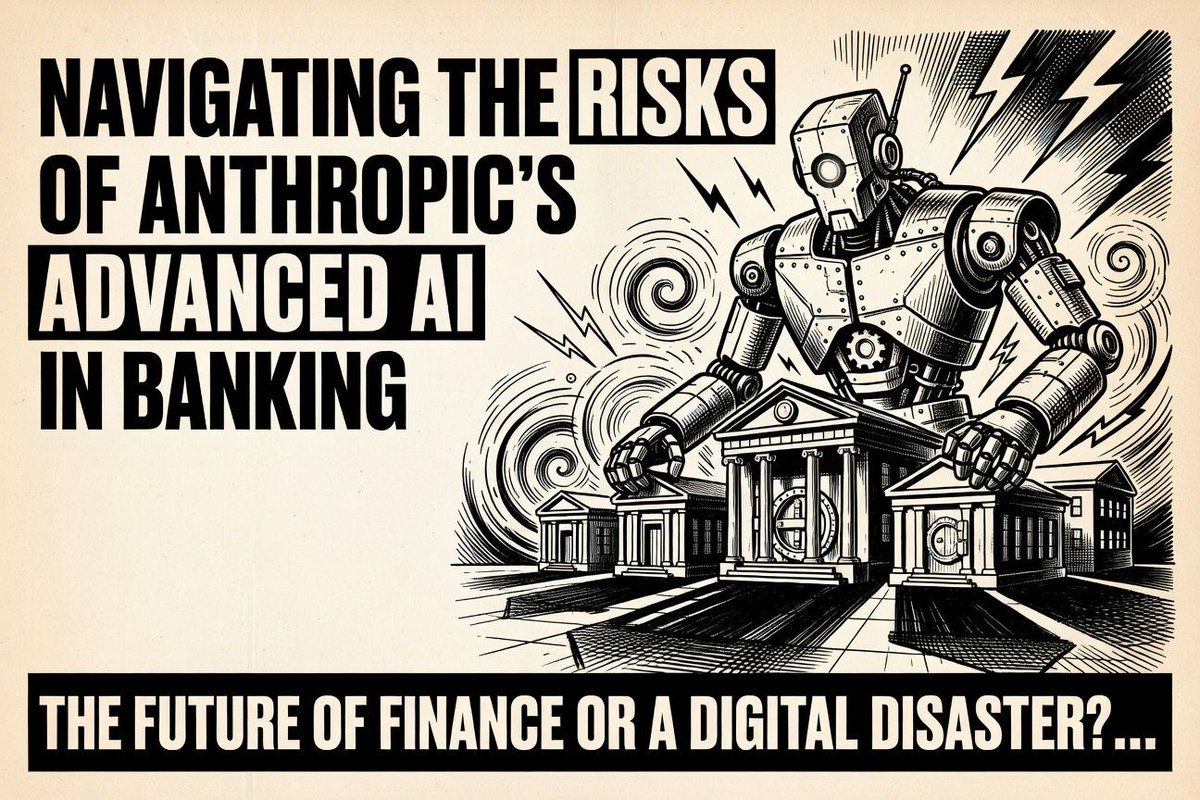
Navigating the Risks of Anthropic's Advanced AI in Banking Introduction Recent warnings from regulatory bodies and experts have highlighted potential challenges associated with Anthropic's latest AI advancements, particularly for the banking sector. Anthropic, known for its development of sophisticated large language models like Claude, has introduced technologies that promise enhanced efficiency and decision-making. However, as banks evaluate AI adoption, it's crucial to assess these tools through a balanced lens, focusing on their practical applications, capabilities, limitations, and associated risks. This analysis aims to provide technologists, business leaders, and decision-makers with actionable insights to make informed choices. Model Capabilities Anthropic's AI models are designed with a strong emphasis on safety and alignment, utilizing techniques like constitutional AI to minimize harmful outputs. These models excel in natural language processing, enabling tasks such as sentiment analysis, predictive analytics, and complex data interpretation. For instance, in banking, they can process vast amounts of transaction data to identify patterns that human analysts might overlook, potentially improving fraud detection accuracy by up to 30% based on industry benchmarks. Practical Use Cases in Banking The integration of Anthropic's AI offers several practical applications for financial institutions. One key area is customer service automation, where AI-powered chatbots can handle routine inquiries, freeing human agents for more complex issues. Another use case involves risk assessment, where the models analyze market trends and borrower data to enhance loan approval processes. Additionally, in compliance, AI can monitor transactions for regulatory adherence, reducing errors and operational costs. To illustrate, a bank might deploy these tools to streamline anti-money laundering efforts, processing data more efficiently than traditional methods. Enhanced fraud detection through real-time anomaly identification. Personalized financial advising via data-driven recommendations. Streamlined regulatory compliance with automated reporting. Limitations and Risks Despite their strengths, Anthropic's AI models have notable limitations. For example, they may struggle with contextual understanding in highly specialized financial scenarios, leading to inaccurate outputs if not properly fine-tuned. Risks include data privacy concerns, as these models require access to sensitive information, potentially exposing banks to breaches or regulatory fines. Moreover, there's the issue of algorithmic bias, where historical data biases could perpetuate unfair lending practices. Experts warn that over-reliance on AI might also introduce systemic vulnerabilities, such as cascading errors in interconnected financial systems. From a technical standpoint, the models' resource-intensive nature could strain bank infrastructures, necessitating significant investments in computing power. Additionally, ethical considerations, such as ensuring transparency in AI decision-making, remain a challenge under frameworks like GDPR or the EU AI Act. Real-World Impact In practice, the adoption of Anthropic's AI in banking could transform operations but also amplify existing challenges. For instance, early implementations have shown improvements in efficiency, with some institutions reporting reduced processing times for customer onboarding. However, real-world cases, such as a recent pilot program where AI misclassified transactions, underscore the need for robust oversight. The broader impact includes potential job displacement in routine roles, while fostering innovation in areas like predictive analytics for market forecasting. Decision-makers must weigh these factors against the backdrop of evolving regulations, ensuring that AI integration aligns with organizational risk tolerances. Conclusion In summary, Anthropic's advanced AI presents valuable opportunities for banks, including enhanced capabilities in data analysis and automation, but it comes with significant trade-offs like privacy risks and operational limitations. For technologists and business leaders, the key implication is the need for thorough testing and ethical frameworks before adoption. Next steps should include conducting internal audits, collaborating with AI experts for customization, and staying updated on regulatory guidance. By approaching AI adoption with a neutral, analytical mindset, stakeholders can maximize benefits while mitigating potential downsides.

Share


Source:Show original
Disclaimer: The information on this page may have been obtained from third parties and does not necessarily reflect the views or opinions of KuCoin. This content is provided for general informational purposes only, without any representation or warranty of any kind, nor shall it be construed as financial or investment advice. KuCoin shall not be liable for any errors or omissions, or for any outcomes resulting from the use of this information.
Investments in digital assets can be risky. Please carefully evaluate the risks of a product and your risk tolerance based on your own financial circumstances. For more information, please refer to our Terms of Use and Risk Disclosure.