


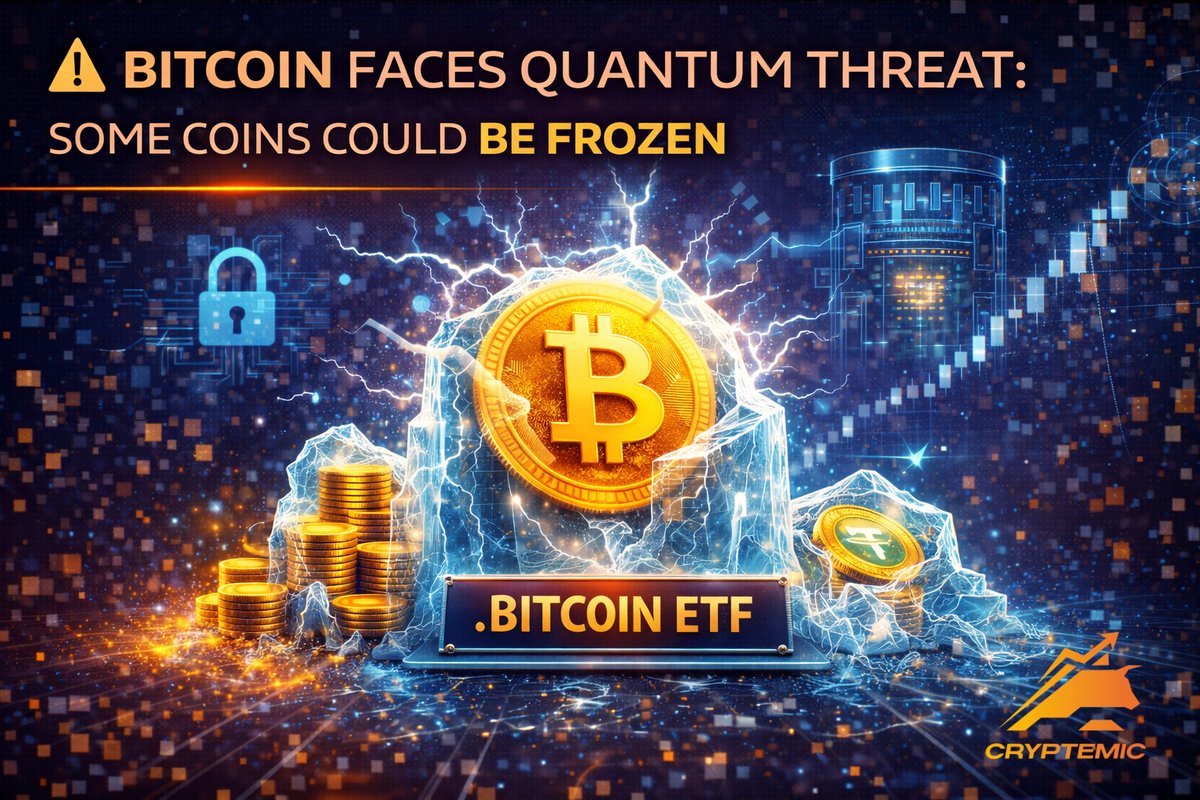
⚛️ Bitcoin Prepares for Quantum Threat: New Proposal Could Freeze Legacy Coins Researchers in the Bitcoin ecosystem have introduced BIP-361, a proposal aimed at protecting the network from future quantum computing risks. Current cryptography (ECDSA and Schnorr) could eventually be broken by advanced quantum machines. The plan outlines a phased migration to quantum-resistant schemes. Initially, sending funds to vulnerable legacy addresses would be disabled. Later, outdated signature types would be fully rejected, potentially freezing any unmigrated coins permanently. Older address formats, such as P2PK and reused addresses, are most exposed since their public keys are already visible onchain. Estimates suggest over one-third of all BTC falls into this category, including early holdings linked to Satoshi Nakamoto. The proposal is co-authored by Jameson Lopp, who warns that even the existence of quantum attacks could undermine trust in the network — making proactive defense critical. If implemented, the proposal could reduce Bitcoin’s effective supply and reshape its long-term economics. For now, BIP-361 remains under discussion with no confirmed activation timeline. Full text of the news is available on our news portal https://t.co/zPCES16vLj Learn how cryptography, security, and future technologies shape crypto markets with Cryptemic Academy 🚀 #CryptoNews #Bitcoin #Blockchain #Quantum #CryptoSecurity #cryptemic #cryptemicacademy

Share


Source:Show original
Disclaimer: The information on this page may have been obtained from third parties and does not necessarily reflect the views or opinions of KuCoin. This content is provided for general informational purposes only, without any representation or warranty of any kind, nor shall it be construed as financial or investment advice. KuCoin shall not be liable for any errors or omissions, or for any outcomes resulting from the use of this information.
Investments in digital assets can be risky. Please carefully evaluate the risks of a product and your risk tolerance based on your own financial circumstances. For more information, please refer to our Terms of Use and Risk Disclosure.