


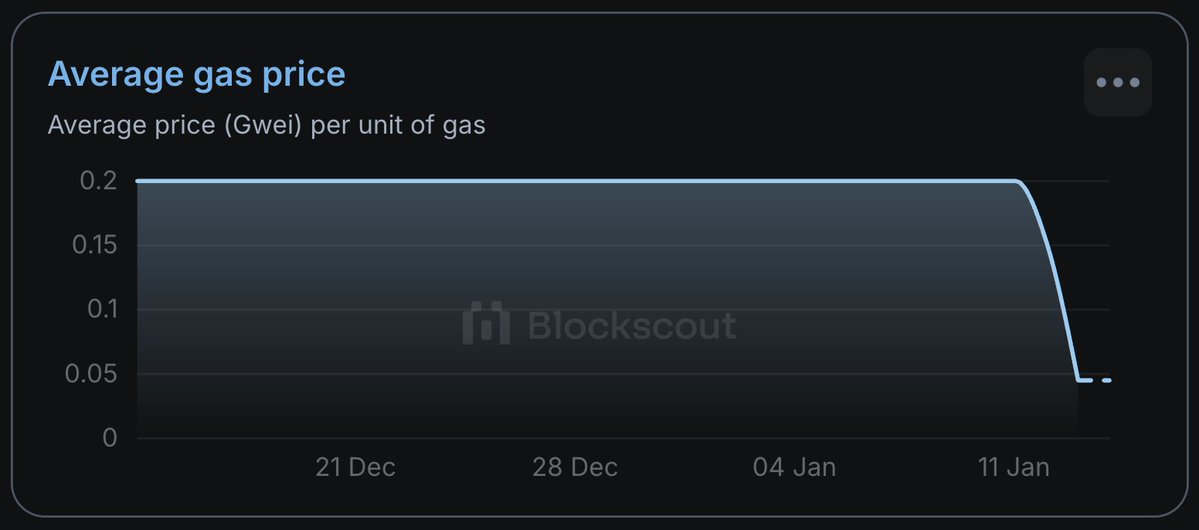
What If Using a Blockchain Didn’t Cost You Anything Have you ever paused before making an on-chain transaction because gas fees felt pointless or unpredictable? Even when fees are low, that small mental friction still exists. You ask yourself whether the action is “worth it.” Over time, that hesitation adds up and quietly slows adoption. On @Superpositionso, that hesitation is starting to disappear. What’s Actually Changing on Superposition You may have noticed that transacting on Superposition has become extremely cheap. In fact, gas is now lower than ever, and all actions on @9livesso are completely gasless. This is not a temporary subsidy or marketing incentive. It is the result of real infrastructure upgrades powered by @conduitxyz, Account Abstraction, and @arbitrum Stylus. In simple terms, Superposition is redesigning how transaction costs work, moving gas out of the user experience entirely. How Gasless Transactions Are Made Possible 1. Account Abstraction removes user-side friction With Account Abstraction, users no longer need to manage gas the traditional way. Transactions can be sponsored, abstracted, or bundled without exposing users to complexity. 2. Conduit handles the execution layer Conduit provides the rollup infrastructure that allows Superposition to optimize performance, costs, and transaction handling at scale. 3. Arbitrum Stylus improves efficiency Stylus enables more efficient execution by allowing smart contracts to run in environments that are faster and cheaper than standard EVM-only setups. 4. Gas costs fade into the background The result is simple: users interact with apps like 9lives without thinking about gas at all. Why This Is Fundamentally Different 1. Gasless is the baseline, not the reward Most platforms treat gasless transactions as a bonus. On Superposition, it is becoming the default experience. 2. Cost reductions compound over time As the stack improves, fees continue to fall. This is structural progress, not a short-term optimization. 3. The user experience finally feels normal When transactions are free, users behave naturally. They click, explore, and engage without hesitation. 4. Yield replaces fees The long-term goal is not just cheaper gas, but negative fees, where activity on the network earns yield instead of paying costs. Why This Matters for the Bigger Web3 Picture If Web3 wants mainstream adoption, transactions cannot feel like toll booths. They must feel invisible. Superposition’s direction points to a future where networks compete on experience, not just decentralization guarantees. When fees go negative and users are paid to participate, on-chain activity becomes sustainable and engaging by default. This is where Arbitrum-based infrastructure shines. Scalability, efficiency, and developer flexibility make these experiments possible without sacrificing performance. My Takeaway Gas was never supposed to be a user feature. It was a technical necessity that leaked into the experience. Superposition’s approach feels like a correction, not an innovation. When using a blockchain becomes cheaper than using Web2 infrastructure, the conversation around adoption changes entirely. Try It Yourself The fastest way to understand this shift is to experience it. Use https://t.co/Mb9cpApOY0, make transactions, and notice what’s missing. No gas anxiety. No friction. Just usage. Soon, using #Superposition won’t cost you anything. Eventually, it will pay you to be there. Source: https://t.co/MmSPvUanNS #Arbitrum #AccountAbstraction #Web3UX #Gasless

Share


Source:Show original
Disclaimer: The information on this page may have been obtained from third parties and does not necessarily reflect the views or opinions of KuCoin. This content is provided for general informational purposes only, without any representation or warranty of any kind, nor shall it be construed as financial or investment advice. KuCoin shall not be liable for any errors or omissions, or for any outcomes resulting from the use of this information.
Investments in digital assets can be risky. Please carefully evaluate the risks of a product and your risk tolerance based on your own financial circumstances. For more information, please refer to our Terms of Use and Risk Disclosure.