


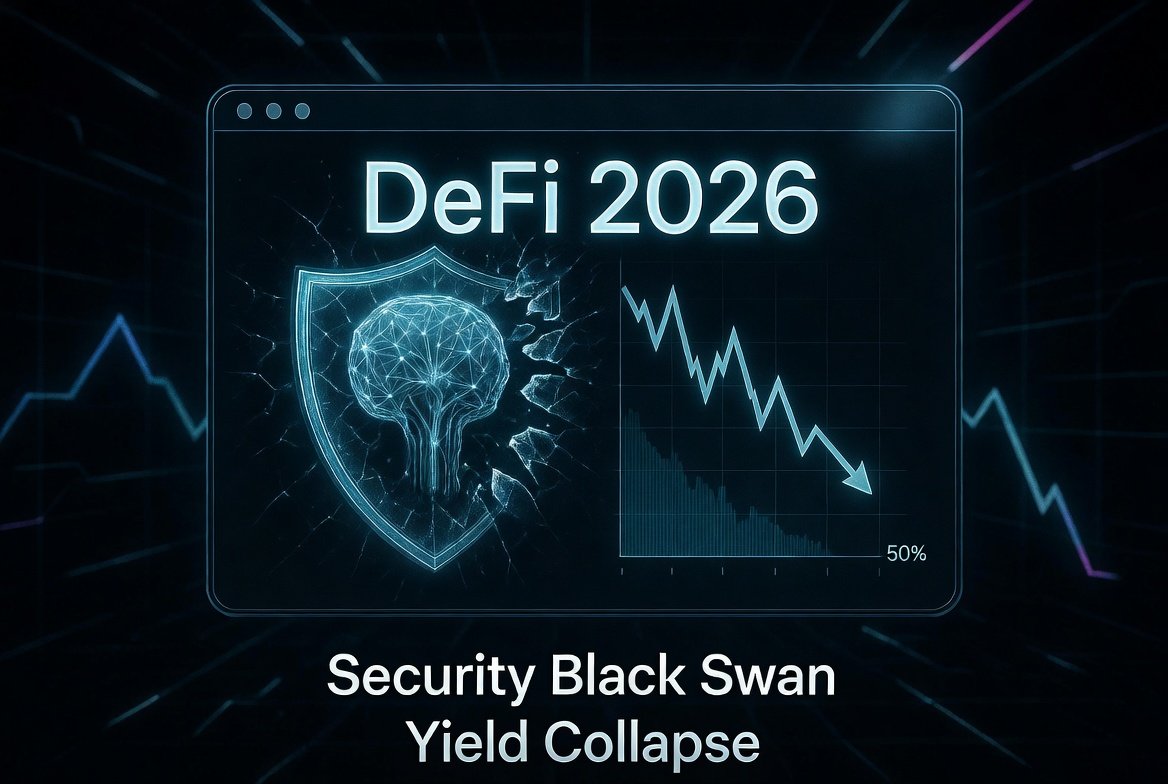
DeFi just got hit where it hurts most: trust and yield Not price. Not narratives. The two things that actually keep capital in the system. 1. AI is starting to break security assumptions @AnthropicAI Mythos AI is a warning shot. We are entering a phase where AI can autonomously find and exploit vulnerabilities even in systems that have been considered “safe” for decades A 27-year-old OpenBSD bug exploited with almost no cost is not just impressive it’s uncomfortable Because if AI can break faster than we can patch then “audited” no longer means what it used to And DeFi is sitting on $200B+ of open-source infrastructure 2. Yield is no longer worth the risk At the same time, returns have compressed hard Aave USDC ~2.6% USDT pools ~1.8% stETH ~2.5% In many cases, lower than TradFi You are taking smart contract risk for savings account level yield That trade-off no longer makes sense for most capital My view This is not just another cycle slowdown This is DeFi being forced to confront its two weakest layers security and sustainability The old model is breaking What matters now Real yield Stronger security assumptions Institutional-grade infrastructure Actual users, not just incentives DeFi is not dying but the easy version of it is gone What survives from here will look very different

Share


Source:Show original
Disclaimer: The information on this page may have been obtained from third parties and does not necessarily reflect the views or opinions of KuCoin. This content is provided for general informational purposes only, without any representation or warranty of any kind, nor shall it be construed as financial or investment advice. KuCoin shall not be liable for any errors or omissions, or for any outcomes resulting from the use of this information.
Investments in digital assets can be risky. Please carefully evaluate the risks of a product and your risk tolerance based on your own financial circumstances. For more information, please refer to our Terms of Use and Risk Disclosure.