





XRP’s decentralized finance ecosystem is growing fast. Its FXRP supply is closing in on 160 million tokens, a milestone that signals rising adoption just months after launch — and the numbers are fueling a broader argument about where XRP stands in the future of decentralized finance.
XRPL Validator Makes The Case For Stability
A validator on the XRP Ledger known as Vet made waves on X this week, arguing that XRP is built to drive the next phase of DeFi in a way that other protocols are not.
His argument doesn’t rest on raw performance data. Instead, it centers on what the XRP Ledger was deliberately designed to leave out.
According to Vet, the protocol skips features like complex smart contract composability and staking — tools common on rival chains — because those features carry hidden dangers.
Classic DeFi has a long way to go to replace TradFi completely as we can see.
XRP will lead the new wave of DeFi.
People aren’t ready for it but it’s inevitable, our protocol design choices are superior and more robust for high value use cases such as DeFi replacing TradFi.
— Vet (@Vet_X0) April 19, 2026
Cascading failures, layered bugs, and compounding risks are what he calls “multiplicative risk.” By avoiding them, he says, the XRP Ledger becomes a more solid base for high-value financial applications.
Traditional finance, he added, is far from being replaced by existing DeFi systems, and XRP’s design makes it better suited for that long transition.
A portion of the FXRP supply is already locked into protocols including Firelight, Kinetic, BlazeSwap, and Upshift. XRP holders are using these platforms for yield and liquidity, marking the early stages of an ecosystem that continues to build out through Flare Network’s staking infrastructure.
Flare Founder Fires Back
Not everyone accepted Vet’s framing without question. Hugo Philion, the founder of Flare Network, pushed back on what he saw as premature claims of superiority.
Philion said he supports both XRP and the XRP Ledger, but argued that no protocol earns the right to claim it is better until it has been put through real pressure at real scale.
As you know I am a big believer in XRPL and XRP but this kind of grave dancing is extremely unseemly especially as various protocols have had issues and bugs when being rolled out on XRP Ledger.
Before commenting on the superiority of protocol design choices etc you would need…
— Hugo Philion (@HugoPhilion) April 20, 2026
He pointed out that multiple crypto protocols — including those tied to XRPL — have run into bugs and rollout problems.
DeFi, he said, is still maturing across the board, and XRP’s entry into the space should be seen as part of that wider development, not a leap ahead of it.
Vet responded by clarifying his position. He was not arguing that XRP beats the competition outright.
His point, he said, was about managing downside risk — and that the trade-offs baked into the XRP Ledger are intentional choices, not shortcomings.
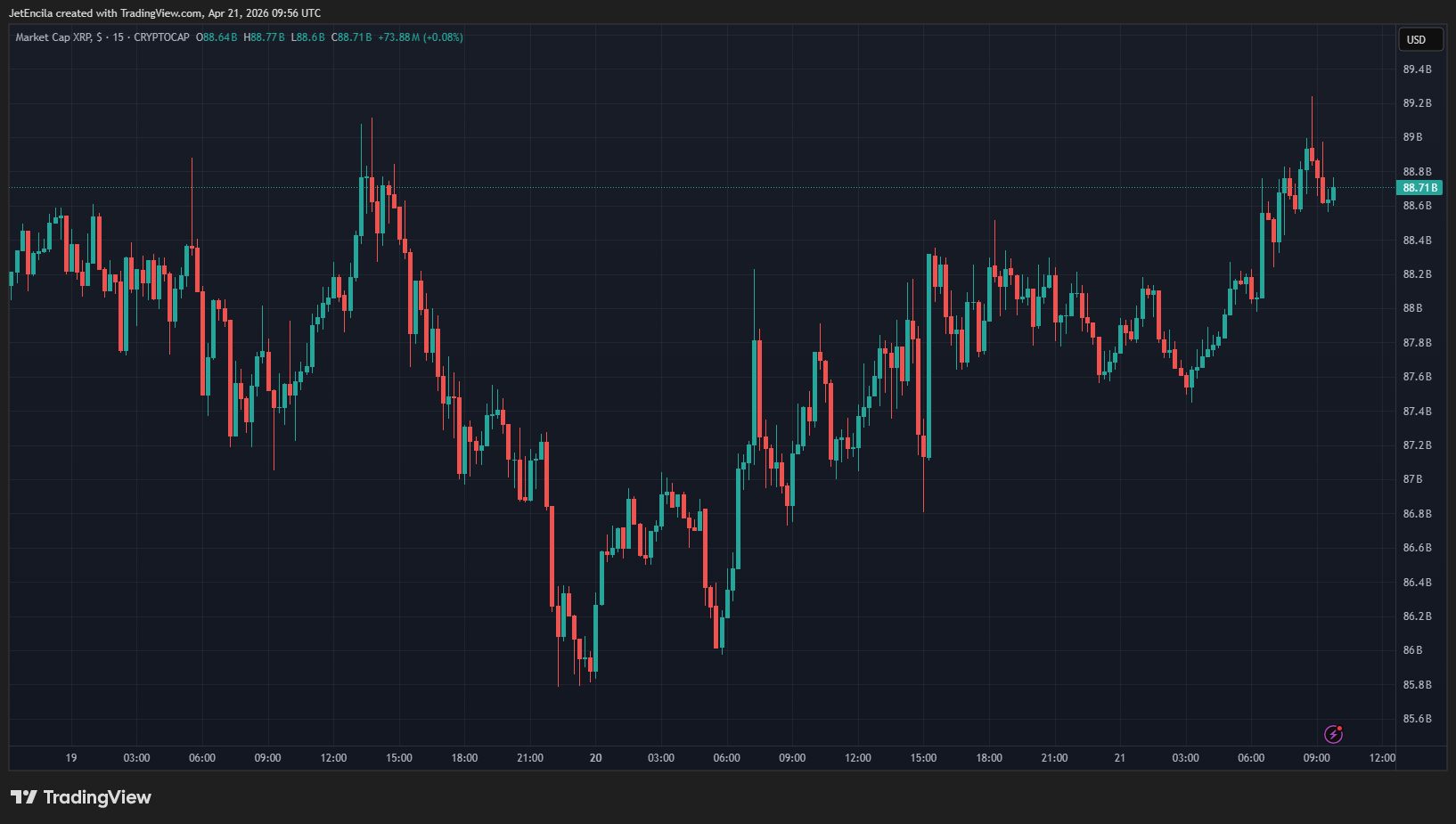
Featured image from Meta, chart from TradingView