





TL;DR:
- Marginal risk: Only 0.03% of the total XRP supply is considered vulnerable, primarily affecting two accounts with more than 21 million tokens.
- Native shielding: Around 2.4 billion XRP in 300,000 wallets are immune because they have never exposed their public keys on the network.
- Technological milestone: The ecosystem is already testing post-quantum algorithms like Dilithium in alpha versions to ensure the transition by April 2026.
Following the advances of Google Quantum AI, the debate over XRP and quantum threats has intensified. In this regard, Vet, an XRPL validator, confirmed that the Ledger’s architecture is currently one of the most robust.
Ripple’s account system, unlike UTXO models, allows for key rotation without migrating funds. With a market capitalization that dominates the sector, the network maintains its integrity against 500,000-qubit computing.
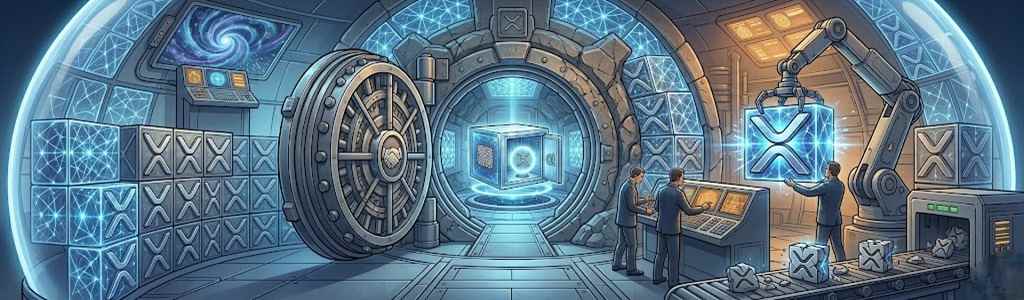
Key rotation and resistance to Google Quantum AI
The quantum weakness lies in the exposure of public keys after the first transaction. In this scenario, the XRPL has a competitive advantage because it allows users to replace their digital signatures natively.
While in Bitcoin, “Satoshi era” coins are trapped in old formats, XRP facilitates a smooth migration toward lattice-based network standards. This avoids the need for traumatic hard forks for the community.
Currently, the development team is experimenting with the ML-DSA standard on the testnet. This advancement ensures that even if quantum computing breaks elliptic curve cryptography, the Ledger will upgrade without friction for holders.
The XRPL structure not only limits risk to an insignificant fraction of the supply but also provides the technical tools necessary for a total cryptographic evolution. XRP’s security appears to be one step ahead in the technological race.