





The risk-adjusted returns could be improving for Ripple [XRP], data showed. The Sharpe Ratio is used to help investors understand if an asset generates high returns, once adjusted for volatility.
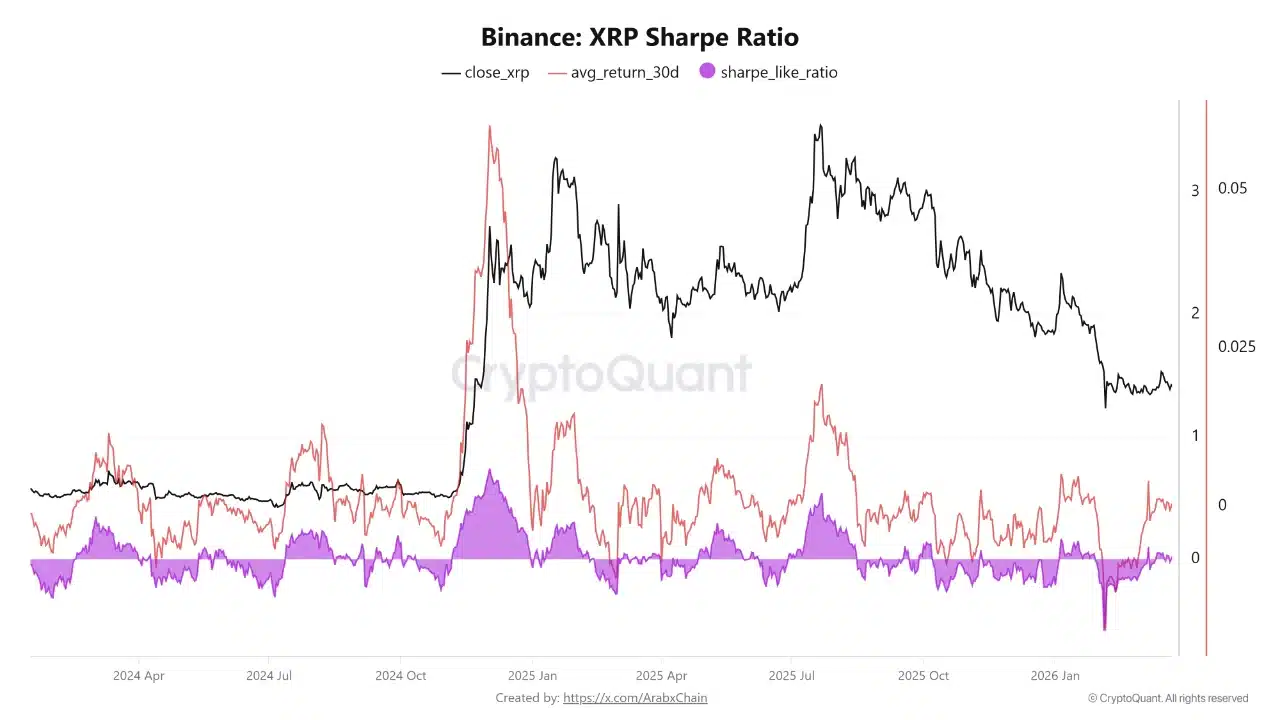
A rising Sharpe Ratio would imply a better risk-adjusted performance, observed an analyst in a post on CryptoQuant Insights. The metric saw a deep decline in February as the early January rally faded into a deeper downtrend. At that time, a Bitcoin [BTC] and crypto market-wide sell-off forced XRP prices from $2.35 to $1.21, a 48% drop.
The XRP gains in mid-March saw the 30-day returns spike higher. Recently, the Sharpe Ratio has improved gradually and has been hovering around the positive territory with a reading of 0.0267.
A sustained increase in the metric would mean that XRP is generating more gains with less volatility and could set the stage for a gradual bullish recovery. Yet, over the past six weeks, the price has kept pulling back to the $1.35 support, the same level XRP retested once more on the 26th of March.
The positive reading on the Sharpe Ratio showed that the risk-adjusted returns have improved moderately. It remains to be seen if the situation improves for the investors.
A drop-off in demand reflected bearish XRP sentiment
To keep the risk-adjusted returns rising, XRP needs increased demand which drive a sustained uptrend. A market that is not overleveraged would also keep the deep liquidity hunts at bay, reducing the daily volatility.
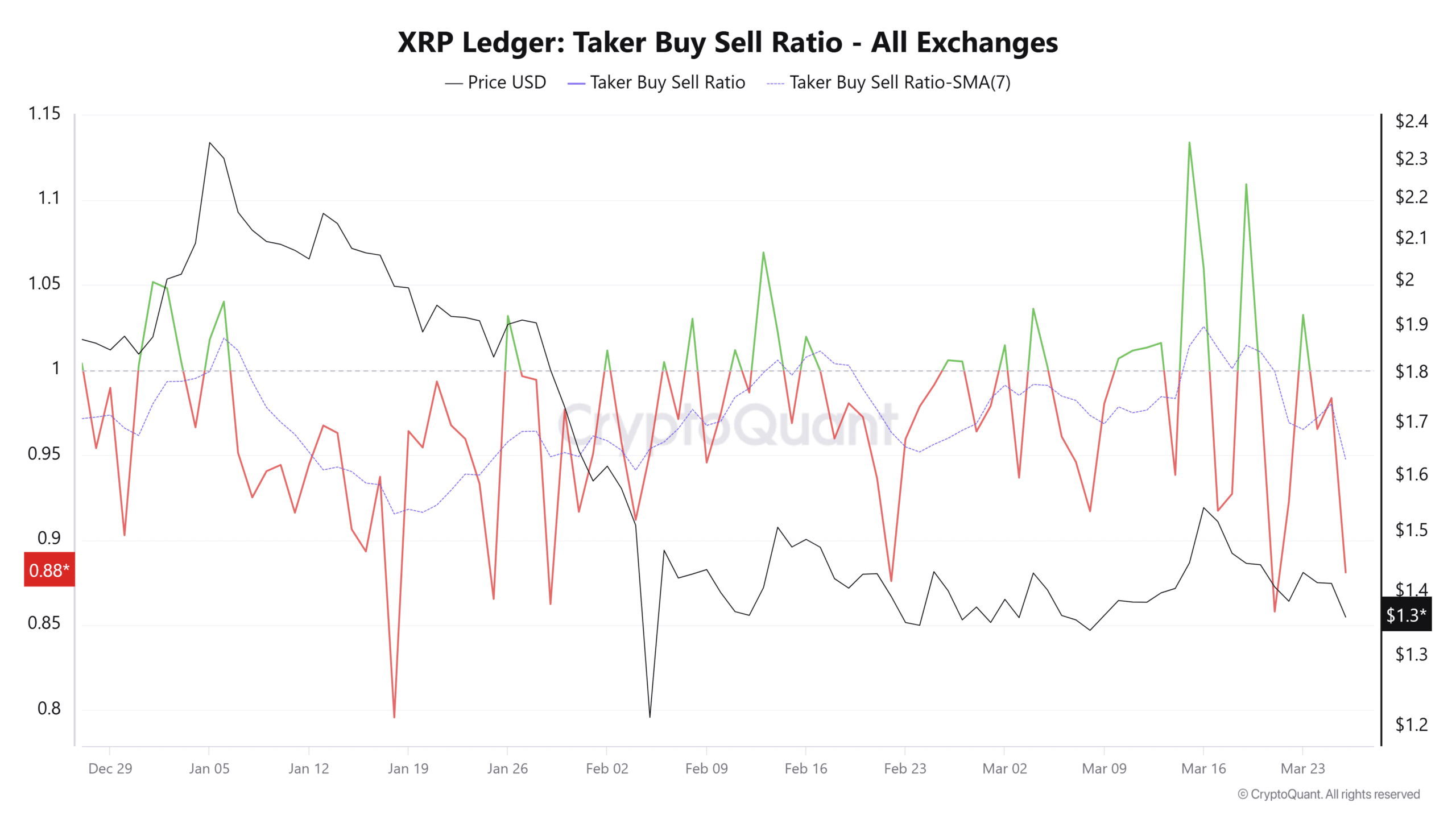
The Taker Buy-Sell Ratio was examined to understand the buyer aggression. In mid-March, when XRP rallied to $1.54 when Bitcoin reached $75k, the taker buy orders were prevalent. The 7-day moving average of the taker Buy/Sell Ratio climbed above 1 and stayed there for a few days, something that has only happened thrice in 2026.
This impetus didn’t last long. Over the past ten days, the crypto market correction saw sellers take the upper hand once again.
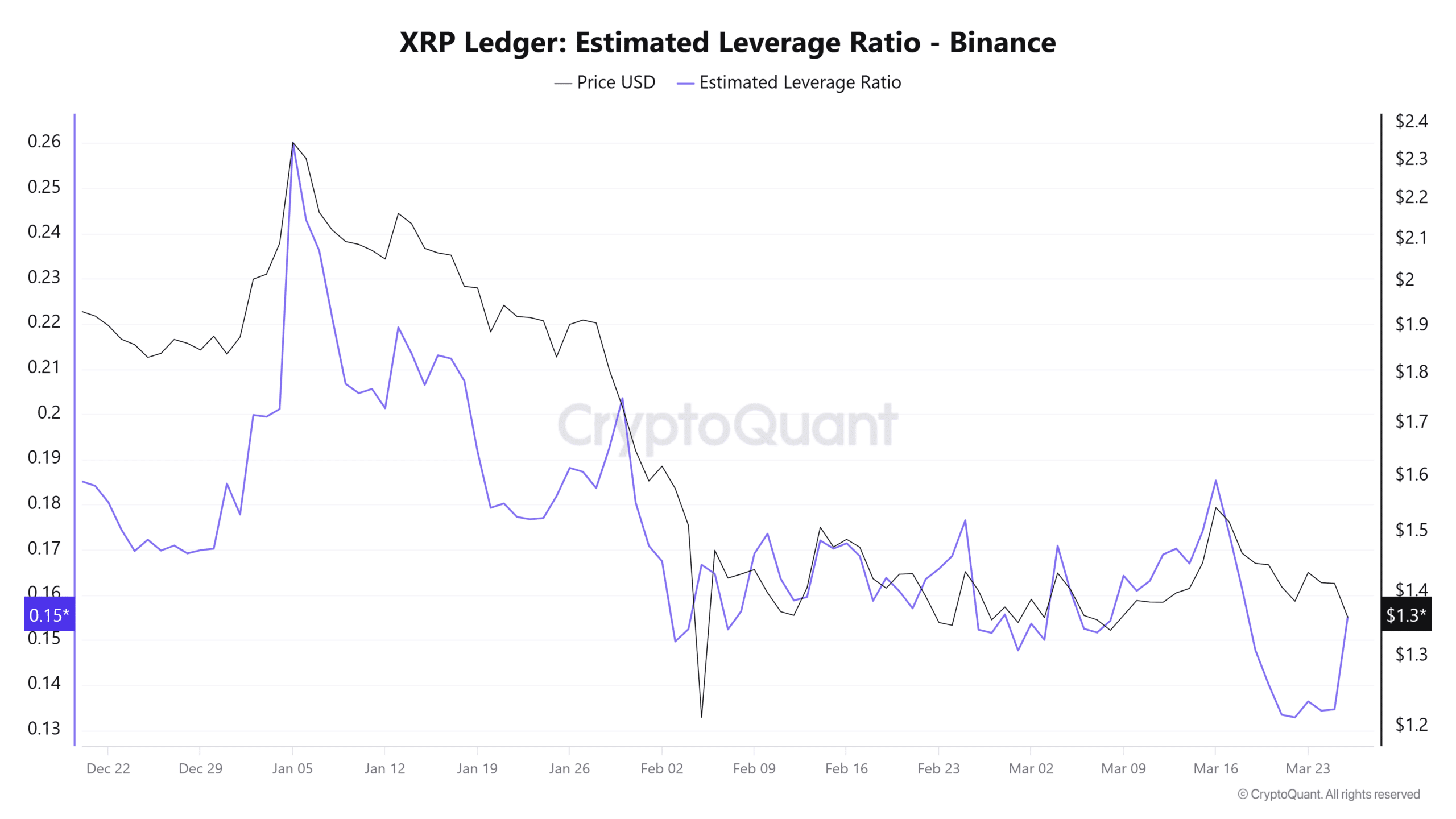
Additionally, the estimated leverage ratio has seen an uptick lately. An AMBCrypto report had pointed out that the reduced Open Interest (OI) behind XRP, combined with increased spot demand, meant that volatility risk was falling.
However, in the past 24 hours, the XRP OI has increased by 5.4%, the Estimated Leverage Ratio also spiked from 0.134 to 0.155. It signaled increased risk appetite from speculative traders. At the same time, it also warned of an increased threat of a hunt for liquidations and the associated price volatility.
Final Summary
- The Sharpe ratio climbed back into positive territory after the deep drop during the February price correction.
- Sustained spot demand and aggressive buyer activity are needed for XRP to defend the $1.20-$1.35 support and climb higher. Current market conditions were not favorable.