





A flood of forgotten funds has quietly found its way back to XRP Ledger users, after a decentralized exchange founder scanned the entire network to track down expired escrows that holders had abandoned — some without even knowing the money was still there.
First Ledger Founder Scans Entire Network To Recover Idle Funds
Adam, the founder of First Ledger, a decentralized exchange built on the XRP Ledger, combed through every corner of the blockchain to locate escrows whose time conditions had long since passed but had never been completed.
Reports say the recovered total came to 750,218 XRP — worth just over $1 million at current prices. First Ledger now runs regular scans to catch eligible escrows as soon as they become available, releasing them before they fall through the cracks again.
XRPL validator Vet confirmed the figures, noting that the bulk of the locked funds belonged to ordinary community members, not institutions. Many holders had set time-based conditions on their XRP years ago and simply moved on, either forgetting the funds existed or not knowing what steps were needed to claim them.
Escrow unlocks spiking on XRP.
Over $1,000,000 or 750,218 XRP total in Escrows just got unlocked.
Lots of those escrows were created by holders and community members and timelock expired, but they forgot or didn’t know how to unlock and receive their XRP back.@xrpl_adam… pic.twitter.com/eSdMQmlSFM
— Vet (@Vet_X0) March 20, 2026
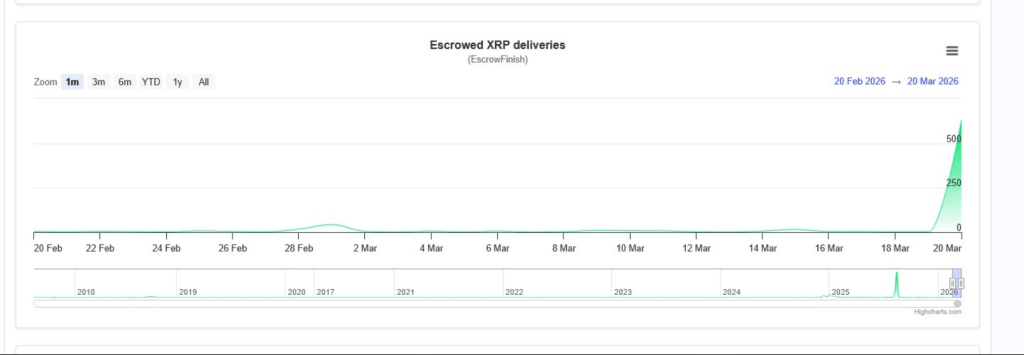
The escrow system on the XRP Ledger does not release funds on its own. Once a timelock expires, the recipient must still send a specific transaction — called an EscrowFinish — to collect what’s theirs. Miss that window, and a separate deadline kicks in.
If that second deadline passes without action, the escrow expires entirely and can no longer be claimed. At that point, only a cancellation transaction can return the XRP to whoever sent it in the first place. In some cases, if no expiration date was ever set, the funds can sit locked indefinitely.
Record Transaction Counts Signal Broader Usage Growth
The recovered funds are just one piece of a wider activity surge on the network. Data shows that deposits into automated market makers hit an all-time high of 70,735 on Feb. 28.
AccountSet transactions — used to update account settings without moving any money — climbed to 114,690 on March 20, the highest single-day count the network has ever recorded.
Error messages tied to insufficient XRP reserves also spiked above 370,000 on March 18, the highest reading in three years.
That number reflects users trying to place new offers without holding enough XRP to meet the network’s minimum balance requirements — a sign that new participants are showing up and running into the system for the first time.
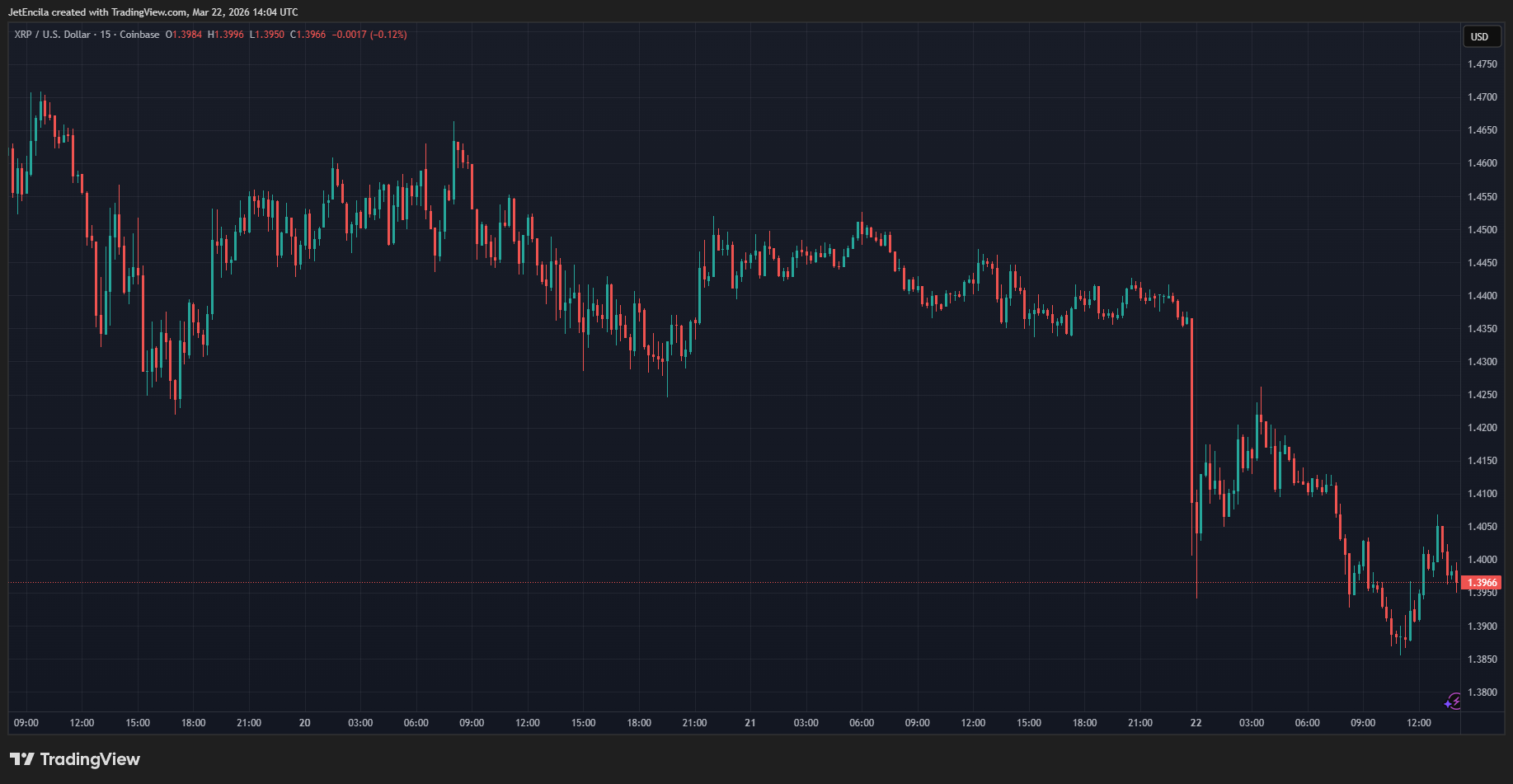
Featured image from Vecteezy, chart from TradingView