




The momentum for the crypto market structure bill, the CLARITY Act, continues to face more roadblocks. It’s now clear that the banks, especially community banks that support rural America, won’t back the bill.
In a statement on the 29th of April, the Independent Community Bankers of America (ICBA), the trade group for the smaller banks, said the Americans overwhelmingly support its push against the stablecoin yield. According to its poll, 73%-74% favor community banks to make local lending decisions.
Additionally, 62%-65% of the polled adults said policymakers should ensure crypto policy preserves access to insured deposit accounts and avoid harming bank lending in local communities. The move comes ahead of the ICBA Capital Summit scheduled for April 29-May 1, 2026. The conference will feature lawmakers and regulators.
And the sector aims to push against the recent stablecoin yield deal in the summit, as noted by Rebecca Romero, ICBA CEO.
ICBA is proud to continue helping community banks advocate in Washington and power $4.1 trillion in total lending activity in local communities nationwide.
White House slams community banks over CLARITY Act
In response, Patrick Witt, U.S. President Donald Trump’s crypto advisor, slammed ICBA’s position and stated,
ICBA is doing its members a huge disservice over this issue. As communicated to their leadership ad nauseam, an outright prohibition on stablecoin rewards is dead on arrival.
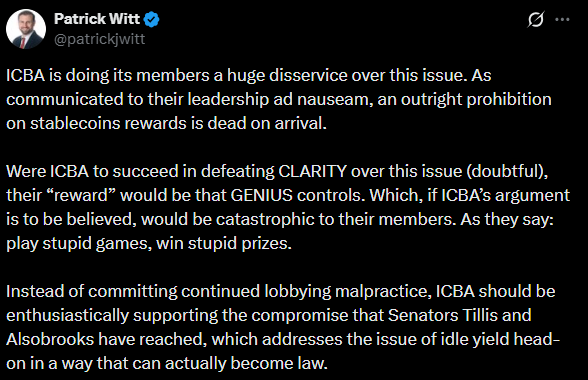
Witt sternly warned the trade group, noting that ‘pay stupid games, win stupid prizes.’ This was because failure to pass the CLARITY Act would leave the GENIUS Act as it is, including allowing stablecoin yield via intermediaries.
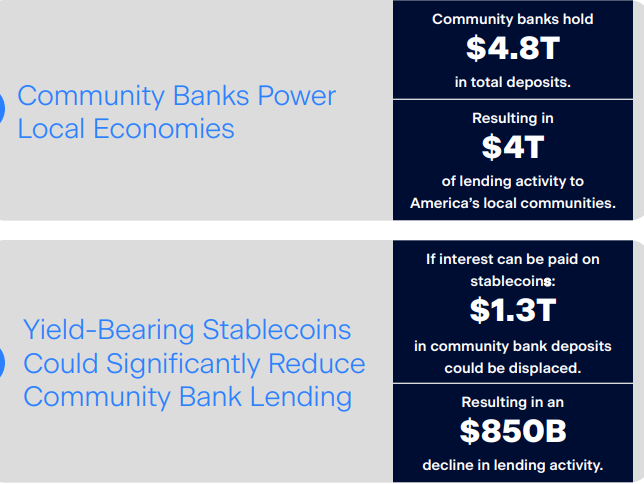
In fact, the ICBA’s report estimated that its members could face an $850 billion liquidity shortfall and $1.3 trillion in bank deposit flight if stablecoin yield via intermediaries continues.
But from the above fallout, one thing has clearly emerged: the banks want outright prohibition of stablecoin yield, not a compromise. And the yield issue isn’t the only hurdle. Senator Thomas Tillis (R-N.C), a key negotiator of the recent yield deal, has called for ethical language to be included in the bill before it advances.
Additionally, Tillis wants lawmakers to address concerns raised by law enforcement groups. The groups opposed the proposed blanket ‘safe harbor’ or exemption for certain developers of decentralized platforms.
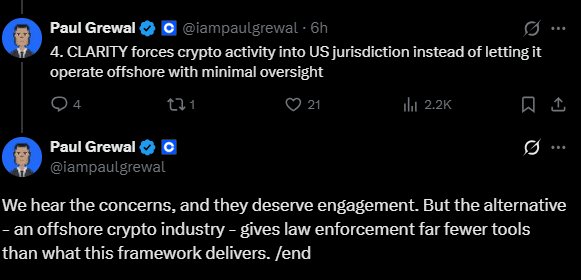
Although Coinbase’s Paul Grewal maintained that CLARITY strengthens law enforcement, the latest issues could further derail May’s Senate markup, let alone the floor vote.
Final Summary
- White House warned ICBA that blocking stablecoin yield could backfire on community banks
- Additionally, regulatory safeguards, developer protections, and ethical issues threaten to derail the crypto bill.