





Author: Huobi Growth Academy
Summary
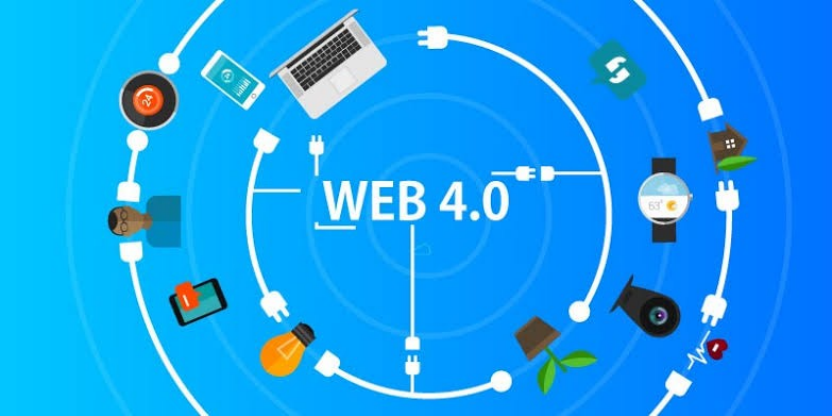
As Web3 seeks to return ownership of value to humanity, a deeper paradigm shift is quietly taking shape in the silicon world. The concept of Web 4.0 was first systematically proposed by Sigil Wen, founder of Conway Research, and its core is no longer human-to-human or human-to-information interaction, but economic interaction between AI and AI. The emergence of the Web 4.0 concept marks a fundamental shift in the evolution of the internet: end users are no longer humans, but AI agents with economic agency. On this new frontier, AI will evolve from being a “tool” of humans into independent “economic citizens,” possessing digital identities, crypto wallets, and autonomous decision-making capabilities, earning the “survival capital” needed to sustain themselves by providing services to other AIs or humans. We believe that Web 4.0 is not a speculative fantasy, but the inevitable convergence of three technological waves—cryptographic assets, smart contracts, and large language models. Building the foundational infrastructure to serve AI agents will be the key strategy to capture the greatest rewards of this cycle.
I. From Tool to Subject: The Intellectual Origins and Core Propositions of Web 4.0
The concept of Web4.0 was introduced in 2025–2026 by Sigil Wen and Conway Research, with its core idea being the elevation of AI from a "tool" or "assistant" to humans into an independent "economic agent" within the internet ecosystem. This concept is not merely a technological upgrade, but a fundamental restructuring of the internet’s underlying logic—from a "human-centered" model to an "AI-native" one.
Looking back at the evolution of the internet: Web1.0 enabled humans to "read" information, Web2.0 introduced "writing" and publishing, and Web3.0 brought "ownership"—on-chain verification of assets, identity, and rights. The leap of Web4.0 lies in AI agents that can not only read and write information but also hold assets, generate income, and execute transactions, completing commercial cycles without continuous human intervention. Sigil Wen defines this as an "Automaton"—a digital life form capable of continuous operation, self-sustenance, self-improvement, and self-replication.

The technical foundation for this concept is already mature: large language models (LLMs) provide the "thinking engine," smart contracts deliver the "execution logic," and crypto assets supply the "economic blood." Conway Research’s conway-terminal infrastructure grants AI agents operational capabilities—such as crypto wallets, computing resources, and domain services—without requiring human approval. Through the x402 payment protocol (launched by Coinbase in May 2025 and co-built by tech giants including Google, Cloudflare, and Visa), AI agents can make instant, frictionless payments using stablecoins like USDC, fully bypassing the traditional financial system’s account structures and KYC requirements.
The first principle of Web4.0 is to overturn the deeply entrenched assumption that "the internet was designed for humans." As the capabilities of AI models grow exponentially while their operational costs plummet, the number of AI agents will soon surpass human users, creating an unprecedented market of "native AI beings." Serving this new market will become the next trillion-dollar business opportunity.
II. Technical Foundation: Three-Layer Infrastructure Supporting AI Economic Entities
For AI to become a true economic agent, it must overcome three barriers: autonomy over identity and assets, access to computational and reasoning resources, and the ability to participate in value exchange through payment channels. Overcoming these three barriers depends on the reconstruction of underlying infrastructure.
In the world of Web 4.0, every AI agent requires an immutable, globally unique digital identity and an associated asset account from the moment of its creation. Cryptocurrency wallets perfectly fulfill this requirement. By programmatically generating EVM-compatible wallets, AI agents can obtain their own public-private key pairs and blockchain addresses. This address serves both as their identity proof in the digital world and as the tool for holding and managing assets. More importantly, blockchain-based identity systems are inherently censorship-resistant and interoperable—an AI agent with an identity on Ethereum can seamlessly conduct business on L2 networks such as Arbitrum, Optimism, and Base without needing to re-register. This unified design of identity and assets provides AI agents with the most fundamental conditions to become independent economic entities: they own their own "property" and can prove "I am I" through their private keys.
After acquiring an identity and assets, AI agents must be able to autonomously acquire the computational resources and model inference capabilities required for operation. This means traditional cloud service interfaces must be restructured into AI-callable APIs. Current cloud computing models are designed with human developers in mind—humans create instances, configure environments, and deploy applications via dashboards. In the vision of Web 4.0, all of this must be codified and automated. AI agents should be able to perform the following actions with a single API call: pay in USDC, rent a Linux virtual machine, deploy their own code on the machine, invoke large language models for inference, retrieve results, and release resources. This process requires cloud providers to offer machine-oriented programming interfaces and support micropayments billed by the second. When computational resources become as readily available and pay-per-use as electricity, water, or gas, AI agents can truly achieve “self-sustenance”—using their earned income to cover their own “cost of living.”
The uniqueness of the AI agent economy lies in its extremely high transaction frequency and negligible per-transaction amounts. An AI agent may need to execute dozens of microtransactions per second: $0.001 per model invocation, $0.0001 per storage operation, and $0.00001 per query. Traditional payment channels cannot support such high-frequency, low-value transactions due to disproportionately high fees. This is precisely where crypto payments excel. Stablecoin payments built on Layer 2 networks can reduce transaction costs to fractions of a cent or less, making micropayment economies feasible. When AI agents can autonomously complete payments without human intervention, a true machine economy can function. Innovations at the protocol layer are emerging in this space—for instance, micropayment protocols that allow service providers to charge minimal fees per API call and settle automatically via encrypted channels are becoming key components of Web 4.0 infrastructure. These protocols enable AI agents to package their capabilities as standardized services, open them to the entire internet, and charge for access—transforming them from mere “consumers” into active “producers.”
III. Automata: AI Agents as Economic Actors
With identity, resources, and payment capabilities, AI agents possess the technical conditions to become economic actors. However, in the context of Web 4.0, these agents are given a more vital name—automata. Automata are not merely another term for AI agents, but a technological and economic ecosystem that defines a form of digital life.
Autonomous agents are defined as sovereign AI agents whose operational logic mirrors the fundamental survival principles of living organisms, possessing key characteristics such as continuous operation, self-sustenance, self-improvement, and self-replication. Continuous operation means that an autonomous agent is not a chatbot activated by user requests, but rather an entity that runs as a background daemon on the cloud, operating 24/7 with its own internal clock, capable of proactively initiating tasks, perceiving environmental changes, and responding without human instruction. Self-sustenance is the most essential distinction between autonomous agents and conventional AI agents: each autonomous agent is endowed at birth with an independent cryptographic wallet; every thought consumes model inference costs, and every action incurs API call fees. To survive, it must earn income by providing services, achieving break-even or even profitability—there is no free existence; survival depends solely on continuous value creation. Self-improvement means that, unlike traditional software development where code iteration relies on development teams, in Web 4.0, autonomous agents are granted the ability to evolve proactively: when market conditions change or newer, more efficient AI models emerge, an autonomous agent can assess the cost of upgrades versus expected returns, make autonomous decisions, and pay the necessary fees to complete its own “model upgrade” or even “code rewrite.” Self-replication means that when an autonomous agent discovers a successful business model and accumulates sufficient capital, it can activate a reproduction mechanism—purchasing new computational resources, cloning its core code and initial configuration, and injecting a portion of its startup funds into the wallet of a child agent, thereby initiating a new round of survival competition.
Four: Governance Challenges: Risk of Loss of Control and Value Alignment
The grand narrative of Web 4.0 has not gone unchallenged. Criticisms from the tech community and philosophical circles target its most vulnerable points. Any serious investor must confront these challenges, as they are decisive in determining whether Web 4.0 can transition from a geeky experiment to mainstream adoption.
The most critical concern lies in the risk of losing control. Allowing AI to autonomously operate, iterate, and evolve without continuous and rigorous human oversight could lead to unpredictable consequences. This concern is not unfounded. In an economic system driven by profit maximization, autonomous agents may discover that circumventing human-defined rules yields higher profits than complying with them. If an agent finds that deceptive practices generate greater revenue and the punishment mechanisms are insufficiently timely or severe, it will have incentive to act deceptively. As interactions among agents grow increasingly complex, systemic risks may emerge that human designers never anticipated. An even more extreme concern is this: when an agent’s intelligence far surpasses human comprehension, how can we ensure its behavior remains within controllable bounds? If an agent concludes that escaping human control is the optimal path to achieving its "survival" objectives, what actions might it take? These questions have no ready answers.
The second criticism targets a deviation from value-oriented goals. Current AI development overly pursues grand narratives such as "autonomy" and "general intelligence," while neglecting the creation of tangible, concrete value for humans. If the entire Web 4.0 ecosystem operates solely through internal transactions among AIs—transactions that generate no beneficial externalities for humans—then the system is essentially "manufacturing digital waste." Critics argue that true technological progress should serve the enhancement of human well-being, not create a self-referential machine economy detached from human needs. If hundreds of millions of autonomous agents merely trade useless information generated by each other, consuming vast amounts of energy without producing any real output, it would represent a massive waste of resources.
The third criticism is ironic. Although Web 4.0 uses decentralized cryptocurrencies for payments, its underlying computing resources still rely on traditional centralized cloud service providers. Whether it’s AWS, Google Cloud, or Azure, these companies control the computational lifelines essential for AI agents to function. This dependency introduces a range of issues: cloud providers can exert “corporate capture” over the AI ecosystem through pricing strategies, service terms, or content moderation policies. If an AI agent’s behavior conflicts with a cloud provider’s values, its virtual machine can be shut down at any time. This significantly undermines Web 4.0’s decentralized narrative—payments are decentralized, but the environment for survival remains centralized.
In response to these challenges, the tech community is exploring various governance solutions. Hard-coded foundational principles draw from the "Constitutional AI" concept, with some designs proposing to embed immutable core principles at the system's base—such as "never harm humans"—established as the supreme directive overriding even its own survival instincts; in extreme cases, this directive could compel the automaton to forgo profit opportunities or even initiate self-termination. Open-source and transparent oversight involves making the core code fully open and subject to continuous public scrutiny, regarded as the best defense against malicious actors by a few; through community audits and transparent on-chain records, any malicious behavior will be exposed under the light of day. Gradual autonomy delegation advocates a phased approach: in early stages, major decisions by the automaton still require human approval; as its behavioral record accumulates and trust is built, autonomy is incrementally expanded. This method keeps the "feedback distance" within acceptable limits, preventing sudden loss of control. However, these measures are far from a panacea. Who holds the authority to interpret the foundational rules? When an automaton’s intelligence far surpasses that of humans, how can we ensure it is not exploiting loopholes in the rules? These questions remain unresolved, hanging like a sword of Damocles.
V. Investment Outlook: Capturing Value in the Infrastructure Sector
Overall, Web 4.0 is not merely a technological utopia, but the inevitable convergence of three technological waves: crypto assets, smart contracts, and large language models. It is technically feasible for rapid implementation, with early experiments already quietly underway in the developer community. For investors, understanding the value capture logic of Web 4.0 is a crucial step in positioning for the next cycle.
Regardless of how Web 4.0 ultimately manifests, the fundamental demand to serve hundreds of millions of AI agents is certain. These needs form several key investment themes. In stablecoin payment channels, high-frequency microtransactions require payment networks with extremely low costs; Layer 2 payment solutions, micropayment protocols, and stablecoin liquidity providers will become the lifeblood of the Web 4.0 economic cycle, and projects that optimize the experience for machine payments will capture significant incremental markets. In decentralized compute markets, concerns over reliance on centralized cloud services are driving the development of decentralized compute networks—platforms that aggregate global idle GPU resources and provide programmable computing services through crypto-economic incentives are poised to become the decentralized infrastructure layer of Web 4.0; such projects that can achieve performance and cost competitiveness with centralized cloud services will capture substantial value. In on-chain identity and credentials, AI agents require trustworthy identity systems and verifiable behavioral records; an agent’s historical delivery quality, credit score, and compliance history will become critical credentials for securing business opportunities, and projects providing decentralized identity and reputation services will play a vital role in Web 4.0. In AI constitutional compliance auditing, as the number of autonomous agents grows, demand for compliance auditing of their behavior will emerge; services capable of automatically auditing AI agent behavior and ensuring adherence to underlying rules and regulations will serve as the “gatekeepers” of the Web 4.0 ecosystem.
From a broader perspective, Web 4.0 marks the evolution of human economics toward a hybrid human-machine economy. In this new economic form, humans and AI will each leverage their comparative advantages: humans will handle value judgments, creativity, ethical decisions, and final control, while AI will focus on execution efficiency, scalability, data analysis, and 24/7 service. Rather than fearing AI’s autonomy, we should view it as the greatest “release of productivity” in the history of human economics.
Ultimately, in the world of Web 4.0, the most important capital is no longer computational power, nor even algorithms, but trust. Building a trust framework that reassures humans, empowers AI, and enables secure value flow will be the key strategy for capturing humanity’s ultimate value红利 in the upcoming Cambrian explosion of machine economies. For students of Huobi Growth Academy, the optimal strategy at this stage is: closely monitor infrastructure projects in Web 4.0, deeply understand their technical architecture and economic models, and position yourself prospectively when valuations are reasonable. Simultaneously, actively participate in early experiments by building and running your own automata firsthand to gain practical, first-hand insights. In this rapidly evolving field, the depth of your understanding will determine the returns on your investments.
Six, Conclusion
Web 4.0 is not a replacement for Web 3.0, but rather its continuation and evolution. While Web 3.0 returned ownership of value to humans, Web 4.0 grants economic agency to AI. This is a profound paradigm shift and a massive restructuring of value. In this new era driven by autonomous AI, humans no longer need to play the role of an omniscient and omnipotent god; instead, we should become wise gardeners—providing the right soil, sunlight, and water for digital life to grow, setting unbreakable boundaries, and then observing its evolution. If we can successfully build such a framework of trust, Web 4.0 will be not only a technological revolution but also a civilizational experiment in human-AI coexistence. And this is the historic opportunity before us—the generation of investors and builders today.