



From the "Wealth Creation Myth" to "Cyber Beimei"Article author and source: Biteye
In the past, crypto airdrops were thrilling "get-rich-quick myths," a time of Uniswap, ENS, and Arbitrum, where early users and project teams mutually elevated each other, and advocates and builders shared in the rewards—creating a brief but real "golden honeymoon."
However, fast-forwarding from 2023 to 2026, massive capital inflows, intense competition among professional studios, and the boundless greed of project teams have completely altered the airdrop landscape.
"Mutual Benefits" has become a "cyber slaughterhouse," where exploiting loopholes has evolved from early-stage gains into a systematic reverse harvest.
Retail investors are redefined: free testers, low-cost liquidity providers, and endless producers of data.
In an environment where long-term rules are opaque and expectations are repeatedly rewritten, what ultimately follows is often not reward, but elimination, dilution, or even direct exclusion.
In this article, we review 12 landmark "anti-farming" projects in airdrop history, examining how trust was gradually eroded.
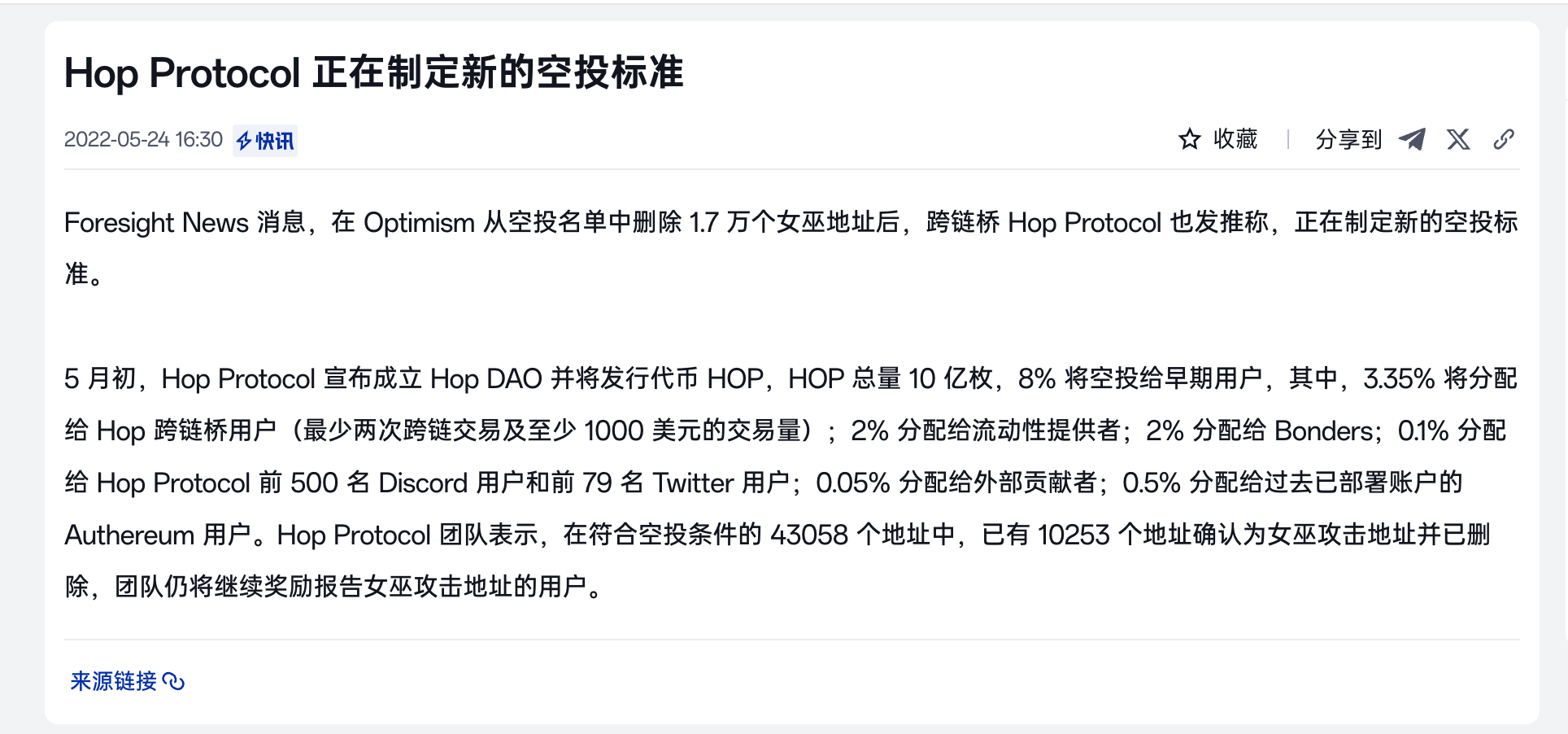
1. Hop Protocol (HOP): Welcome to the Sybil era.
- The anti-sybil process: The cross-chain bridge star HOP pioneered a chilling "community举报Sybil" mechanism. The rules are irresistibly tempting: informants can claim a share of the reported addresses. For a moment, it feels as if Shang Yang from thousands of years ago, who implemented collective punishment and denunciation, has been transported into Web3.
- Anti-pump characteristics: ordinary users turning against each other in a cycle of mutual harm. The project team offloads the tedious and unpleasant task of on-chain address correlation analysis to users, exploiting human greed to incite community infighting—and even uploads举报 lists directly to GitHub for industry-wide reuse.
- Far-reaching impact: After HOP, detecting sybils became "politically correct" for all token projects, turning on-chain interactions from an experience of decentralized products into an exhausting cat-and-mouse game. While combating sybils is necessary, completely offloading the responsibility of moderation to the community—and even encouraging mutual hostility—severely damages the community ecosystem.
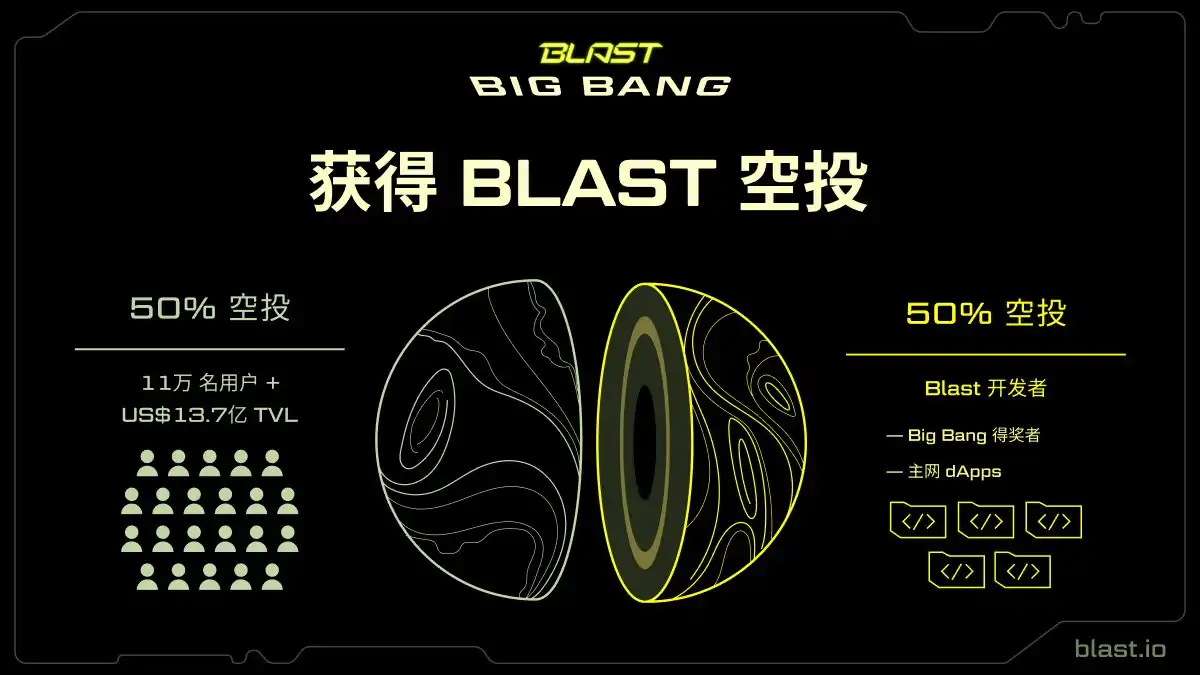
2. Blast: The Father of the Infamous "Points System"
- The anti-pump process: Blast, despite its prestigious Paradigm backing, abandoned traditional interaction models by requiring users to lock up ETH or stablecoins in exchange for "points." The rules changed frequently, benefiting large holders and top NFT traders, while ordinary users saw their token rewards fail to outpace the interest rates of risk-free investments after months of locking their assets.
- Anti-arbitrage characteristics: Ponzi-like structure and blind box gambling. Users, swept up in endless FOMO, become free ATMs for the project’s TVL metrics.
- Far-reaching impact: Since Blast, "point stacking" has become an industry standard. While the point system was originally intended to encourage long-term user participation, frequent rule changes and severe imbalances in rewards ultimately eroded user trust in projects. Web3 bounty hunters have become Web2 gig workers, and the decentralized spirit that Web3 once prided itself on has been completely extinguished by capital’s calculations.
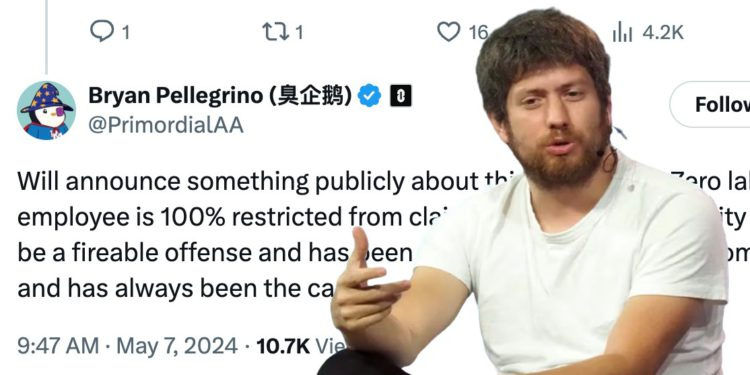
3. LayerZero (ZRO): The Tipping Point of Trust Collapse
- Anti-sybil process: After 18 months of cross-chain interactions that cost users massive gas fees, the project team introduced the most stringent sybil detection ever just before token launch, even requiring users to “voluntarily confess” to retain a portion of their allocation—or face complete forfeiture. A large number of genuine active users and small studios were wiped out.
- Anti-sweep characteristics: Extreme arrogance in the presumption of guilt. The project team reaps exorbitant user-paid fees, then treats users like thieves—suspecting and humiliating them.
- Far-reaching impact: LayerZero personally dismantled the grand narrative of cross-chain interoperability. While sybil farming requires scrutiny, the blunt implementation of a "guilty until proven innocent + self-reporting" mechanism has further accelerated the collapse of trust. From now on, the臭企鹅 will be forever infamous, and "anti-airdrop" has become the Sword of Damocles hanging over every airdrop hunter. Retail users have finally realized: in the face of absolute interpretive power, your efforts are worthless.
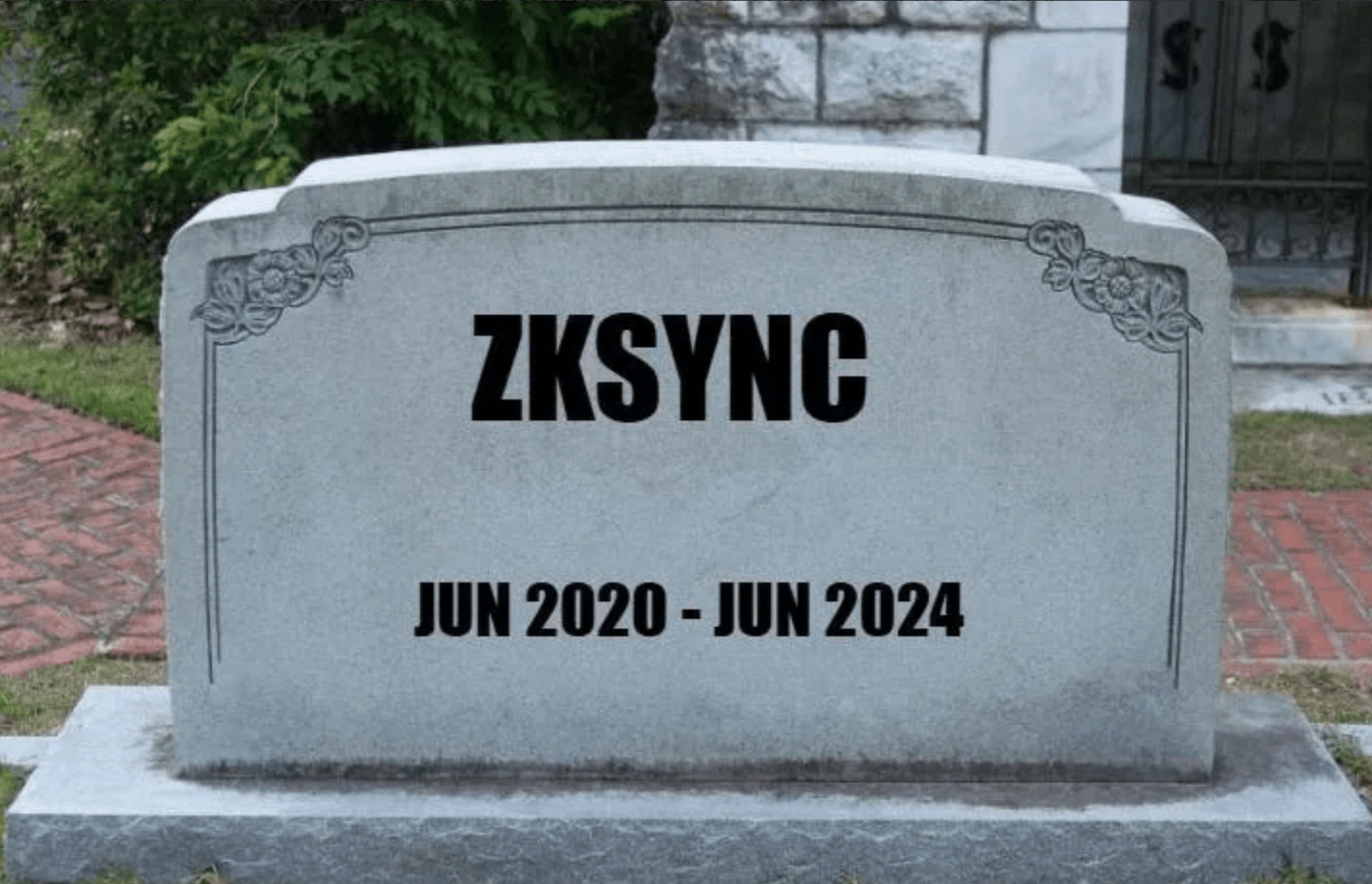
4. zkSync (ZK): The Complete End of the L2 Interaction Airdrop Era
- The airdrop process: As one of the original four L2 kings, zkSync had kept the community in anticipation for years. After absorbing hundreds of millions of dollars in gas fees, its airdrop rules revealed a shocking lack of transparency: drastically reducing the weight of transaction volume and activity, instead making “funds held at specific times” the primary eligibility criterion. This left countless long-term users who had supported the project’s growth with nothing, while insiders and newly created accounts that made sudden deposits reaped massive shares.
- Anti-snipe feature: Use "activity" to trick gas fees, then use "funding volume" to kick users out.
- Far-reaching impact: zkSync’s blatantly greedy behavior has left the entire market utterly disillusioned with L2 airdrops. While preventing sybil attacks and bot armies is necessary, the opaque rules have discouraged genuine early contributors. As a result, newly launched L2s now face complete indifference—retail users no longer want to work as unpaid on-chain laborers.
5. Infinex: Public sale mechanism collapses
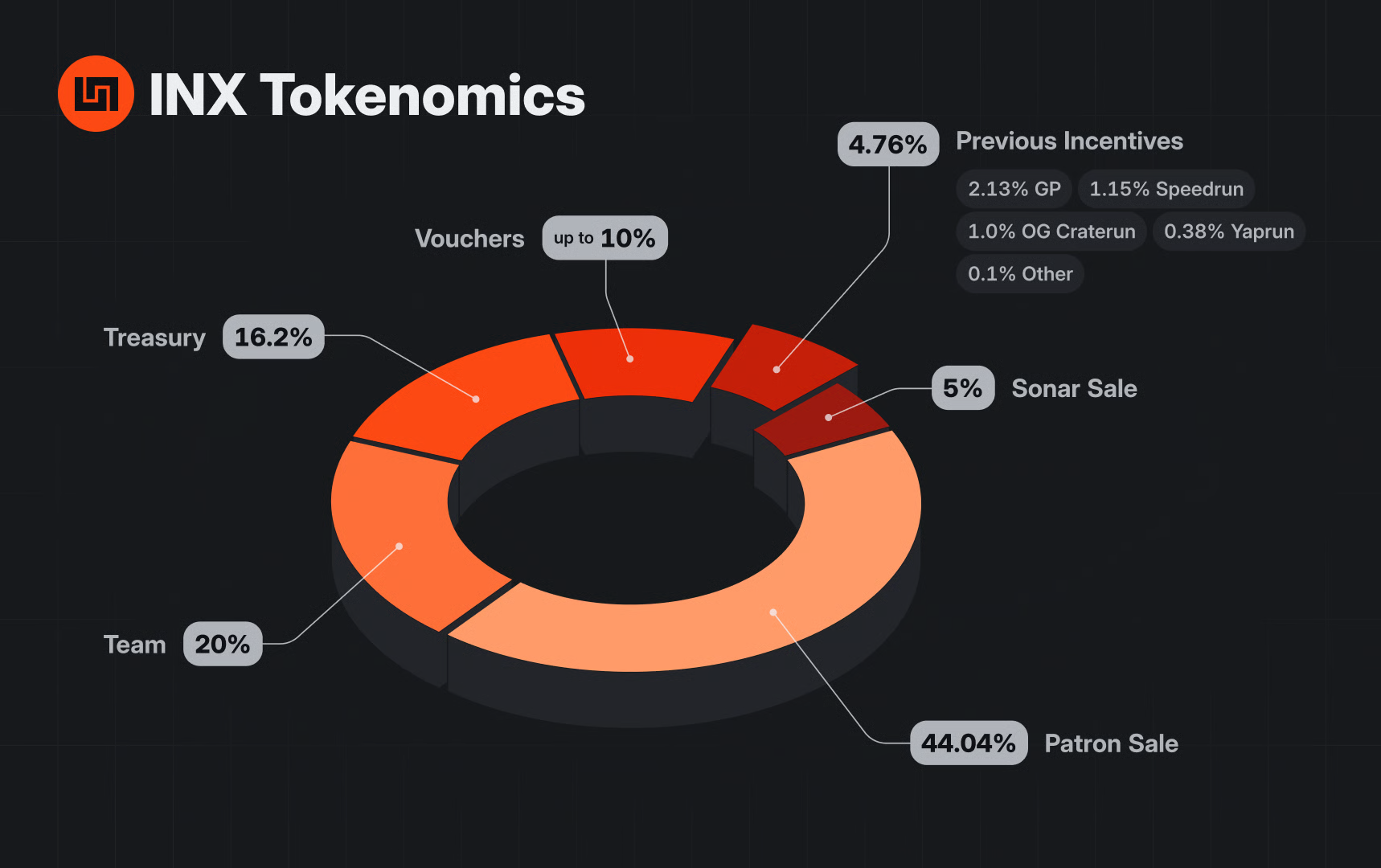
- The unwind process: As a cross-chain DeFi aggregation platform endorsed by Synthetix founder Kain Warwick, Infinex was once regarded by the community as a symbol of legitimacy. It lured users into investing substantial funds and effort through Patron NFTs and months-long points campaigns. However, when the public sale launched in January 2026, the community was met with an extremely high FDV valuation, an outrageous “mandatory one-year lock-up,” and a chaotic allocation logic. Participation on the first day of the sale collapsed dramatically, forcing the team to repeatedly issue emergency patches and revise the rules amid widespread backlash.
- Anti-pump characteristic: A "public sale reversal" under high expectations. This tactic—first using NFT narratives to create hype, then abruptly changing the public sale mechanism—turns long-term supporters' investments into locked-in sunk costs.
- Far-reaching impact: The Infinex incident exposed the risks of the "NFT + points for public sale" model, earning endless greetings from the community to the project team's family.
6. Linea: The term "black slave" originated with Linea
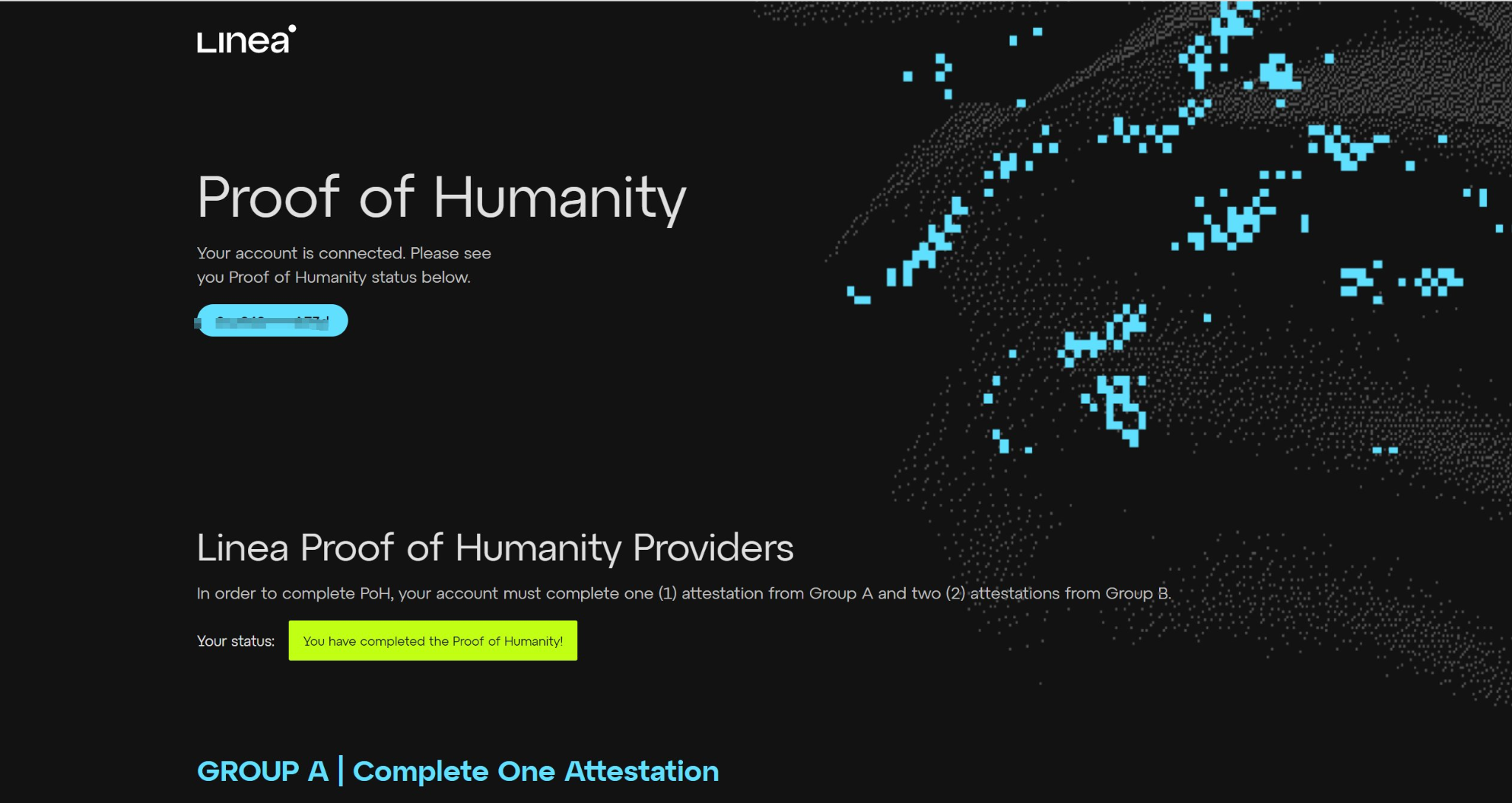
- The anti-rub process: pushed the art of PUA to an outrageous extreme—launching a Galxe Odyssey campaign with tasks spanning two years and an absurd number of stages. Users were forced to endlessly answer questions, bridge chains, swap tokens, and mint NFTs with zero liquidity, all while being compelled to complete an excruciatingly tedious KYC process.
- Anti-grind characteristics: an endless war of attrition. Always completing tasks, always accumulating LXP points, always being gaslit, while the mainnet token launch remains perpetually out of reach.
- Far-reaching impact: Linea has turned "complete tasks to earn airdrops" into a full-time job with extremely low hourly pay and immense mental strain. Many users have become so burned out that they’ve left the space entirely, marking the definitive collapse of the OAT (on-chain achievement token) narrative.
7. Grass: The Free Generator for DePIN
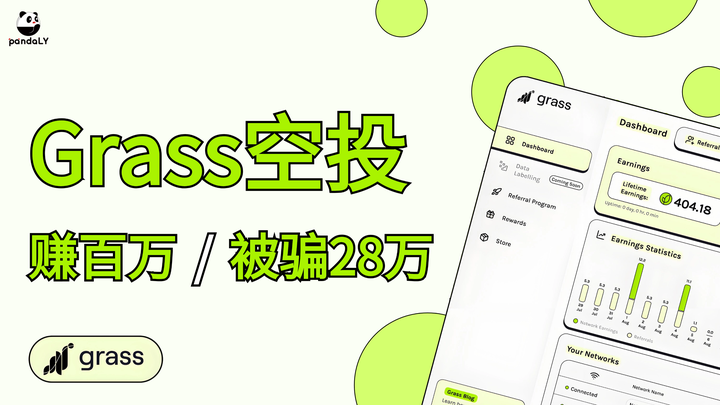
- The reverse airdrop process: As a star project in the DePIN space, it encouraged users to run their devices 24/7 to contribute idle bandwidth. Countless users kept their computers on around the clock and even spent their own money to purchase overseas clean IPs. However, when the token was launched, the project team retained the vast majority of tokens or allocated them to VCs—leaving retail users who had spent months mining to find that the proceeds from selling their tokens didn’t even cover their electricity and proxy IP costs.
- Anti-rug characteristics: Getting something for nothing. Under the guise of Web3 development, openly exploiting the physical resources of Web2 users.
- Far-reaching impact: Grass’s anti-pump exposed that many so-called DePIN projects are essentially “free-riding software,” leading to a sharp, cliff-like decline in retail participation for subsequent similar projects.
8. Monad: The L1 Airdrop Terminator
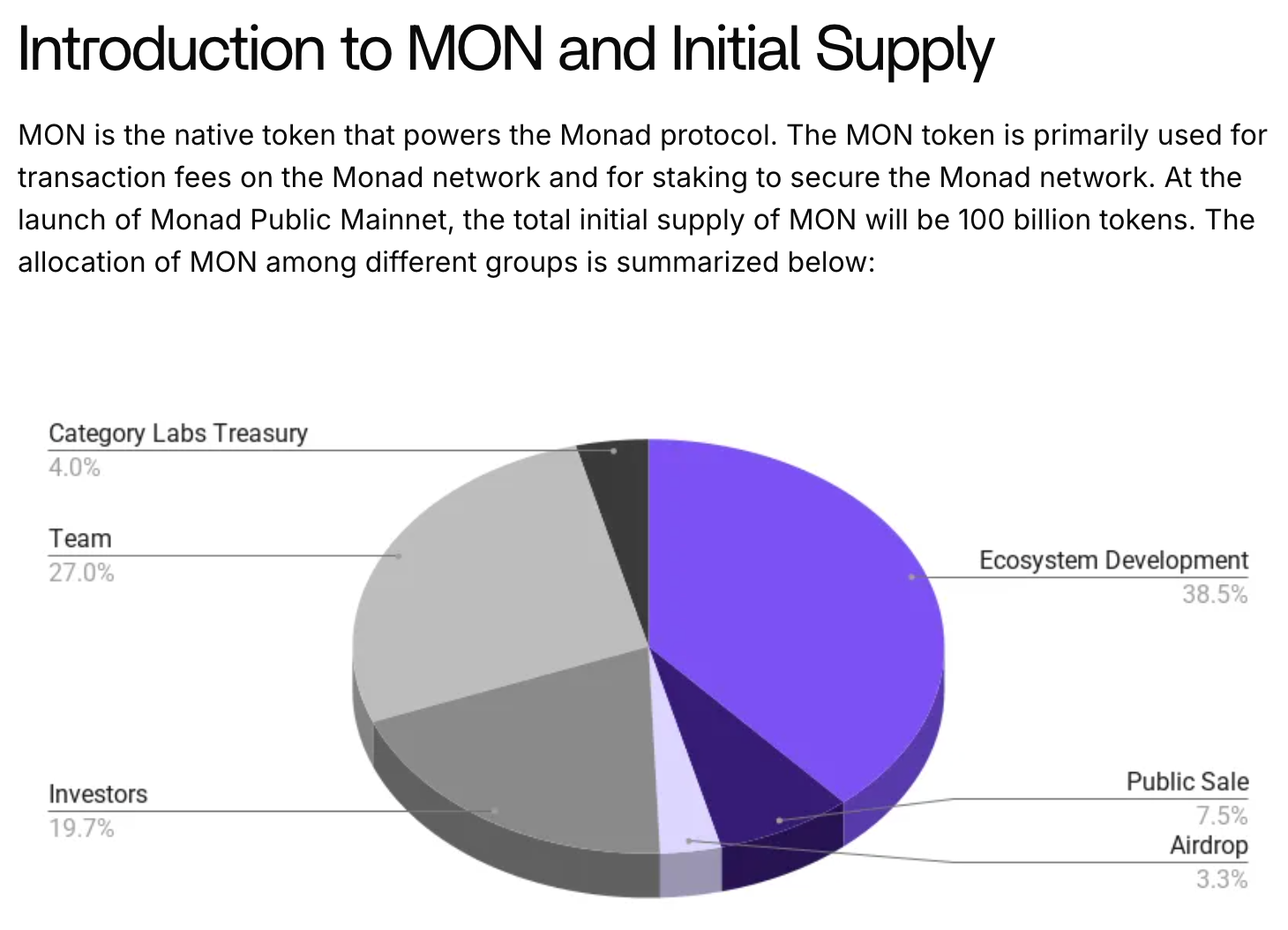
- Anti-airdrop process: As a highly anticipated high-performance L1 project, Monad attracted prolonged community interaction on its testnet. In October 2025, the MON airdrop was launched, opening claims to 230,000 addresses; however, the overall community allocation ratio was only around 3.3%. Many genuine testnet users were completely excluded or received minimal allocations due to strict Sybil detection, while KOLs and certain early-affiliated parties received substantial allocations.
- Anti-pump characteristics: extremely low allocation and strict review following high expectations. The project team attracted a large number of testnet users with a technical narrative, then distributed all tokens to KOLs.
- Far-reaching impact: The Monad incident further reduced community expectations for airdrops from new L1 projects. Although early announcements of testnets were not considered official, the lack of intervention during the process—and the absence of any token distribution at TGE—left genuine early contributors feeling betrayed. As a result, enthusiasm for participating in high-performance L1 projects has significantly declined, accelerating the shift in the L1 landscape from “a hundred flowers blooming” to “cautious observation.”
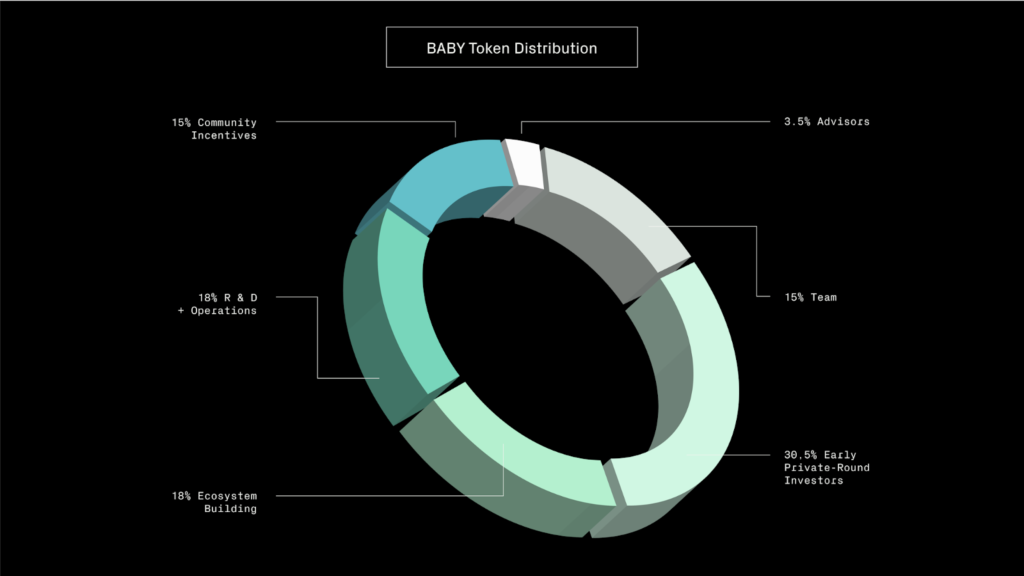
9. Babylon: Cultural Misfit and Imitation in the Bitcoin Ecosystem
- The anti-staking process: an attempt to forcibly transplant Ethereum’s staking model onto the Bitcoin network. During the mainnet activity, due to Bitcoin’s chain capacity constraints and extreme network congestion, countless retail users paid exorbitant miner fees yet still failed to stake, resulting in direct financial losses. Meanwhile, those who barely succeeded in staking discovered, after a six-month lock-up period, that their airdrop returns were far lower than what they could have earned through simple spot trading on exchanges or purchasing financial products.
- Anti-snipe characteristics: Extremely high cost of experimentation. Forcing FOMO sentiment on the BTC chain, which does not support smart contracts, ultimately leads retail investors to be severely penalized by exorbitant gas fees.
- Far-reaching impact: A freezing reality check for the overheated BTC L2 space. It proved at great cost that simply copying Ethereum’s PUA model simply does not work within the Bitcoin ecosystem, severely eroding the trust and patience of veteran Bitcoin users toward emerging projects.
10. Backpack: The Backlash from Manipulated Trading Volume and the Crisis of Trust in “Chinese Projects”
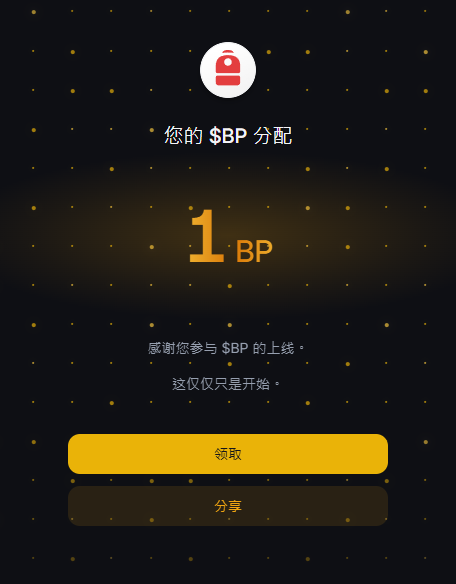
- The anti-farming process: Backpack, which raised $37 million, launched a "volume = points" campaign to manipulate the community for two years. Just before the TGE, it abruptly imposed strict KYC and a black-box "one device, one IP" purge, wiping out countless accounts. Survivors suffered equally: one major user spent $300,000 in trading fees to generate $15 billion in volume, receiving only $150,000 in tokens back—a net loss of 50%. Users’ real money was directly converted into the project’s profits.
- Anti-pump characteristics: A straightforward and crude "reverse pump." While volume manipulation certainly requires strict scrutiny, reviewing projects only after token issuance is clearly using airdrops as a facade to collect fees. Moreover, the token's BP price plunged 68% in its first week, silently draining users who were trapped in endless volume-farming activities.
- Far-reaching impact: The image of Chinese entrepreneurs has completely collapsed. The China region has become a major hotspot, and the stereotype that “Chinese projects = rug pulls” has become deeply ingrained in the community, leading to an unprecedented trust crisis for subsequent Web3 projects led by Chinese teams during their cold starts.
11. EdgeX: The Decline of Perp DEX
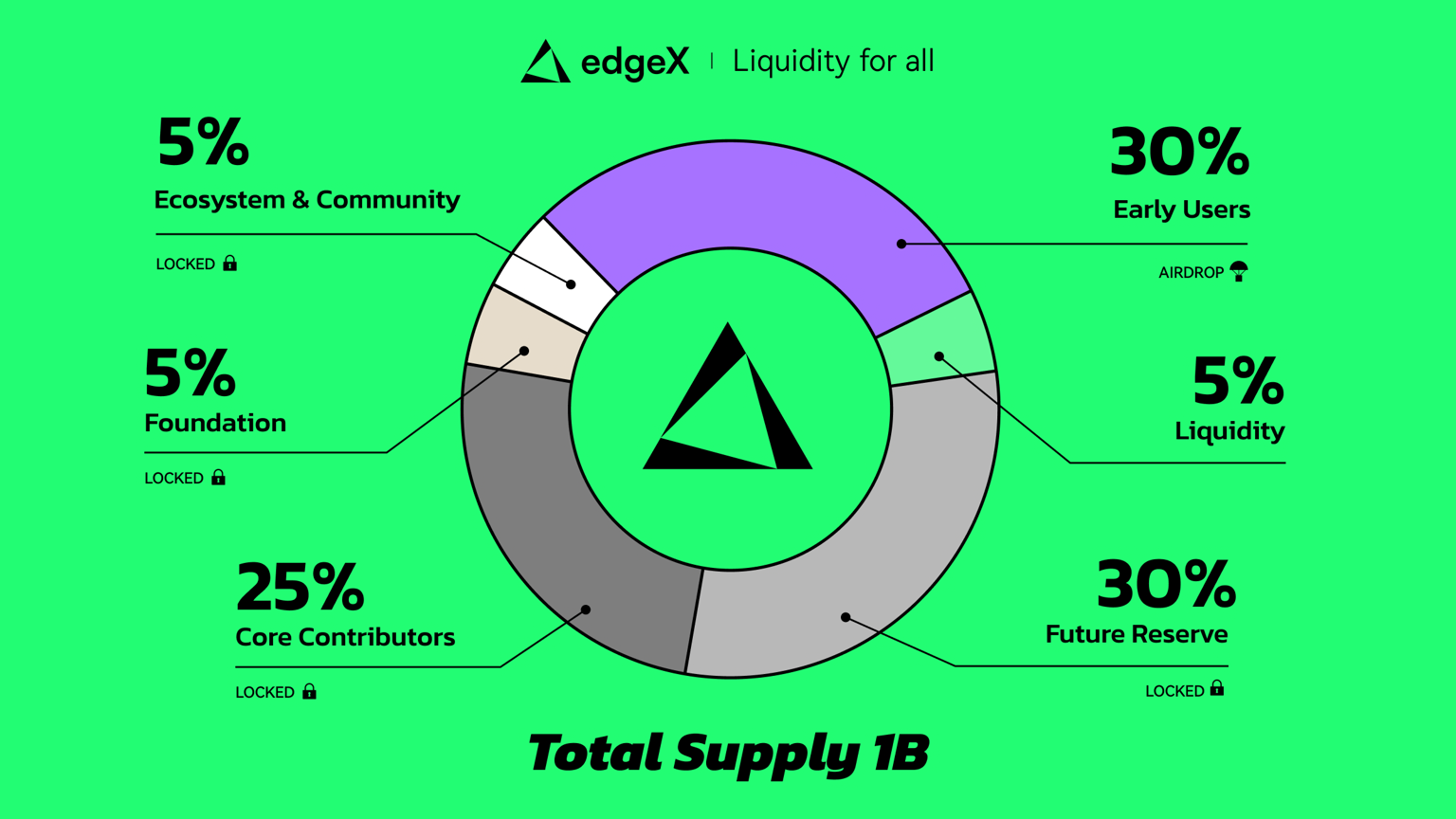
- The reverse airdrop process: After the L2 collapse, Perp DEXs requiring real-money transaction fees were once seen by retail investors as the last refuge for airdrops. Although Lighter set a positive precedent, by the time edgeX launched its TGE: long-term users spent hundreds of thousands of dollars in fees yet received an airdrop worth less than a thousand dollars, while over 80 new addresses with no prior interaction history collectively claimed nearly $100 million in tokens. Subsequently, on-chain investigators confirmed links between the market maker and black-market operations; the official account immediately disabled comments and went silent, leaving behind nothing but chaos.
- Anti-pump characteristics: insiders openly steal, retail investors treated as data cows, project teams no longer even pretending.
- Far-reaching impact: The EdgeX scandal has completely shattered the volume-farming narrative around Perp DEXs, turning top institutional endorsements into a synonym for sophisticated rug pulls. Retail investors have lost all hope, and smart money is rapidly flowing back to CEXs or L1-native platforms.
12. Genius: The final straw that breaks the back of the rug-pullers
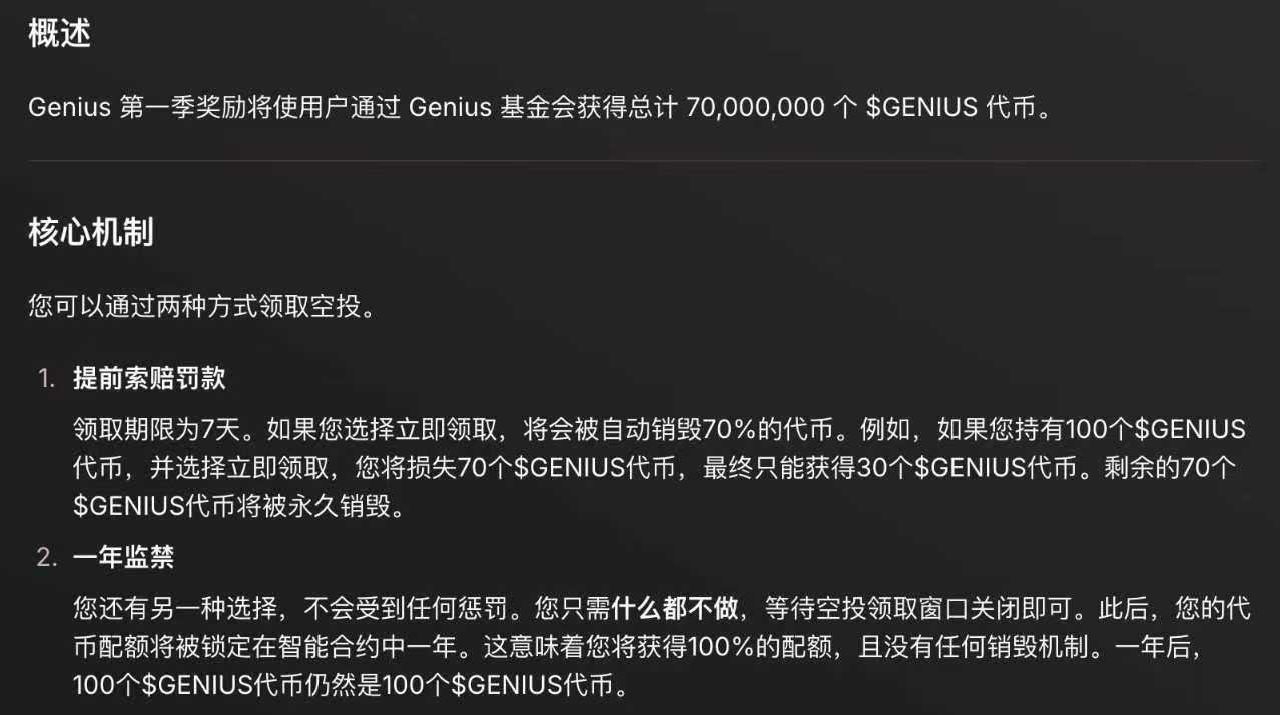
- The reverse airdrop process: Genius was seen as the last hope, but after the community massively flooded trading volumes, the TGE delivered a surprising twist: users could either claim their airdrop immediately within 7 days—resulting in automatic destruction of 70% of tokens, leaving a maximum of 30%—or lock their tokens for one year to receive the full amount. Under intense public pressure, the project team subsequently introduced an emergency "refund" option: within 48 hours after the TGE, users could choose to permanently destroy their entire airdrop allocation in exchange for a refund of the fees collected by Genius.
- Anti-pump characteristics: Users invest real money based on trust premiums, only to be told at the last minute, “Either take a fraction of your funds and leave, or stick around for another year with the project team.”
- Far-reaching impact: Genius’s antics have completely debunked the “premier endorsement narrative,” widely regarded by the community as “the final straw that broke the back of the rug-pullers.”
Conclusion: Take decisive action to address the root cause.
From HOP’s witch hunt list, to Blast’s points-within-points scheme, to LayerZero’s self-incriminating massacre… these twelve project teams collectively wrote a bizarre and brutal tale of suffering for retail investors in the crypto world.
But the truth may be even harsher: this is not only a premeditated harvest, but a collective karma of speculation and greed.
For a long time, the airdrop community has only cared about “whether a token is being launched and how to split the airdrops,” ignoring whether the project has genuine product-market fit or can generate sustainable revenue. Project teams have precisely exploited this greed—while you chase airdrops, they target your principal and fees.
Today, the airdrop bubble has burst, leaving countless individuals severely harmed by "reverse airdrops." While this is undoubtedly brutal, it may also serve as a necessary and decisive cleansing.
The market has finally been forced back to common sense: traffic attracted by airdrop expectations is ultimately illusory; only products with genuine product-market fit are worth investing time and money into.
This is the end of airdrops and the rebirth of Web3. Projects built on manipulation and opacity will ultimately be rejected by users through their actions; in contrast, those truly committed to co-building with the community and returning to fundamental value will earn even more precious trust amid the ruins.
For crypto arbitrageurs, this was a painful lesson and a wake-up call.
What other CS projects do you have in mind? Feel free to add them in the comments 👏