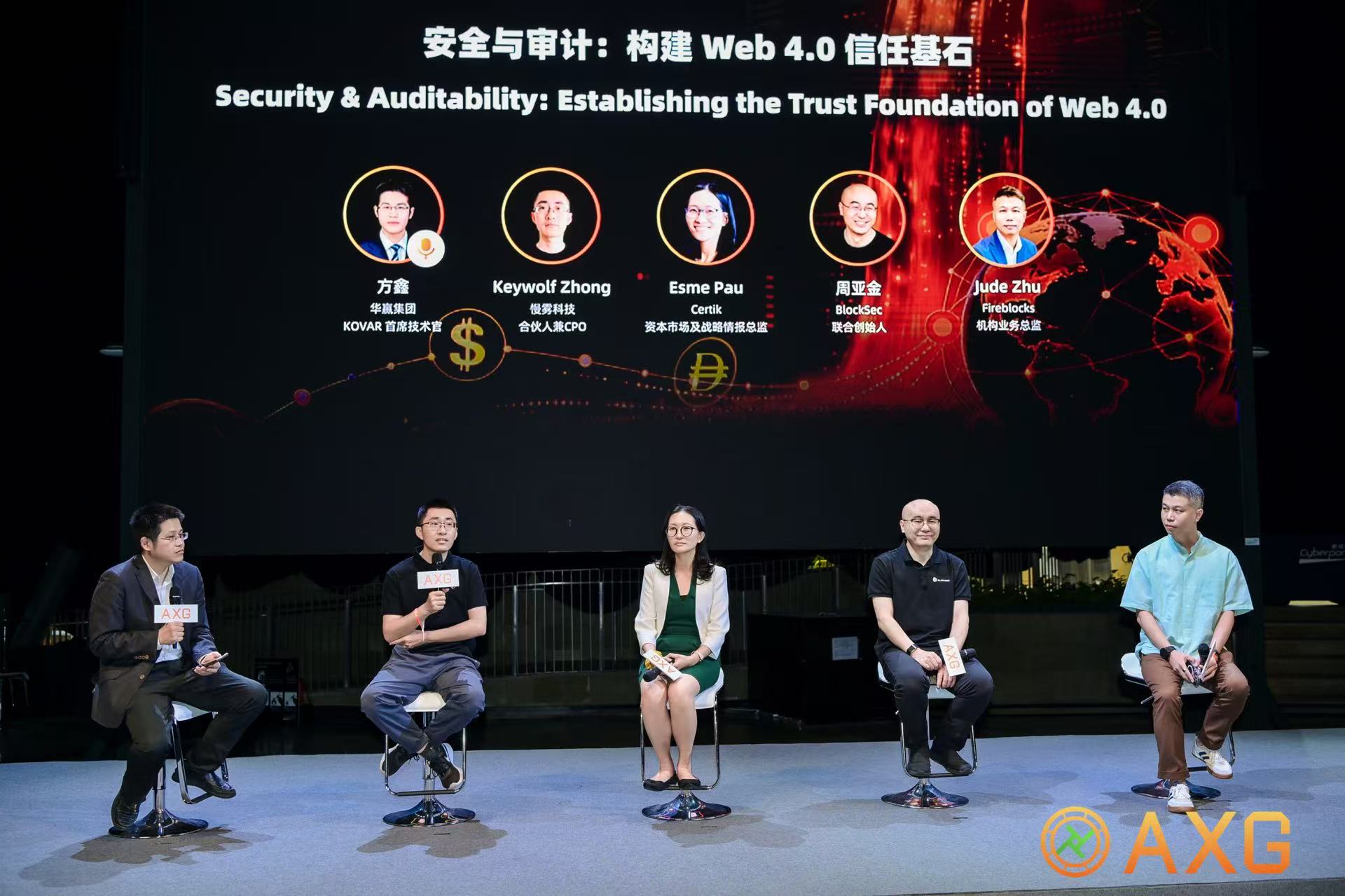


ME News reports that on April 22 (UTC+8), the highly anticipated inaugural Global Web4.0 - Integration Innovation Conference on Artificial Intelligence and Digital Assets officially opened at Hong Kong Science Park. As a core session of the conference, a roundtable discussion titled “Security and Auditing: Building the Trust Foundation of Web 4.0,” moderated by Fang Xin of Huaying Group (Nasdaq: AXG), brought together experts from leading security audit firms including SlowMist, Certik, BlockSec, and Fireblocks.
The discussion focuses on the fundamental shift in the core security paradigm of the Web 4.0 era. The panelists agreed that the security requirements for Web 4.0 have evolved critically from “pre-event auditing” to “real-time monitoring and response.”
Key topics include:
Paradigm shift: SlowMist explores the significant changes in security systems under the Web 4.0 scenario.
Audit boundary: Certik thoroughly examined the boundaries of smart contract auditing in addressing security issues.
Real-time response: BlockSec suggests that security is evolving toward a new trend of real-time monitoring and response.
Institutional-grade security: Fireblocks emphasizes that once institutional funds enter the chain, the focus of asset and operational security has shifted.
The roundtable discussed the ecological composition of future security infrastructure—whether it will evolve into a “decentralized security network” or remain dominated by a few leading institutions. Experts concluded that advancements in security technology and processes will help build a more robust on-chain trust foundation. This roundtable provides an authoritative guide for ensuring the security and compliance of digital assets in the Web 4.0 era.(Source: Huaying Group)