







Organized by ChainCatcher
Important information:
- Robinhood's crypto performance in Q1 2026 saw a significant decline, with trading revenue remaining positive thanks to prediction market income.
- DeFi United announces the technical solution to fix the Kelp rsETH vulnerability, planning to liquidate approximately 107,000 tokens held by the attacker.
- MoonPay has invested $100 million to acquire the Israeli security company Sodot and has established an institutional business division.
- Visa has included Polygon in its global stablecoin settlement program, with an annualized settlement volume already reaching $7 billion.
- The encrypted data and research platform Blockworks has completed a Series A extension round at a $192 million valuation, co-led by Parafi Capital and Reciprocal Ventures.
- Latin American digital wallet platform Belo completes $14 million Series A funding led by Tether
- Ethereum Foundation releases Q1 grant list: Ongoing support for ZK, cryptography, and protocol infrastructure
What important events occurred in the past 24 hours?
ChainCatcher news, According to CNBC, the crypto data and research platform Blockworks has announced the completion of its Series A extension round, bringing its post-money valuation to $192 million. The round was co-led by Parafi Capital and Reciprocal Ventures, with participation from multiple institutions including Coinbase Ventures, Advancit Capital, and MoonPay. Over 20 founders and operators from projects such as Solana, LayerZero, Pyth, EigenLayer, Kraken, Arbitrum, and Polygon also invested individually. The exact amount raised was not disclosed.
The company stated that the crypto market has grown to a trillion-dollar scale without the infrastructure of traditional capital markets, yet still faces issues such as fragmented data, inconsistent disclosures, and a lack of investor communication mechanisms. Blockworks aims to fill this gap with a three-pronged framework of “data + disclosures + investor relations.”
ChainCatcher report: Celsius founder Alex Mashinsky has reached a settlement with the U.S. Federal Trade Commission (FTC), agreeing to pay $10 million and being permanently barred from promoting, marketing, or distributing any products or services related to asset deposit, exchange, investment, or withdrawal.
The court also ordered a $4.72 billion monetary judgment, but most of it is temporarily stayed—unless Mashinsky is found to have concealed or misrepresented assets in his financial disclosures, in which case the judgment will be immediately enforced. Previously, Mashinsky was sentenced to 12 years in prison in May 2025 for commodities fraud and securities fraud.
ChainCatcher report: The Ethereum Foundation has announced its grant and ecosystem support projects for the first quarter of 2026, focusing on cryptography, zero-knowledge proofs (ZK), protocol security, and core infrastructure development to continuously strengthen Ethereum’s underlying technology stack and long-term scalability.
This quarter’s funding covers multiple key areas. At the protocol and client level, initiatives include optimizations for the Geth and Erigon clients, upgrades to the Lighthouse client, and the development of network monitoring tools following the Pectra upgrade, all aimed at enhancing network performance and resilience against attacks. Additionally, projects such as HSM key management, the validator security tool Vero, and the DISC-NG node discovery mechanism have received support to improve node-level reliability and institutional-grade compliance capabilities.
In cryptography and ZK, the foundation continues to invest in projects such as Poseidon hash function analysis, Gröbner basis attack research, quantum-resistant and homomorphic hybrid encryption exploration, and formal verification of RISC-V zkVM, further strengthening the security boundaries of zero-knowledge proof and cryptographic infrastructure.
In the developer ecosystem, tools such as the upgraded BuidlGuidl education system, ERC standard community building, WalletConnect clear-sign library, and Open Creator Rails continue to advance, lowering the barrier to development and enhancing user interaction security. Meanwhile, L2BEAT continues to provide Layer 2 transparency analysis, strengthening the data infrastructure of the scaling ecosystem.
In addition, the foundation supports privacy technologies (such as Tor integration and the Privacy Pool SDK), decentralized identity (did:ethr standard upgrades), DAO governance research, and public goods experimentation projects, covering the entire ecosystem from the protocol layer to the application layer. Overall, this round of funding continues Ethereum’s long-term commitment to its three core pillars—cryptography, ZK, and protocol engineering—emphasizing the support of future multi-layer scaling and institutional-grade application adoption through infrastructure and standardization efforts.
ChainCatcher report, according to The Block, Solana ecosystem multisig protocol Squads has announced the completion of an $18 million strategic funding round led by Solana Ventures, with participation from Coinbase Ventures, Haun Ventures, L1D, and others. This equity round brings Squads’ total funding to $42.9 million. The funds will be used to expand its stablecoin enterprise finance platform, Altitude.
It is reported that Altitude, a stablecoin payment platform under Squads, enables businesses to conduct 24/7 global payment settlements in stablecoins via self-custody wallets, while integrating with global payment networks through its compliance and risk management system.
ChainCatcher report, according to Fortune, the White House has released the list of 37 donors for the construction of the new White House Ballroom under the Trump administration. The project’s budget has now increased from an initial $200 million to $400 million, primarily funded through tax-deductible private donations. The list shows that several technology and cryptocurrency companies participated in the donations, including:
- Meta
- Apple
- Amazon
- Microsoft
- Coinbase
- Ripple
- Tether
- Palantir Technologies
The report stated that Google's parent company, Alphabet, reached a settlement with Trump this year over the YouTube ban, using $22 million of the settlement funds for the construction of this banquet hall; defense contractor Lockheed Martin is said to have donated over $10 million.
In addition, several individuals from the cryptocurrency industry are also on the list, including:
- Charles Cascarilla
- Cameron Winklevoss
- Tyler Winklevoss
Reports indicate that Trump has recently accelerated progress on the banquet hall project, linking it to White House security needs. Previously, the East Wing of the White House was demolished in 2025 to make way for a new building of approximately 90,000 square feet.
ChainCatcher report, according to The Wall Street Journal, Parallel Web Systems, an AI infrastructure company founded by former Twitter CEO Parag Agrawal, has completed a $100 million Series B round, bringing its post-money valuation to $2 billion.
This round was led by Sequoia Capital, with participation from existing investors including Kleiner Perkins, Index Ventures, and Khosla Ventures. Parallel provides efficient web search and access control infrastructure for long-duration AI agents, having raised a total of $230 million to date. With approximately 50 employees, the company serves over 100,000 developers and enterprise customers, and is currently focused on expanding its sales, marketing, and R&D teams to further advance enterprise-grade “AI agent web access” use cases.
ChainCatcher report: According to official announcements, Visa has officially integrated Polygon into its Global Stablecoin Settlement Program. Visa’s partners, including issuers and acquirers, can now complete stablecoin settlements via the Polygon network. Polygon states that it has now become the world’s largest USD stablecoin payment network.
According to Allium and Dune data: 34% of USD stablecoin transfers occur on Polygon, more than twice that of BNB Chain; 54% of USDC transfers occur on Polygon, exceeding the total of all other chains combined; 36% of global USDC transactions run on Polygon; Polygon currently has approximately 3.19 million weekly active stablecoin users; on-chain stablecoin supply has reached a record high of $3.62 billion; in March, the number of USD stablecoin transactions reached 178.1 million.
Visa stated that its stablecoin settlement program has reached an annualized scale of $7 billion this quarter, a 50% increase from three months ago. Polygon emphasized that its network offers sub-cent transaction fees, approximately 4-second transaction finality, and is already being used by institutions such as Stripe, Revolut, Flutterwave, and BlackRock for real-world financial settlements.
ChainCatcher report, according to Bloomberg, the crypto payment company MoonPay has acquired Israeli crypto security startup Sodot and is using it as the foundation to launch a new division, “MoonPay Institutional,” focused on serving institutional clients’ demands for digital assets.
The division will provide services such as trading, tokenized securities, payments, wallet management, and stablecoin issuance to large traditional financial institutions. Caroline D. Pham, former acting chair of the U.S. Commodity Futures Trading Commission (CFTC), will lead the division; she joined MoonPay in late 2025 as Chief Legal Officer and Chief Administrative Officer.
Latin American digital wallet platform Belo completes $14 million Series A funding led by Tether
ChainCatcher report, according to CoinDesk, Tether led the $14 million Series A funding round for Latin American digital wallet platform Belo, with additional participation from Titan Fund, The Venture City, Mindset Ventures, and G2.
Belo stated that it will use the new funding to expand into markets in Mexico, Chile, Colombia, Peru, Bolivia, and Paraguay, while continuing to strengthen its presence in Brazil, with a focus on serving freelancers, remote workers, and users engaged in cross-border fund transfers.
Belo was founded in 2021 and is headquartered in Buenos Aires, Argentina, with over 3 million users across Latin America. Its product is a digital wallet built on crypto infrastructure, enabling users to hold, send, and receive local currencies and "digital dollars" (stablecoins).
Reports indicate that stablecoins have rapidly gained popularity in emerging markets such as Latin America in recent years, primarily used to hedge against inflation, facilitate cross-border remittances, and bypass high-cost foreign exchange systems. Belo reduces the cost and delay of cross-border transfers by integrating payments, currency exchange, and international transfers into a single app workflow, while using crypto infrastructure to settle transactions in the background.
ChainCatcher report, according to The Block, Ales Michl, Governor of the Czech National Bank, delivered a keynote speech at the Bitcoin 2026 conference in Las Vegas, publicly advocating for the inclusion of Bitcoin in central bank reserve portfolios. Michl stated that the bank manages approximately $180 billion in reserves, and internal research shows that allocating just 1% of assets to Bitcoin could increase overall expected returns without significantly increasing risk, due to Bitcoin’s low correlation with other reserve assets.
The Czech National Bank completed its first test purchase of Bitcoin in November 2025, becoming the world's first central bank to buy Bitcoin.
U.S. Secretary of the Treasury: Channels for Iranian cryptocurrency usage have been disrupted
ChainCatcher report: U.S. Treasury Secretary Scott Bessent posted on X that the Treasury has taken action via economic sanctions against Iran’s international shadow banking infrastructure, cryptocurrency access channels, shadow fleet, weapons procurement networks, funding for regional terrorist proxies, and Chinese independent refineries supporting Iran’s oil trade. These actions have disrupted hundreds of billions of dollars in revenue that could have been used to finance terrorism.
Under maximum pressure from the U.S. president, inflation in Tehran has doubled, causing its currency to rapidly depreciate. Iran’s primary oil export terminal, Kharg Island, is nearing its storage capacity limit, forcing the regime to cut oil production and resulting in an additional daily revenue loss of approximately $170 million, along with permanent damage to Iran’s oil infrastructure. The Treasury will continue to apply maximum pressure, and any individuals, vessels, or entities assisting Tehran’s illicit financial flows face the risk of U.S. sanctions.
ChainCatcher reports, The Bitcoin lending protocol Tropykus has announced a phased shutdown of its current version, with deposit and borrowing functions being permanently disabled. Users may withdraw funds and repay loans until July 27, 2026, after which all related operations will only be supported via direct interaction with the smart contract.
The official stated that this closure decision is based on long-term strategic evolution, as the current architecture can no longer meet the demands of long-term growth in the face of security challenges posed by emerging technologies such as artificial intelligence. The team recommends that all users complete withdrawals and settle all borrowing positions before the deadline.
ChainCatcher news,Robinhood's cryptocurrency business performance declined significantly in the first quarter of 2026. The company reported cryptocurrency revenue of $134 million, a 47% year-over-year decrease; native app cryptocurrency trading volume amounted to $24 billion, down 48% year-over-year. This decline continues the trend since the end of 2025, following a 38% drop in cryptocurrency trading revenue in Q4. Robinhood stated in its quarterly report that the acquired Bitstamp platform contributed $42 billion in trading volume, but did not provide year-over-year data.
Despite weak crypto business, Robinhood's overall trading revenue increased 7% year-over-year to $623 million, primarily driven by a 320% surge in prediction market revenue. Options revenue rose 8% to $260 million, while stock revenue surged 46% to $82 million. The company's net profit reached $346 million, up 3% year-over-year.
Polymarket responds to "data breach" concerns: on-chain data is inherently public and auditable
ChainCatcher reports, In response to external concerns about a alleged "data leak," Polymarket has issued a clarification stating that the data was never leaked; all data is publicly accessible via its public endpoints and on-chain data, which is an inherent feature of on-chain transparency, not a security vulnerability.
Polymarket states that one of the core advantages of on-chain data is its complete public audibility—anyone can access the data for free via its API, without needing to pay for it.
ChainCatcher previously reported that the prediction market platform Polymarket is suspected of a data breach, with over 300,000 records and an exploit kit leaked.
ChainCatcher report, according to market sources, U.S. Treasury Secretary Scott Bessent stated that the Treasury has taken action against Iran’s shadow banking network, channels for acquiring crypto assets, and oil trade infrastructure.
ChainCatcher reports, DeFi United announced on Tuesday a technical remediation plan for the cross-chain bridge vulnerability affecting Kelp DAO's rsETH. Previously, attackers exploited a vulnerability in the Unichain-to-Ethereum bridge powered by LayerZero, forging inbound packets to release 116,500 rsETH, approximately 107,000 of which remain locked as collateral across seven associated addresses on Aave and Compound.
DeFi United stated that it has received sufficient ETH commitments to restore the backing of rsETH, which will be converted into rsETH in batches and injected into the bridged lock contract. LayerZero Labs committed over 10,000 ETH on Tuesday to support the recovery efforts. Regarding the liquidation of the attacker’s positions, the alliance will execute controlled liquidations through Aave and Compound governance proposals, expecting to recover approximately 13,000 and 16,776 ETH respectively.
During the repair period, WETH and rsETH reserves on multiple chains will remain frozen. DeFi United also highlights execution risks, including the pace of governance approval, potential interference by attackers, and the fact that new security measures have yet to be validated in production.
Canaan receives new order from Tether to supply submerged-cooled Bitcoin mining hardware
ChainCatcher report: On Tuesday, Bitcoin mining hardware manufacturer Canaan (Nasdaq: CAN) announced it has received a new order from Tether for custom Bitcoin mining hardware, supplying high-density hash rate board modules designed for immersion cooling systems, planned for deployment at Tether’s affiliated facilities in South America.
This collaboration builds on the双方 2025 R&D partnership with ACME Swisstech, which has already delivered a proof-of-concept platform to enhance mining efficiency and scalability. Tether is concurrently developing its own control boards and management software, demonstrating its commitment to deep integration of mining hardware and software. The agreement includes optional additional purchases, preserving flexibility for Tether to expand its infrastructure.
The day before this message was posted, Tether announced the launch of an open-source mining framework, further expanding its footprint in Bitcoin mining infrastructure. Canaan, a publicly listed company in Singapore, currently holds 1,808 BTC, valued at approximately $137 million, marking its highest historical holding level.
Meme Popular Ranking
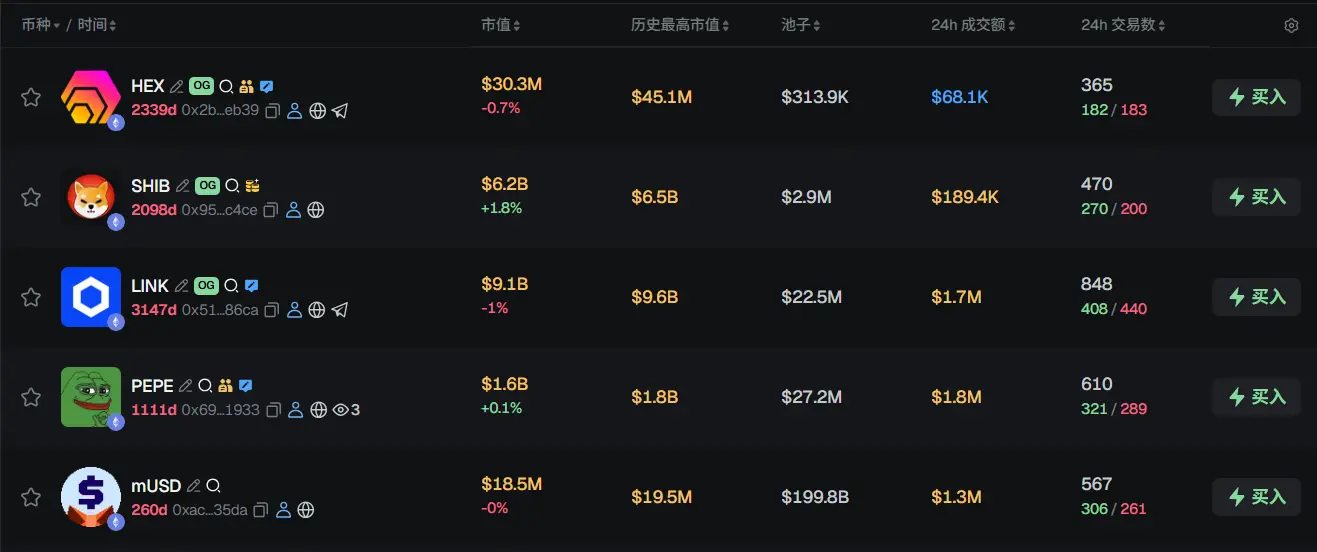
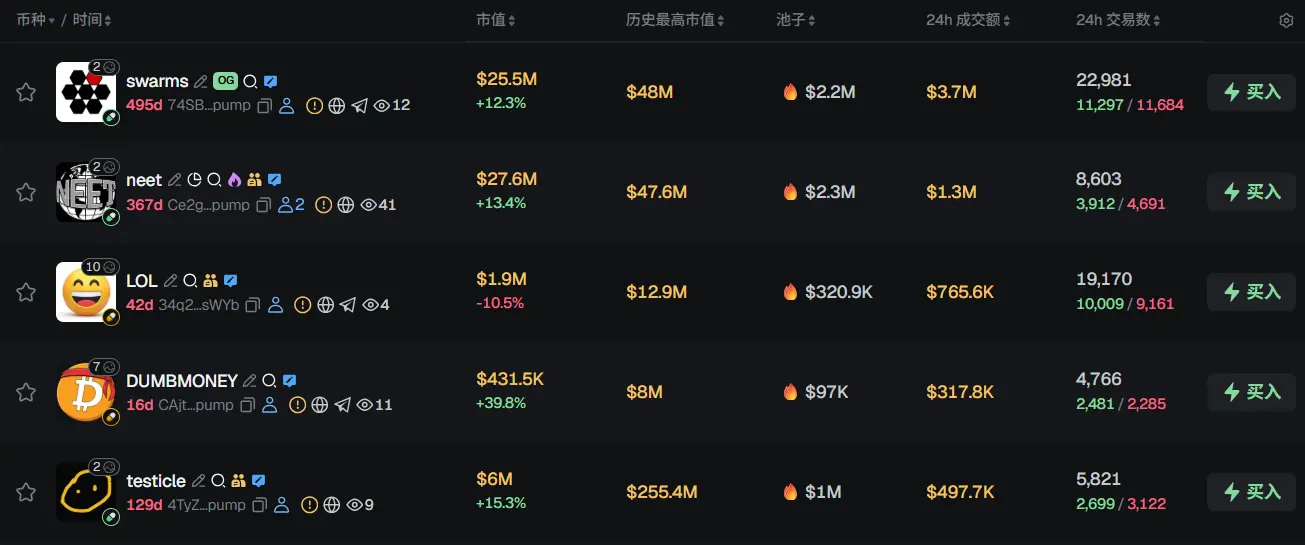
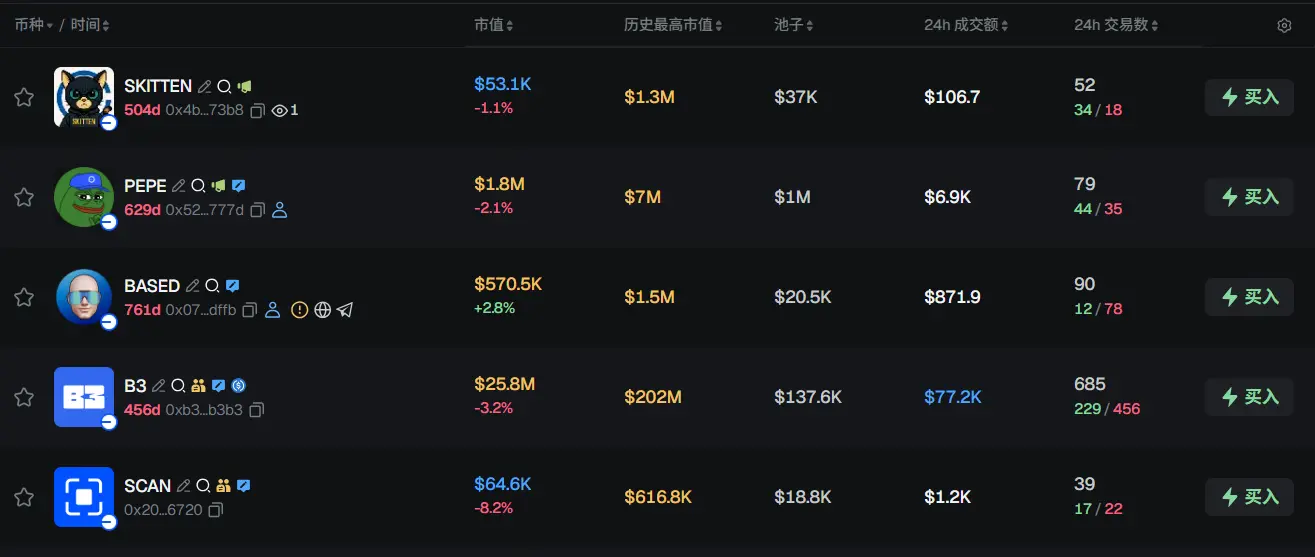
According to market data from the meme token tracking and analytics platform GMGN, as of April 30 at 09:00,
The top five most popular ETH tokens in the past 24 hours are: HEX, SHIB, LINK, PEPE, mUSD
The top five most popular Solana tokens in the past 24 hours were: swarms, neet, LOL, DUMBMONEY, testicle
The top five most popular tokens on Base over the past 24 hours are: SKITTEN, PEPE, BASED, B3, SCAN
What are the best articles to read from the past 24 hours?
Oracle: The Second Front Behind the Battle for Prediction Markets
Over the past two years, prediction markets have become the most compelling narrative in the crypto industry. The entire sector reached nearly $10 billion in total trading volume by the end of last year, with monthly growth momentum significantly accelerating in the second half of 2025.
But at the other end of this celebration is a character who has always stayed out of the spotlight and repeatedly been vilified by users: the oracle.
The impossible trinity of DeFi lending
There is real demand for fixed-rate lending on-chain. The obvious solution is to issue fixed-rate loans, but there is no matching demand for fixed-rate lending in the market.
The vast majority of on-chain funds are chasing yield and craving immediate liquidity. Therefore, issuing fixed-rate loans merely shifts interest rate risk from borrowers to lenders. When the lender is a treasury that promises immediate liquidity, this creates a balance sheet mismatch.
In variable-rate lending, interest rates fluctuate based on utilization and market conditions, and borrowers directly bear the cost of this volatility. This is a real cost, but it is clear and transparent, and ends when the position is closed.
Suppose a lender holds a 6-month fixed-rate loan at 3%. If interest rates rise, the same loan today would yield 5%. Under mark-to-market (MTM) valuation, the value of the old loan has declined. With new loans offering higher returns at equivalent risk, no one would pay the old loan’s amortized value.
In traditional financial systems, "price" typically belongs only to assets.
Stocks, interest rates, commodities—they can be traded because they have standardized units of measurement and consensus pricing mechanisms. In contrast, the variables that truly drive market volatility—policy directions, macroeconomic data, political events—have long remained in a more primitive state: discussed and predicted, but rarely directly priced.
These variables have always existed, but lacked standardized expression. Kalshi’s emergence fundamentally changes this by providing a tradable price system for the “event itself,” rather than creating new information.