





Article by: Cointelegraph
Compiled by: AiddiaoJP, Foresight News
During the war between the United States and Iran, Bitcoin has been one of the strongest-performing assets. However, due to the bond market showing signs of "losing control," Bitcoin's upward momentum is beginning to show signs of exhaustion.
Key points:
- If the U.S.-Iran war prolongs, U.S. benchmark Treasury yields could rise by 200 basis points.
- Historical experience shows that oil-related conflicts tend to increase inflation and reduce risk appetite; accordingly, Bitcoin's price could fall below $50,000 in 2026.
Oil supply shocks could push U.S. Treasury yields above 5%.
Since the U.S. and Israel launched attacks on Iran on February 28, the benchmark 10-year U.S. Treasury yield has risen to approximately 4.42%, reaching a nine-month high.
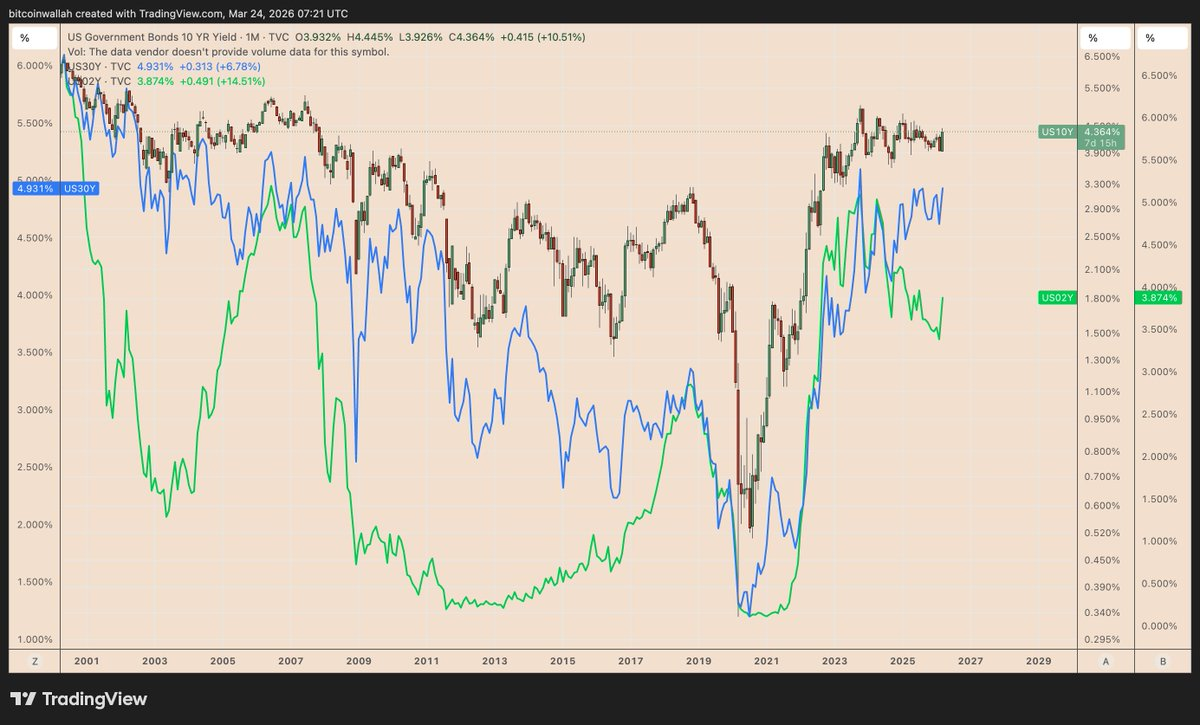
Monthly performance of U.S. 2-year, 10-year, and 30-year Treasury yields. Source: TradingView
Among these, the 30-year Treasury yield rose to approximately 4.97%, while the 2-year Treasury yield increased to a range of 3.95% to 3.98%.
Due to the impact of war, oil prices have risen sharply, intensifying market concerns about rising inflation and pushing up government bond yields. Under these conditions, the market generally expects no interest rate cuts to occur within 2026.
U.S. President Donald Trump announced a five-day pause in actions, temporarily easing immediate market concerns over strikes on Iran’s energy facilities. However, the conflict remains uncontrolled, as Iran has denied engaging in any negotiations and cross-border attacks continued as of Tuesday.
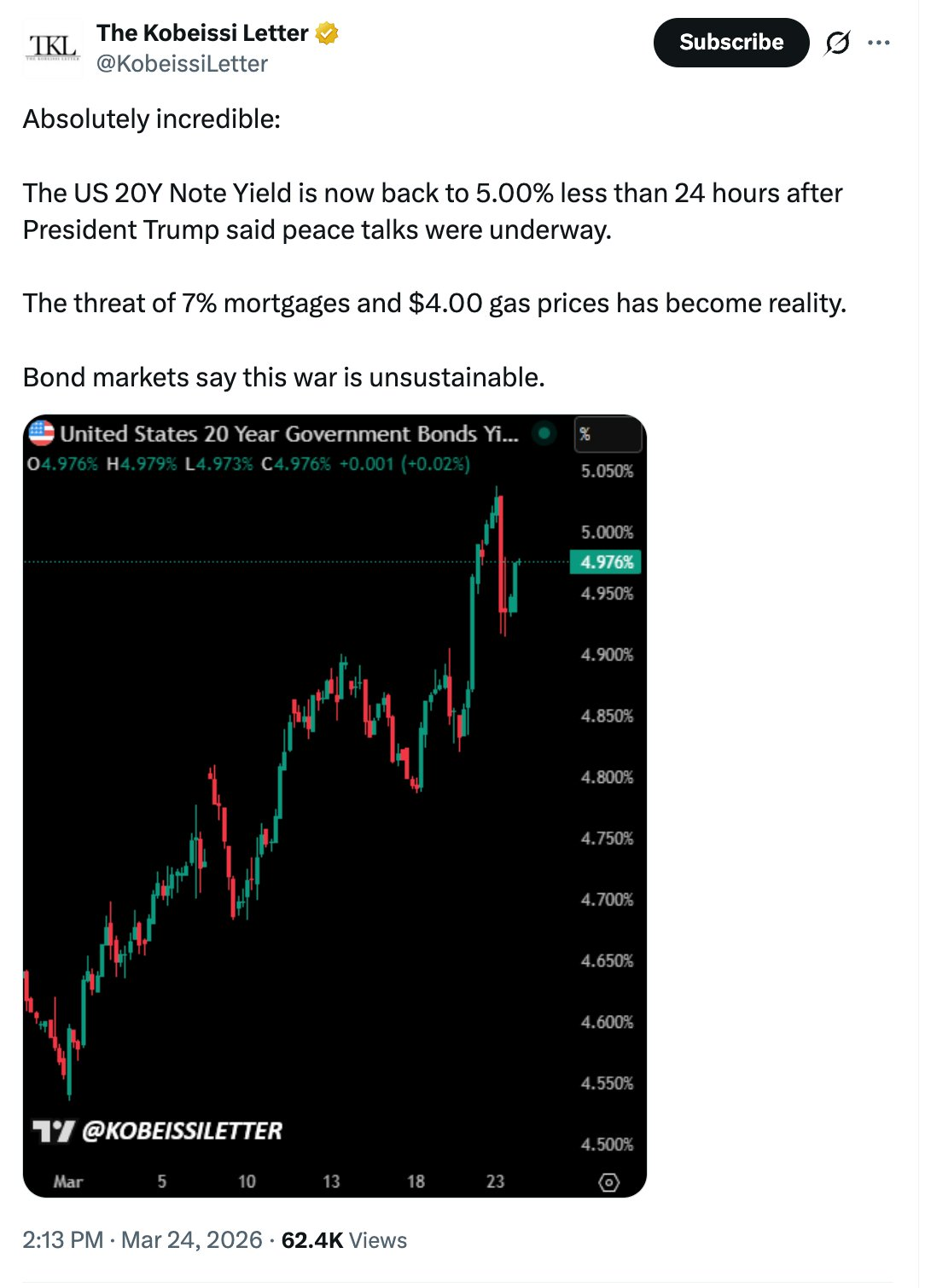
Source: X
Market observers have expressed concern that U.S. Treasury yields face further upside risk. Technical analysts further note that if the 10-year Treasury yield breaks above the current symmetrical triangle pattern, it could rise by 200 basis points to 6.4%.
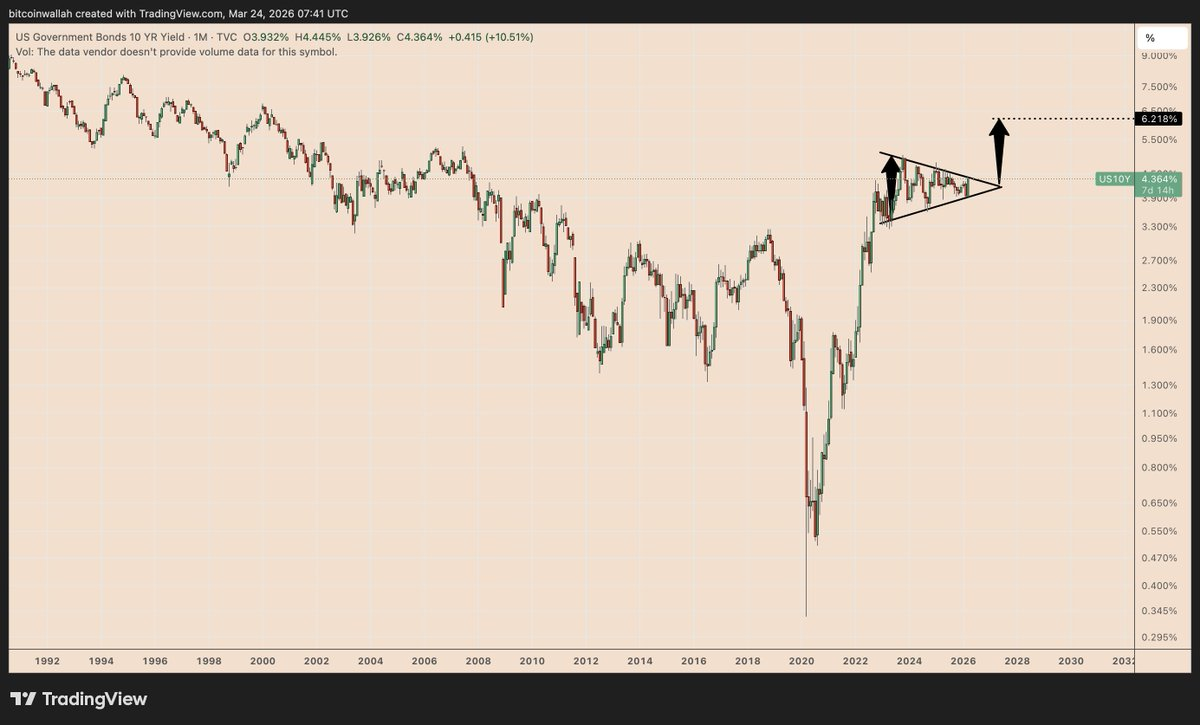
Monthly chart of the U.S. 10-year Treasury yield. Source: TradingView
Rising yields will lower the opportunity cost of holding risk assets such as stocks and Bitcoin. If Bitcoin continues to exhibit risk asset characteristics, a breakout of the 10-year Treasury yield above 5% could trigger selling pressure in the Bitcoin market.
Historical cases of oil-related shocks
Historically, short-term conflicts related to oil have typically caused sharp but brief fluctuations in government bond yields and stock markets, while prolonged supply shocks may drive yields upward over the long term and exert sustained pressure on stock markets.
During the 1973 Yom Kippur War and the Arab oil embargo, Treasury yields initially rose slightly, then surged significantly as inflation intensified, while the S&P 500 declined by approximately 41% to 48% during the stagflation period.
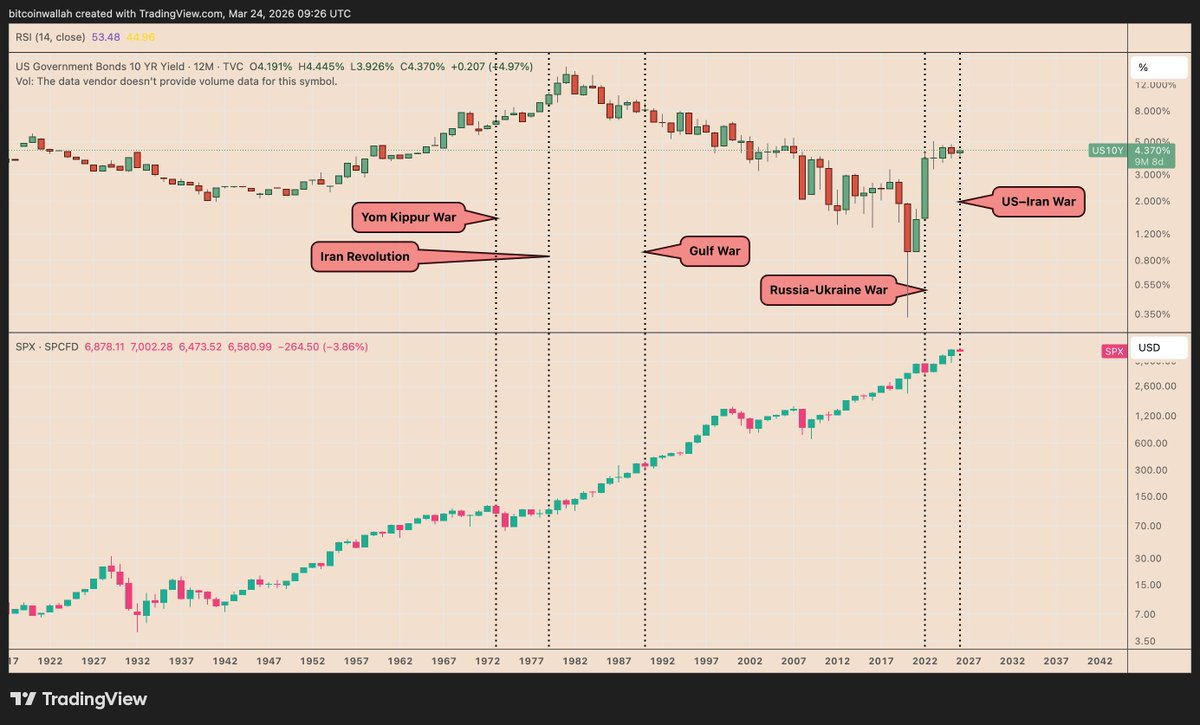
Annual chart of the U.S. 10-year Treasury yield versus the S&P 500 index. Source: TradingView
During the 1979 Iranian Revolution, the bond market reacted more strongly, with 10-year Treasury yields rising by approximately 150 to 200 basis points over the following year, while the stock market correction was relatively mild.
During the 1990–1991 Gulf War, the 10-year Treasury yield rose by approximately 50 to 70 basis points, the S&P 500 index fell by about 16% to 20%, and then rebounded after the conflict was brought under control.
After the outbreak of the Russia-Ukraine conflict in 2022, there was also a rise in government bond yields and a short-term decline of 5% to 10% in the S&P 500 index.
The current conflict between the United States and Israel on one side, and Iran on the other, appears to be in its early stages, consistent with the historical pattern described above. If the conflict escalates further and oil prices remain elevated, bond yields could rise even higher, potentially subjecting risk assets to renewed downward pressure.
Bitcoin still maintains a high correlation with the S&P 500 index. Therefore, unless the conflict situation eases rapidly, Bitcoin prices are likely to face increased downward pressure.
To what level might the price of Bitcoin fall?
From a technical analysis perspective, if the price of Bitcoin breaks below the current bearish flag pattern, it could decline further to $50,000 or lower over the coming months.
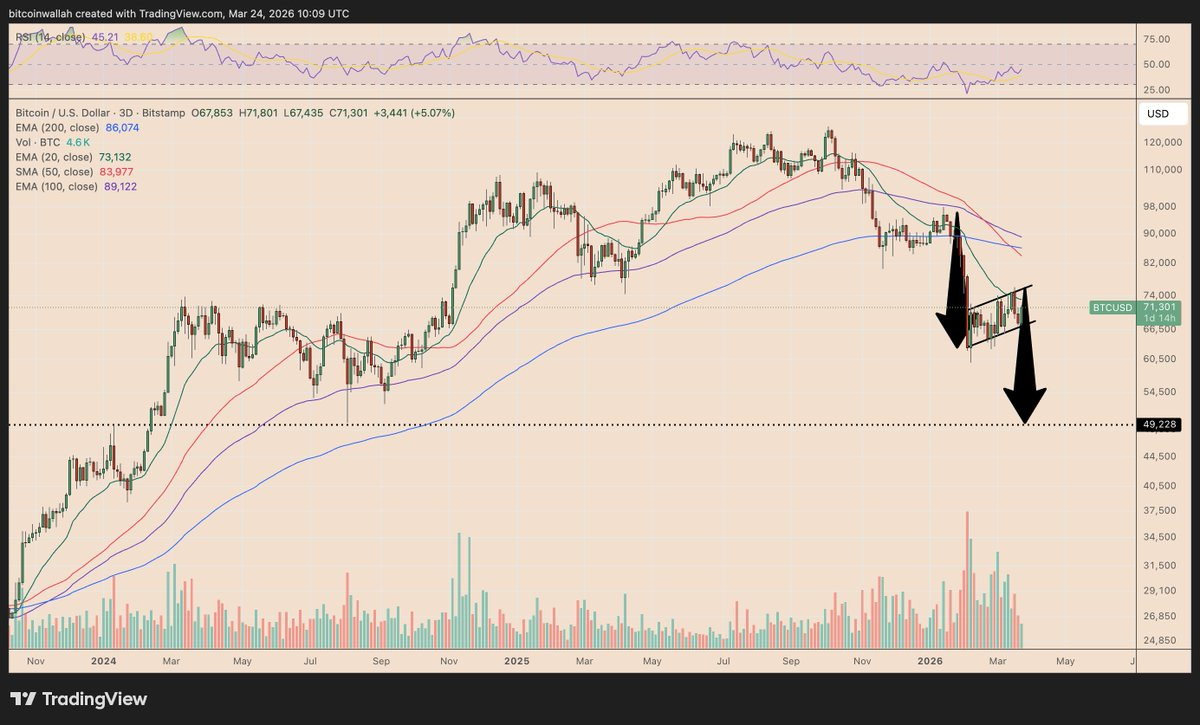
Three-day price chart for Bitcoin/USD. Source: TradingView
The above technical expectations align closely with trading data from prediction markets. Currently, traders estimate a 70% probability that Bitcoin will fall below $55,000 in 2026 and a 46% probability it will drop below $45,000.
BitMEX co-founder Arthur Hayes said that if the U.S.-Iran war drags on, it could force the Federal Reserve to adopt a dovish monetary policy, which would be beneficial for Bitcoin.
He noted: "The longer the conflict lasts, the greater the likelihood that the Federal Reserve will print money to support the U.S. war machine." He further added:
When central banks start printing money, I will choose to buy Bitcoin.