





Two U.S. lawmakers have introduced legislation to reshape the country’s role in digital asset infrastructure, focusing on domestic Bitcoin mining and the creation of a national reserve.
The proposed “Mined in America Act,” introduced by Bill Cassidy and Cynthia Lummis, seeks to expand U.S.-based cryptocurrency mining while reducing reliance on foreign supply chains. The bill also codifies a Strategic Bitcoin Reserve, aligning with earlier executive actions.
Bill targets domestic mining and supply chain control
At its core, the legislation introduces a voluntary certification program for mining operations, allowing facilities to qualify as “Mined in America” if they meet certain criteria.
A key provision requires participating entities to phase out mining hardware linked to foreign adversaries.
This is in light of industry estimates that while the U.S. accounts for roughly 38% of global Bitcoin hash rate, the vast majority of mining equipment is manufactured abroad.
The bill also directs federal agencies to support the development of U.S.-based mining hardware. Also, to integrate mining projects into existing energy and rural infrastructure programs, rather than creating new spending initiatives.
Strategic Bitcoin Reserve moves toward formalization
Beyond mining, the legislation would formally establish a Strategic Bitcoin Reserve within the U.S. Treasury.
While previous executive actions had outlined the concept, the bill aims to embed it into law. This signals a broader shift toward treating Bitcoin as part of national financial strategy.
Supporters of the proposal argue that aligning mining, manufacturing, and reserve management could strengthen U.S. leadership in digital assets while reducing exposure to foreign-controlled infrastructure.
Mining activity remains resilient despite price volatility
Market data suggests that mining continues to expand even during periods of price weakness.
Recent data from Glassnode shows Bitcoin’s hash rate holding near elevated levels, fluctuating between 0.9T and 1.2T, even as prices have declined from late-2025 highs.
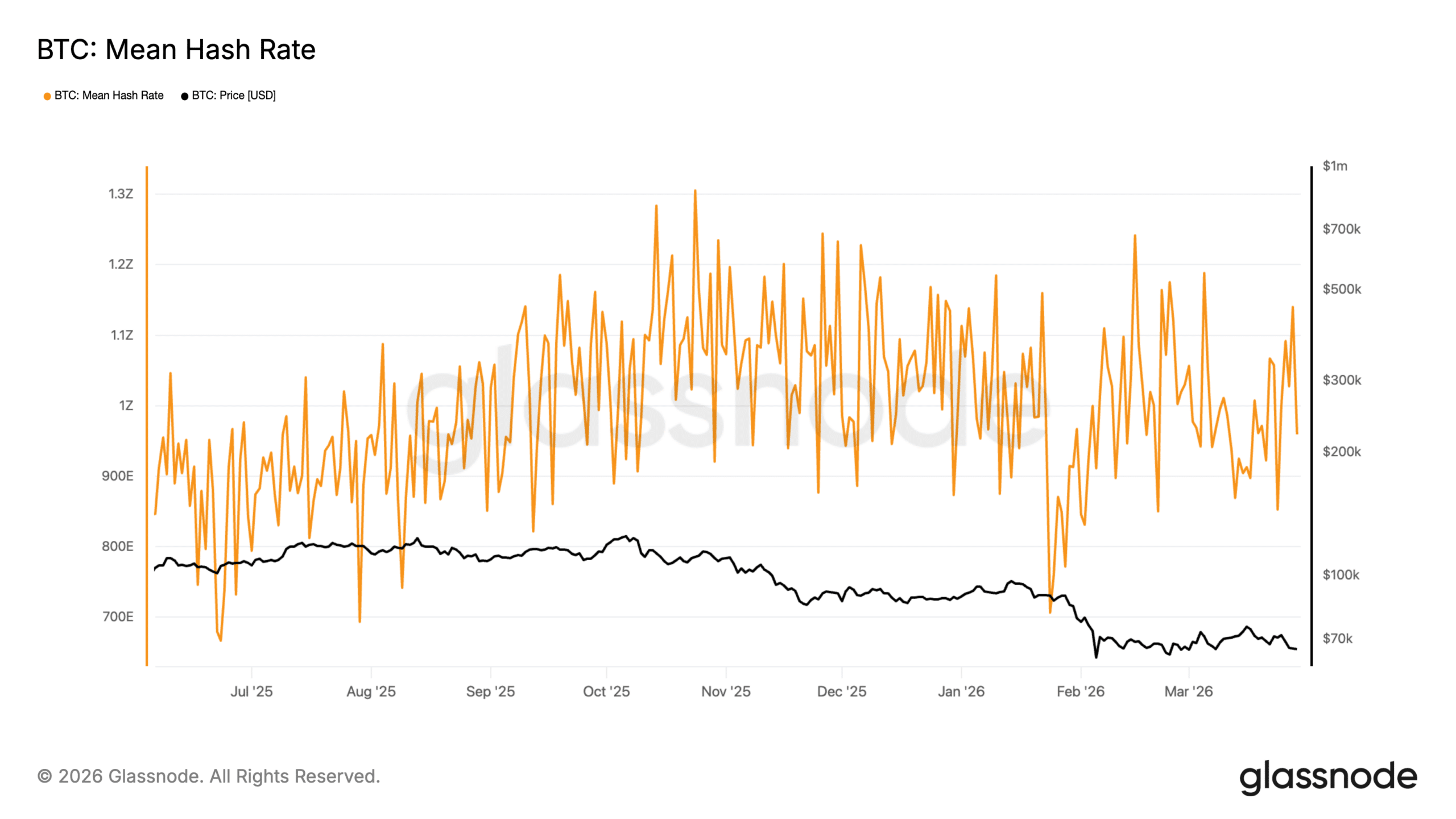
The divergence indicates sustained investment in mining infrastructure, reinforcing its role as a foundational layer of the network rather than a purely price-driven activity.
The trend underscores why policymakers are increasingly focused on securing mining capacity and supply chains as part of broader digital asset strategy.
Final Summary
- The proposed bill aims to localize Bitcoin mining, reduce reliance on foreign hardware, and formalize a U.S. Strategic Bitcoin Reserve.
- Sustained mining activity despite price volatility highlights why governments are beginning to treat Bitcoin infrastructure as strategically important.