





U.S banking regulators, the Office of the Comptroller of the Currency (OCC), the Federal Reserve, and the Federal Deposit Insurance Corporation (FDIC) have issued a joint statement clarifying the capital requirements for tokenized securities.
According to the regulators, the underlying technology for the stock doesn’t matter; capital requirements remain the same.
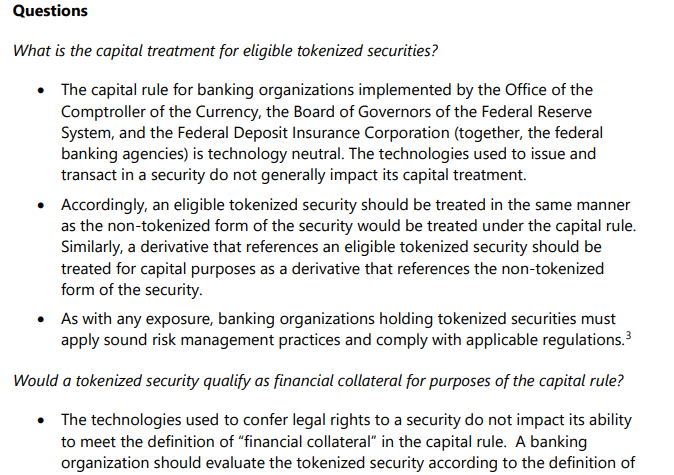
“The capital rule is technology neutral. An eligible tokenized security should generally receive the same capital treatment as the non-tokenized form of security under the capital rule.”
The regulators further elaborated that a tokenized security could be used as collateral, provided it meets the relevant criteria of the concerned bank or financial institution.
Source: OCC
Tokenized securities are traditional stocks offered via blockchain or crypto rails. The latest guidance means tokenized securities will be treated as traditional securities.
A ‘major unlock’ for tokenized securities?
Interestingly, crypto industry leaders billed the update as a major catalyst for the adoption of tokenized securities.
For his part, Nathan McCauley, CEO and co-founder of institutional crypto platform Anchorage Digital, said,
“Incredible unlock for tokenization.”
Similarly, Miller Whitehouse-Levine, CEO of the Solana Policy Institute, views the move as a deliberate laying of groundwork by the regulators to support the growing on-chain U.S capital markets.
“Brick by brick…Multiple Federal agencies are laying the groundwork for on-chain securities markets in the United States.”
That being said, regulators have issued select guidelines as momentum for tokenized securities accelerates.
In January, the Securities and Exchange Commission (SEC) reiterated that tokenized stocks remain securities and must comply with federal securities laws.
Combined with the recent statement, the regulators have offered interpretive guidance covering taxonomy, compliance frameworks, and now, capital treatment for banks that will deal with tokenized securities.
This will set the stage for an enforceable rulemaking for players in the sector.
However, on-chain settlement, custody, and cross-border trading rules, among others, remain unresolved.
Here, it’s worth noting that tokenized securities are one of the contentious issues in the crypto market structure bill – The CLARITY Act. Especially given the strong opposition from Citadel and other traditional players who are against proposed legal exemptions for DeFi platforms.
Tokenized stock adoption surges by 47%
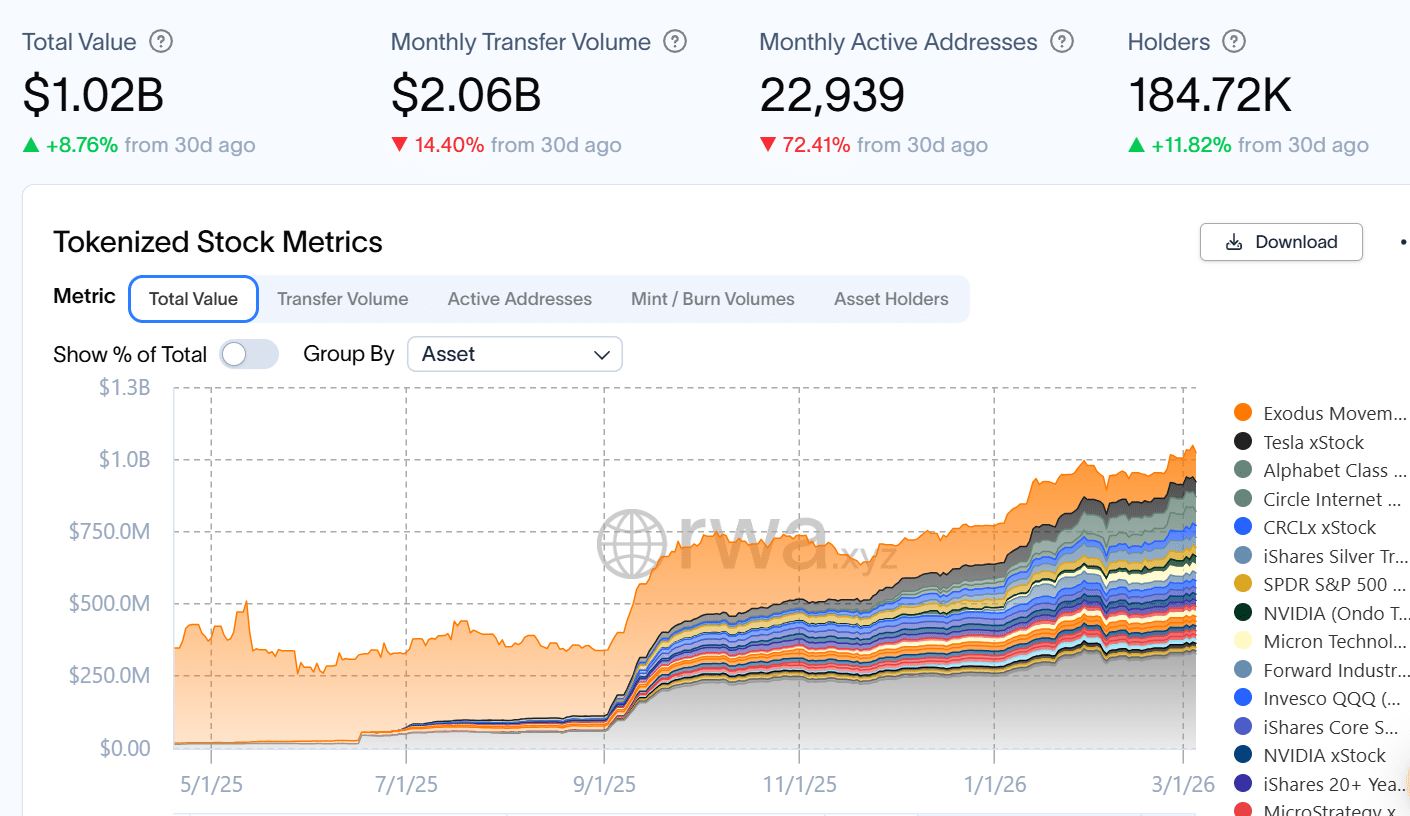
Meanwhile, the tokenized securities sector recorded massive growth in 2025 and continues to accelerate in 2026.
On a year-to-date (YTD) basis, holders of tokenized stocks jumped from 125k to 184k – Marking a 47% adoption rate. Additionally, the subsector’s overall market cap topped $1 billion, with the same growing still.
Source: RWA
Final Summary
- U.S regulators announced tokenized securities will be treated as traditional securities for capital and collateral purposes.
- Adoption of tokenized stocks has accelerated, rising by 47% to 184k holders in Q1 2026.