





For months, the U.S. crypto space has been stuck on one key issue: yield. This refers to the rewards people earn on stablecoins.
The clash between traditional banks and crypto firms went beyond slowing progress and nearly blocked the Digital Asset Market CLARITY Act. At one point, it even risked pushing innovation outside the U.S.
Now, things are starting to move. After intense meetings between the White House and lawmakers this March, a breakthrough seems close.
Executives are confident about the CLARITY Act passage
Senator Cynthia Lummis said negotiations are done, suggesting a deal on stablecoin rewards is almost here, but the obstacles are not over yet.
With an important Senate review coming in April and midterm elections approaching in 2026, time is running out. If a deal isn’t reached by May, progress on clear crypto rules could be delayed for a long time.
Senator Lummis said,
President Trump pledged to make America the digital asset capital of the world. The CLARITY Act is how we make that happen. Let’s get it done, once and for all.
What changed?
For those unaware, things took a big turn on the 20th of March. Patrick Witt, the White House’s top crypto advisor, said that the Senate and the administration had reached an “agreement in principle.”
He called it a major step forward, as it finally breaks the long-standing deadlock. He also gave credit to Senators Thom Tillis and Angela Alsobrooks for helping both sides reach a compromise.
The deal finally found a middle path. As per the latest discussion, it will not allow passive rewards, meaning users won’t earn interest just for holding stablecoins, which was a concern for banks.
But it will allow activity-based rewards, where users can earn benefits by using stablecoins for payments or on platforms.
Crypto community is optimistic
Nic Puckrin, CEO of Coin Bureau, also stressed that time is running out. He said that if the CLARITY Act doesn’t pass the Senate Banking Committee by the end of April, it could be “dead” until 2027, as lawmakers will soon shift focus to the 2026 midterm elections.
Still, Puckrin is cautiously hopeful, as he said,
Yesterday, the stablecoin yield deal happened. Senators + the White House reached a compromise on the exact issue that’s been blocking this for months.
He added,
This isn’t done yet. But the path just opened. Watch April closely.
Polymarket odds rise
This shift is already visible in market sentiment. On Polymarket, the chances of the CLARITY Act becoming law in 2026 jumped from 60% to 70% in just one day after the update on the 20th of March.
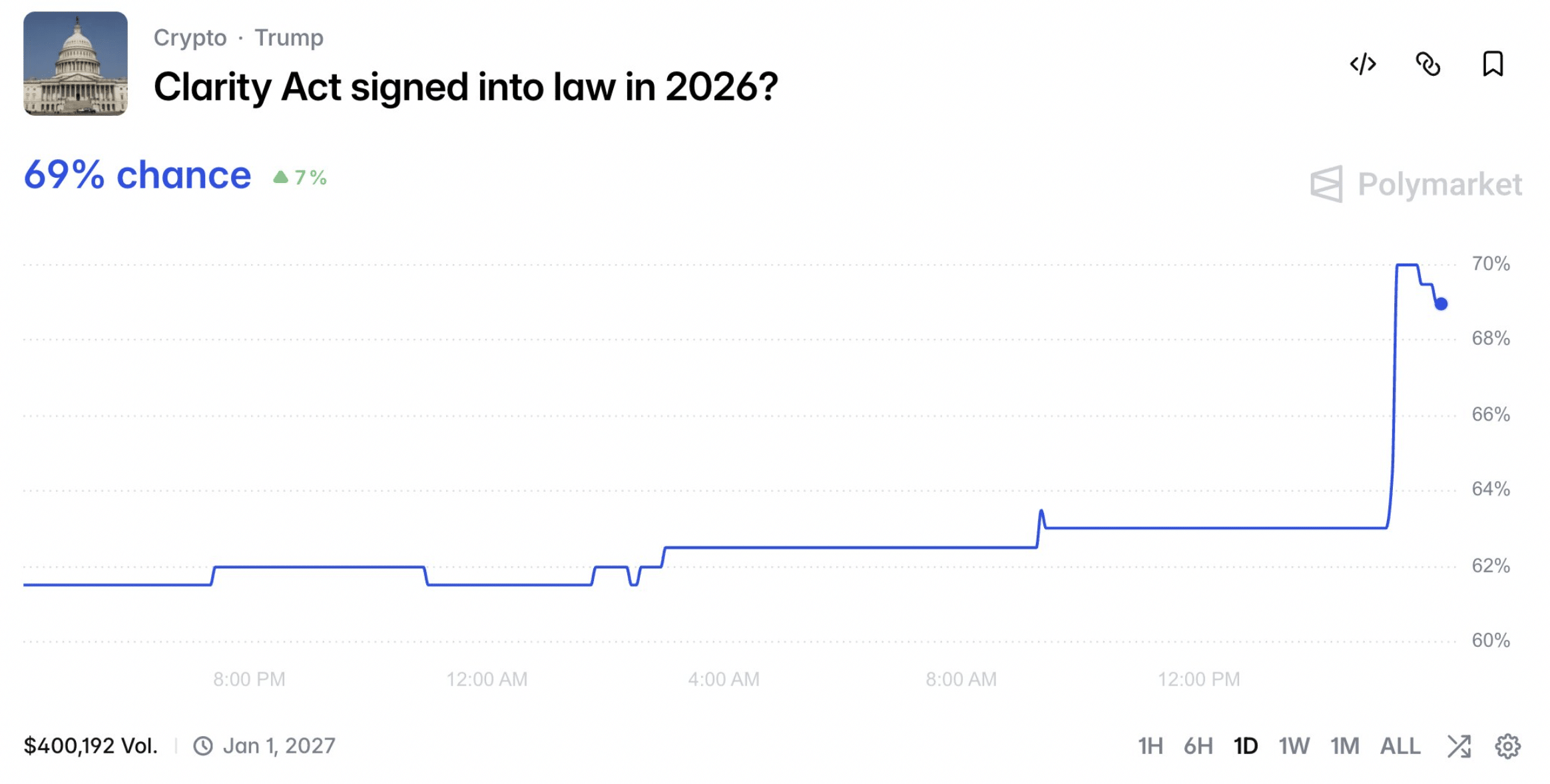
This shows that more people now believe the long delay in decision-making might finally end.
If this momentum continues and the bill passes between April and May, it could have a massive impact. It may bring in large amounts of investment and make the crypto market work more efficiently.
More importantly, it would replace unclear regulation and position the U.S. as a global crypto hub. Ergo, as expected, all eyes are on what comes next for the CLARITY Act.
Final Summary
- The stablecoin yield compromise has broken a months-long deadlock, bringing the CLARITY Act closer to reality.
- Political pressure from the upcoming 2026 midterms could delay progress if deadlines are missed.