





Emerging Developments in the U.S. Bitcoin Strategic Reserve
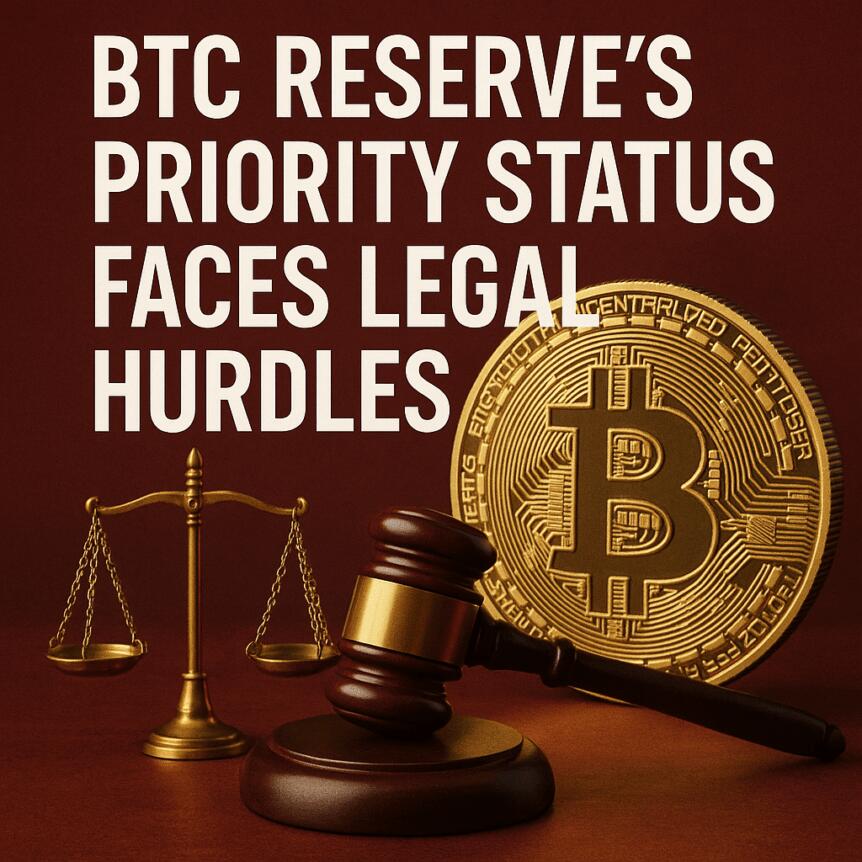
Efforts to establish a formal Bitcoin (BTC) strategic reserve within the United States are progressing, yet legal ambiguities continue to pose significant challenges. According to Patrick Witt, director of the White House Crypto Council, complex and obscure legal provisions are hindering the implementation process, despite ongoing negotiations among key government agencies. This initiative, originally signaled through executive orders signed by former President Donald Trump, aims to position the U.S. as a pioneer in national digital asset reserves, yet practical hurdles remain.
Several government sectors, including the Department of Justice and the Office of Legal Counsel, are actively examining the legalities involved in creating such a reserve. Witt explained on the Crypto in America podcast, “It seems straightforward, but then you get into some obscure legal provisions, and why this agency can’t do it, but actually, this other agency could. We’re continuing to push on that. It is certainly still on the priority list right now.”
In March 2025, Trump signed an executive order establishing both a Strategic Bitcoin Reserve and a Digital Asset Stockpile, which included various cryptocurrencies beyond Bitcoin. The order explicitly states that the U.S. government would not sell any of its BTC holdings and intends to increase its reserve solely through cryptocurrency assets acquired via asset forfeiture cases, not by purchasing on the open market. This limitation has drawn criticism from the Bitcoin community, arguing that it restricts the government’s ability to accumulate new Bitcoin.
Some critics, including prominent Bitcoin maximalists, dismiss the reserve’s practical potential. Justin Bechler remarked, “The belief that the federal government will one day build a Bitcoin reserve requires a complete detachment from reality. There is no movement toward a Bitcoin reserve. There are only empty speeches, vague references, and opportunistic pandering from Washington politicians.”
Further developments emerged in July 2025, when the White House published a digital assets report that notably omitted any concrete plans for augmenting the Bitcoin reserve. Treasury Secretary Scott Bessent later proposed budget-neutral strategies that could allow the government to buy Bitcoin without impacting the federal deficit, sparking renewed interest in the possibility of the U.S. accumulating Bitcoin through reallocating existing assets.
Despite these initiatives, skepticism persists regarding the government’s commitment, with critics emphasizing the lack of tangible actions versus verbal commitments. The evolving landscape indicates that while the concept of a national Bitcoin reserve remains a strategic goal, substantial legal and political obstacles continue to impede its realization.
This article was originally published as BTC Reserve’s Priority Status Faces Legal Hurdles on Crypto Breaking News – your trusted source for crypto news, Bitcoin news, and blockchain updates.