





Original Author: Sandy Carter, Forbes
Original Translation: Saoirse, Foresight News
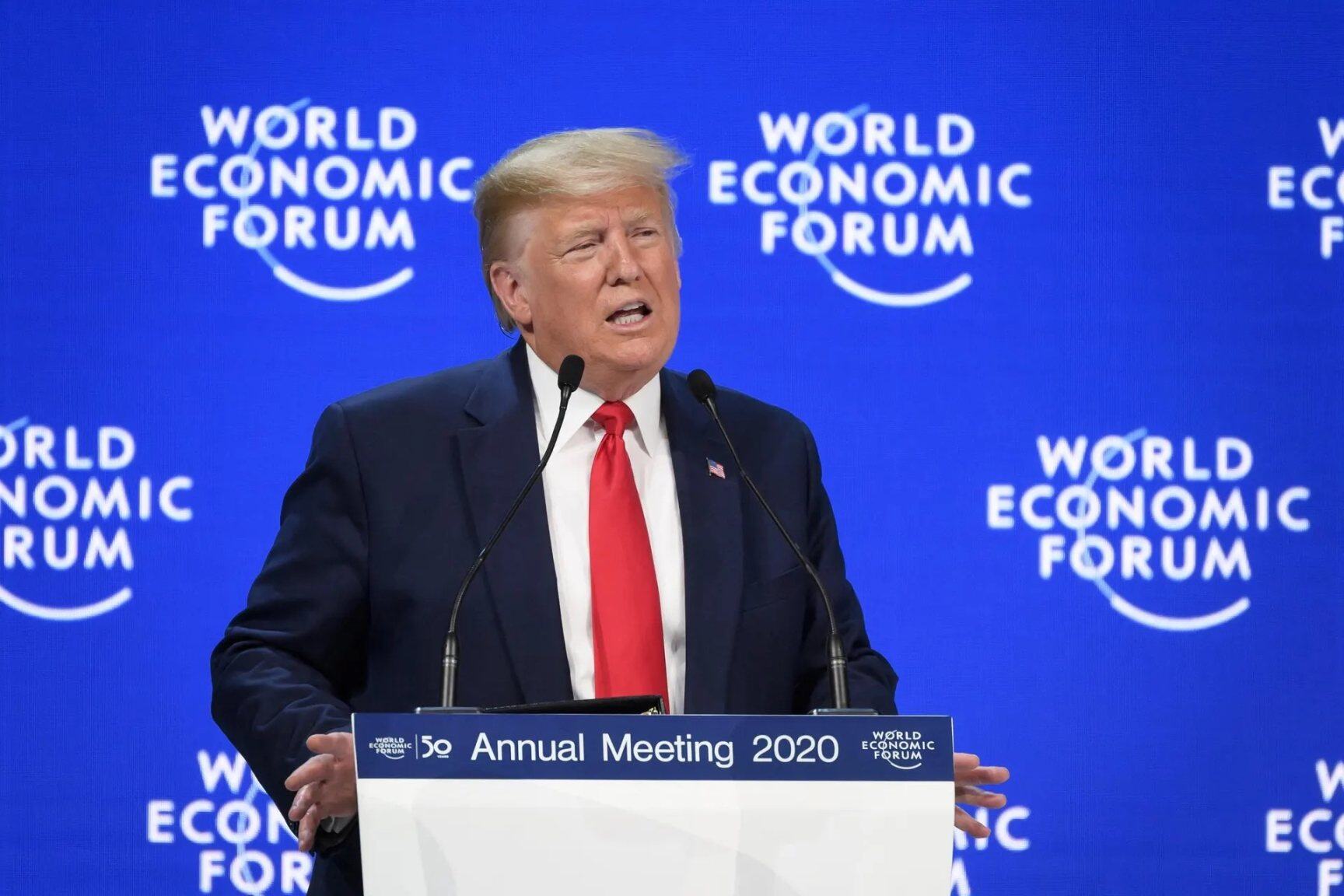
Donald Trump speaking at the 2020 World Economic Forum in Davos. Photo: Fabrice Coffrini / AFP
Donald Trump will travel to Davos next week.
As the World Economic Forum convenes, technology, policy, national competitiveness, and financial infrastructure are at a critical juncture of interweaving and collision. This appearance marks Trump's first visit to Davos in six years. Meanwhile, the organizers noted that the United States delegation is the largest in the forum's history, including senior U.S. cabinet officials and a large delegation from major American corporations.
This year, Davos will also witness the official return of the U.S. Pavilion. This U.S.-centered physical venue will serve as a key hub for policy discussions and business exchanges in the region. I am honored to have been invited to deliver a speech at the U.S. Pavilion this year. This move clearly demonstrates that both the U.S. government and American businesses place great importance on the 2026 Davos Forum, viewing it as a significant platform to exert influence and exchange core ideas.
Notably, just before the World Economic Forum in Davos, Brian Armstrong, CEO of Coinbase and one of the most influential executives in the cryptocurrency industry, refused to support a proposed cryptocurrency bill—despite widespread political interest in advancing the legislation this year. Together, these events reveal a profound shift in the interaction between power, policy, technology, and cryptocurrency.
Trump tried to elevate Davos from "idea discussion" to "institutional building."
I have attended the Davos Forum many times before, but this year's forum gives a completely different impression in terms of tone and content. With the participation of heads of state, cabinet ministers, and hundreds of corporate CEOs, the core focus of the forum has shifted toward infrastructure-level decision-making. This year's forum is expected to attract about 3,000 participants from 130 countries, with the number of political leaders and corporate CEOs reaching a record high.
The changes in the field of artificial intelligence (AI) are particularly notable. Next week, the agenda of the "AI House" at Davos will fully reflect this transformation—positioning AI as a "shared infrastructure," and focusing on core topics such as "Power and Responsibility," "Large-Scale Governance," and "How intelligent systems should enhance rather than replace human decision-making."
Today, artificial intelligence is no longer seen as an "emerging technology," but rather as critical infrastructure of equal importance to energy, supply chains, and national competitiveness. From the topic settings of the "Intelligent Agent AI Pavilion," it is evident that as intelligent technologies evolve from the "tool level" to the "decision-making system level," governance issues such as "trust, accountability, and control" arising from autonomous AI agents will become the focal points of discussion. Currently, the level of attention policymakers are giving to "computing power and access rights to AI" is comparable to the past emphasis on "oil resources."
The executives' discussions focused on "how to establish a solid foundation for organizations built in different economic eras." In this context, the importance of "system durability" far surpasses "growth speed," and the central question has shifted to "which systems will remain critical a decade from now."
The concept of "systems thinking" is also applicable in the field of digital finance.
This "systems thinking" is increasingly permeating the field of digital finance.
Today, stablecoins process daily settlement transactions amounting to billions of dollars, with widespread application particularly in cross-border payments and fund management. At the same time, "tokenization" is quietly permeating capital markets, expanding its scope from fund products to various real-world assets.
Cryptocurrencies have officially transitioned from the "experimental phase" into the "financial infrastructure domain." In 2025, the Davos Web3 Center signed the "Davos Web3 Declaration," clearly endorsing four core principles: "responsible innovation, sustainable development, accountability, and trust." In 2026, the center will further strengthen the dissemination and implementation of these principles.
Trump's Core Message on "Power and Digital Finance"
Trump's appearance in Davos has injected political influence into this transformation process. For a long time, his economic views have consistently revolved around "sovereignty, influence, and competitiveness," and cryptocurrencies happen to lie precisely at the intersection of these three dimensions.
On one hand, digital assets promise "faster settlement speeds, new models of capital formation, and enhanced efficiency," aligning closely with policy agendas aimed at "promoting growth." On the other hand, digital assets have also raised concerns in areas such as "sanctions enforcement, financial regulation, and the long-term status of the U.S. dollar." Although the Davos Forum is not a "legislative venue," it serves as a key platform for "conveying policy priorities"—the positioning and interpretation of cryptocurrencies at the forum will have significant implications for both the market and regulators.
The return of the U.S. pavilion further confirms this: the United States does not view Davos as a "neutral backdrop," but rather as a strategic platform for "shaping the narrative around technology, capital, and influence."
Brian Armstrong's "Opposing Position"
Against this backdrop, according to Reuters, Armstrong's refusal to support the cryptocurrency bill reflects the maturation of the cryptocurrency industry. With the passage of the CLARITY Act, the industry's expectations regarding regulation have fundamentally shifted. For nearly a decade, leaders in the cryptocurrency space have advocated the stance that "any clear regulation is better than no regulation at all." However, as risks in the industry continue to rise, this position has now changed.
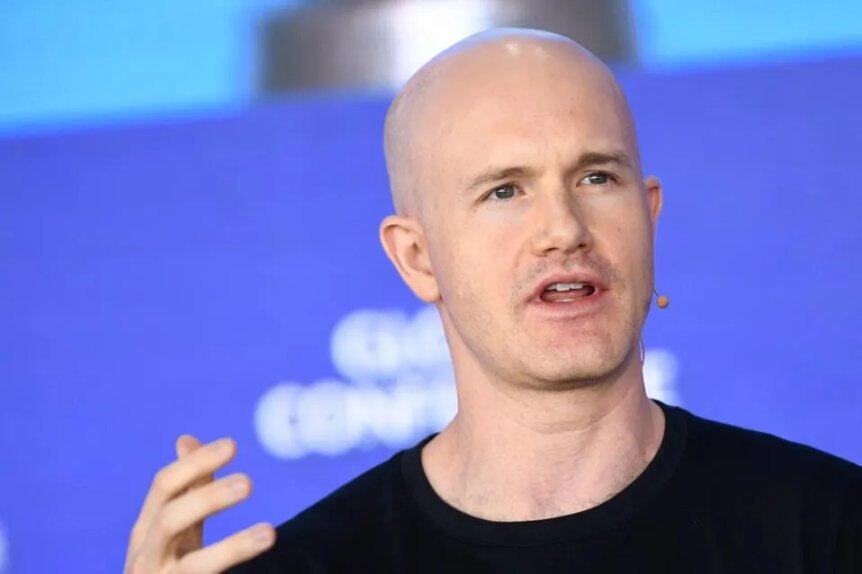
Brian Armstrong clearly expressed his opposition to cryptocurrency legislation. (Photo: Patrick T. Fallon / AFP)
Armstrong's concerns can be summarized into three main points:
- The bill would "artificially determine winners and losers": This bill clearly favors large existing companies and centralized intermediaries, potentially excluding innovative startups and open networks that could drive industry progress;
- Increased compliance burdens without enhanced clarity: The bill has not clearly defined the operational rules for cryptocurrency products, yet it has added a series of new obligations. Rather than reducing legal uncertainty, these provisions may actually exacerbate risks.
- Undermine the core advantage of "decentralization": Key provisions in the bill will push the crypto ecosystem toward a "highly centralized" direction, undermining the "resilient architecture" and "global interoperability" upon which cryptocurrencies rely, potentially leading to an outflow of innovation resources or creating long-term risks of market concentration.
Armstrong's position is not one of "simple opposition to regulation," but rather an emphasis on the "scientific and rigorous nature of regulation." As cryptocurrencies become core infrastructure, poorly designed regulatory policies could lead to problems such as "entrenchment of fragile systems," "outflow of innovative resources," or "long-term concentration risks."
Trump, Armstrong, and the "Struggle for the Economic Underlying Rules"
There is a direct connection between Trump's trip to Davos and Armstrong's rejection of the bill: Trump is attempting to convey "America's strategy for competing in a technology-driven global economy" through the Davos Forum, while Armstrong is resisting unreasonable regulations that "could prematurely lock in the future form of digital finance" through the legislative process.
Today, the core of this field is no longer "hype or experimentation," but rather "who can control the fundamental systems upon which economies rely." The key issue now is "how to control the underlying rules governing modern economies"—and as Trump heads to Davos, this battle has fully entered the political arena.